
Breaking barriers: Meet woman who started pork business on credit
Today, Babirye buys pigs from different farms, where they are sold by the kilo. The farm-gate price for a kilo of pork is sh11,000-sh12,000.
PAKASA
Due to changing trends in the employment arena, women are crossing into erstwhile male-dominated activities and vice-versa. One such example is Robinah Babirye, 30, who deals in pork, writes Victoria Nampala Bugembe.
Babirye inherited the business from her partner, who was gunned down in 2013 by unknown assailants. The incident took place near a supermarket in Kyanja, a Kampala suburb. The killers also took off with his motorcycle.
Who is Babirye?
Babirye hails from Kikula village in Kyabalanzi county, Mubende district. Her parents are Ssalongo Kawuki Elidadi and Nalongo Eseza Nakiwala; both are deceased. She studied at Kiwanda Demonstration School.
"When I was in P5, my mother, who paid my school fees fell ill. This marked the end of my education journey," Babirye says.
In 2004, aged 14, she came to Kampala where she got a job as a maid in Bugolobi, a Kampala suburb.
"I was paid sh30,000 a month and worked at that home for three years. I used my salary to look after my siblings and ailing mother," she adds.
Babirye sought formal employment thereafter but still ended up as a maid at Kisaasi, another suburb.
"After working for three months, I was involved in a romantic relationship and conceived immediately," she says.
When her mother passed on in June 2008, Babirye moved in with her boyfriend. Her siblings were sent to live with other relatives as their father had died in 2004."
Her boyfriend was employed at a pork roast eatery, earning sh2,500 daily.
"I used to serve the clients and wash the dishes without pay," Babirye says.
However, the daily earnings were barely enough to cater for the couple's utility bills, rent and their family. With time, his pay increased to sh3,000 per day.
"We earned extra because my partner supervised the slaughtering of the pigs and would get the entrails that were sold to dog owners," Babirye says.
In 2010, the couple had a misunderstanding with the owner of the butcher, which led to them leaving the joint.
"We moved to our former business competitors nearby and continued work," Babirye says.
However, her partner loved the bottle and occasionally closed shop to go for a drink.
Babirye worried about the proprietor dropping by unexpectedly and finding the business closed, yet it still had stock.
Since she had mastered the skill of cutting pork, Babirye would serve the customers when her partner was away.
He would only return in evening drunk and demanding the day's sales.
"Initially, I made many mistakes, such as selling lean meat without fat as customers demanded. I later learnt that the fat is supposed to be sold with the meat to clear the stock," she says.
With time, Babirye gained the skills to run the business efficiently.
Moving again
In 2012, the couple left the second location and were offered space by Rebecca Nangoobi, a resident.
"Since we did not have capital, I sought a loan of sh40,000 payable within six months from Silver Association. This is a village saving and credit co-operative in Kisaasi, [a Kampala suburb]," Babirye says.
"We also got support from relatives who provided iron sheets, timber and tools, such as a machete and weighing scales to start running a pork joint," she says.
"I would sit by the roadside and advertise the business, to attract clients," Babirye says.
Increase in the number of clients presented an opportunity for expansion.
The couple set up a pork shop at Ndundu, Kisaasi where they used to pay ground rent of sh200,000.
"We used to earn over sh400,000 from both branches. After deducting expenses, we would have a profit of sh200,000- sh300,000. The proceeds would be used to purchase pork the next day," she says.
However, the second kiosk was demolished by the city authority since it was not permanent as required by the law, to ensure sanitation.
The couple sought another venue at Komamboga, from where they operated until her partner was murdered.
Taking on pork business
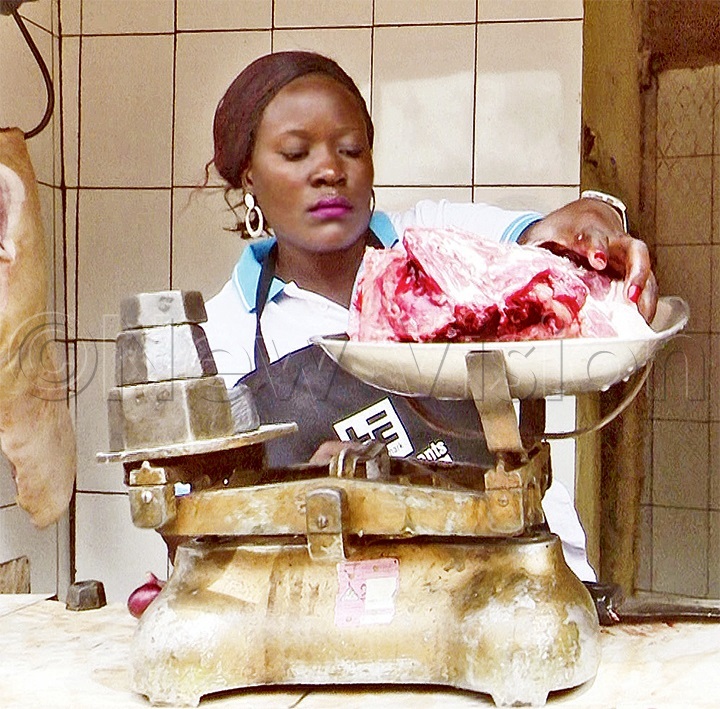
"After his burial, I took over the business. However, I did not know the source of the pork and the other costs involved," Babirye says.
She was advised to look for Deo Mutale in Lusanja, a city suburb.
"Mutale was my partner's friend and had an abattoir. He agreed to give me pork on credit on condition that I paid him after making sales," Babirye adds.
She would sell each kilogramme at sh12,000. From each kilo sold, she would save sh3,000.
"I would save sh15,000, when the sales were good," she says.
She worked with other youth who would run the shops when she went to buy pork. Each worker was paid sh10,000 daily.
She got an unsecured loan of sh2m from a microfinance institution to boost the business.
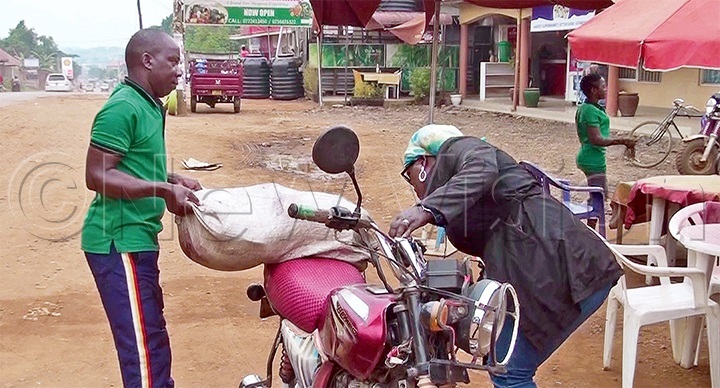
Today, Babirye buys pigs from different farms, where they are sold by the kilo. The farm-gate price for a kilo of pork is sh11,000-sh12,000.
From each pig, Babirye can save up to sh100,000 daily. She sells over 70kg of pork on peak days like weekends.
Achievements
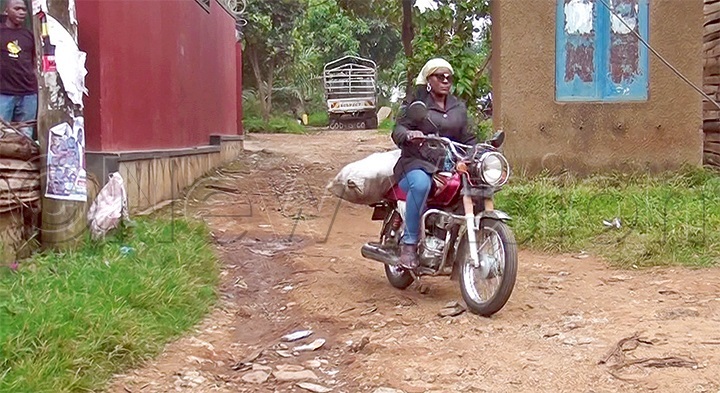
Babirye owns a motorcycle which she got as a loan at sh4,690,000 and used to pay sh70,000 per week. The motorcycle is used in the
business.
Through savings, Babirye bought a plot of land at Gayaza, in Wakiso district, where she plans to construct a pork recreation centre.
Running a pork business
Hygiene is key. The pork business requires that one keeps the work space clean, constantly washing all the tools used.
Place your pork eatery in a location with a high population for good returns.
Carry out research about how to run the business. This will help one to figure out how to overcome the challenges.
Trustworthiness is key. "If I was not trustworthy with my customers and suppliers, I would be out of business by now."
Impact of COVID -19
Babirye says although she was receiving few customers, the business was booming and pork price was hiked from sh9,000 to 11,000 at the abattoir.
She is, however, grateful that despite other businesses closing down, the butcher was among those left to operate.
She was forced to lay off some workers due to the high expenses of running of the business.
Babirye says she is exploiting her other talents to diversify her sources of income.
"I have recorded two songs so far. I am soon shooting videos for the songs," she says.
Risks
Running a pork business comes with many risks, which include discrimination from people who consider pork a taboo because of their religious affiliation.
The business is also associated with losses, especially when the pork stays overnight and has not been handled properly.
For Babirye, hygiene is essential and she is the only one who is allowed to touch the meat that is on display.
Challenges
Loss of her two butchers to the city authority workers who pulled the structures down in a move aimed at decongesting the city suburbs of Kisaasi and Kyanja.
High rental charges.
Landlords stopping the operation of the pork joint because of increased number of customers. It takes a lot of money and time to invest in setting up another place.
High taxes have affected the growth of the business.
Scarcity of pork due to limited supply and the prices keep rising.
Plans
She plans to purchase a deep freezer that can keep pork fresh
A pork recreation centre, which will have several social amenities at affordable prices.
Studying law to help children and women who are abused by men.
Advice
The Government needs to help women at the grassroots. Many of such women bear the burden of looking after their families singlehandedly.
Women in formal employment should invest in a side business to earn an extra shilling.
If you get a chance to learn on job, pay attention as such skills could help in the future.
Do your best and only make sure you are good at bookkeeping.
Handle your workers with respect because they play a great role in attracting or chasing clients away from your business.
Always be part of the business activities, so that the employees can learn from you.
People speak out
Henry Ssesanga: For the last 10 years I have worked with Babirye, I have been able to feed my two families with ease. I have also been able to buy two plots of land.
She is my heroine because once she loves something, she will do all it takes to accomplish it in time.
Entrepreneurs should cherish and make their business a priority if they are to succeed.
Patrick Sentongo: I respect Babirye because there are many widows who cannot take on their late husband's businesses because they never learnt how to run them yet they have families to look after.
Babirye is a wonder woman who turns a deaf ear to what community members may say about the nature of her work. She is hardworking and understands one language: Money.