
US, Iran agree to two-week ceasefire after Trump apocalyptic threats
Trump said he had spoken to Pakistan's leaders who "requested that I hold off the destructive force being sent tonight to Iran."
Iranians react after a ceasefire announcement at the Enqelab square, in Tehran, on April 8 2026. (AFP)
________________
WASHINGTON - The United States and Iran agreed to a two-week ceasefire Tuesday barely an hour before President Donald Trump's deadline to obliterate the rival country was set to expire, with Tehran to temporarily reopen the vital Strait of Hormuz.
After more than a month of blistering attacks by the United States and Israel, Iran cast the ceasefire as a victory and said it had agreed to talks with Washington to begin Friday in Pakistan on a path to end the conflict.
Trump said he had spoken to Pakistan's leaders who "requested that I hold off the destructive force being sent tonight to Iran."
"Subject to the Islamic Republic of Iran agreeing to the COMPLETE, IMMEDIATE, and SAFE OPENING of the Strait of Hormuz, I agree to suspend the bombing and attack of Iran for a period of two weeks," Trump wrote on his Truth Social platform.
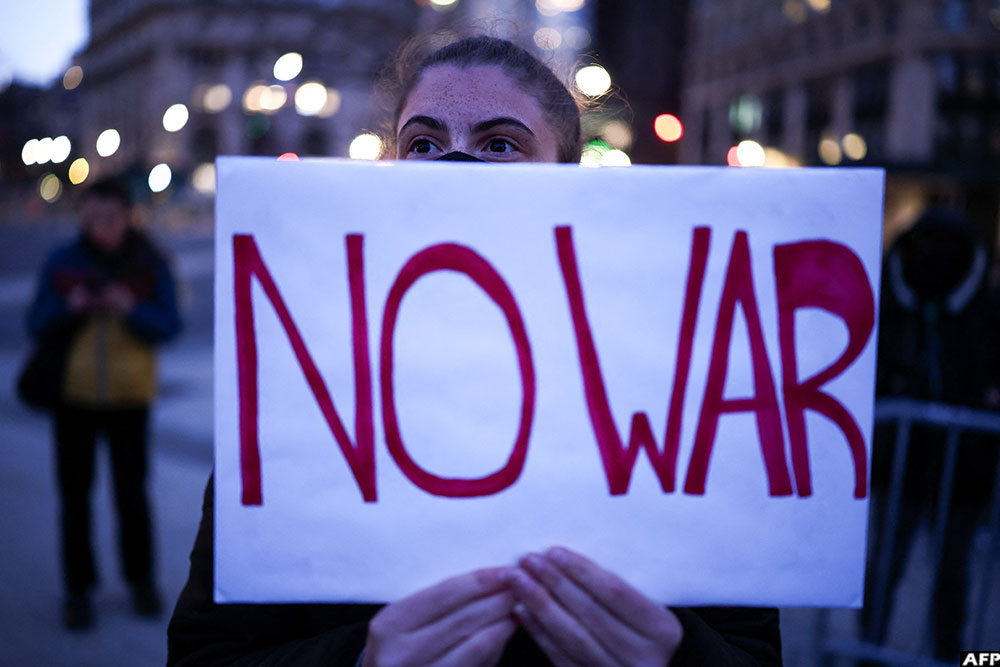
A demonstrator holds a sign during a protest against US military action in Iran in the Manhattan borough of New York City on April 7, 2026
Iranian Foreign Minister Abbas Araghchi confirmed safe passage for two weeks for ships through the Strait of Hormuz, the gateway for one-fifth of the world's oil which Tehran sealed off in retaliation for the war launched on February 28.
"If attacks against Iran are halted, our Powerful Armed Forces will cease their defensive operations," Araghchi said.
Prime Minister Shehbaz Sharif of Pakistan, which has played a key mediator role, said that the ceasefire would start immediately.
He said that the United States "along with their allies" had agreed to a ceasefire everywhere including Lebanon, implying that Israel had agreed to halt its invasion of its northern neighbor.
Israel did not immediately react. Its assault on Lebanon in response to rocket fire by Iranian-backed Hezbollah has led to more than 1,500 deaths, according to Lebanese authorities.
Israel had encouraged Trump to join the war against Iran, its arch-nemesis, and in the first strikes killed the long-serving supreme leader, Ayatollah Ali Khamenei.
Oil prices plunged by more than 17 percent after the ceasefire announcement. Costs at the pump had risen sharply since the war for ordinary Americans, putting heavy political pressure on Trump.
Stock prices also soared in early trade Wednesday in Asia.
Trump said that the United States was "very far along" in negotiating a long-term agreement with Iran, which had submitted a 10-point plan that he said was "workable."
But Iran publicly released points that took maximalist positions including lifting longstanding US sanctions, guaranteeing its own "dominion" over the Strait of Hormuz and removing US forces from the region.
Trump had set a deadline to Iran to open the Strait of Hormuz by 8:00 pm Washington time (midnight GMT), or 3:30 am in Tehran, for Iran.
He had earlier threatened to destroy all power plants and bridges across the country of 90 million people -- a war crime against sites that are primarily of civilian usage.
Trump made threats shocking even by his own standards when he warned that "a whole civilization will die tonight, never to be brought back again. I don't want that to happen, but it probably will."
The rhetoric was an escalation from a profanity-laden post two days earlier, on Easter Sunday.
Pope Leo XIV said that "this threat against all the people of Iran" was "truly unacceptable."
Heavy strikes before deadline
The United States and Israel struck key infrastructure before Trump's deadline, with Israeli Prime Minister Benjamin Netanyahu saying attacks hit railways and bridges allegedly used by the Revolutionary Guards.
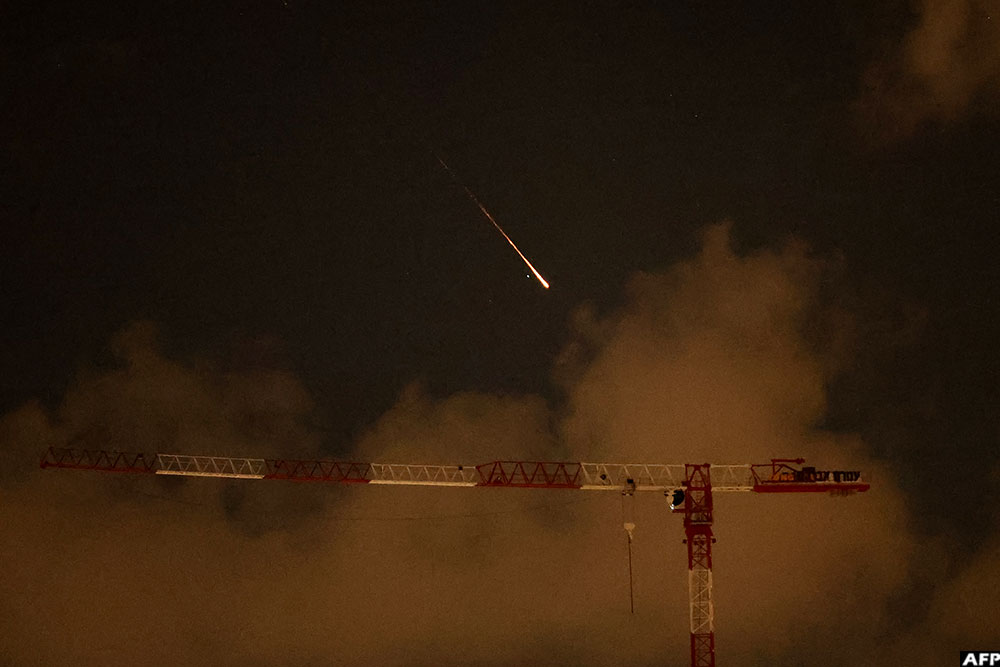
Israel's military issued two warnings in quick succession early Wednesday that Iran had fired missiles toward it, moments after US President Donald Trump said he had agreed to postpone striking Iranian infrastructure
The Israeli military also offered a rare statement of regret after it acknowledged damaging a synagogue in Tehran, saying it had been targeting a senior Iranian commander.
Iran, run by Shia Muslim clerics, is home to around 100 synagogues for its historic Jewish minority.
Infrastructure attacks reported by Iranian authorities Tuesday included a US-Israeli strike on a bridge outside the city of Qom and another on a rail bridge in central Iran that killed two people.
Iran has retaliated with weeks of drone and missile attacks on Gulf Arab states, citing their role as hubs for US troops.
The attacks have shattered the monarchies' hard-fought reputation for safety and stability.
Qatar said early Wednesday that four people were hurt by falling missile debris, including a child. AFP reporters also heard explosions in Bahrain and Saudi Arabia and the United Arab Emirates said they responded to missile threats.
Two civilians, one of them an eight-year-old child, were killed in Baghdad when a projectile crashed into their home, police told AFP.
'Terrified'
Iranian university student Metanat, 27, whose classmate was killed two weeks ago in an attack, told AFP before Trump's suspension of the bombing she felt "terrified and so should everyone else in the country."
State media published photos purporting to show groups of Iranians forming human chains to protect power plants.
The show of patriotism in the face of attacks came several months after Iran's cleric-run government cracked down violently on mass protests, with rights groups reporting thousands of deaths.
A peace agreement, if realized, would leave in place the Islamic republic despite hopes by Israel and the United States of toppling it.
The United States and Israel said that they attacked Iran to degrade its military capacity. Trump has alleged that Iran was near building an atomic bomb, an assertion not backed by the UN nuclear watchdog and most observers.