
Pakistan army chief in Tehran as Iran weighs US peace offer
Weeks of negotiations since an April 8 ceasefire -- including historic face-to-face talks hosted by Islamabad -- have still not produced a permanent agreement or restored full access to the strait - through which a fifth of global oil shipments normally pass.
The Strait of Hormuz remains effectively closed, choking off supplies of oil, gas and fertiliser to the world economy (Credit: AFP0
TENRAN - Iranian foreign ministry spokesman Esmaeil Baqaei cautioned that the visit did not mean "we have reached a turning point or a decisive situation" with "deep and extensive" disagreements remaining, according to Iran's ISNA news agency.
US Secretary of State Marco Rubio had earlier voiced hope of progress toward ending the war, which began on February 28 with US-Israeli strikes on Iran and has led to competing blockades around the strategic Strait of Hormuz, roiling the global economy and pushing up energy prices.
Weeks of negotiations since an April 8 ceasefire -- including historic face-to-face talks hosted by Islamabad -- have still not produced a permanent agreement or restored full access to the strait - through which a fifth of global oil shipments normally pass.
President Donald Trump has described the stop-start negotiations this week as teetering on the "borderline" between a deal and renewed attacks.
The president on Friday said he would miss his son's wedding this weekend due to "circumstances pertaining to government", as US outlets Axios and CBS News reported the White House was considering strikes, although both added a final decision had not been made yet.
Pakistan's military said Field Marshal Asim Munir had "arrived in Tehran as part of ongoing mediation efforts".
The army chief was welcomed by Iran's Interior Minister Eskandar Momeni and his Pakistani counterpart Mohsin Naqvi, who had been in Tehran on two separate visits in the past week, meeting with the Iranian president and foreign minister.
"In recent days, many countries -- both regional and non-regional -- have been trying to help bring the war to an end... However, Pakistan remains the official mediator," said the Iranian foreign ministry's Baqaei.
Iran's foreign minister Abbas Araghchi said Tehran was engaged in the diplomatic process despite what he called "repeated betrayals of diplomacy" by the US and "military aggression against Iran", according to Iranian news agency Tasnim.
"Despite its strong suspicion of the United States, the Islamic Republic of Iran has entered this diplomatic process with a responsible approach and with all seriousness and is striving to reach a reasonable and fair result," Araghchi said.
Hormuz squeeze
Rubio, speaking on the margins of a NATO meeting in Sweden, said there had been "some progress" in the talks, but warned that Washington was "not there yet".
"It may not" change, Rubio said. "We're dealing with a very difficult group of people. And if it doesn't change, then the president's been clear he has other options."
Rubio said Trump "prefers the negotiated option" but had expressed concern that a deal "maybe...is not possible".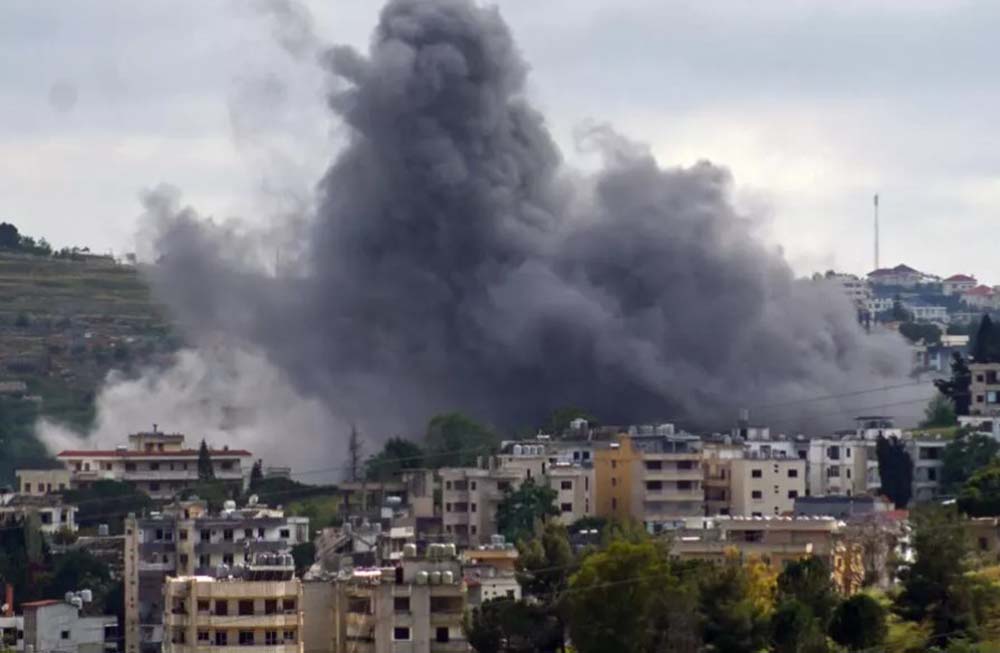
Israel and Hezbollah have continued to fight despite a ceasefire, with Israel striking Lebanon on Friday. (Credit: AFP)
Tehran effectively closed the Strait of Hormuz, which normally carries large volumes of oil and gas, in retaliation for the US-Israeli strikes.
The future of Hormuz remains a key sticking point, with fears growing that the global economy will suffer as pre-war oil stockpiles run down.
Markets nevertheless took some comfort from the diplomacy, with Wall Street rising Friday and the Dow closing at a second straight record high as investors bet talks could eventually produce an off-ramp.
Oil prices also rose, however, underscoring fears that disruption in Hormuz will keep feeding inflation. US consumer sentiment fell to its lowest level since records began in 1952, with high prices still eroding household finances.
European Union nations moved Friday towards sanctions on Iranian officials and others blamed for blocking the strait.
Baqaei said Hormuz and the US blockade of Iranian ports were also under discussion.
"The issue of ending the war on all fronts, including Lebanon, is very important," he added.
Lebanon front
Hezbollah drew Lebanon into the war with rocket fire at Israel after Iran's supreme leader was killed by US-Israeli strikes.
Since an April 17 truce, Israel has continued strikes, demolitions and evacuation orders in south Lebanon, saying it is targeting Hezbollah, which has also kept up attacks.
Late Friday, Lebanon's state-run National News Agency said Israel carried out five airstrikes in the east of the country near the Syrian border, targeting the Nabi Sreij area.
The agency said the area had been spared from attacks since the ceasefire, and that the strikes came after Israel called for the evacuation of two areas in southern Lebanon.
Lebanon's health ministry said Israeli attacks have killed at least 3,111 people in Lebanon since March 2, adding that strikes on the south on Friday killed 10 people, including six rescuers and a child.
The Israeli military announced a separate strike that killed two people in southern Lebanon.
The United States on Thursday sanctioned nine Hezbollah-linked individuals, including two officers, accused of "obstructing the peace process in Lebanon."