
Numbers behind vote that plunged UK PM Starmer into crisis
With results now counted, Labour lost 1,498 of 2,566 individual English council seats which were up for grabs in the elections, and lost three seats in the Scottish parliament.
Britain's Prime Minister Keir Starmer reacts as he meets construction apprentices during a visit to London South Bank Technical College in London on May 12, 2026. More than 100 Labour MPs have signed a statement in a show of support for Prime Minister Keir Starmer, who is under pressure to step down after devastating elections, UK media reported Tuesday. (Credit: AFP)
LONDON - Dismal results in local elections have triggered a crisis for UK Prime Minister Keir Starmer, with MPs and ministers in his own party calling on him to step down.
Here are the numbers behind a historically bad night for Starmer's Labour Party.
Massive losses
Around a third of local councils in England held elections on Thursday, while voters in Wales and Scotland elected representatives to their devolved national parliaments.
With results now counted, Labour lost 1,498 of 2,566 individual English council seats which were up for grabs in the elections, and lost three seats in the Scottish parliament.
Perhaps the most symbolic blow was delivered in Wales, where the party had not lost an election for 100 years.
But it lost control of the national Welsh parliament, the Senedd, coming in third place behind left-wing nationalists Plaid Cymru and anti-immigration populists Reform.
Attacked on all sides
Labour losing votes to the left and right was a theme echoed across England, making it more difficult for Starmer to know which flank to defend as he attempted to present a future path for his leadership.
Reform, which gained 1,452 seats across the country, punished Labour in its working class heartlands of northern and central England, according to Open Council Data UK.
And in cities and more affluent areas, the left-wing Green Party and Liberal Democrats compounded Labour's losses.
London falling
Nowhere illustrated the breakdown of Labour's loose coalition of working-class, Muslim and educated young voters better than in London, where it lost control of 12 of its 21 councils.
Independent candidates surged in Newham, Tower Hamlets and Redbridge, all of which have Muslim populations of more than 30 percent.
Many of those candidates had made the Gaza conflict a central issue in their campaigns, capitalising on local anger about Labour's stance during the war.
The Green Party, which has been highly critical of Israel's actions against Palestinians in Gaza, made its biggest gains in more affluent areas with a higher educated population, according to data from Open Council Data UK and the Office for National Statistics.
Reform made large gains in outer London boroughs such as Havering, where it won 39 out of 55 seats.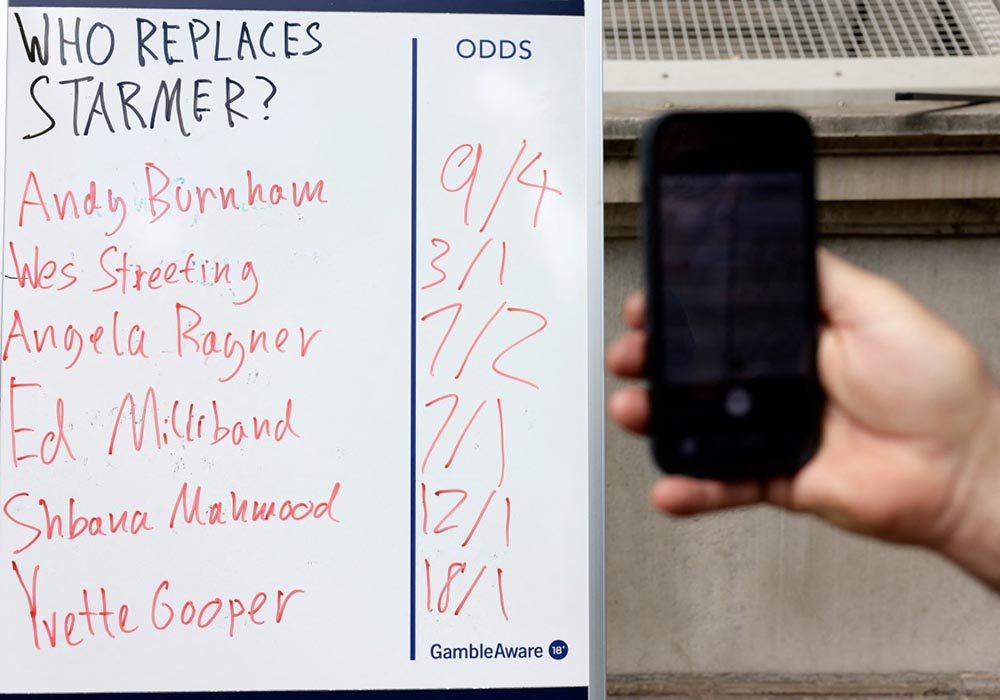
People take photographs of a betting company's odds on contenders to be the next leader of Britain's Labour party, with Andy Burnham, Wes Streeting and Angela Rayner's names all listed, on Whitehall in central London on May 12, 2026. (Credit: AFP)
Fragmentation of UK politics
The election also signalled the continuing fragmentation of the UK political landscape, which had been dominated by Labour and the Conservative parties for a century.
Together, they used to attract around 90 percent of the vote during general elections, but insurgent parties have since made serious inroads, particularly during the political chaos of the last decade.
The two parties combined are projected to receive just 34 percent of the vote in England's local elections when all the data is received, according to the BBC, the lowest since comparable national local election estimates began.
Reform makes Scotland gains
One of the main beneficiaries of the fragmentation has been Nigel Farage's Reform party, which made gains in areas previously considered out of bounds to him.
His party won 17 seats in the Scottish parliament, and now has as many as Labour, which ran the devolved government until 2007.