
Why Museveni won
After the results were announced, Museveni secured 71.65% of the vote, far ahead of his closest challenger, National Unity Platform (NUP) leader Robert Kyagulanyi, also known as Bobi Wine, who got 24.72%.
President Museveni casting his vote at Kaaro polling station in Rwakitura, Kiruhura district, on Thursday. (Credit: Eddie Ssejjoba)
KAMPALA - When polling stations opened across Uganda on January 15, 2026, there was little suspense about the outcome.
President Yoweri Museveni, now 81 and in power since 1986, was headed for another term, his seventh, after a campaign that largely reinforced his long-standing dominance of the political landscape.
After the results were announced, Museveni secured 71.65% of the vote, far ahead of his closest challenger, National Unity Platform (NUP) leader Robert Kyagulanyi, also known as Bobi Wine, who got 24.72%.
Political analysts say a mix of incumbency, state organisation, historical memory and the weakness and fragmentation of the opposition shaped Museveni’s victory. For many voters, the election was less a contest between competing policy ideas and more a judgment on continuity, stability and access to tangible benefits.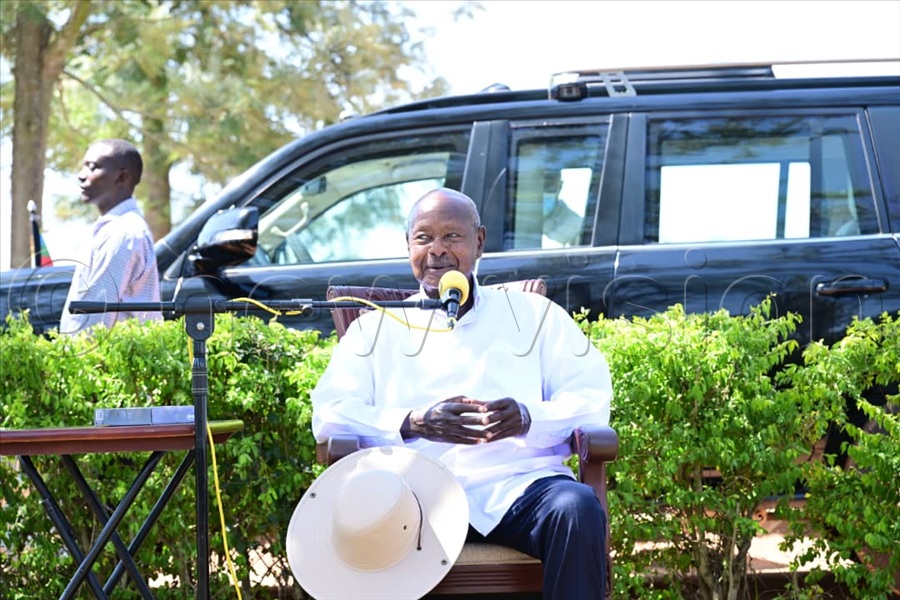
Museveni speaks to the press on Thursday immediately after casting his ballot.
Peace and stability
Political and security analyst Charles Rwomushana argues that the 2026 vote was not really an election in the conventional sense but more of a referendum on Museveni.
“There is no organised group mobilising the population around clear issues and yet elections are supposed to be issue-based, not driven by hate and emotions,” Rwomushana says.
He notes that Museveni has a long historical record to point to, particularly on security and stability.
“In Museveni’s case, he has a historical record to point to: Uganda has been stable, and he presents himself as the leader who has stabilised the country for four decades. That is an issue one can vote for,” he explains.
This framing, analysts say, placed Museveni at the centre of the political narrative. Rather than voters choosing between competing visions, many were deciding whether the President should continue in office.
Opposition defections
Museveni’s campaign rallies were marked by defections from the opposition parties, including Uganda People’s Congress (UPC), National Unity Platform (NUP), who said they had seen the light and were willing to rally behind President Museveni and ensure his win.
In the West Nile region, opposition stalwarts like Geoffrey Alex Ogwal Adyebo, the Kwania district LC5 chairperson and a prominent Uganda People’s Congress (UPC) figure and Tom Richard Ocen Agwec, former UPC national mobiliser for Kwania County, cited the NRM’s achievements as their reason for crossing over.
“I have witnessed a lot of achievements from the NRM Government, from the road sector to wealth creation. I want to be part of NRM’s vision to transform our country from middle-income status to a money economy,” Agwec said.
The Patriotic League of Uganda also came out strongly in support of Museveni.
No formidable alternative
Several analysts point to the Opposition’s failure to present a clear, unified alternative as a critical factor in Museveni’s win.
“There is no real opposition to Museveni; rather, there is a reaction to him. The Opposition is responding to Museveni’s agenda instead of presenting alternatives. They have failed to clearly define the country’s problems and propose practical solutions,” Rwomushana says.
Prof. Solomon Muchwa Asiimwe echoes Rwomushana’s view, saying there was no opposition candidate strong enough to seriously challenge the incumbent.
Asiimwe notes that NUP faced internal challenges and that while its leader achieved some political milestones, they cannot be compared to Museveni’s seniority and long political experience.
Yet for Rwomushana, the inconsistency in opposition messaging, which he said is marred by lies, provided fertile ground for NRM. Rwomushana describes Museveni as true to himself and consistent in character, arguing that while Kyagulanyi faced internal conflicts within his own camp, Museveni focused on supporting and consolidating his base.
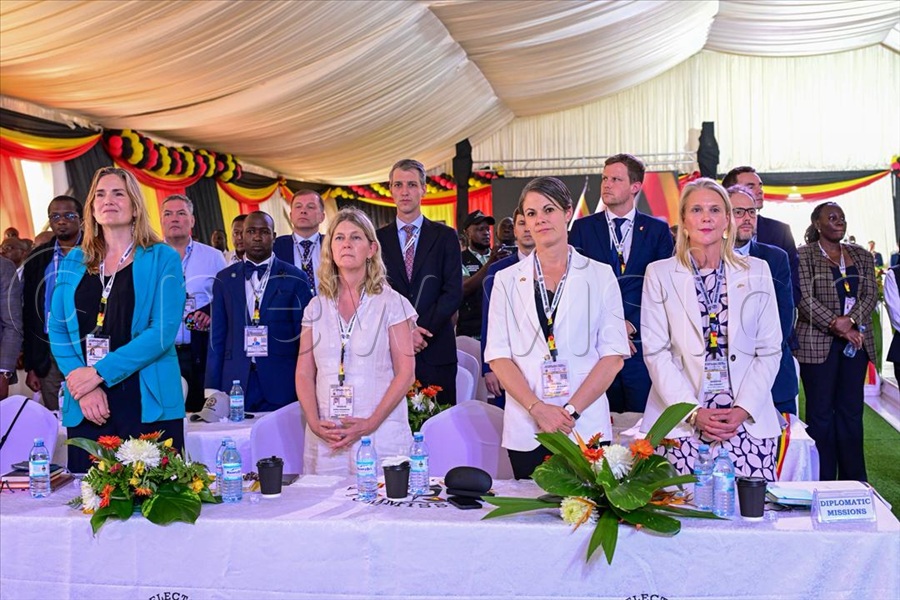
Front row, left to right: The Dutch Ambassador to Uganda, Frederieke Quispel; the Ambassador of Sweden to Uganda, Maria Håkansson; the Ambassador of Denmark to Uganda, Signe Winding Albjerg and the British High Commissioner to Uganda, Lisa Chesney together with other observers at the Electoral Commission’s National Tally Centre in Lubowa-Lweza, Wakiso district, Saturday. (Credit: Miriam Namutebi)
Power of incumbency
Political analysts also say that incumbency emerged as a dominant theme. Asiimwe says Museveni’s position as sitting president gave him a decisive edge.
“As an incumbent, he has put in place programmes that are both visible and tangible, such as the Parish Development Model (PDM), Emyooga, alongside maintaining security,” Asiimwe says.
Anti-poverty programmes
Analysts also highlight the role of government social and economic programmes in consolidating Museveni’s support, particularly in rural areas where most Ugandans live.
Henry Kasaacha, a political commentator, attributed President Museveni’s victory to effective grassroots mobilisation, noting that NRM party members were well organised and mobilised to turn up and vote.
He said the party’s strong co-ordination at village, parish, and district levels ensured a disciplined and unified approach during the elections.
Kasaacha further observed that, on the other hand, the opposition suffered from disunity and internal divisions, which weakened their campaigns and left them vulnerable.
He noted that the lack of a common strategy and fragmented leadership made it difficult for opposition parties to effectively challenge the NRM’s well-organised machinery.
“Look at how the opposition has been fighting among itself, with different opposition parties fielding candidates against each other. They should have formed an alliance to stand a better chance. In this case, there was no formidable coalition, which gave the President an added advantage,” Kasaacha said.
Dr Sabiiti Makara, a political analyst and lecturer at Makerere University, says Museveni regained ground he had previously lost by focusing on visible interventions at the grassroots.
“He consistently speaks to what he has done, and these achievements are visible at the grassroots. Now I am in the village, and there is hardly any family that has not received PDM funds,” Makara says.
Makara cites programmes such as Emyooga that have given grassroots people low-interest financial access, skills training initiatives, and strong party and network structures at the village level as key to rebuilding support.
He also points at social protection initiatives, especially the monthly stipend for the elderly, saying, “My own mother here is 76 years old and is benefiting from it, and you cannot easily take her away from Museveni.”
Dr Gerald Walulya, a senior lecturer in the Department of Journalism and Communication at Makerere University, said government programmes such as PDM, significantly contributed to the re-election of President Museveni.
“The 71.65% result still demonstrates that the President remains popular. However, a major contributing factor was financial mobilisation. People who have benefited from government programmes such as the PDM strongly supported him.
“There was also a deliberate effort to correct earlier mistakes, particularly in regions like Buganda, where he previously performed poorly. In addition, campaign financing by the National Resistance Movement (NRM) enhanced the party’s campaign efforts,” Dr Walulya said.
He said the Government should chart a way forward by engaging the Opposition and working together in the coming years to promote national cohesion and stability.
Walulya added that the NRM now needs to focus on implementing its manifesto to ensure that its policies and programmes translate into tangible benefits for all Ugandans.
He emphasised that effective execution of the party’s development plans, will be critical to meeting public expectations and sustaining the trust placed in the party by citizens. Rwomushana similarly notes that Museveni remains endeared to many Ugandans because of programmes like the Parish Development Model.
He noted that Museveni acknowledges that there is a problem, proposes a solution and takes time to explain it to people, which brings him closer to them,” he says.
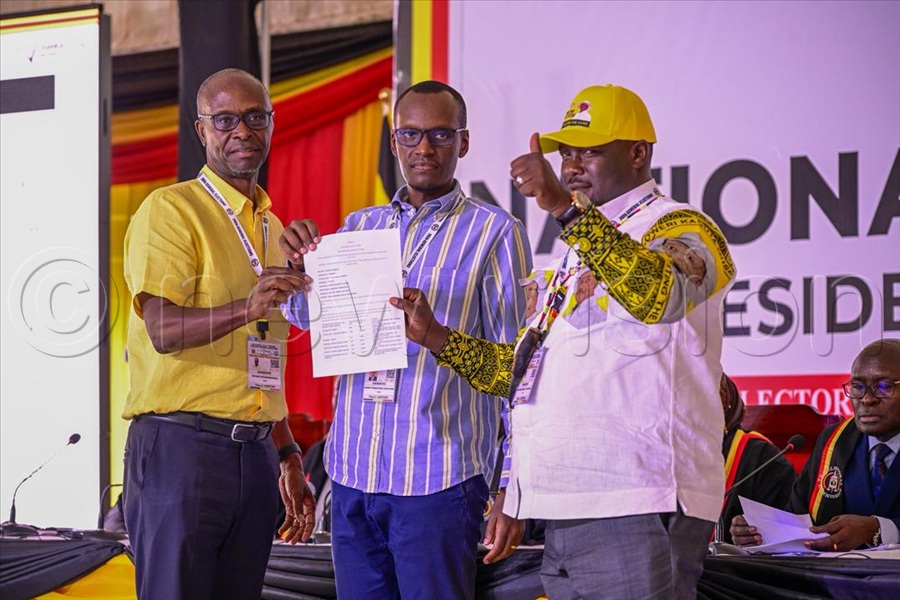
Several analysts point to the Opposition’s failure to present a clear, unified alternative as a critical factor in Museveni’s win.
Political culture
Beyond programmes and organisation, analysts say Uganda’s political culture itself favoured the incumbent.
“People in Uganda do not always vote based on grievances or ideology. Voting is largely emotional and affective rather than issue based. It is not grounded in ideas,” Prof. Ndebesa Mwambutsya of Makerere University says.
He points out what he sees as contradictions in voter behaviour, further noting: “You find that people advocate for better services, like education and roads, yet they still vote for candidates who have not delivered them.”
Karamoja is cited as an example of a region that remains poor but continues to strongly support the incumbent. Ndebesa said many voters make pragmatic choices shaped by survival instincts in a winner takes it all political system.
“The people’s mindset is that whoever loses, loses everything. Poor people have a strong survival instinct.
Regional dynamics
Regional dynamics, experts said, also played a pivotal role as NRM moved to consolidate Acholi, Lango, West Nile, Karamoja, Bukedi, Bugisu, Busoga, Ankole, Rwenzori, Toro, Bunyoro, Rwenzori and by extension win over Buganda.
This move, Asiimwe says highlights the northern region as an example of how long-term political strategy benefited Museveni.
He added that there was a deliberate effort to integrate these regions, especially northern region, into broader economic development.
“As a result, people in the north view these developments as having been brought by Museveni himself. So, they feel like they don’t want to lose out on these programmes, thus their continued support for the incumbent,” he says.
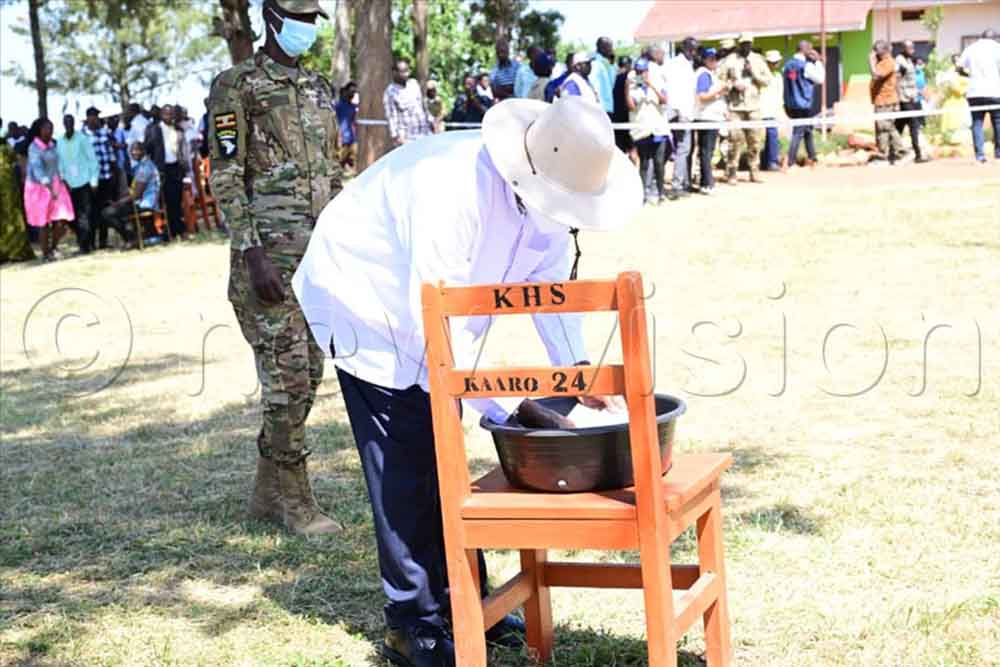
President Museveni casting his vote at Kaaro polling station in Rwakitura, Kiruhura district, on Thursday. (Credit: Eddie Ssejjoba)
Security
Security featured prominently in analysts’ assessments of why Museveni prevailed. Asiimwe says many Ugandans believe they are secure because of Museveni personally.
“People think that without Museveni, there cannot be peace. In the same way, government programmes are widely perceived as Museveni’s initiatives, not state policies,” he says.
This perception, analysts argue, is especially powerful in a region marked by instability. Uganda borders conflict-affected areas in the DR Congo and South Sudan and has been involved in regional security efforts.
The other analysts argue that the defeat of the Lord’s Resistance Army that ended decades of terror in northern Uganda, transforming once-deserted areas into productive farmland and operations against the Allied Democratic Forces (ADF) disrupted planned attacks reinforced confidence in the state’s ability to protect its citizens.
Rwomushana says he believes Museveni was rigged in the 2021 elections. However, he adds that this time round, “Museveni was ready for the rigging machine of the Opposition.”
While analysts are critical of the Opposition’s weaknesses, they also acknowledge structural challenges facing challengers.
Opposition misses
“The Opposition today can be likened to grasshoppers placed in a calabash. They will definitely turn on each other and bite off each other’s necks,” Ndebesa says of opposition parties, adding that this was partly their own fault.
However, he also points to structural factors working against them inadvertently, including limited resources, a hostile state environment, and what he describes as widespread public ignorance.
“These structural constraints severely limit the Opposition’s capacity, and it is not their fault. They have nothing they can do about this,” he says.
Museveni’s campaign slogan, focused on “protecting the gains, was carefully chosen.
It spoke to a population cautious about disruption, which analysts like Asiimwe say contributed to why voters opted for continuity of the NRM Government.
Surveys by Afrobarometer consistently showed high approval ratings for government performance on security and relative satisfaction with economic conditions.
The New Vision Citizens’ Manifesto poll also revealed security was one of the main reasons why respondents preferred voting Museveni as president.
Predictable outcome
By the time ballots were cast on January 15, many voters appeared to have already made up their minds. Queues formed, officials went about their work, but the ending felt familiar.
For analysts, Museveni’s 2026 victory was not dramatic but predictable, the result of decades spent building a political system that blends history, security, social programmes and organisational strength.
As Rwomushana puts it, Museveni has studied Ugandan society and moves with it, while his challengers have struggled to match his reach and consistency.
In a political environment shaped by memories of past instability and present-day pragmatism, Rwomushana said many Ugandans opted for continuity.
Whether that choice will continue to define future elections remains an open question, but in 2026, it was enough to return Museveni to State House once again.