
Uganda votes: Kampala voters endure long queues
At Kansanga Primary School and Seed Secondary School, voters crowded the gates, patiently waiting for the process to begin. Similarly, at St. Denis Ssebugwawo Secondary School in Gaba Parish, hundreds of voters turned up. The school hosted 10 polling stations at its gate.
Kawempe North voters queue to cast their votes in the general elections in Kawempe North Church of Uganda Zone in Kawempe Tula on January 15, 2026. (Credit: Nicholas Oneal)
KAMPALA - As early as 5:00 a.m., Councillor Diriisa Tebandeke of Kansanga Parish was already moving through different zones, urging residents of Kansanga and Gaba in Makindye East Constituency to wake up and vote early.
Using a megaphone, his call was clearly heard and received a positive response. However, voters were later disappointed by the late arrival of electoral materials.
Earlier, the Electoral Commission Chairperson, Justice Simon Byabakama, had assured the public that electoral materials would be delivered early to allow smooth management of time. This promise was not fully realised.
Although voters expressed frustration over the delays, turnout remained impressively high. Many voters said their main goal was simply to cast their vote and return home.
At Kansanga Primary School and Seed Secondary School, voters crowded the gates, patiently waiting for the process to begin. Similarly, at St. Denis Ssebugwawo Secondary School in Gaba Parish, hundreds of voters turned up. The school hosted 10 polling stations at its gate.
One voter seated nearby said, “I came early, hoping to vote and go back home quickly, but it’s now 10:00 a.m., and nothing is happening. I will go back and prepare breakfast for my children. I don’t think I will return.”
John Tiboruhanga, a voter from Maasa-Ana Zone in Kansanga Parish, noted that many people closed their shops to participate in the election but were discouraged by the delays.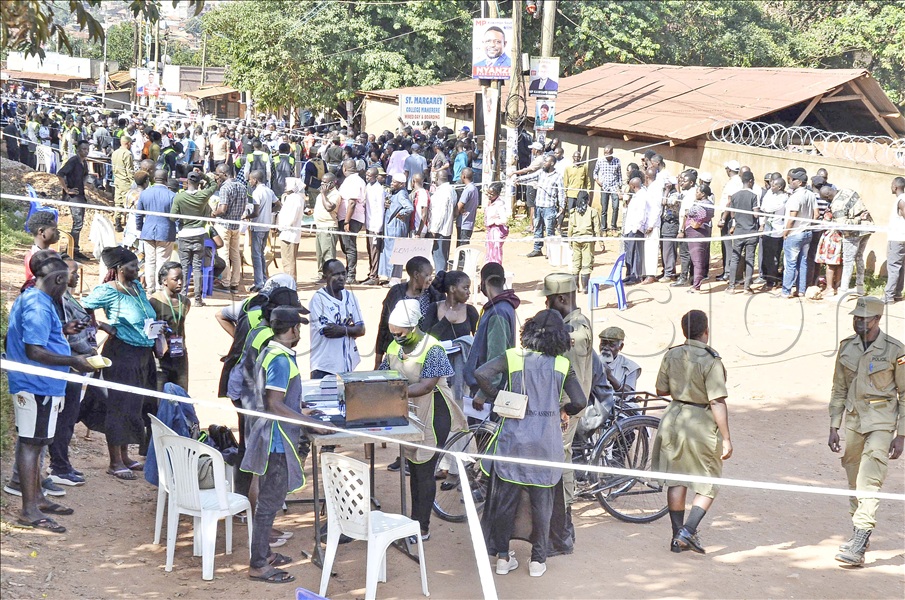
Voters in long queues at Kikoni polling station in Kampala during presidential elections on 15 Jan 2026. (Credit: Ronnie Kijjambu)
Judith Abaho Nuwabeine, a parliamentary hopeful for Makindye East, commended voters for remaining peaceful despite the challenges. She voted at Gaba Mission and observed that turnout was high, although the machines had failed.
Makindye East Constituency was among several polling areas that reported cases of faulty biometric voter verification kits (BVVKs), forcing officials to resort to manual voting.
“Turnout is very good, but the machines are not working. I am concerned about transparency during vote counting,” she said, Nuwabeine.
Richard Nsaba, the election officer in charge of Gaba, explained that the BVVK machines experienced technical hiccups, prompting a return to manual voting.
This change created anxiety among voters who had expected a fully biometric process. He assured voters that transparency would still be upheld despite the technical challenges.
Security.
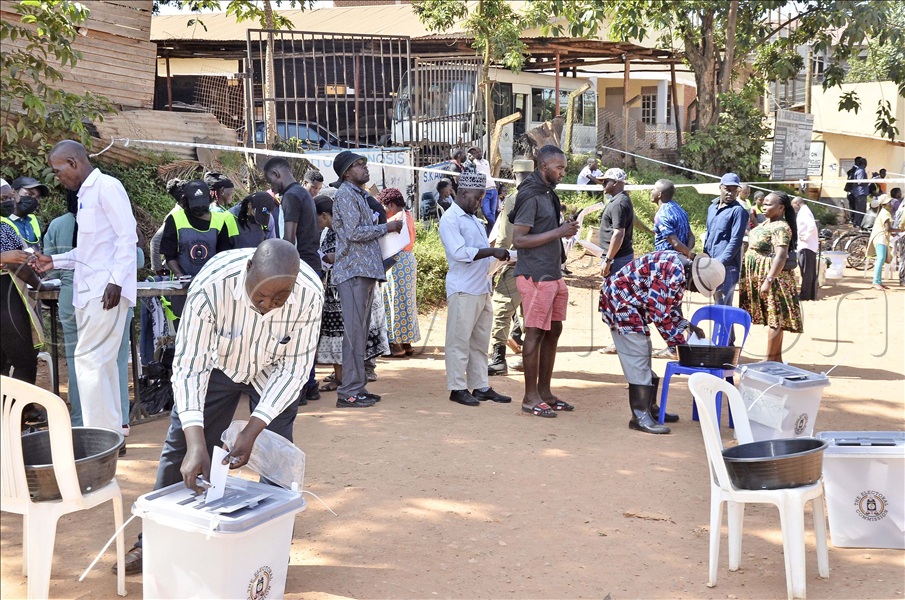
Voters participating in presidential elections at Kikoni polling station in Kampala on January 15, 2026. (Credit: Ronnie Kijjambu)
By around 11:00 a.m., some voters became impatient after waiting in long queues and began banging the gates, drawing the attention of nearby security personnel. Order was restored after Uganda People’s Defence Force (UPDF) soldiers joined the election constables initially deployed at different centres.
Following the incident, the UPDF maintained presence in the area with a camp between Gaba Seminary and Sir Jose Hotel, with soldiers patrolling the area to prevent further disturbances.
According to local residents, the situation remained largely peaceful. Voters were not allowed to loiter after casting their ballots, and those who attempted to do so were ordered to leave.
Shifra Lukwago, a commissioner with the Uganda Human Rights Commission, moved between polling stations and observed that while the exercise was generally orderly, the role and effectiveness of the BVVK machines needed to be questioned.
Stephen Mayombwe, a councillor for Luwafu Parish, raised similar concerns, noting that voter numbers at Luwafu polling station declined once people realised that the machines were not functioning.
“Some voters left, saying they could not participate in manual voting due to fears of vote rigging,” he said.
David Musiri, a parliamentary hopeful with the Democratic Front, warned that although the BVVK machines failed, transparency must still be ensured. He emphasised that the credibility of the next Makindye West Member of Parliament would depend on whether votes were handled honestly.
Musiri voted at Kizungu Polling Station on Luisa Day and Nursery Primary School.
Business Activity
Unlike other public holidays when businesses often remain open, most shops and markets were closed during the general elections.
Along Kansanga and the entire Gaba Road stretch, only a few businesses, mainly operated by urban refugees, were open, but they recorded no customers. Taxis and boda bodas were also largely idle, with very few passengers.