
Security, social service gaps top voters’ concerns in Kisoro, Rubanda
The challenges that voters and leaders in Kisoro and Rubanda want addressed cut across health, education, road network and transport, agriculture and food security, water and sanitation, employment, poverty, energy and power, security, land management, business and economic issues, environment, domestic conflicts and leadership gaps, among others.
UPDF soldiers patrolling the Bunagana town as fighting between M23 rebels and the Congolese army raged on in Bunagana hills in March 2022.
CITIZENS’ MANIFESTO
By Nelson Kiva, Daniel Nsengimana and Edward Anyoli
As part of Uganda’s decentralisation agenda, Kisoro district was carved out of Kabale district in 1991, taking the total district tally to 35. However, by the end of 1991, the tally had grown to 38 districts. Today, the country boasts 146 districts and 11 cities.
The hilly and mountainous terrain of Kisoro creates unique mobility and connectivity challenges, but the fertile volcanic soils are a great consolation for agriculture, the key source of livelihood for the population in the district.
Tourism challenges
Tourism and trade thrive even across the border with the DR Congo through the border town of Bunagana and the Cyanika border post with Rwanda.
The district is home to Mgahinga Gorilla National Park, part of the Virunga Conservation Area, and Bwindi Impenetrable National Park, a UNESCO world heritage site where gorilla trekking meets cultural heritage.
However, Kisoro is located on the border point with the troubled eastern DR Congo, causing the district to bear the infl ux of refugees fleeing insecurity and political persecution.
“Whenever clashes are ongoing in DR Congo among different rebel groups or ethnic confrontations, we receive an overwhelming number of Congolese through Bunagana.
While some go back after a lull in the fighting, a huge number is processed through Nyakabande transit and reception centre in Nyakabande sub-county, before they are transferred to settlement centres in Nakivale, Rwamwanja or Kwangwali in Kikuube district,” a refugee desk offi cial at Nyakabande said.
The official said at the height of the M23 (March 23) rebel movement’s military confrontation with the Armed Forces of the Democratic Republic of the Congo in March 2025, the number of refugees fleeing into Uganda averaged more than 1,200 daily.
Such tense moments, according to Kisoro political and security leaders, put Uganda’s security apparatus on the tenterhooks, with the possibility of a security breach hitting high alert levels.
In a rapid advance in February this year, the M23 rebels captured the main cities of eastern DR Congo — Goma and Bukavu. In addition to triggering an influx of refugees into Uganda, this interrupted the joint roads construction projects between Kinshasa and Kampala and set back regional trade.
Uganda announced the reopening of the Bunagana and Ishasa border crossings in the M23-controlled eastern DR Congo in July this year, attracting a critical diplomatic response from Kinshasa that questioned Kampala’s unilateral decision.
Figures from the Office of the Prime Minister indicate that Uganda hosts over 1.9 million refugees, mostly Congolese and South Sudanese.
Uganda has an open-door refugee policy despite dwindling financing caused by aid cuts.
The challenges that voters and leaders in Kisoro and Rubanda want addressed cut across health, education, road network and transport, agriculture and food security, water and sanitation, employment, poverty, energy and power, security, land management, business and economic issues, environment, domestic conflicts and leadership gaps, among others.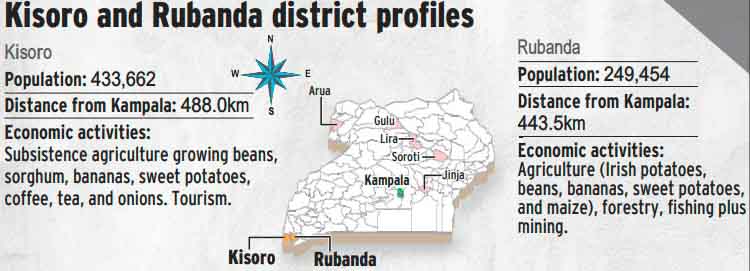
Rubanda issues
In his re-election bid, President Yoweri Museveni, the National Resistance Movement (NRM) candidate, will begin his campaign trail in western Uganda with rallies in Kisoro and Rubanda on Monday, ahead of other campaign meetings in Rukiga and Kabale districts on Tuesday. Rubanda district was established by an Act of Parliament on September 3, 2015 and became operational on July 1, 2016, effectively splitting from Kabale district.
With a total population of 249,454 people, it is bordered by Kabale to the east and north, Kanungu to the northwest, Kisoro to the west, and Rwanda to the south. Some voters in the district expect to hear from the President and other candidates on how they will resolve gaps in road infrastructure and other social services such as drug stock-outs, limited access to safe and clean water, and affirmative support to vulnerable groups.
The Minister of State for Finance in Charge of General Duties, Henry Musasizi, said a lot has been achieved under the National Resistance Movement (NRM) Government in Rubanda, strengthening Museveni’s support in the district. Musasizi, who doubles as Rubanda East MP, said the key progress in infrastructure includes the tarmacking of the Kabale-Kisoro road, extension of electricity, the ongoing construction of Rubanda General Hospital, and the establishment of three seed secondary schools.
Through efforts to boost household incomes, Musasizi said Rubanda has received up to sh21b to support wealth-creation initiatives such as Parish Development Model (PDM) in recent years.
While rallying NRM party leaders in Rubanda and other Kigezi sub-region districts ahead of the western Uganda campaign trail, Eng. Jonard Asiimwe urged them to move beyond slogans and focus on explaining the “undeniable” development gains registered by the NRM Government over the years.
He cautioned Rubanda leaders against allowing disagreements from party primary elections to derail unity during the President’s re-election campaign.
Road gaps in Kisoro
Ezra Ndinayo, a teacher at Gasave Primary School in Kisoro district, wants leaders to prioritise development infrastructure and increase salaries for primary school teachers, saying this would motivate educators and improve the quality of education.
“Construct better school facilities to save parents who struggle to pay frequent development fees,” he said.
Ndinayo expressed concern over the bad state of the Maziba-Gihuranda road. For Benon Banzibariho, 56, persistent poverty must be addressed.
He argued that despite deliberate poverty-alleviation programmes such as the PDM, Emyooga, Youth Livelihood Programme, and Uganda Women Empowerment Programme, a large portion of the population in Kisoro, Rubanda, and the wider Kigezi sub-region remains trapped in poverty.
He alleged that anti-poverty initiatives have mainly benefited the well-off rather than the intended beneficiaries. Banzibariho said deliberate interventions must be crafted to ensure that government programmes reach the targeted communities.
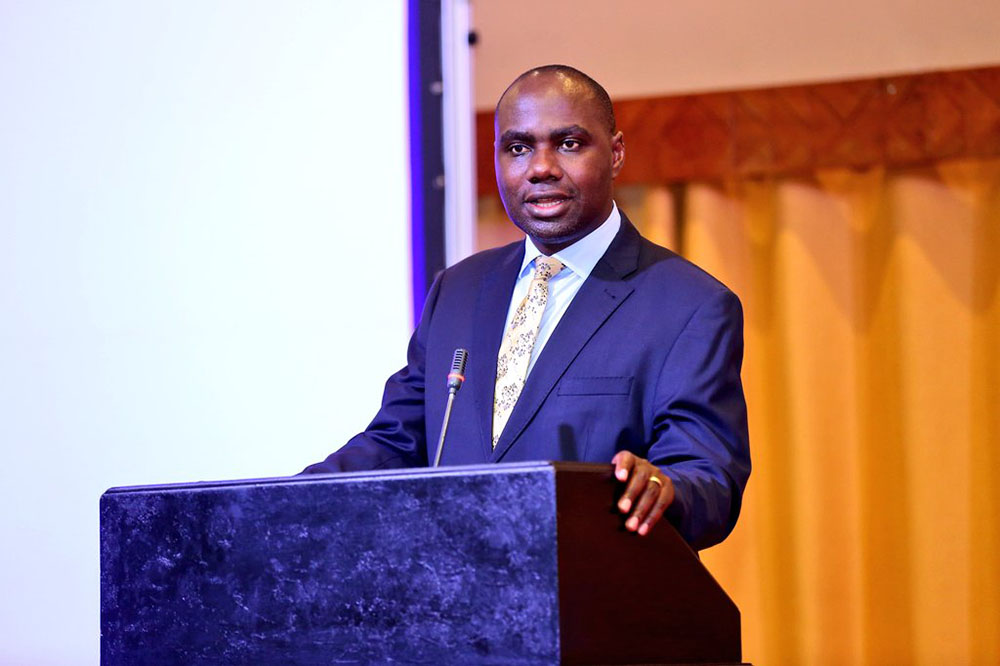
Henry Musasizi
Clean and safe water
Jessica Nyirasinamenye, 66, and Lydia Nyirarukundo, 56, from Rukundo town council, appealed for support through the provision of domestic animals including cattle, goats and sheep to help households fi ght poverty.
They also requested rainwater-harvesting tanks, saying they walk long distances to fetch water from community taps and streams. A section of voters, including women, commended Museveni and the NRM Government for ensuring peace, especially along the DR Congo borderline with Uganda.
They said the security presence has enabled them to carry out trade despite the volatile situation on the DR Congo side.
Poor internet, network
The LC1 chairperson of Nteko ward in Nkuringo town council, Joseph Sinaribonye, expressed concern over persistent lack of telephone and radio network coverage in their area. He said the problem has been worsened by limited connectivity along border-area roads, rendering cross-border trade difficult.
“More than 1,500 households in Nteko ward lack reliable network access, making communication difficult, especially during emergencies such as thefts. Residents are often forced to climb nearby hills simply to make phone calls,” Sinaribonye said.
He added that the Nteko-Buhoma road has severely deteriorated, making it difficult to access Kanungu district, further isolating the community.
According to leaders in both Kisoro and Rubanda districts, poor connectivity due to bad roads hinders trade, tourism and cross-border business with communities in the DR Congo.
They urged the Government to intervene by improving network coverage and upgrading transport infrastructure to enhance service delivery in the region.
Tea factory
John Kamara Nizeyimana, the Bufumbira North legislator, reminded the President of earlier promises made to Kisoro, including the establishment of the Bwindi-Mughinga Tea Factory.
Kamara said the tea sector currently employs between 800 and 12,000 people in the area.
He added that the Kisiza Farmers Co-operative Society manages many tea gardens but lacks a proper facility to process and store tea, which limits their ability to earn income.
“Many farmers are being arrested for failing to pay their workers due to debts after investing more in tea,” Kamara said.
Industry park
Kamara also reminded the President of the pledge to establish the Kibaya Industrial Park in Rukundo town council in Kisoro district, emphasising that construction has never commenced.
He called for the rehabilitation of the Natete-Kamara market in Mupaka town council and the road from Kamara market to Rutshuru in DR Congo, saying this would ease business and the transportation of goods between Uganda and the DR Congo.
Citizen manifesto
The concerns of voters in Kisoro, Rubanda and the entire Kigezi sub-region are reflected in the New Vision Citizens Manifesto conducted between March and May this year, where prospective voters highlighted key bottlenecks undermining service delivery in healthcare, security, roads infrastructure, water and sanitation, poverty, unemployment, power connectivity, education, agricultural services, land management, crime and leadership.
To ensure a national outlook, the Citizens’ Manifesto and Opinion Poll survey involved 6,006 respondents from 58 districts across 17 sub-regions. Respondents were randomly sampled from both rural and urban settings.
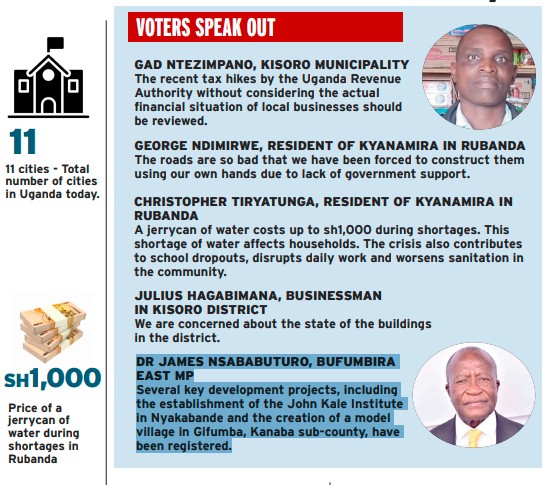
Voters speak out
Gad Ntezimpano, Kisoro Municipality
The recent tax hikes by the Uganda Revenue Authority, without considering the actual financial situation of local businesses, should be reviewed.
George Ndimirwe, resident of Kyanamira in Rubanda
The roads are so bad that we have been forced to construct them using our own hands due to lack of government support.
Christopher Tiyatunga, resident of Kyanamira in Rubanda
A jerrycan of water costs up to sh1,000 during shortages. This shortage of water affects households. The crisis also contributes to school dropouts, disrupts daily work and worsens sanitation in the community.
Julius Hagabimana, businessman in Kisoro district
We are concerned about the state of the buildings in the district
Dr James Nsababuturo, Bufumbira East MP
Several key development projects, including the establishment of the John Kale Institute in Nyakabande and the creation of a model village in Gifumba, Kanaba sub-county, have been registered.
What experts say
Stephen Rugigana, the chief executive officer of Kisoro Community Volunteers Association, a non-governmental organisation working with communities on development initiatives, said the key issue the President and other leaders need to address is the state of the roads.
He said Kisoro contributes significantly to tourism because of its national parks, yet the road network remains in bad condition.
“Tourism brings in a lot of revenue, but the roads are deplorable. Tourists who are supposed to visit Mgahinga National Park are often diverted to Rwanda instead. My appeal to the President is that he urgently addresses the issue of roads and ensures adequate funding is allocated for this infrastructure,” Rugigana said.
Francis Okiror, a researcher, said the President has repeatedly emphasised private sector-led growth, often speaking about lowering the cost of electricity, improving transportation and revamping railway lines to reduce production costs.
However, he said those benefiting from this growth are largely those who are already well-off, leaving ordinary citizens behind.
“Unfortunately, most of the beneficiaries are foreigners, not locals. If you look at the people who own factories and are able to manufacture, they are mostly foreigners. But when you look at locals, a study by the Bank of Uganda shows that the majority of Ugandans earn less than sh1m,” Okiror said.