
Polling centres report low turnout in LC5 and mayoral elections
Many parts of Uganda have recorded low turnout during the Local Council Five (LC5) and mayoral elections.
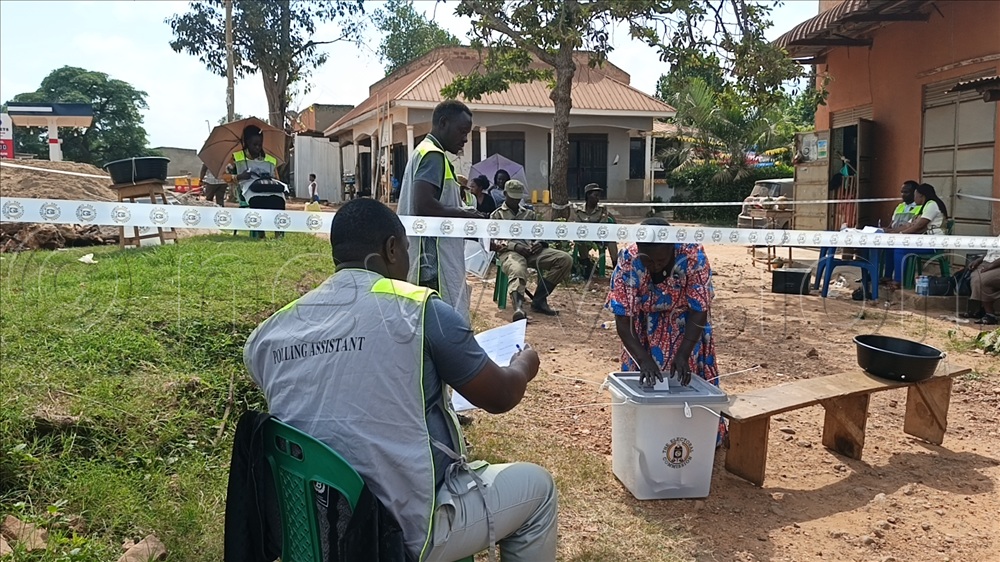
A polling station having only two voters. Most polling stations has recorded few voters.(Photo by Luke Kagiri)
________________
The low turnout was attributed to inadequate voter mobilisation and a sense of voter disillusionment following the recent presidential and parliamentary elections.
Many parts of Uganda have recorded low turnout during the Local Council Five (LC5) and mayoral elections, with many polling stations registering significantly fewer voters compared to the presidential and parliamentary elections held on January 15.
In most of the polling stations, the agents remained idle as they waited for the voters, who, in some cases, trickled and spent hardly five minutes at the centre (s).
There were also reports of missing biometric machines at the Mar Voting.
Responding to queries from the New Vision Gulu team, the Electoral Commission Public Relations Officer, Julius Muchunguzi, maintained that the absence of biometric machines should not be the primary focus of the day.
He stated that the manual National Voter Register remains a legal and effective means of identification and should be utilised by all registered citizens.
Muchunguzi also pointed out that it is premature to categorise the turnout as low, insisting that a definitive assessment of the day's engagement can only be made when polls officially close at 4:00 PM.
Dokolo
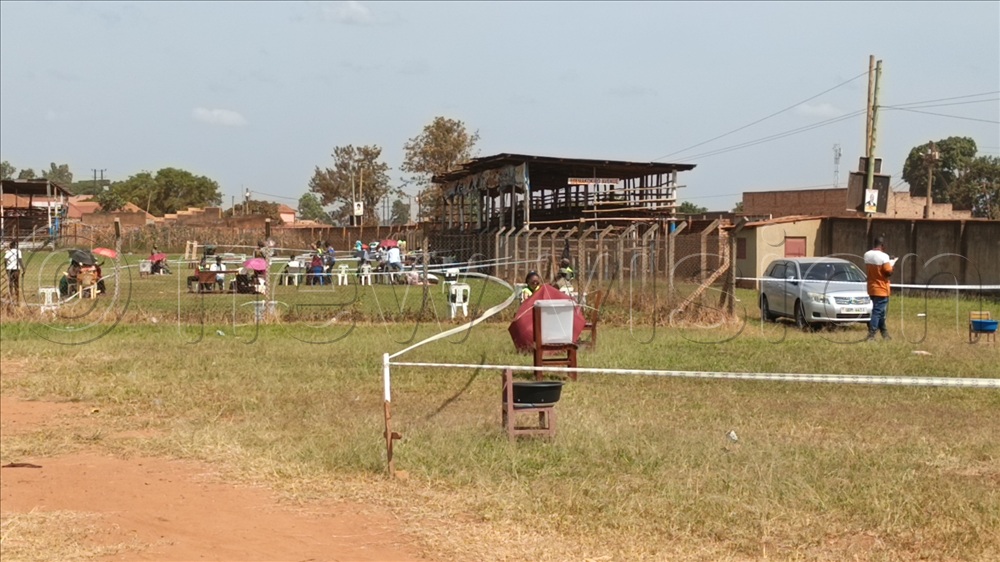
In Dokolo and most parts of the Lango sub-region, voter turnout was low.
Several polling stations reported fewer, while some remained completely empty. Many voters reportedly boycotted the exercise due to disappointment after their preferred candidates lost in the recently concluded elections.
“People are not there. Polling stations are empty,” said Babra Akech, the Dokolo Resident District Commissioner.
“People opened their shops and continued with normal business as if there was no election. They are not interested.”
Akech said she passed through Agwata Sub-county and found residents focusing on their businesses instead of voting.
“I went to one of the polling stations called Abakuli in Bata and found it empty,” she added.
Dokolo district has 252 polling stations, and according to Akech, voter turnout was extremely poor. She noted that many voters expected candidates to transport them to polling stations.
“They want to be transported, and any candidate who does that will definitely win,” she said, adding that voter turnout was high during the presidential elections because of President Yoweri Museveni’s Parish Development Model message.
Fred Ogwang, an independent candidate for Etam Sub-county councillor in Amolatar District, said voter apathy stemmed from unmet expectations.
“People have not turned up in big numbers like in the presidential and parliamentary elections. Most of them felt voting again was a waste of time because their candidates lost,” he said.
James Opinya, the Parish Supervisor of Ocini Parish in Kamdini Sub-county, Oyam District, said many voters do not value LC5 elections.
“People only take presidential, parliamentary, and LC1 chairperson elections seriously. For LC5, people do not bother,” he said.
Opinya added that turnout in the upcoming LC3 and councillor elections may be even lower due to negative public attitudes toward their roles in the community.
Mathias Lutwama, the Deputy Resident District Commissioner of Alebtong, said many people mistakenly believe that only Members of Parliament and the President matter.
“They forget that LC5 leaders are at the forefront of service delivery,” he said, adding that security in the district remained calm.
The situation was not different in Lira City. Voters were few in almost all polling stations.
At Numa Ground polling station, which has 511 registered voters, only 44 people had voted by 1:30 p.m., compared to about 200 voters during the previous elections. Another polling station at the same venue recorded only about 50 voters out of 600 registered voters.
Rajab Ocen, a presiding officer, said, “Most people only take presidential and parliamentary elections seriously."
At the Cathedral triangle, about 150 had cast their votes by midday. The area has three polling stations with a total of about 1,500 registered voters.
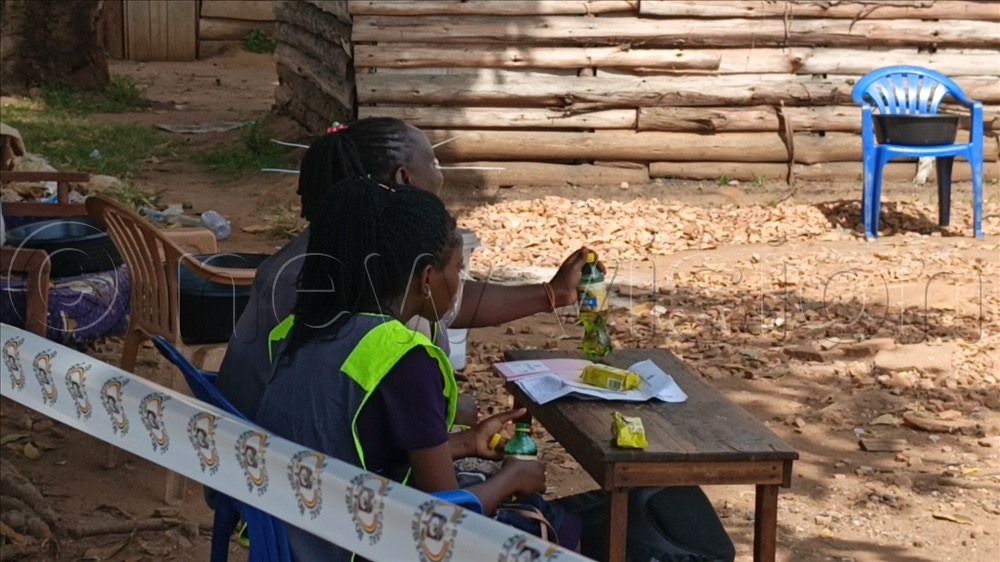
At Lango College, Kirombve North A polling station, only 35 of about 500 registered voters had cast their vote by midday.
At Junior Quarters A, which has three polling Stations, 179 has cast their votes out of 1,215 registered voters.
Unconfirmed reports indicate that voting at some polling centres was delayed due to a mismatch in names and symbols, according to the report.
Mityana
Luke Kagiri reports that the turnout was low, as most of the residents stayed away to attend to their businesses.
By 11 am, only about 20 people had turned up at the two polling stations at Mizigo village, in Busimbi division.
At Ssaza playground, where there are many polling stations, only agents and polling officials were seen waiting for voters. Some of the voters who spoke to New Vision asked government to empower local governments so that they can effectively serve the communities.
Dennis Ojwee reports that a wave of voter apathy has characterised the Gulu District Local Council elections, with several polling stations recording less than five per cent turnout by mid-morning.
The exercise was further complicated by the absence of biometric voter verification kits, forcing polling officials to rely entirely on manual registers.
The democratic exercise across Gulu District saw a sluggish start as most polling stations visited by New Vision remained largely deserted. By 10:00 am, centres with over 400 registered voters had recorded fewer than 20 ballots cast, signalling a significant decline in civic engagement compared to previous national polls.
The lack of activity at the ballot boxes has raised concerns among local observers about the growing disconnect between the electorate and local government representation.
Manual verification and technical gaps
Polling officials, left without the standard biometric distribution from the Electoral Commission, were forced to manually verify identities using printed paper registers.
This return to manual systems follows the EC’s decision not to deploy electronic verification kits for this specific round of local elections. While the process has continued without the usual digital safeguards, the shift has added a layer of administrative burden to the officials managing the few voters who did arrive to cast their ballots.
Incumbent chairperson decries low numbers
The incumbent Gulu LC5 Chairperson, Christopher Opiyo Ateker, cast his vote at 10:17 am and expressed deep concern over the empty queues.
He suggested that many voters might be discouraged by the outcomes of previous elections or are currently preoccupied with harvesting crops to save them from the seasonal bushfires common during the dry season.
He urged the public to remember that local leaders are the most direct link to service delivery and suggested that Parliament should consider amending the constitution to hold local elections before presidential polls in the future to boost grassroots participation.
Kagadi
Andrew Musinguzi reports that Greater Kibaale registered complaints, including: low turnout, missing candidates' names on ballot papers and photos.
All the 543 Polling stations in Kagadi District registered low turnout, with some voters and polling officials attributing it to loss of interest and faith in unity prayers.
In Kagadi district, four contenders are battling for the LC5 seat and they include incumbent Ndibwami Yosia Bahunga (NRM), Elly Gard Tumusiime (Indep), Zephania Birungi (Indep) and Katuramu Augustine (Indep).
Joan Kyalikunda, a presiding officer at Kabuga primary school Polling station said she registered low turnout due to prayers by faith of unity believers which falls every 2nd, 22nd and 12th of every month.
Kibaale
Jacqueline Atuheirwe, the Kibaale District returning officer, said all the 220 polling stations have not used BVVK machines as directed by higher authorities.
‘’We have not used voter verification machines because higher authorities have not recommended us to use them. There has been low turnout in most polling stations. I think voters were interested mostly in presidential and parliamentary elections,’’, said Atuheirwe.
Kakumiro
Honest John Baguma, the Kakumiro District returning officer, said although there was low turnout a total of 445 out of 446 used the BVVK machines except at Kakindo town council Polling station, where the machine was faulty.
Joseph Sentayi Senkusu, the Incumbent LC5 (NRM), is battling with Semanda Gerald Apuuli for the same seat.
According to presiding officers and polling officials in Kakindo town council and sub-county, there was low turnout, and at some polling stations, voting started at 10:00am due to a lack of ten recommended eyewitnesses for the opening of the ballot box.
In Kakindo sub-county, the name of an Independent female District councillor did not appear on the ballot paper, and her supporters boycotted the elections, claiming that the incident was politically motivated.
Rubanda
Voting in several polling stations across Rubanda County East was delayed due to the late delivery of voting materials. At the Bubare Town Council headquarters, polling was delayed until after 9:00 a.m., as materials had only arrived at 4:00 a.m. The delayed delivery caused disruptions, affecting timely distribution to polling centres.
At the Bubare Hagomborora polling center, with 405 registered voters, no votes had been cast by 9:30 a.m., as the ten required witnesses had not yet arrived. Similar delays were reported at the Bubare Hagomborora Muchahi polling station. In Bubare Sub-County, polling started after 9:00 a.m., with only 20 votes cast by 10:00 a.m. at Ihanga Market 1 polling station, which has 330 registered voters.
In Hamurwa Sub-County, delays were also noted. By 10:45 a.m., only 47 votes had been cast at the Kibihijo polling station, out of 215 registered voters. Similarly, at Rugarama Kakore polling station, 100 voters had cast their ballots by 10:00 a.m..
The low turnout in Rubanda has been linked to inadequate voter mobilisation and a sense of voter disillusionment following the recent presidential and parliamentary elections.