
Markets, roads top Kamwenge, Kyegegwa voters’ demands
Kamwenge authorities disclosed that they are looking forward to more funding to increase access to clean water, improve feeder roads, schools and also want the electricity coverage to be boosted to support industrial growth and value addition.
Markets, roads top Kamwenge, Kyegegwa voters’ demands
CITIZENS’ MANIFESTO
By Nelson Kiva, Stephen Nuwagira, Edward Anyoli and Ibrahim Ruhweza
Kamwenge and Kyegegwa were created in 2010 and 2009, respectively, as part of Uganda’s decentralisation agenda. However, challenges which have dogged the other local governments have not spared the two western Uganda districts.
One key concern the voters and local leaders have put forward in Kamwenge district is the state of Kamwenge Central Market, which the vendors have since resisted utilising, citing that it was constructed below the specifications they were informed about.
They are seeking the intervention of President Yoweri Museveni.
Shoody market concerns
Evas Maniraguha, the LC3 councillor in Kamwenge town council, condemned what she described as “shoddy” work done during the construction of the market against the promise of a high-standard facility that would accommodate all the vendors.
“We had our old market, and they came and told us that they want to remove it and construct a modern one to accommodate all the vendors. They told us it would cost sh3.6b and that they will work on it in phases.
After demolishing the old one, they said they would construct a market of sh1.2b in the first phase. We thought they would put stalls, slaughter slabs. In the old market, we had 76 lock-ups, but for them, they only worked on 24 lock-ups, a toilet, a slaughter slab and a fish management facility,” Maniraguha said.
According to Maniraguha, when vendors started demanding accountability for money, the permanent secretary of the local government ministry, Ben Kumumanya, toured the facility, but has since not returned.
“What we have is not a market. We registered our complaint with Prime Minister Robinah Nabbanja and she promised to send people from the Inspector General of Government, but they have never appeared,” she said.
She added: “As a way of punishing us, they brought people to contest against us and we lost in the primaries because they were highly funded. We returned as independents and whenever we try to bring up the issue of the market, we are attacked. They do not want even the President to come to Kamwenge town to see the shoddy market that was constructed. The market that was constructed triggers shame.”
Museveni, the National Resistance Movement (NRM) party candidate, is scheduled to campaign in Kamwenge and Kyegegwa on Monday ahead of other rallies in Kyenjojo and Kibaale the following day.
“Those are the problems we want to tell the President, but we may not get to him because they cannot allow us to go near him. But we know he reads The Weekend Vision, let him act on the matter because our women who mostly work in this market are not happy,” Maniraguha said.
Kamwenge market was first constructed in 1970 by government.
It had 47 stalls and 78 lock-ups, and it is located along the Ibanda-Fortportal highway in Kamwenge town, beside Kamwenge Catholic Church.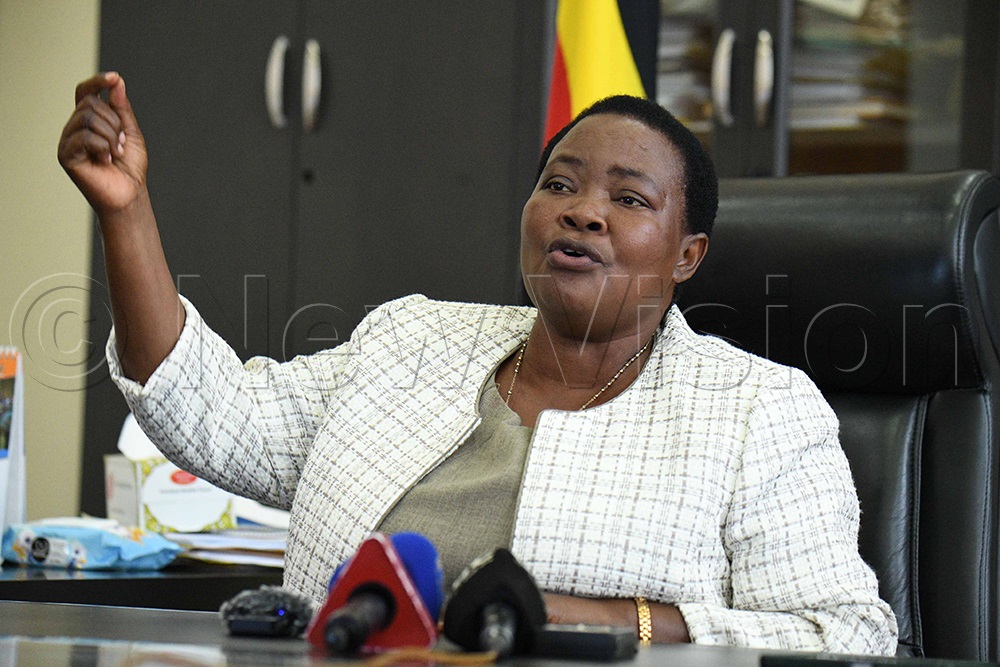
Prime Minister Robinah Nabbanja
The market was constructed to enable farmers and food dealers to work from one place and have a market for their yield.
This was well before Kamwenge became a district and with no town council; the town council has since been established with a population of 23,900 people.
The construction of the market that started in 2022 was to be implemented in three phases, and at completion would cost sh3.6b. In the first phase, government, through the National Agricultural Advisory Services (NAADS), obtained funds to support the construction of the market under the AGRILED programme.
AGRILED is a presidential initiative piloted in the Rwenzori region to spur economic development in the region through agro-industrialisation, focusing on increased production, improved storage, value addition and marketing.
The NAADS secretariat contracted Rayna (U) Limited at sh1.2b for the construction of the market. The construction of the market was launched on August 31, 2022 and was witnessed by the senior district officials.
Winnishine Ninshaba, the LC3 chairperson of Kamwenge town council, says: “According to our architectural plan, we want a storey market facing the Mbarara-Fort Portal road. We also want it to be fenced and provided with lighting,” she said.
Ninshaba added that the market is currently in the bush and a shame to their town. “We want them to construct the lock-ups and stalls, and we shift back our women to work,” Ninshaba said.
With a combined population of 838,287 people, the local economies of the districts are mainly anchored on agriculture, small-scale trade and tourism.
For instance, Kamwenge is home to the stunning Kibale Forest National Park, a premier chimpanzee trekking destination and the attractive Queen Elizabeth National Park.
They grow crops, such as coffee, tea and bananas. Kamwenge is also known for its dairy farming and apiculture.
Kamwenge borders Kyenjojo to the north, Kyegegwa and Kiruhura (northeast), Ibanda to the east and southeast, Rubirizi (southwest), Kasese to the west and Kabarole (northwest). Kyegegwa is bordered by Kibaale (north), Mubende (east), Kiruhura to the south, Kamwenge (south-west) and Kyenjojo to the north-west.
The challenges the voters and the leaders in Kamwenge, Kyegegwa and entire Toro sub-region want to be addressed cut-across sectors of health, education, road network and transport issues, agriculture and food security, water and sanitation, employment, poverty, energy/ power, security, land management, business and economic issues, environment, domestic conflicts and leadership gaps, among others.
Clean water gains
Nkoma sub-county LC5 councillor John Byoruganda touted the Government’s performance in the district, citing the around 80% safe and clean water coverage as an example.
He added that the existence of many government-owned health centres in Kamwenge has eased access to healthcare.
“Many residents do not travel long distances to access health services. The district has a number of health centre IIIs and IIs plus two health centre IVs at Bisozi and Kamwenge, as well as the Lukunyu district hospital,” he said.
The Kamwenge district speaker, Gerald Twebaze, said some of the key achievements registered over the past five years include ongoing construction works for the Kahunge-Kihura (Kyenjojo) road, plus Bwizi-Biguri-Mpara (Kyegegwa) road and the construction of two modern markets at Nkoma-Katalyeba town council and another at Bisozi in Nkoma sub-county.

Other achievements, he said, include the seed secondary schools that were built in Busiriba, Ntonwa, and Kabambiro sub-counties, while Bishop Balya Girls’ SS has been taken over by the Government.
Twebaze thanked the Government for funding the district’s budget at over 96%, about sh50b each year, saying this goes a long way to improve services.
“We want to protect these gains, but we are also looking forward to more support going forward. The President’s campaign stop in the district is a rare opportunity that the leaders cannot take for granted,” Twebaze said.
The female district youth councillor, Ruth Nabagabe, commended the Government for the state-of-the-art sports complex that houses the football stadium, among others, at Nkoma-Katalyeba town council.
She also appreciated the Government increase of Emyooga SACCOS money and other programmes such as the Parish Development Model (PDM) and the Social Assistance Grant for Empowerment (SAGE), which mainly target senior citizens.
Nabagabe, however, said the Government should also think about establishing secondary schools in Biguli and Kabuye.
Kamwenge authorities disclosed that they are looking forward to more funding to increase access to clean water, improve feeder roads, schools and also want the electricity coverage to be boosted to support industrial growth and value addition.
They also want a ban on the creation of administrative units to be lifted so that Kamwenge town council is elevated to municipal status.
The voters in the district also want leaders to ensure that the Government fences off Kibaale National Park to protect residents and crops from wild animals. They also want those whose crops have been affected by the wild animals to be compensated.
Citizens’ manifesto
The voters’ concerns in Kamwenge, Kyegegwa and entire Toro sub-region, are also reflected in the New Vision Citizens Manifesto conducted between March and May 2025, where prospective voters highlighted key bottlenecks undermining service delivery in the spheres of healthcare, security, roads infrastructure, water and sanitation, poverty, unemployment, power connectivity, education, agricultural services, land management, crimes, leadership among others.
For instance, only about 28.2% of the respondents in Kyegegwa endorsed the state of health services, while in the education sector, more than 81% believe something should be done to improve the sector’s performance.
Only 11.8% of the respondents in the district approved of the state of the roads and transport, as more than 88% suggested more needed to be done in the spirit of better social services.
To ensure a national outlook, the Citizens’ Manifesto and Opinion Poll survey involved 6,006 respondents from 58 districts across the 17 sub-regions. The respondents were randomly sampled from both rural and urban set-ups.
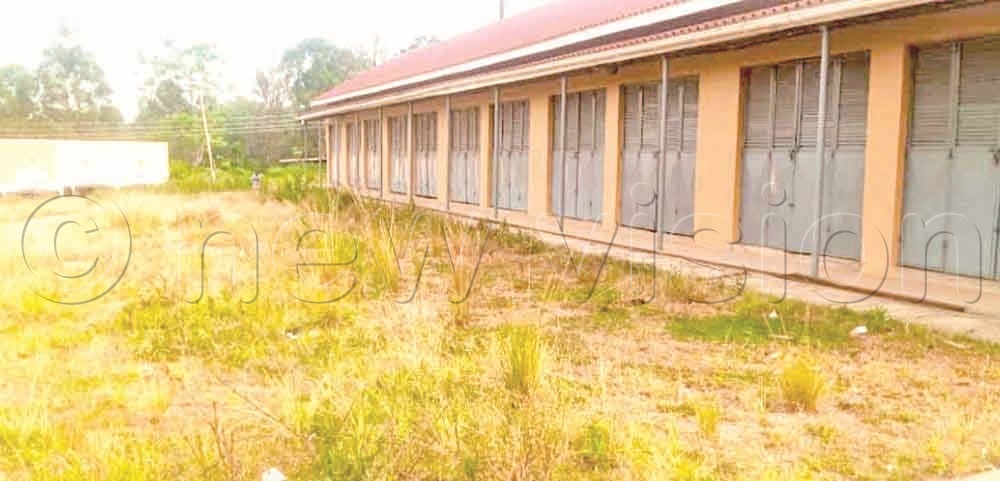
A picture showing the deserted Kamwenge Central Market that cost sh1.2b during construction.
Kampala-Fort Portal road
The Kampala-Fort Portal road is a challenge which has not spared Kyegegwa, which is located along the highway.
Richard Bogere, a bus driver, said driving on the road is a punishment, especially after Mityana, where there are what he described as “mega” potholes.
“The clouds of dust make visibility on the road poor, leading to head-on collisions. The brake pads we used to change once a month now wear out in a week. Steering rods are always failing. Sometimes, women even give birth on our buses because we spend too many hours stuck on this road,” Bogere said.
According to the Prime Minister Robinah Nabbanja, the road construction project faced significant setbacks, largely due to financial and operational challenges experienced by the contractor, Energo.
To address the situation, she revealed that the Government has allocated sh50b specifically aimed at revitalising the stalled project.
Despite the delays, Nabbanja said the work will resume. Museveni had earlier instructed the Cabinet to prioritise the road corridor following his July tour of Mubende and Mityana districts.
Experts’ views
According to Dr Livingstone Sewanyana, the executive director at the Foundation for Human Rights Initiative (FHRI), in order to turn around the life of people, leaders must address the deep-rooted underdevelopment that has long affected several up-country districts.
He noted that these districts particularly continue to suffer from poor infrastructure, which has stalled meaningful progress.
“These districts are characterised by serious underdevelopment. The entire infrastructure, especially the road networks, is completely inadequate. In addition, these districts are home to indigenous communities who deserve affirmative action in education, health and access to basic services,” he said.
He added: “There has hardly been any serious investment in these areas, leaving the communities marginalised. The President should prioritise investment in road infrastructure, education, health services, and giving these communities a sense of identity and inclusion so they, too, can share in the national cake.”
On his part, Samuel Bainengana, the communication officer of Kyegegwa, said one of the major issues the President should address during his campaign in Kyegegwa is land ownership in Kyaka south constituency, where refugees are currently settled.
He noted that discussions on how to properly handle refugee resettlement remain critical for the district. Bainengana further pointed out that the President must also prioritise the poor state of roads in the area.
He cited the Kampala–Fort Portal Road, Liberation Road and the roads from Kazo-Karuguru-Kabarole, saying they are all in bad condition.
“These roads have appeared in several manifestos with promises that they would be paved, but they have never been worked on,” he said.