
Ending household poverty tops Soroti, Serere voters’ demands
“Here in Soroti city, we have had a challenge with roads. We have maintained over 30km of both tarmac and gravel and this is a good development that everyone is seeing. This has been done under the Uganda Support to Municipal Infrastructure Development programme in the last three years,” Edogu said.
Ending household poverty tops Soroti, Serere voters’ demands
CITIZEN’S MANIFESTO
The reign of peace has set the stage for Soroti/ city and Serere district to pursue sustainable transformation.
Like any other part of Teso sub-region, Soroti and Serere were not spared insecurity occasioned by the Lord’s Resistance Army (LRA) and Karimojong warriors who raided for cattle.
The authorities in the administrative units, which have a combined population of over 758,000 people according to the 2024 National Population and Housing Census, are doing all they can to achieve prosperity for their people.
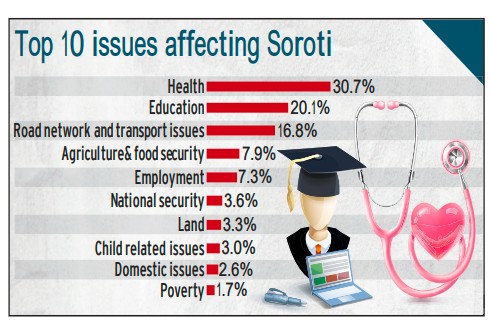
However, according to voters’ challenges, which cut across sectors of health, education, road network and transport issues, agriculture and food security, water and sanitation, employment, poverty, energy/power, security, land management, business and economic issues, environment, domestic conflicts and leadership gaps, among others, are still prevalent.
Household income
Fredrick Gerald Okello, a voter and farmer in Serere, pointed out that household income remains a pressing challenge, despite various government interventions.
“People have plans to put money in their pockets, but lack start-up kits,” he said, highlighting the need for continuous investment and the empowerment of ordinary citizens.
With security, he expressed concern about the presence of dangerous gangs in Kyere, which has led to increased fear among residents and disrupted their peace of mind.
Soroti city administrators said they are pursuing an ambitious modern city, challenges notwithstanding.
Implemented in 2010 by a parliamentary legislation that approved about 15 cities to be implemented in a phased manner, the city is currently functioning with a budget of sh27b (2025/2026).
Its leaders have highlighted that their priorities to transform the main town in Teso sub?region into a modern city include streamlining its physical plan and that the money has already been earmarked for the purpose.
The city mayor, Joshua Edogu, said that on top of a proper physical plan, achieving proper infrastructure for the city in terms of roads is also at the core of their priorities list.
He added that their priority list also borders on providing schools with more classroom blocks, staff houses and upgrading health centres, among others.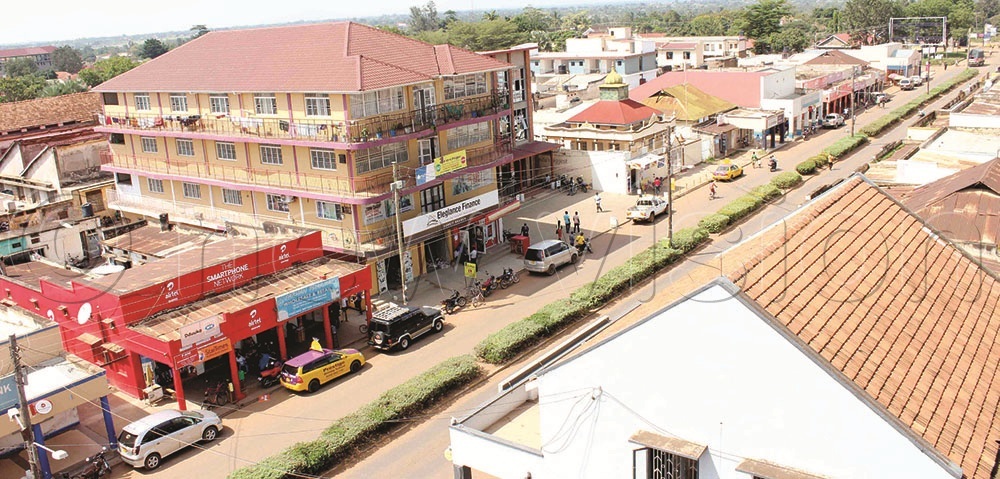
Soroti is a fast-developing city with great potential and needs more attention from the Government.
Roads
“Here in Soroti city, we have had a challenge with roads. We have maintained over 30km of both tarmac and gravel and this is a good development that everyone is seeing. This has been done under the Uganda Support to Municipal Infrastructure Development programme in the last three years,” Edogu said.
He celebrated that they have a proper water drainage system draining into the swamp, unlike in the past when the city could experience flooding in some areas.
He added that the city has since achieved proper lighting with over 600 solar poles installed in all the divisions. When you come to Soroti city at night, for the first time, you might think that you are entering another city altogether. And this has gone a long way in improving business at night and security generally,” Edogu said.
The lighting, the mayor added, has enabled the installed security cameras on the city streets to even function at night, in contrast with the past, where the cameras would only work during the day.
The other achievements the city leadership said have been in the area of education and health, with a number of classroom and teacher staff blocks established.
Two key achievements in the health sector, according to the mayor, are the construction of a new health centre III at Otatai in the eastern division and a blood bank in the city’s western division.
Household poverty
The Government’s alleviation programmes, such as the Parish Development Model (PDM) and Emyooga, among others, the leadership claimed that it is revolutionising the struggle to eradicate household poverty.
The city has appealed to the Government for road equipment to enable the city to maintain its road network. Top of what voters in Soroti city want is a new regional referral hospital.
They claim that the hospital, which dates back to the colonial administration, was in a sorry state requiring total overhaul. While in Soroti city, the major economic activity is trade, in rural Soroti and Serere, the major economic activity is agriculture, crop growing and animal rearing.
Soroti was carved out of the then Teso district in 1997 to improve local governance and bring services closer to the people. It is bordered by Amuria (north), Katakwi (east), Ngora (southeast), Serere (south) and Kaberamaido to the west.
The Soroti LC5 chairperson, Simon Peter Edoru Ekuu, said they have a lot to celebrate, including the new district headquarters after they managed to get money to construct.
“Everyone in Teso celebrates the peace. With the road network, the allocation of over sh1b has improved our road network,” he said.
He added that they had received money from the central government to recruit over 150 teachers to address the challenge of staffing in primary schools to improve education.
“So far, we have also received money from the central government to recruit all the heads of department, who have been acting, and they will now be permanently brought on board,’’ Edoru said.
According to Edoru, the Government needs to increase funding to local governments to, among others, facilitate the councils, which are facilitated through local revenue, which is not enough.
Citizen’s manifesto
The voters’ concerns are also reflected in the New Vision Citizens Manifesto conducted between March and May 2025, where prospective voters highlighted key bottlenecks undermining service delivery in the spheres of healthcare, security, roads infrastructure, water and sanitation, poverty, unemployment and power connectivity.
Others are education, agricultural services, land management, crimes and leadership, among others.
For instance, only about 30% of the respondents in greater Soroti endorsed the state of health services, while in education, more than 70% believe something should be done to improve the sector’s performance.
Only 20.1% of the respondents in the district approved of the state of the roads and transport, as more than 83% suggested more needed to be done in the spirit of better social services.
To ensure a national outlook, the Citizens’ Manifesto and Opinion Poll survey involved 6006 respondents from 58 districts across the 17 sub-regions.
The respondents were randomly sampled from both rural and urban setups. Serere district, carved out of Soroti district in 2010, is bordered by Soroti district to the north, Ngora (east), Pallisa, Kaliro and Buyende (south).
According to the New Vision Citizens Manifesto, about 64% of the prospective voters in the district questioned the state of health in the district, with only 36.7% of the respondents approving of healthcare in the district.
About 22.3% of the respondents approved education sector’s performance, as the bigger portion called for more to be done to improve the sector. The road approval stood at only 15.1%.
Expert view
Richard Muganzi, the director of programmes at the Centre for Health, Human Rights and Development, said the President is guided by the manifesto, but their focus is on ensuring that health policies promote social justice.
“For us, social justice in health means ensuring that health services are accessible, available and acceptable in ways that uphold a human rights – based approach. As external donations continue to dwindle, we want to see the Government allocate more resources from the national budget to strengthen health service delivery. This should be addressed in this campaign,” Muganzi said.
According to Muganzi, the Government should finalise the National Health Insurance Bill and subsidise health services to make them more affordable and accessible to all citizens.
We believe the National Health Insurance Scheme Bill is a step in the right direction. It would enable the Government to take greater responsibility in subsidising health service delivery, especially for people facing catastrophic health expenditures, those who are forced to spend out of pocket when they can barely afford it,” Muganzi said.
City’s potential
John Walugembe, the chief executive director of Uganda’s Small and Medium Enterprises, said Soroti is a fast-developing city with great potential, but there are key issues that the President needs to address during his campaign — particularly the restocking of cattle and support for the fruit factory.
“I think for Soroti, there are several critical issues the President should focus on,” Walugembe said.
“One is the restocking of cattle that were lost, which was a worthwhile initiative and needs to be addressed. Another is the functionality of the Soroti fruit factory, which can support farmers to ensure that mango farmers, not only in Soroti, but across the eastern region, have a reliable market for their produce.”
“However, the factory is currently facing design and operational challenges.
Voters’ views
Joyce Mary Etiang, resident Kyere sub-county
Despite some government efforts, the roads remain in poor shape. Imagine I fell down while heading to an event today because of bad roads.
Julius Olupot, leader of Oonokor village
Let the Government fulfil the cattle rehabilitation programme and the lack of adequate medical supplies in local health facilities.
Moses Opio, a local from Atirir village
Farmers feel unheard, despite producing abundant food. There is no market for our crops.
John Michael Oluga
We are not happy with the Government’s ban on fishing, which has contributed to suffering of fishermen.
Fredrick Gerald Okello, former district speaker, Serere
People have plans to put money in their pockets, but lack start-up kits. There is need for continuous investment and the empowerment of ordinary citizens.