
2026 general election: Presidential candidates receive hard copies of voters register
Todwong received a hard copy of the polling station list for ease of identification and location of polling stations. The documents were handed over by Emmanuel Matsiko, the EC head of the political parties unit.
NRM secretary general, Richard Todwong, receiving the hard copies of the national voters register from the Electoral Commission (EC) headquarters in Kampala, ahead of polling day. (Credit: Mpalanyi Ssentongo)
_________________
Presidential candidates contesting in the 2026 general election have started receiving hard copies of the national voters register from the Electoral Commission (EC) headquarters in Kampala, ahead of polling day.
Ugandans will go to the polls on January 15, 2026, to elect a President and Members of Parliament.
The National Resistance Movement (NRM) presidential candidate and incumbent, Yoweri Museveni, was the first to receive more than one million copies of the register on Wednesday, December 7, through the party’s secretary general, Richard Todwong.
Todwong also received a hard copy of the polling station list for ease of identification and location of polling stations. The documents were handed over by Emmanuel Matsiko, the EC head of the political parties unit.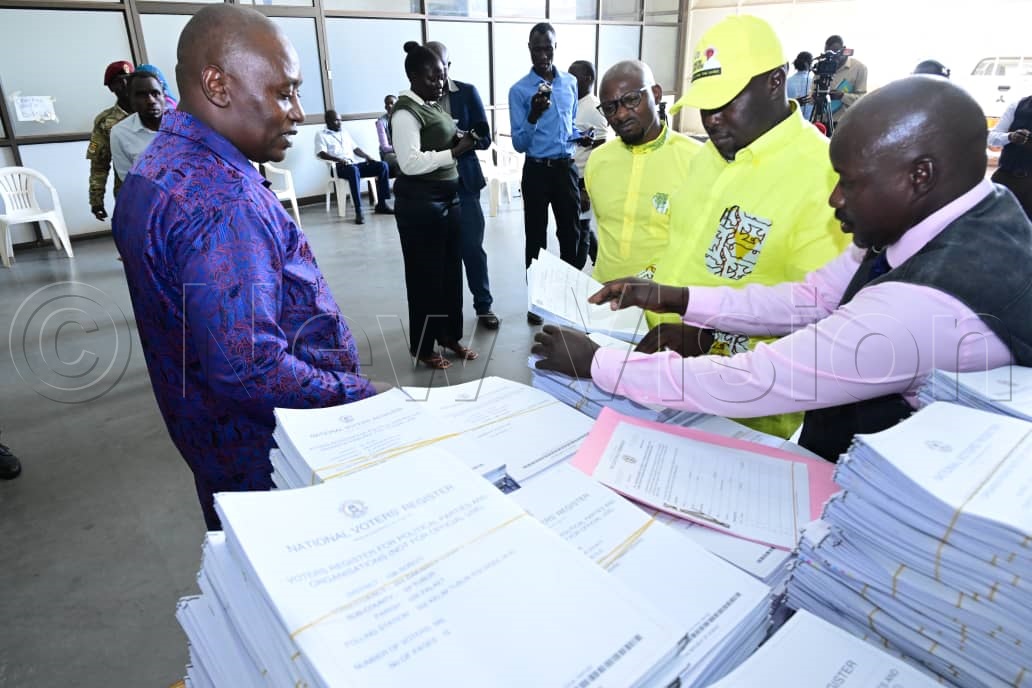
NRM secretary general, Richard Todwong, receiving the hard copies of the national voters register from the Electoral Commission (EC) headquarters in Kampala, ahead of polling day. (Credit: Mpalanyi Ssentongo)
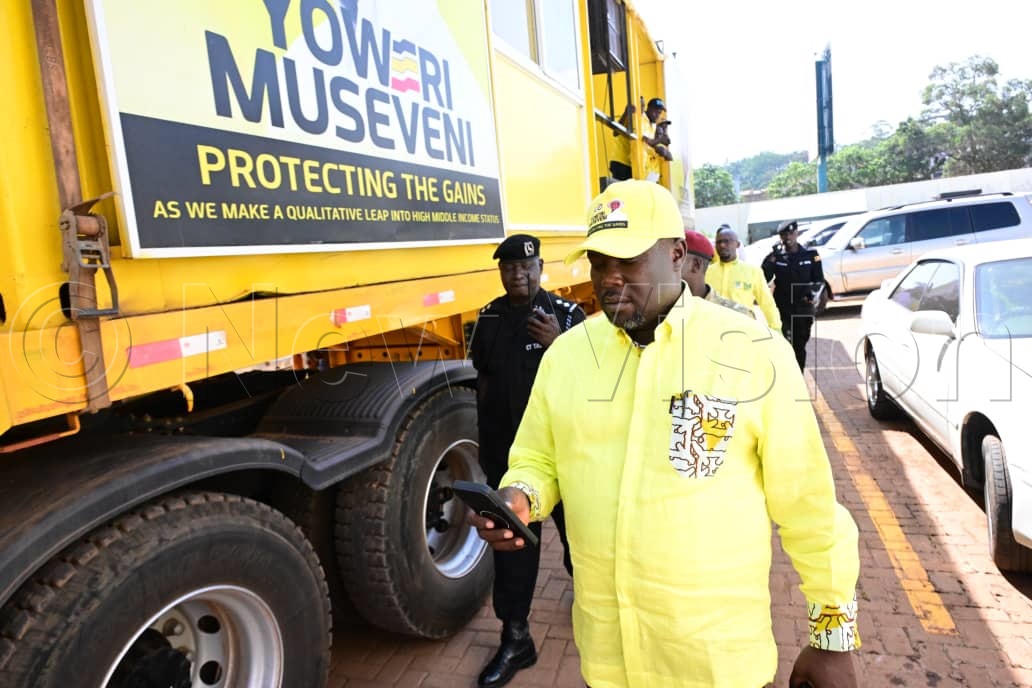
NRM secretary general, Richard Todwong, receiving the hard copies of the national voters register from the Electoral Commission (EC) headquarters in Kampala, ahead of polling day. (Credit: Mpalanyi Ssentongo)
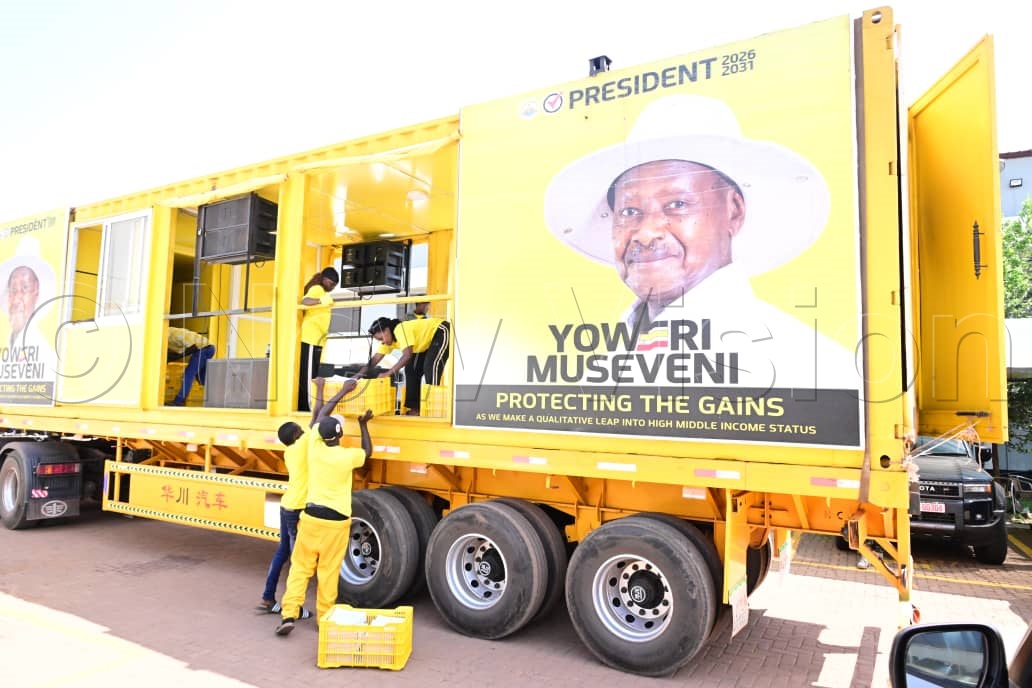
(Credit: Mpalanyi Ssentongo)
After spending about four minutes verifying several copies, Todwong, who was accompanied by NRM director of legal affairs Enoch Barata, addressed journalists.
"We can confirm that we have sampled a few of the registers and we have cross-checked the numbers, the pages and how the names are written and the photos appear. We shall continue doing more deeper verification, polling station by polling station, to ascertain that what is being handed over is authentic," he said.
"On behalf of the party, we are grateful to the Electoral Commission for offering this (hard copy of the register) to all political parties and to all presidential candidates. Our members will receive these copies at their polling stations before polling day," he added.
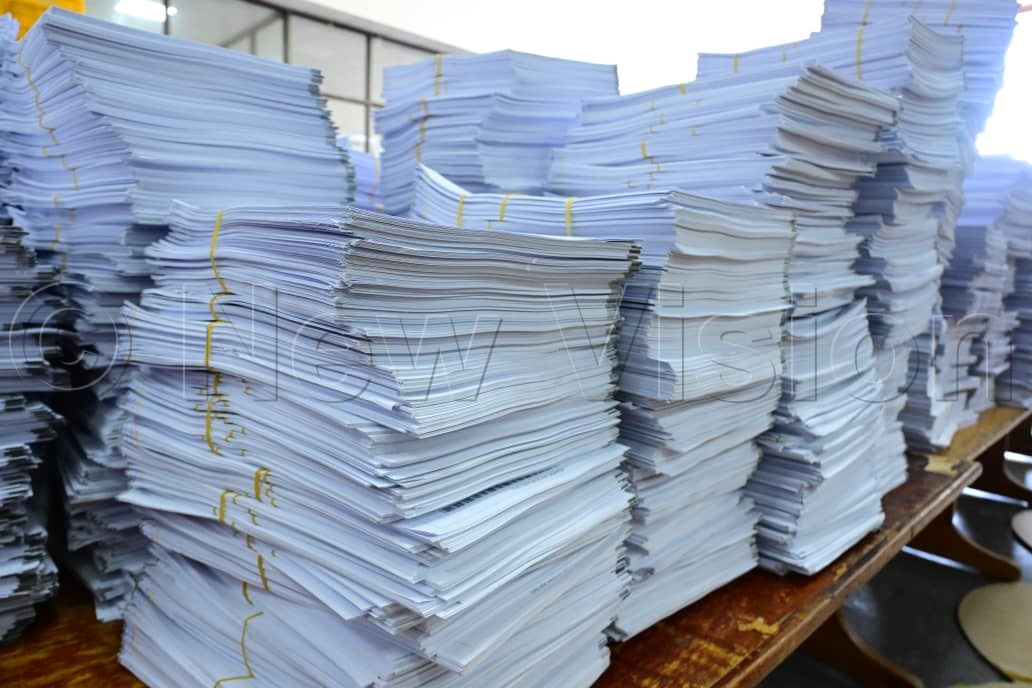
Hard copies of the national voters register at the Electoral Commission (EC) headquarters in Kampala, ahead of polling day. (Credit: Mpalanyi Ssentongo)
(Credit: Mpalanyi Ssentongo)
(Credit: Mpalanyi Ssentongo)
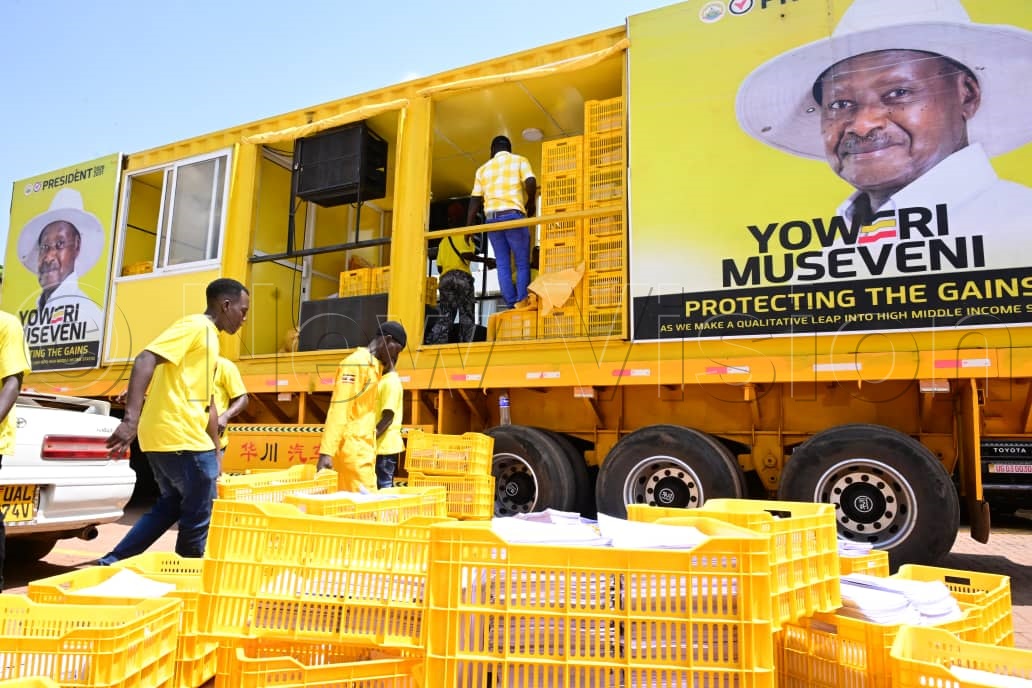
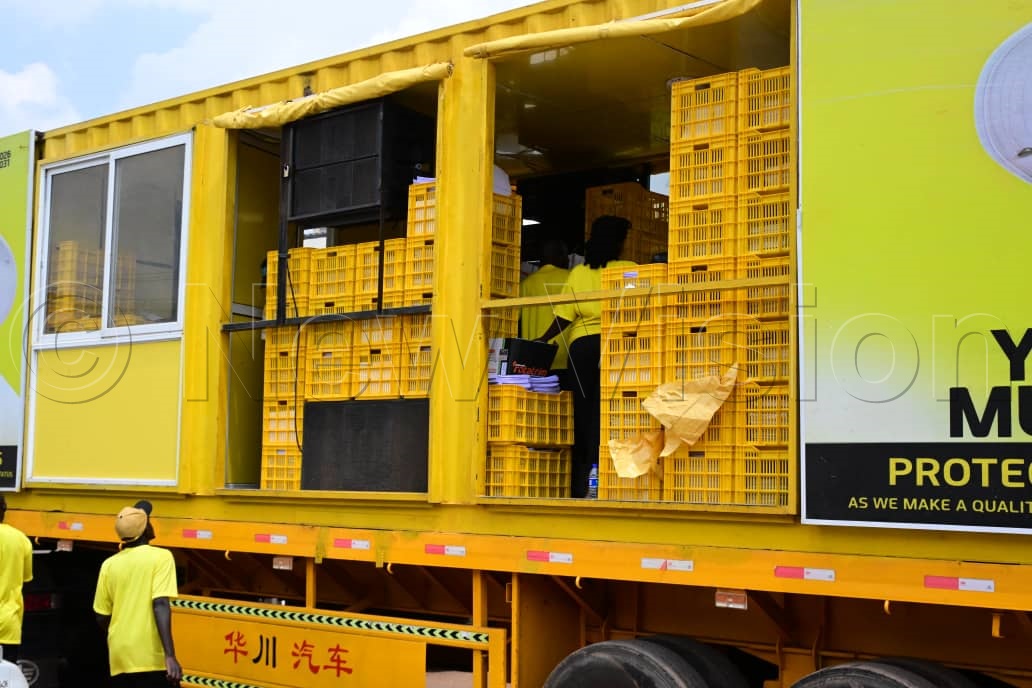
The ruling party later packed the registers into crates and loaded them onto a 22-wheeler trailer painted yellow, the party’s official colour.
At the EC warehouse, the registers were organised according to the commission’s 12 electoral regions and placed on two tables.
Each copy contains a voter’s details, including photograph, names, date of birth and polling location information such as district, constituency, sub-county, parish and polling station.
Uganda has 21 million registered voters across 5,739 polling stations countrywide.
EC spokesperson Julius Mucunguzi said soft copies of the voters' register had been issued to all presidential candidates immediately after nomination on September 23 and 24, 2025.
Kyagulanyi unhappy
National Unity Platform presidential candidate Robert Kyagulanyi criticised the EC on X, formerly Twitter, early Wednesday morning, accusing the commission of failing to issue hard copies of the voters' register within the legally required timeframe of two weeks before polling day.
"Here is the reason Byabakama is still refusing to give us the National Voters' Register, 8 days to the election, despite the legal command for them to avail it 14 days to an election! He knows the amount of deliberate fraud in there," Kyagulanyi wrote hours before the EC began issuing the registers.
Kyagulanyi further alleged the register contained irregularities, including "tens of thousands of multiple entries, inconsistencies in voters' details, very many people who died years back, and yet their details are still on the register, etc."
He also claimed that when they "exposed some of this fraud, the regime responded by arresting Dr Sarah Bireete (a civil society leader) and the developers of the Fannon App."
Kyagulanyi said the app enabled citizens to easily detect irregularities, adding that voter location slips continued to reveal alleged electoral manipulation.
"There has never been an Electoral Commission as incompetent, partisan, and fraudulent as Byabakama's," he wrote.
By the time of filing this report, Kyagulanyi and six other presidential candidates had not yet received their hard copies of the register.
The other candidates include Joseph Mabirizi of the Conservative Party, Nandala Mafabi of the Forum for Democratic Change, Mubarak Munyagwa of the Common Man’s Party, Mugisha Muntu of the Alliance for National Transformation and Frank Kabinga of the Revolutionary People’s Party.
EC chairperson Justice Simon Byabakama recently urged Kyagulanyi and other stakeholders to use established channels to seek clarification, verify information and raise concerns regarding the electoral process.
“The commission remains committed to conducting the 2026 general elections in a transparent, professional, and credible manner, and reassures Ugandans of its dedication to safeguarding the integrity of the electoral process,” Byabakama said.
He dismissed allegations of irregularities in the voters' register.
In a statement issued on December 28, 2025, Byabakama said the EC had reviewed claims circulating on X regarding alleged irregularities.
He explained that Kyagulanyi had cited two voter location slips bearing the name Matovu Ronald with similar dates of birth, alleging deliberate multiple registration.
According to Byabakama, the EC established that the slips belonged to two different individuals registered in separate electoral areas.
“The voters are clearly distinguishable by their unique photographs. While the individuals share similar names and days of birth, this does not in any way mean they are the same person,” he said.
He added that data protection laws prevent the publication of personal voter details.
“The commission further advises all stakeholders to refrain from sharing an individual’s personal voter information on social media without his/her consent, as this violates privacy laws,” he said.
Byabakama also said the biometric voter verification system had been strengthened to verify voters using fingerprints or facial recognition before a ballot is issued.
“Without successful biometric verification, one will not be issued a ballot paper (s). This safeguard firmly upholds the principle of one person, one vote,” he said.