
Uganda, Tanzania deepen conservation ties to boost Kidepo project
The April 19-20 Uganda–Tanzania exchange learning visit brought together senior government officials, conservation experts, and technical teams to share experiences and best practices in tackling wildlife crime, improving ecosystem management, and promoting community-based conservation.
Uganda has intensified efforts to strengthen wildlife conservation and combat illegal wildlife trade through a strategic exchange programme with Tanzania. (Photo by Javier Silas Omagor)
________________
Uganda has intensified efforts to strengthen wildlife conservation and combat illegal wildlife trade through a strategic exchange programme with Tanzania, a move expected to significantly boost the implementation of the Kidepo Landscape Integrated Conservation Development Project (KLICDP).
The April 19-25 Uganda–Tanzania exchange learning visit brought together senior government officials, conservation experts, and technical teams to share experiences and best practices in tackling wildlife crime, improving ecosystem management, and promoting community-based conservation.
The Ugandan delegation was led by the Permanent Secretary in the Ministry of Tourism, Wildlife and Antiquities, Doreen Katusiime, alongside the Commissioner for Wildlife Conservation, George Owoyesigire.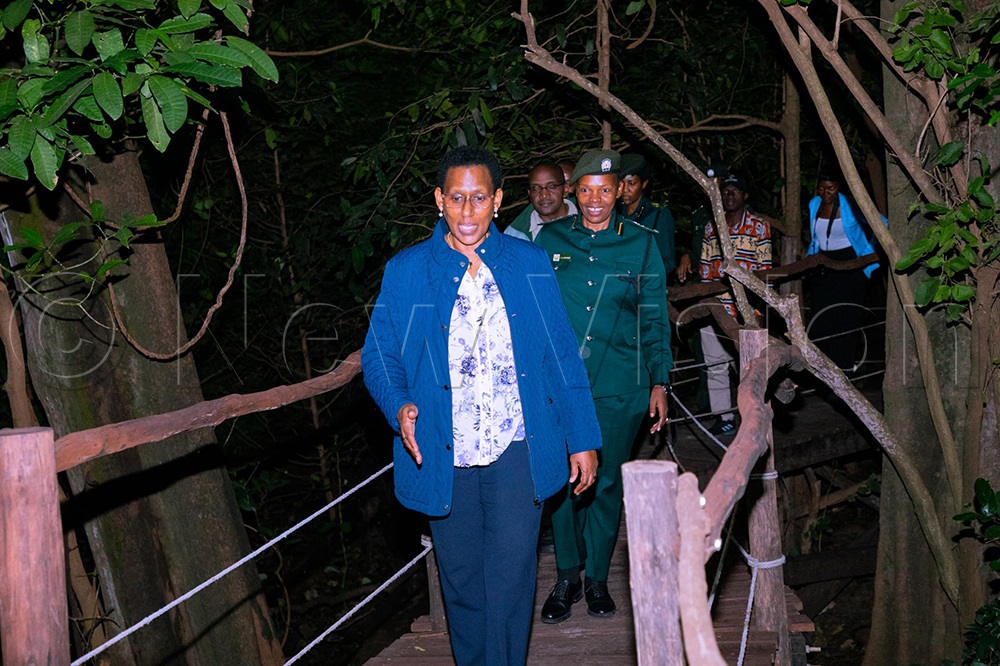
Tourism Ministry's PS Doreen Katusiime led the Uganda team on several tourism site visits in Tanzania. (Photo by Javier Silas Omagor)
The team engaged with Tanzania’s Ministry of Natural Resources and Tourism, wildlife research institutions, and conservation authorities in a structured programme designed to strengthen cross-border collaboration.
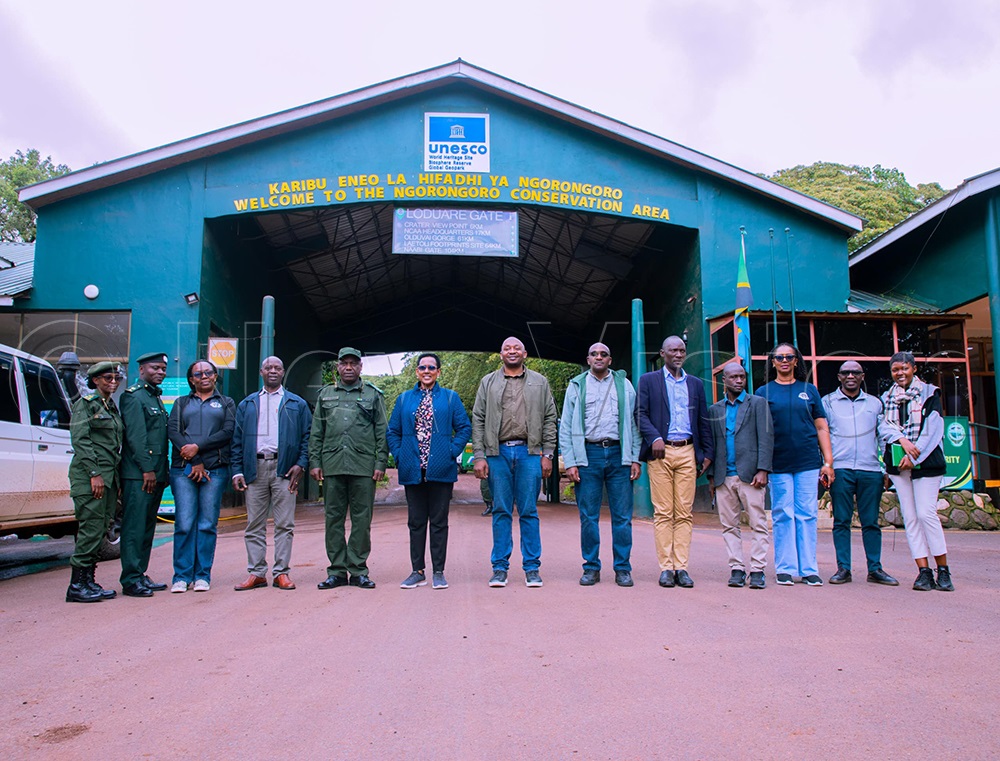
The initiative is also expected to boost Uganda’s tourism sector by safeguarding key ecosystems and promoting sustainable use of natural resources. (Photo by Javier Silas Omagor)
The visit forms part of a Global Wildlife Programme (GWP) initiative that supports partnerships between countries implementing Global Environment Facility (GEF)-funded projects. Uganda’s Kidepo project was twinned with Tanzania’s Combating Poaching and Illegal Wildlife Trade project, with support from the World Bank.
Officials said the exchange aimed to strengthen capacity, enhance coordination among institutions, and equip Uganda’s conservation teams with practical tools to address persistent challenges in the Kidepo landscape.
The Kidepo landscape in north-eastern Uganda covers more than 1,400 square kilometres, including Kidepo Valley National Park, Karenga Community Wildlife Area, and several central forest reserves.
It hosts unique wildlife species and supports pastoralist and farming communities, but continues to face threats from poaching, climate change, human-wildlife conflict, and illegal wildlife trade.
During the exchange, Ugandan officials visited key conservation sites in Tanzania, including Manyara National Park, the Ngorongoro Conservation Area, and community wildlife management areas in Muheesi and Itigi.
They also engaged with the Tanzania Wildlife Research Institute and national parks authorities to study successful anti-poaching interventions and community-led conservation models.
Katusiime described the visit as a timely and practical learning opportunity.
“It has been a productive benchmarking exercise. We have learned valuable lessons, particularly on how Tanzania has managed to rebuild wildlife populations after experiencing serious poaching challenges.
These insights will be integrated into the Kidepo project implementation,” she said.
Owoyesigire said Tanzania’s model of involving communities directly in conservation offers important lessons for Uganda.
“Conservation becomes sustainable when communities are active participants. The approaches we observed will help us strengthen community engagement and improve outcomes in managing wildlife and natural resources,” he said.
The exchange also focused on improving law enforcement coordination, strengthening institutional collaboration, and addressing the transboundary nature of wildlife crime, which remains a major challenge in the region.
Zewu Kanyago, Communications and Knowledge Management Officer for the Kidepo project, said the exposure to Tanzania’s approaches had deepened understanding of how to align conservation with community development.
“The insights on community engagement and coordination will help us refine how we design and implement grassroots interventions. Strengthening livelihoods and building local capacity will be key in reducing human-wildlife conflict and ensuring sustainable coexistence,” Kanyago said.
Members of Parliament who have followed the project also expressed strong support for increased investment in the sector, recognising tourism as a key driver of Uganda’s economy.
Hon. Isaac Malinga Maikut, MP for Soi County in Kween District, welcomed the exchange, saying it reflects a practical and forward-looking approach to conservation and development.
“This partnership demonstrates the importance of collaboration in addressing complex environmental challenges. The support from UNEP, the Ministry of Tourism, Wildlife and Antiquities, and other partners is critical in ensuring that conservation efforts are aligned with community development,” Maikut said.
He added that Parliamentarians are committed to ensuring that tourism is prioritised in national budget allocations.
“As leaders, we are resolved to support policies and budgets that strengthen tourism and conservation. This sector is not just about wildlife; it is about livelihoods, jobs, and national growth,” he said.
Tourism remains one of Uganda’s top foreign exchange earners, contributing over $1.6 billion (Six trillion, seventeen billion, five hundred seventy-nine million, two hundred thousand Ugandan shillings) annually and supporting hundreds of thousands of jobs directly and indirectly.
Serere County MP Emmanuel Omoding also commended the Uganda–Tanzania collaboration, describing it as a timely intervention in the fight against wildlife crime.
“This is a commendable step by both governments. Wildlife conservation is a shared responsibility, and such partnerships are essential in protecting our natural heritage while promoting regional cooperation,” Omoding said.
He noted that cross-border collaboration is particularly important given that wildlife and environmental challenges do not respect national boundaries.
The Kidepo Landscape Integrated Conservation Development Project, funded by the Global Environment Facility through UNEP and implemented by the Ministry of Tourism, Wildlife and Antiquities, seeks to promote sustainable biodiversity management while improving livelihoods and reducing human-wildlife conflict.
Officials said the knowledge gained from the exchange will be applied to strengthen project implementation, enhance community participation, and improve enforcement mechanisms against wildlife crime.
The initiative is also expected to boost Uganda’s tourism sector by safeguarding key ecosystems and promoting sustainable use of natural resources.
As Uganda continues to position itself as a leading conservation destination, officials say partnerships such as the one with Tanzania will be critical in ensuring long-term environmental sustainability, improved livelihoods, and sustained economic growth.