
Telling Uganda’s story to China through film and digital media
Beyond trade figures and investment deals, Uganda is increasingly turning to film and digital media to position itself in the Chinese imagination, not just as a destination on the map, but as a living, human story.
Beyond trade figures and investment deals, Uganda is increasingly turning to film and digital media to position itself in the Chinese imagination. (Courtesy photo)
________________
As Uganda deepens its diplomatic and economic engagement with China, culture and storytelling are emerging as powerful new tools of connection.
Beyond trade figures and investment deals, Uganda is increasingly turning to film and digital media to position itself in the Chinese imagination, not just as a destination on the map, but as a living, human story.
At the centre of this approach is Judith Nsababera, Uganda’s consul general in Guangzhou, who is championing a documentary project titled: Back to the Source – The Nile.
The film is part of a broader and sustained campaign to attract Chinese tourists to the Pearl of Africa by telling Uganda’s story in ways that resonate emotionally with contemporary travellers.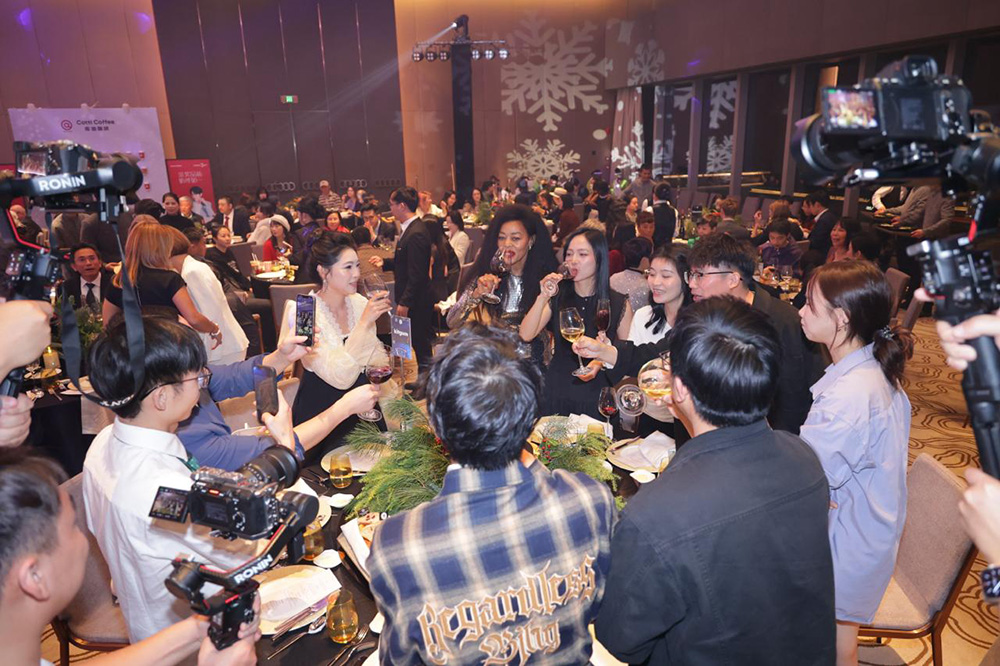
Beyond trade figures and investment deals, Uganda is increasingly turning to film and digital media to position itself in the Chinese imagination. (Courtesy photo)
The project builds on the momentum generated by the Uganda-China Expo held at the Sheraton Kampala Hotel, which brought together tourism stakeholders from both countries, as well as a familiarisation tour that introduced Chinese tour operators to Uganda’s key attractions.
“This is a follow-up in a consistent campaign to keep Uganda in the eyes and minds of potential tourists. Chinese outbound travel is rebounding strongly in the post-pandemic period, and Uganda must be visible and relevant in that recovery,” Nsababera said.
Her optimism is supported by global travel trends. In 2024, Chinese travellers made an estimated 88.6 million outbound trips, moving steadily toward the pre-pandemic peak of 155 million recorded in 2019. Travel spending is projected to reach about US$140 billion in 2025. However, Nsababera notes a significant shift: Today’s Chinese tourists are more budget-conscious and increasingly drawn to meaningful, experience-driven travel rather than shopping-centric trips.
That change plays to Uganda’s strengths. Its appeal lies not only in wildlife and scenery, but in culture, people and authentic encounters.
It was against this backdrop that a symbolic cultural exchange unfolded in Guangzhou, where diplomats, creatives and friends of Uganda gathered for the presentation of Back to the Source – The Nile. Taking centre stage was the film’s director, Derrick Ssenyonyi, a Ugandan filmmaker known for human-centred storytelling and digital media.
Visiting China for the first time, Ssenyonyi spoke warmly of the experience. “I have travelled to many places in the world, but the warmth and kindness I have felt here have been overwhelming,” he said. “I have already learned simple phrases -how to say hello, thank you and even how to ask for food.”
Despite language barriers, Ssenyonyi believes film and photography can communicate across cultures. Images, sound and emotion, he argues, often speak more powerfully than words. His experience reinforced Nsababera’s belief that while destinations attract interest, it is people and personal encounters that make journeys memorable.
Unlike conventional travel films, Back to the Source – The Nile does not simply catalogue landscapes and attractions. While it traces Uganda’s geography - from Jinja and the Source of the Nile to Kisoro, Bwindi, Lake Mburo, Mbarara and Kampala - its focus remains firmly on the people who give these places meaning.
“The people crown the experience. They give depth to gorilla tracking, scaling the Rwenzori Mountains, birdwatching and every other tourism activity,” Ssenyonyi explained.
At its core, the documentary follows a personal journey along the River Nile while carrying a broader national message about identity, opportunity and Uganda’s place in the global community. It reflects a growing understanding that tourism promotion today is less about selling attractions and more about telling stories that audiences can connect with emotionally.
The project also mirrors a global shift in diplomacy, where storytelling is increasingly used as soft power-humanising international relations and building emotional bridges between societies. Ssenyonyi observes that Uganda and China share strong values around community, collective identity and shared responsibility.
“This film covers different regions of Uganda. But more importantly, it covers the heart of Uganda - our people. And that is something Uganda and China deeply share,” he said.
Crucially, the project is designed for the digital age. During his stay in China, Ssenyonyi was struck by how central mobile phones and digital platforms are to daily life.
“If we want to reach people, we must speak to them where they already are - on their screens,” he said.
As a result, Back to the Source – The Nile is being developed not only for cinema screenings, but also for mobile phones, social media and online platforms. Short-form videos and digital storytelling now shape how destinations are discovered and understood.
For Uganda, this approach signals a shift. Investing in digital storytelling is no longer optional. With rich cultural content and compelling human stories, Uganda has what it takes to connect globally - one screen, one story and one shared experience at a time.