
Suspended in the sky: My visit to Da Nang's Golden Bridge
As I floated above the Ba Na Hills in Vietnam, I could not help but think of Uganda, a country blessed with landscapes just as dramatic, just as breathtaking, and just as worthy of the world's attention.
The writer, Asha Kamushabe, poses for a photo on the Golden Bridge, a pedestrian bridge in Da Nang, Vietnam. (Credit: Asha Kamushabe)
______________________________
TRAVEL
📍 Vietnam 🇻🇳
By Asha Kamushabe
_________________________
There are places in the world that stop you mid-breath, where the landscape is so extraordinary that your body forgets, just for a moment, what it was doing. Da Nang, Vietnam's jewel on the central coast, is one of those places. And perched high above it all, cradled in the stone hands of giants, the Golden Bridge.
Da Nang is no ordinary city.
A major coastal metropolis shaped by the sea, rapid modernisation, and centuries of cultural exchange, it sits at the heart of one of Southeast Asia's most compelling travel corridors, flanked by the UNESCO World Heritage Sites of Hội An to the south and the imperial city of Huế to the north.
Its sandy beaches stretch for miles, its riverfront glitters at night, and its skyline tells the story of a nation that has rebuilt itself with breathtaking ambition. But it is up in the Ba Na Hills, high above the city's hum, that Da Nang reveals its most magical secret.
Thrilling ascent in a cable car
Getting to the Golden Bridge is itself half the adventure.
The journey begins aboard a cable car — a delightfully suspended mode of transport that feels equal parts thrilling and serene. Each cabin carries five to six passengers, its walls largely made of glass, offering an almost unobstructed panorama of everything around you.
As you glide upward, the world below opens up in ways that no road trip ever could.
While the speed is steady and unhurried, every now and then a gentle bump or soft sway reminds you of where you are. Think of it as mild turbulence on a flight — enough to quicken your pulse, but not enough to alarm. After all, here, you are travelling at the height of a twenty-storey building, suspended over a landscape that grows more magnificent with every metre of altitude gained.
Beneath you, a dense tropical forest unfolds; towering trees draped in shades of green so rich they seem almost unreal, laced with narrow tributaries that weave quietly through the hills like silver threads on an emerald cloth.
The cable lines themselves are anchored by enormous towers, reminiscent of massive pillars supporting high-voltage power lines, yet somehow fitting against the grandeur of the terrain.
Approaching each station, the cable car does not come to a full stop; it simply slows, just enough for passengers to step on or off with practised ease, before gliding onward.
The nearly forty-minute ride culminates in one of the finest views I have ever seen: Da Nang's skyline stretching toward the horizon, with the ancient rooftops of Hội An just visible in the distance, a reminder that history and modernity are never far apart in this part of the world.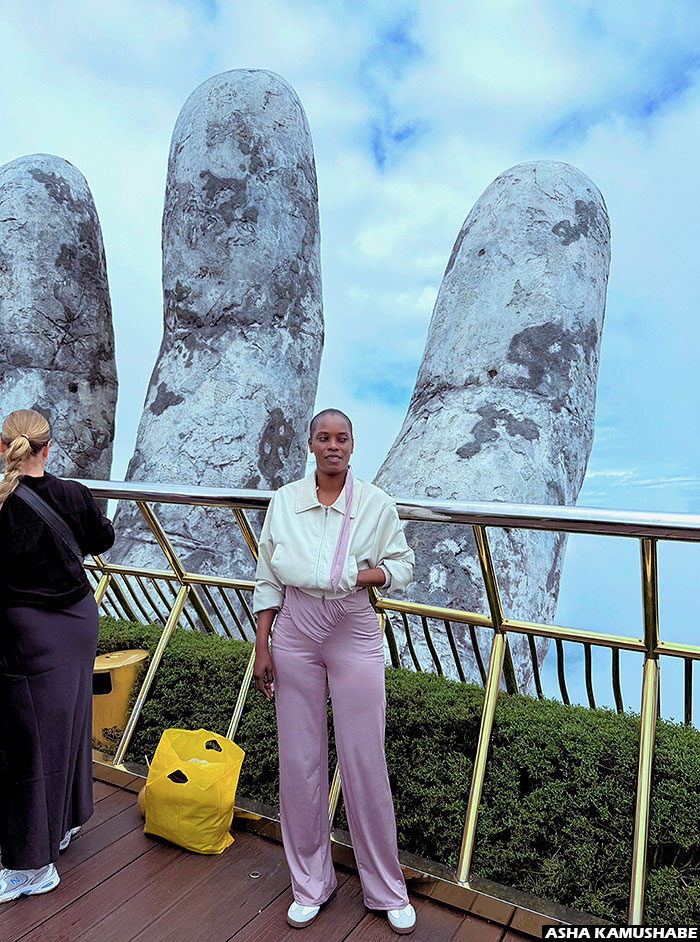
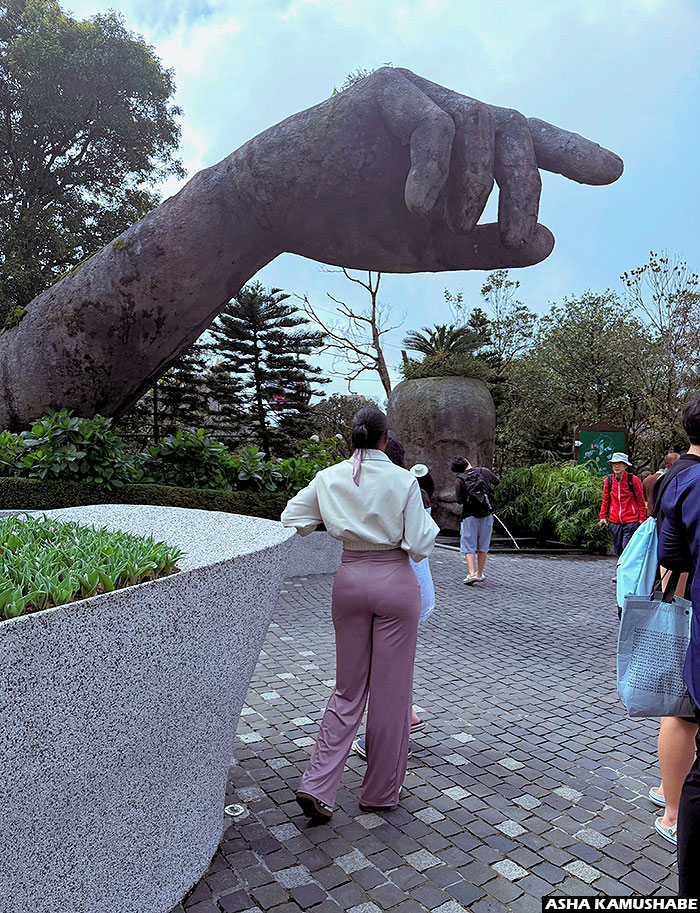
Beyond the bridge: A world unto itself
The Golden Bridge experience does not end at the hilltop station.
From there, passengers transfer onto buses for a short five-minute drive that deposits them into an entirely different world — one adorned with ornate Asian architecture, winding pathways, and the unmistakable atmosphere of a place that has been lovingly curated for wonder.
The most arresting landmark in this elevated enclave is a grand old building that wears its French colonial history on its sleeve. Once a functioning hotel during the era of French Indochina, it has since been preserved as a tourist attraction — its European-style architectural design standing in striking contrast to the Vietnamese hills that surround it.
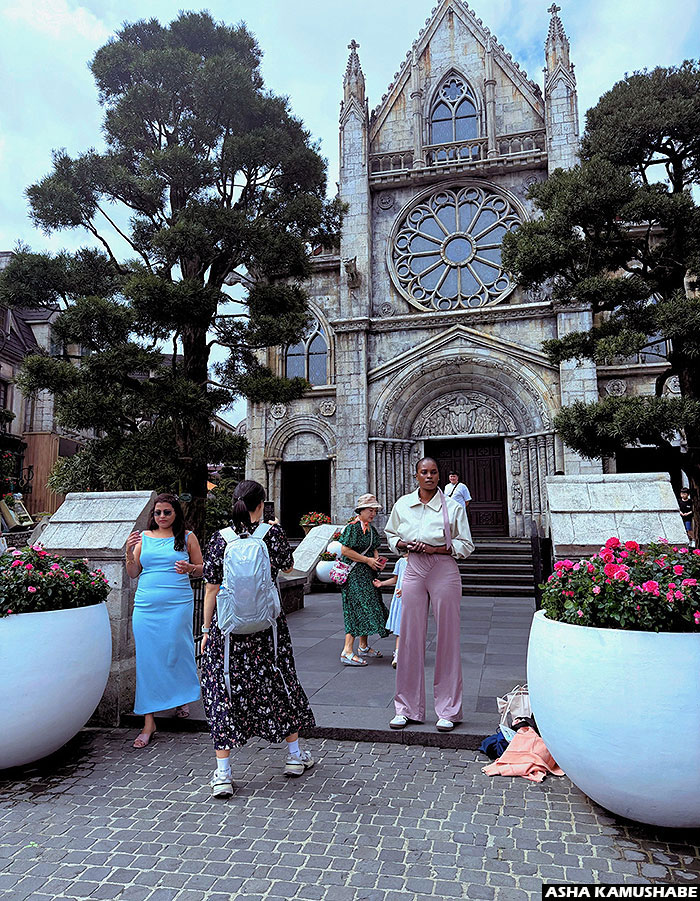
To the natives, it is a reminder of the layered, sometimes painful and complex story of colonial legacy. Most visitors come here en route to the Golden Bridge, but the building itself comands attention.
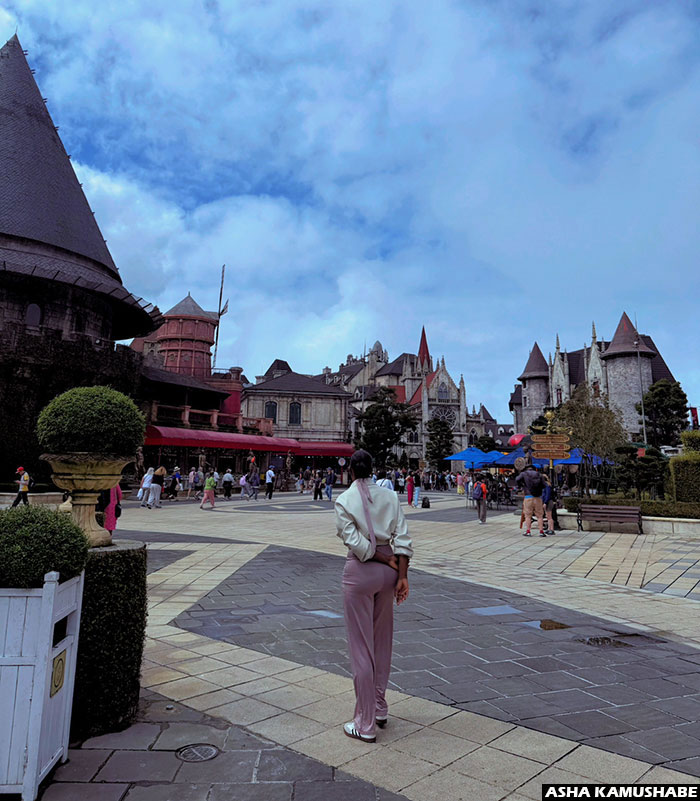
Nearby, a charming French village has been recreated, complete with a zipline and go-kart track for tourists seeking a burst of adrenaline amid the history.
A little further along, Fantasy Park awaits — a cheerful expanse of restaurants, manicured flower gardens, and open promenades where visitors slow down, inhale the cool mountain air, and simply exist in the beauty of the moment.
After a guided walk through the area, it is time to return to the station, board the cable car once more, and float back down to earth, carrying memories that linger long after the descent.
What Uganda can learn
Travelling shapes not just your perspective, but your imagination of what is possible at home.
As I floated above the Ba Na Hills, I could not help but think of Uganda, a country blessed with landscapes just as dramatic, just as breathtaking, and just as worthy of the world's attention.
The Golden Bridge did not appear out of nowhere; it was the result of deliberate, visionary investment in tourism infrastructure. Da Nang understood that it had something special and chose to build around it; not to replace nature, but to give visitors a way to experience it more profoundly.
Uganda has the same raw material in abundance; the misty Rwenzori Mountains, the dramatic escarpments of Kidepo or the lush hills of Bwindi Impenetrable Forest.
A cable car system at any of these destinations, much like the iconic one atop Table Mountain in Cape Town, South Africa, could transform the visitor experience entirely, offering access to those who cannot trek while creating employment, stimulating local economies, and deepening cultural preservation efforts.
Tourism, when done thoughtfully, is not just an industry; it is a statement about how a nation values its heritage.
The question for Uganda is no longer whether we have what it takes. We always have. The question is simply: when do we begin?
(Follow Asha Kamushabe's travel adventures on TikTok @littlemillionnaire1)