
Sh40b 'Name a Rhino' campaign to spur conservation efforts
The naming campaign is expected to be a celebration of conservation success, a way to promote tourism and community development, and a cultural tradition that fosters a deeper connection between humans and rhinos.
The future of rhinos in Ziwa Rhino Ranch is insecure unless the conflicting parties resolve their grievances. (Photo by Titus Kakembo)
________________
What is in a name, especially a rhino's?
Well, Uganda is preparing to roll out an annual tradition that celebrates one of its greatest conservation triumphs, the naming of rhinos, while returning them to their ancestral ranges. Soon, some of the mighty beasts will be translocated from Nakasongola’s Ziwa Rhino Sanctuary into the wild.
The naming campaign is expected to be a celebration of conservation success, a way to promote tourism and community development, and a cultural tradition that fosters a deeper connection between humans and rhinos.
It’s a milestone in the making. Since the arrival of six white rhinos in Uganda, the animals have been on a remarkable breeding spree at Ziwa. The once-empty grasslands now echo with their heavy footsteps, and calves are becoming a common sight. Their numbers have grown so steadily that the Uganda Wildlife Authority (UWA) says the sanctuary is now approaching its capacity.
“We have been planning to relocate some of them to the wild in Ajai Wildlife Reserve, Murchison Falls National Park, and Kidepo Valley National Park,” UWA executive director James Musinguzi said at the launch of the 'Name a Rhino campaign' at the Sheraton Kampala Hotel on August 12, 2025.
“We are also sourcing indigenous black rhinos. Uganda can now guarantee them 24-hour ranger protection and surveillance.”
Minister of State for Tourism Martin Mugara and the ED UWA James Musinguzi during the launch of the Rhino baby naming exercise at the Sheraton Hotel. (Photo by Julius Luwemba)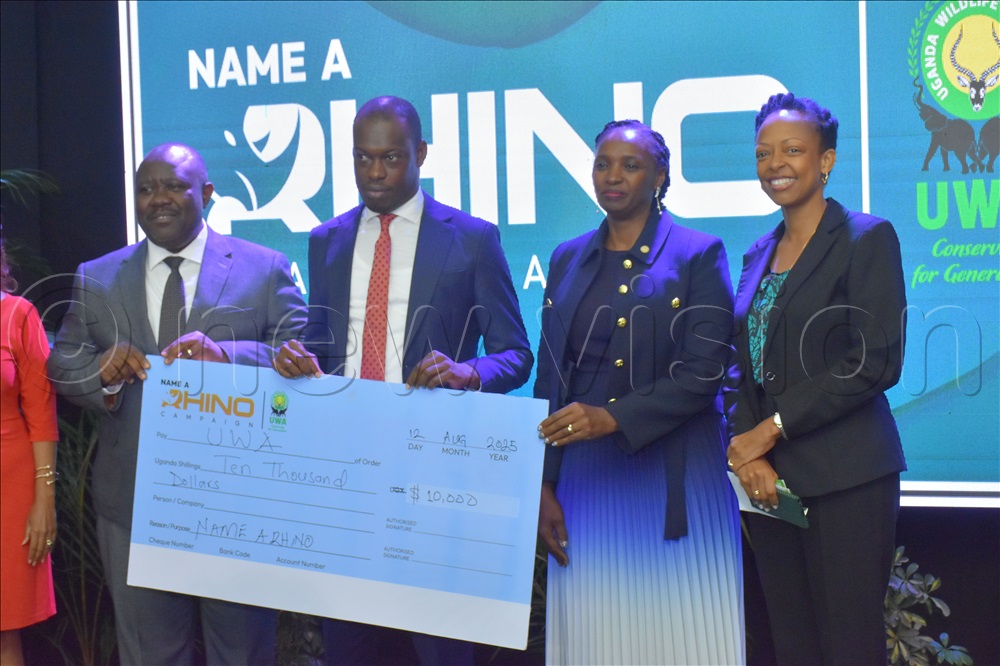
The climax of this campaign will be on September 22, 2025, when 17 rhino calves will receive official names in a ceremony graced by President Yoweri Museveni. The event is part of an ambitious $11 million fundraising drive aimed at restoring rhinos to their natural habitats across Uganda.
“Our goal is to conserve the diversity of wildlife that makes Destination Uganda unique,” Musinguzi stressed.
A conservation success story
Uganda’s rhino revival is nothing short of remarkable. The last wild rhino in the country was poached in 1986, a grim end to a species that once roamed freely across savannah and woodland.
“This mammal is a symbol of resilience and biodiversity,” tourism state minister Martin Mugarra said.
Mugarra attributed Uganda’s success to a sustainable tourism model in which humans and wildlife share the same landscapes — a strategy that has helped the country emerge as a bucket-list destination for nature lovers.
Tourism gets a boost
For Uganda Tourism Board CEO Juliana Kagwa, the rhino story is a golden ticket in global marketing campaigns.
“Besides the white rhinos, we have the mountain gorilla, over 1,100 bird species to thrill even the most seasoned birders, and a rich diversity of cultures, cuisines, and beverages,” Kagwa said, her smile as wide as the savannah.
“Right now, the ongoing CHAN football league has bars and lodges booked to capacity.”
She also confirmed strong corporate and institutional backing for the Name a Rhino campaign, with sponsorship from UNDP, the British High Commission, Centenary Bank, the Uganda Tour Operators Association, and the Jane Goodall Institute – Uganda.
With thriving wildlife populations, a flourishing cultural tourism sector, and upgraded infrastructure, Uganda is sending a clear message to the world: here, conservation and tourism are not rivals — they grow stronger together.