
Jinja hotel training college set for major upgrade in tourism skills overhaul
Jinja resident city commissioner Richard Gulume expressed pride in the transformation of the historic Crested Crane Hotel.
The front view of the Crested Crane Hotel in Jinja. (Photos by Donald Kiirya)
________________
The government has signalled a major shift in the country’s tourism strategy, unveiling a multi-billion shilling investment in the Hotel and Tourism Training College (HTTC).
The move is intended to transform the Jinja-based college into a regional centre of excellence, equipped to produce a workforce capable of competing on the global stage.
A new era for tourism education
Speaking on behalf of the permanent secretary of the Ministry of Tourism, Wildlife and Antiquities, Doreen Katusiime, the principal tourism officer at the Ministry, Harriet Kiiza, emphasised that in a rapidly evolving global environment, technological investment and sustainability are no longer optional but mandatory.
"Our graduates must be globally competitive while remaining rooted in our unique cultural heritage—the bridge between the classroom and the workplace must be ironclad to ensure our students transition into high-value careers," Kiiza stated during a stakeholders’ consultative meeting at HTTC on February 25, 2026.
The meeting was organised by HTTC and funded by Enabel under the theme, “Strengthening Partnerships for Sustainable Growth.”
She highlighted three strategic pillars for the college’s future. On curriculum relevance, she called on industry stakeholders to play an active role in curriculum development to ensure graduates are "employable" from day one.
Harriet Kiiza (right), the Principal Tourism Officer at the Ministry of Tourism, Wildlife and Antiquities addressing some of the participants attending a stakeholder's consultative meeting at the Hotel and Tourism Training College in Jinja City on February 25. 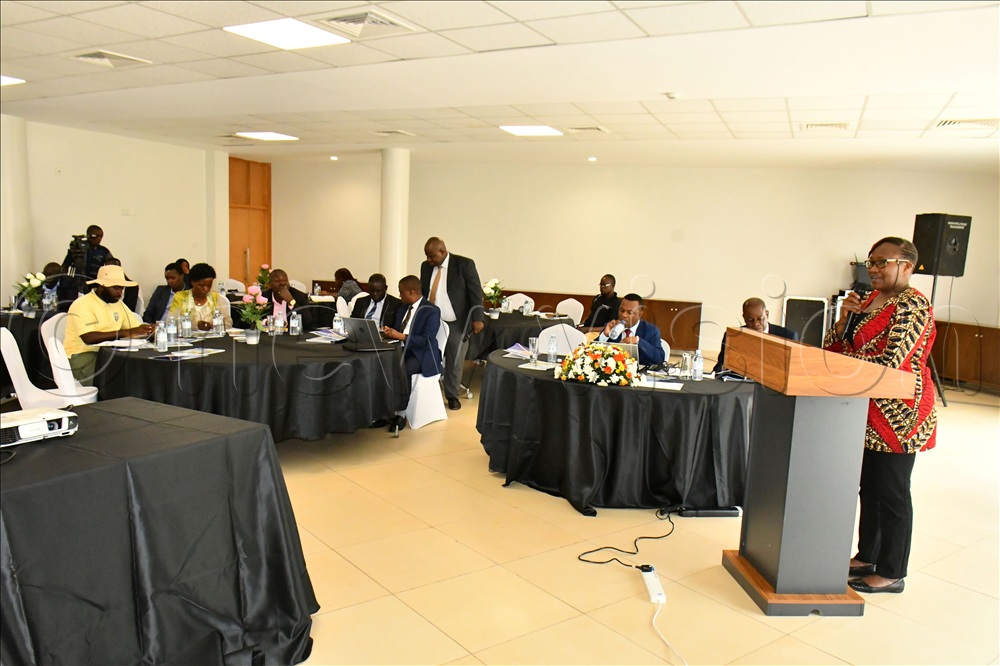
On quality assurance, she stressed the need to meet international standards through modern training facilities and continuous staff development. On inclusiveness, she underscored the importance of ensuring tourism creates growth opportunities for youth, women and marginalised communities.
Plugging the skills gap
The principal of HTTC, Richard Kawere, addressed growing concerns within the industry, including the shortage of certified professionals in specialised niche areas.
“Research conducted during the strategic plan's development revealed a significant shortage of certified personnel in spa, sauna, and fitness management. To address this immediately, the College has partnered with the American Hotel and Lodging Education Institute (AHLEI) to offer international certifications while local programs are finalised,” Kawere said.
He revealed that the college is implementing an ambitious five-year strategic plan aligned with National Development Goals. Central to the plan is a sh5.6 billion infrastructure project aimed at addressing specific professional gaps in the hospitality sector.
To bridge these gaps, the government has approved funding for a fully equipped health club featuring a modern gym, spa and sauna, as well as the construction of a swimming pool and specialised hostels to support local accommodation.
Kawere also addressed the need for career progression, stating that the college is working with regulators to enable diploma holders to transition more efficiently to degree programmes through credit transfers.
Kawere concluded by stating that the central government alone cannot drive the sector and that collaboration with all stakeholders is essential.
Local leaders speak out
He noted that the refurbishment would reduce the industry's reliance on foreign labour, particularly from neighbouring countries.
"Some time back, people were getting employed from Kenya to come and work here. Now, we can train on our own," Gulume said.
He commended HTTC for training Ugandans and some international students in tourism and hotel management, enabling many to secure jobs in the hospitality sector.
He further announced that the government is supporting the growth of both the hotel and HTTC by upgrading 30 kilometres of tourism roads in Jinja to improve access and enhance the city’s image.
Stakeholder reactions
The engagement drew praise from cultural and private sector leaders. Busoga Kingdom’s Permanent Secretary, Godfrey Samanya Sajjabi, thanked the government for its significant contribution to Busoga’s development and lauded the college for offering bursaries to local students.
Uganda Hotel Owners Association executive director Jean Byamugisha called for closer collaboration between the private sector and the college.
She emphasised the urgency of introducing short, industry-specific courses, including self-defence training for hospitality staff, in preparation for major upcoming events such as AFCON 2027.
Moving forward
The Ministry of Tourism reaffirmed its commitment to the centre of excellence vision and urged the private sector to provide more internships and guest lectures.