
Four rhinos successfully translocated to Ajai Wildlife Reserve
With the reunion complete, what followed was thunderous applause from the team of vet doctors and rangers, as well as a section of the community staying around Ajai Wildlife Reserve for a job well done.
UWA Rangers and vet doctors helping a rhino into a transportation crate during the translocation exercise that saw four rhinos so far being reintegrated back into the wild, in Ajai Wildlife Reserve. (Photo by Julius Luwemba)
_________________
The early morning mist still hugged the green vegetation of Uganda's central region district of Nakasongola as a team of veterinary staff, rangers under the Uganda Wildlife Authority (UWA), and a select team of conservation journalists gathered for a briefing at Ziwa Rhino Sanctuary on Wednesday (January 7).
Starting with the dos and don'ts, Dr Atim Nnedi, the UWA chief veterinary officer who was leading the translocation process, cautioned all the participants on how to conduct themselves for purposes of personal safety before undertaking the translocation of the rhinos.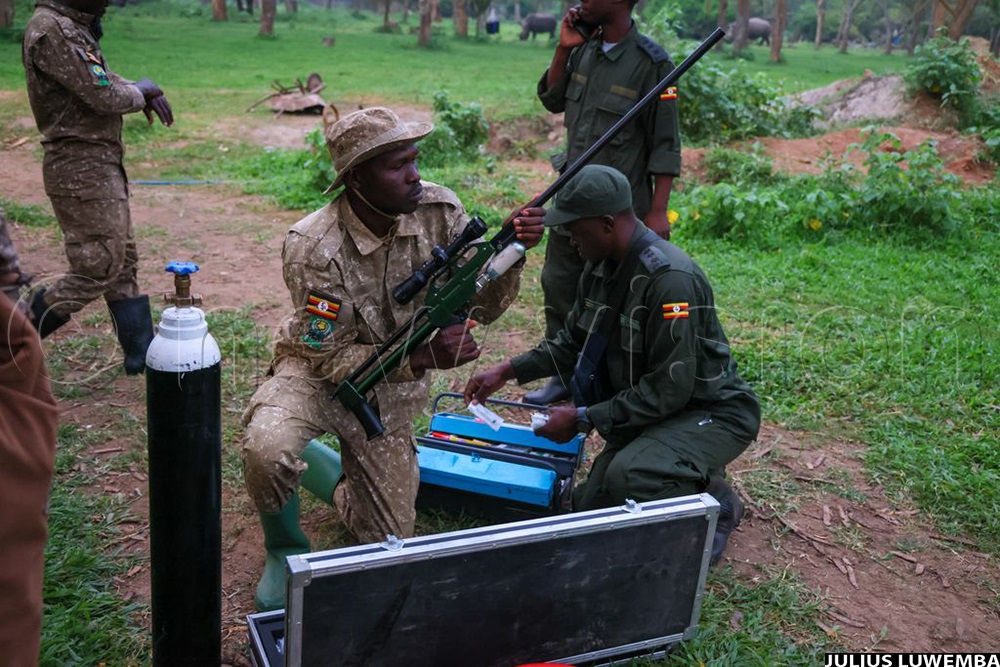
Vet doctors preparing their equipment including a darting gun for tranquilizing the rhinos before translocating them to Ajai Wildlife Reserve. (Photo by Julius Luwemba)
The translocation exercise was a story in motion.
Having identified the rhinos to be moved, a team of vet doctors was set — armed with requisite gear and equipment. Dr Joshua Lubega, using a darting gun, took aim and with precision, was bang on target. He targeted hind thigh of the gentle animal.
After a few minutes, the drug took effect and before the rhino could dizzily hit the grassy carpeted ground, it was already surrounded by a team of well-trained rangers who gently yet firmly held it in a preferred posture to avoid any possible injuries.
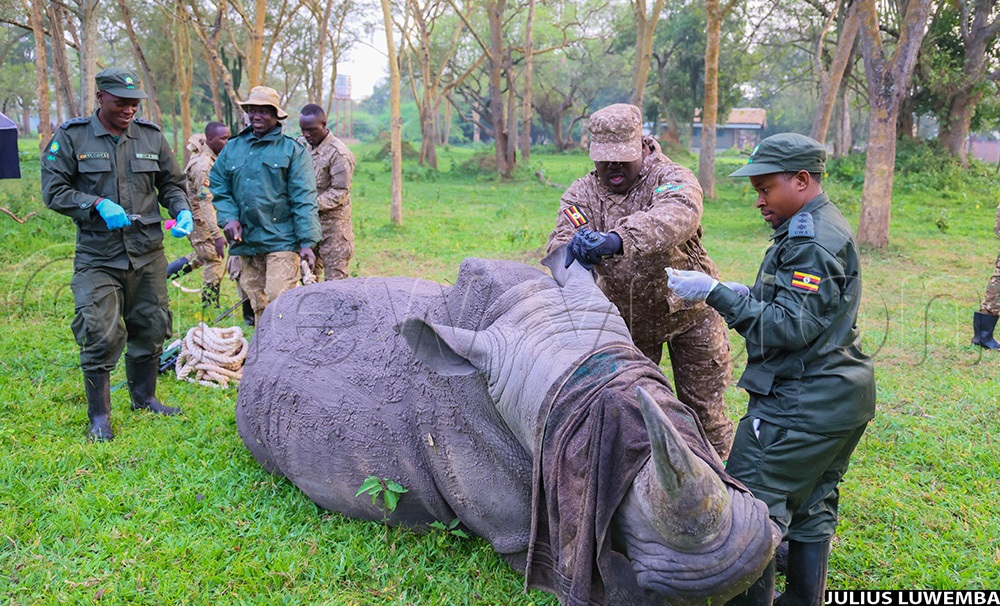
The UWA vet doctors while sedating one of the rhinos before being translocated from Ziwa sanctuary in Nakasongola district to Ajai wildlife reserve in Madi Okollo district. (Photo by Julius Luwemba)
Clinical measurements were conducted, including measuring the weight and pulse. The male rhino, named Jabele, was then gently hauled into a crate and loaded onto a truck.
The same process was repeated with the next male rhino named Erias. By 9am, two trucks carrying the two rhinos were already en route to Madi-Okollo district, where Ajai Wildlife Reserve is located.
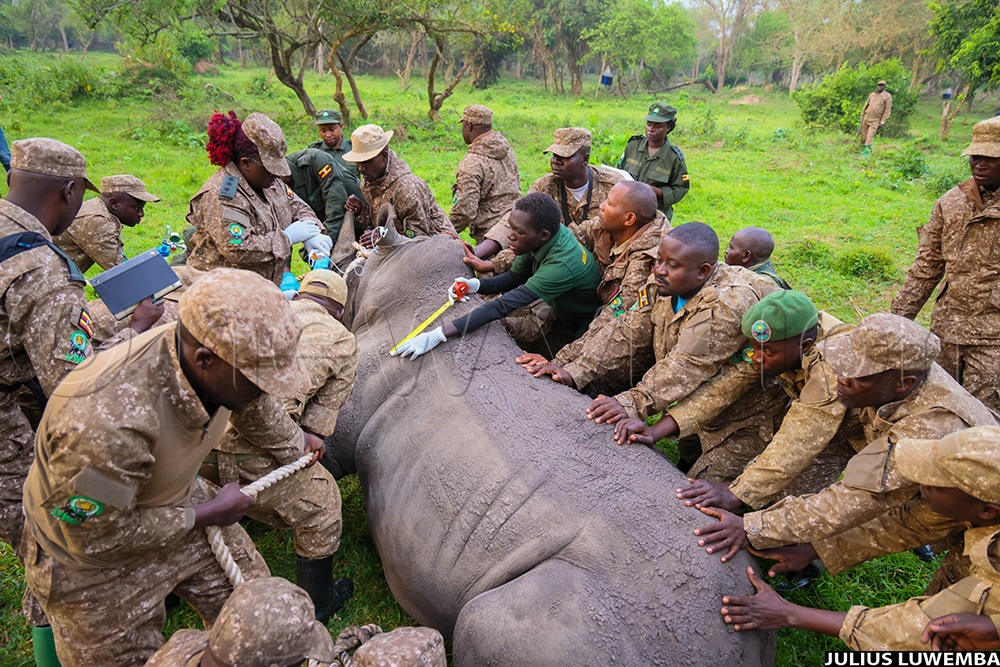
UWA rangers and vet doctors recording the vitals of one of the rhinos at Ziwa sanctuary in Nakasongola district before it was translocated to Ajai wildlife reserve in Madi Okollo district. (Photo by Julius Luwemba)
The rhinos' journey was from Nakasongola through Masindi district and Murchison Falls National Park then to the final destination.
After a four-hour drive, the offloading process was seamless, and the two rhinos were successfully reunited with their colleagues that had been translocated earlier on Monday (January 5).
With the reunion complete, what followed was thunderous applause from the team of vet doctors and rangers, as well as a section of the community staying around Ajai Wildlife Reserve for a job well done.
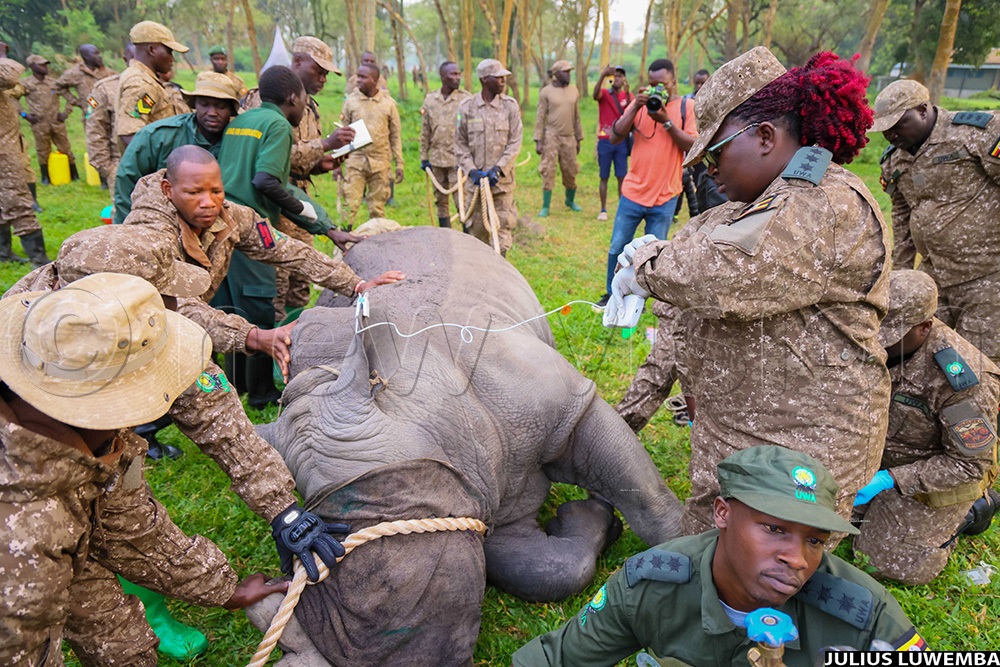
The UWA vet doctors being assisted by the rangers to sedate one of the rhinos at Ziwa sanctuary during the translocation exercise that saw four rhinos taken back to the wild where they existed over 40years ago. (Photo by Julius Luwemba)
It was a momentous success of a long journey that saw rhinos integrated back to Uganda's wild after a period of over 40 years since the last rhino was killed in Ajai Wildlife Reserve.
Bashir Hangi, who speaks for UWA, commended all the staff, among several other stakeholders, who made sure Uganda registers a successful integration and reintegration of rhinos back to the wild.
"Today, we have seen history unfold, where we have had the first-ever rhino translocation in the country. It has been done with the care and sensitivity that it deserves," he said.
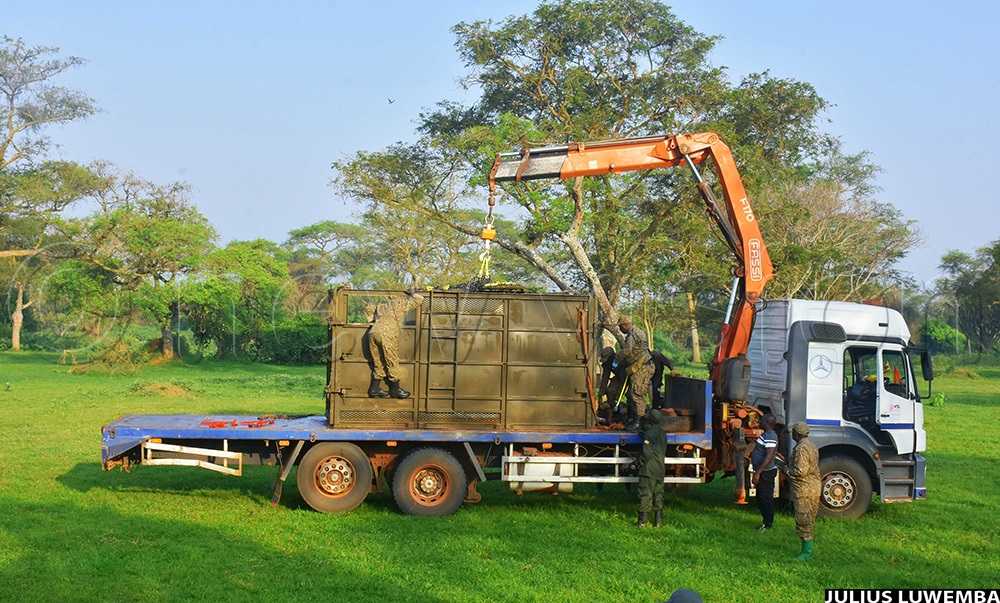
One of the rhinos placed into the crates, being loaded onto a truck to be transported to Ajai wildlife reserve in Madi Okollo district. (Photo by Julius Luwemba)
'Doing excellently fine'
The plan is to have a total of 20 rhinos returned to Ajai Wildlife Reserve.
Hangi explained that the four rhinos translocated this week will serve as a quick benchmark before integrating the remaining 16 rhinos to the wildlife reserve.
"Those brought so far are doing excellently fine and our ecological team will continue monitoring them as we plan on bringing the remaining 16 rhinos. But I can assure that we have everything in place to enable the translocation of the remaining rhinos," he said.
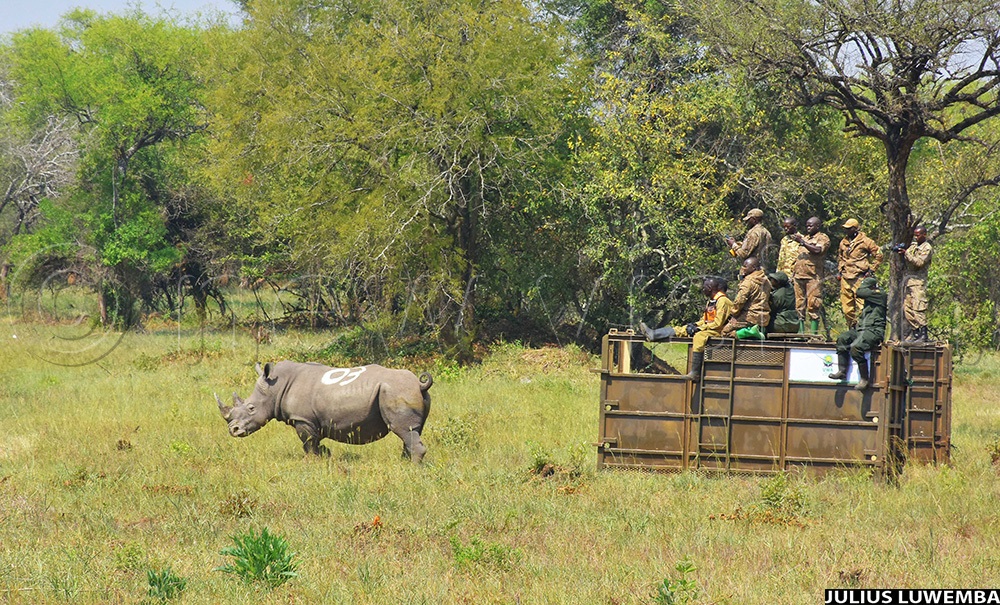
One of the translocated Rhinos upon being released to the wild landscapes of Ajai Wildlife reserve in Madi Okollo district. (Photo by Julius Luwemba)
UWA executive director Dr James Musinguzi said the translocation step strengthens the rhino species' recovery "and restores an important part of our natural heritage for future generations".
Last month, in December, Uganda received eight rhinos from South Africa as part of the national rhino conservation strategy aimed at increasing the rhino numbers. The donation brought to 59 the total number of rhinos that are currently kept in Uganda.
Basil Ajer, the tourism director under the tourism industry, recently said that whereas Uganda's conservation efforts are commendable, the country once boasted of over 1,000 rhinos before the intensive poaching and civil unrest of the late 1970s and early 1980s.
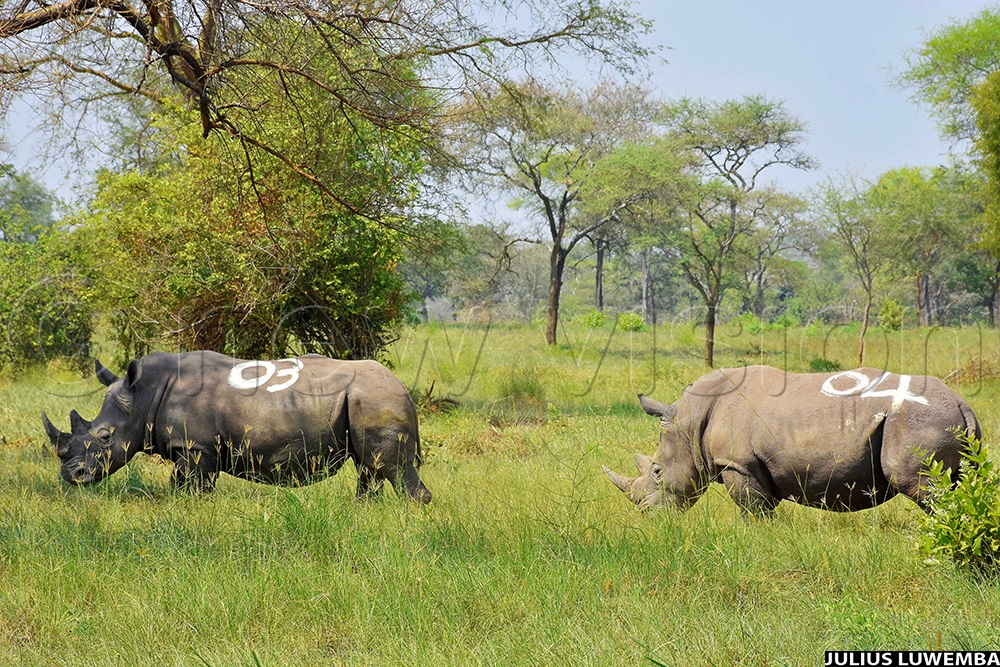
The latest two Rhinos that were translocated to Ajai Wildlife Reserve, making a total of four rhinos that have so far been translocated back to the wild in Uganda. (Photo by Julius Luwemba)
He said as Uganda takes the positive trajectory of increasing the rhino numbers, community sensitisation remains key to sustain such conservation efforts.
"Therefore, the community must feel the ownership of such wildlife as we supplement the efforts with fencing and boosting security."
Uganda once boasted of the northern white rhinos and eastern black rhino species. The northern white rhinos were confined west of the Albert Nile in the then West Nile district, with their home in Ajai.
The eastern black rhino species was confined in the east of the Albert Nile and north of the Victoria Nile, spanning the Acholi, Lango and Karamoja areas, before they were all wiped out during the period of insecurity.
The last rhino in the Narus valley of Kidepo National Park was killed in 1983.
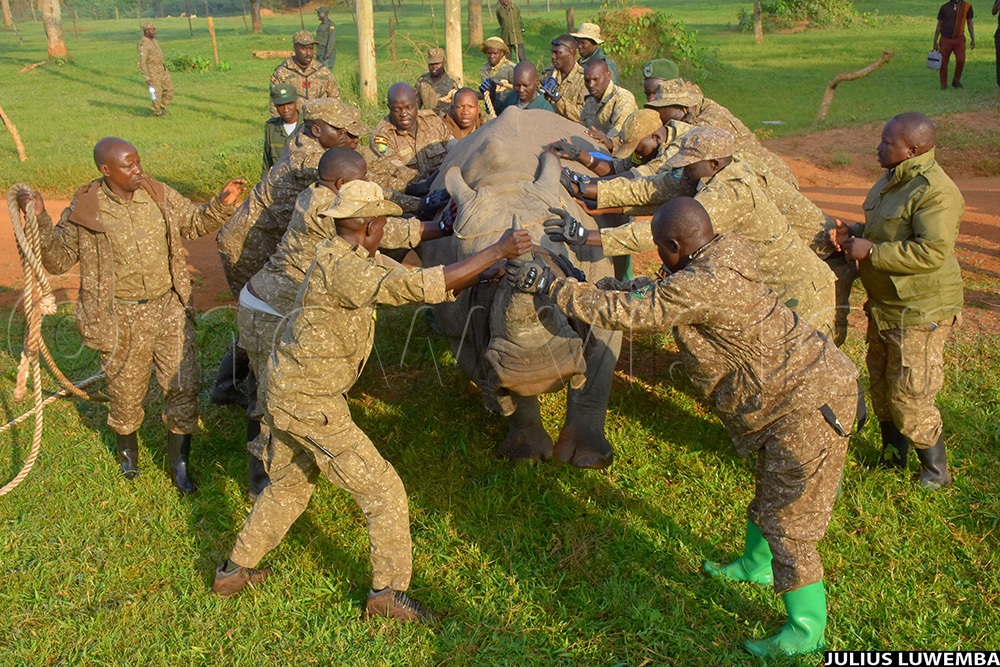
The exercise which saw four rhinos being reintegrated back to the wild, is part of the wider rhino conservation strategy aimed at repopulating the number of rhinos in the wild. (Photo by Julius Luwemba)
Meanwhile, the systematic reintroduction started in 1997, which saw two rhinos imported from Kenya in 2001. In 2006, the breeding of rhinos started at Ziwa Rhino Sanctuary with the importation of four rhinos from Solio camp in Kenya and two rhinos from Disney Animal Kingdom in the USA.
The six gentle beasts formed the founding population of the breeding programme at Ziwa Rhino Sanctuary, which saw the number grow to 49 individuals, before another eight were brought in December last year.
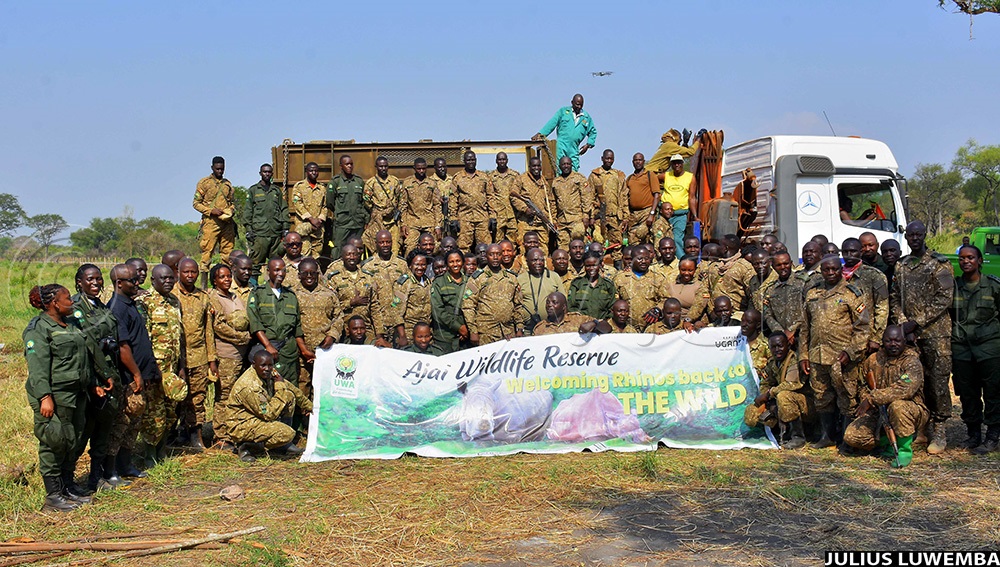
The team of staff for Uganda Wildlife Authority that pioneered the translocation of rhinos from Ziwa sanctuary to Ajai Wildlife reserve.(Photo by Julius Luwemba)
In partnership with the Uganda Tourism Board, the wildlife authority ran a rhino-naming campaign on September 22, 2025, which raised over 490 million shillings with an aim of implementing the 10-year rhino conservation and management strategy (2018-2028).
The strategy aims to achieve an annual rhino population growth rate of at least five per cent.
The plan will see Uganda's wider landscapes such as Murchison Falls and Kidepo national parks repopulated with the once-extinct rhinoceros.