
Canadian explorers captivated by Kibale’s wildlife spectacle
In this rich ecosystem of Kibale National Park, which covers 766 square kilometres, a group of Canadian tourism influencers who arrived in Uganda on April 9, 2026, were left in awe not only of the vegetation and landscape but also of the behaviour of its inhabitants.
Gorilla and Chimpanzee tracking was the highlight of the tour by the Canadian influencers. (Courtesy photo)
________________
The forest hummed with life as birds called in coded melodies, insects twitched in invisible rhythms, and trees creaked under their own weight. The chorus of cicadas filled the undergrowth while, in the distance, a grey-cheeked mangabey let out a hoot that rippled through the canopy.
Into the cool forest came an unmistakable sound, a rhythmic thump followed by the rush of movement overhead. Chimpanzees swung effortlessly from branch to branch, their silhouettes cutting through shafts of filtered sunlight.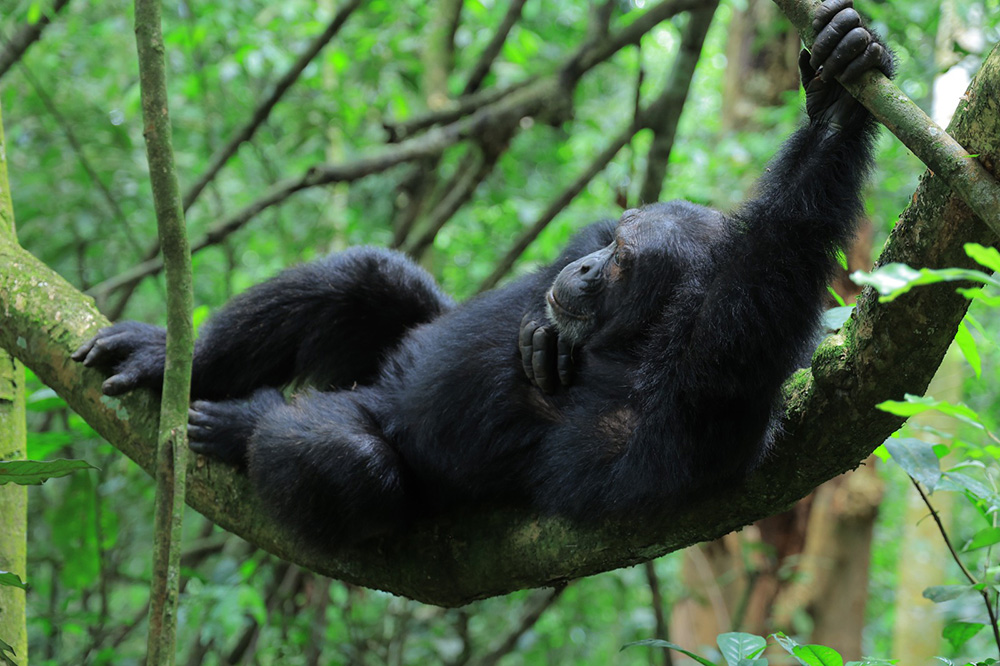
A chimpanzee relaxing in the tree branches of Kibale National Park. (Courtesy photo)
These were not just animals in the trees. They were families expressing emotions and interactions, their lives marked by playfulness, a clear sign of social bonding.
In this rich ecosystem of Kibale National Park, which covers 766 square kilometres, a group of Canadian tourism influencers who arrived in Uganda on April 9, 2026, were left in awe not only of the vegetation and landscape but also of the behaviour of its inhabitants.
Known as the primate capital of the world, Kibale National Park has 20 recorded species of primates, including 13 diurnal species and seven nocturnal ones. The park is also home to 21 reptile species, 251 butterfly species and 350 tree species. Among the primates are over 1,450 chimpanzees living in 13 communities.
Out of the 13 chimpanzee communities, only five are habituated for research and tourism. The Canadian team of travel influencers and operators visited the Kanyantare family of chimpanzees in the Kanyanchu sector of Kibale National Park.
"When my eyes locked into those of a Chimpanzee, I felt emotionally attached to it. We both seemed to have known each other for a long time," recounted Sventlana Senyuk, a Canadian tour operator.
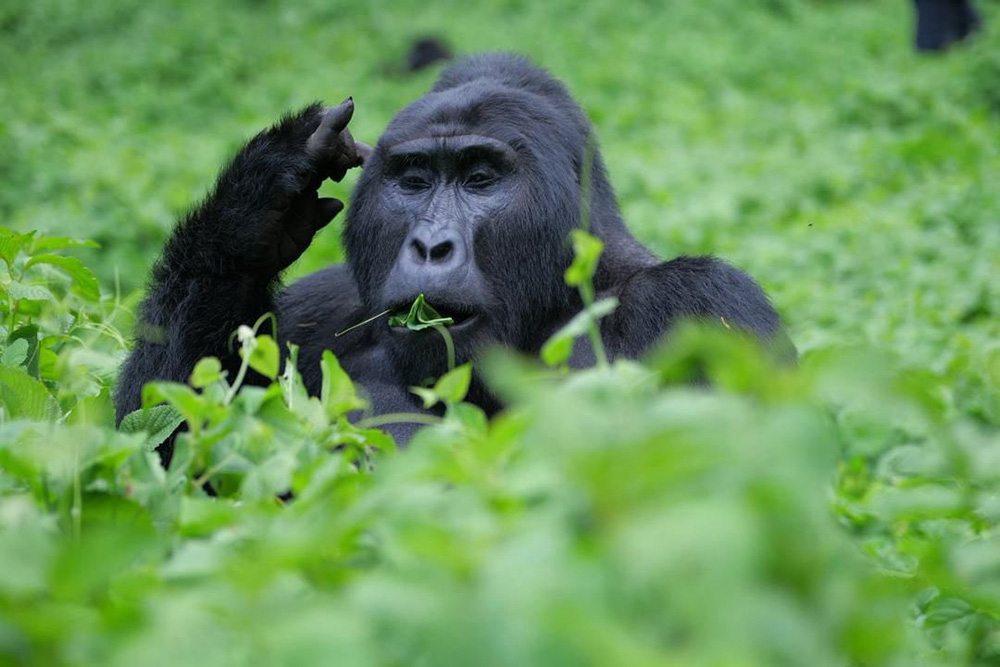
A gorilla browsing on leaves and tendrils. (Courtesy photo)
The visit came at a time when online narratives had sensationalised reports about chimpanzee conflict in the park, particularly involving the Ngogo community. On the ground, however, a different picture emerged.
While social media stories described what was termed a 'civil war', chimpanzee families in Kibale National Park appeared calm and peaceful, as witnessed by the Canadian tour operators during their tracking expedition on Tuesday evening.
Led by Ambassador Allan Kajik, chargé d'affaires at the Uganda High Commission in Ottawa, Canada, the team described the chimpanzee tracking experience as rewarding.
"There has been a lot of misinformation that Chimpanzees were tearing each other apart. On the contrary, we've found these great apes lying in the tree branches while cross-legged, others swinging from one tree to the other, whereas the rest were just grooming each other," Kajik expressed.
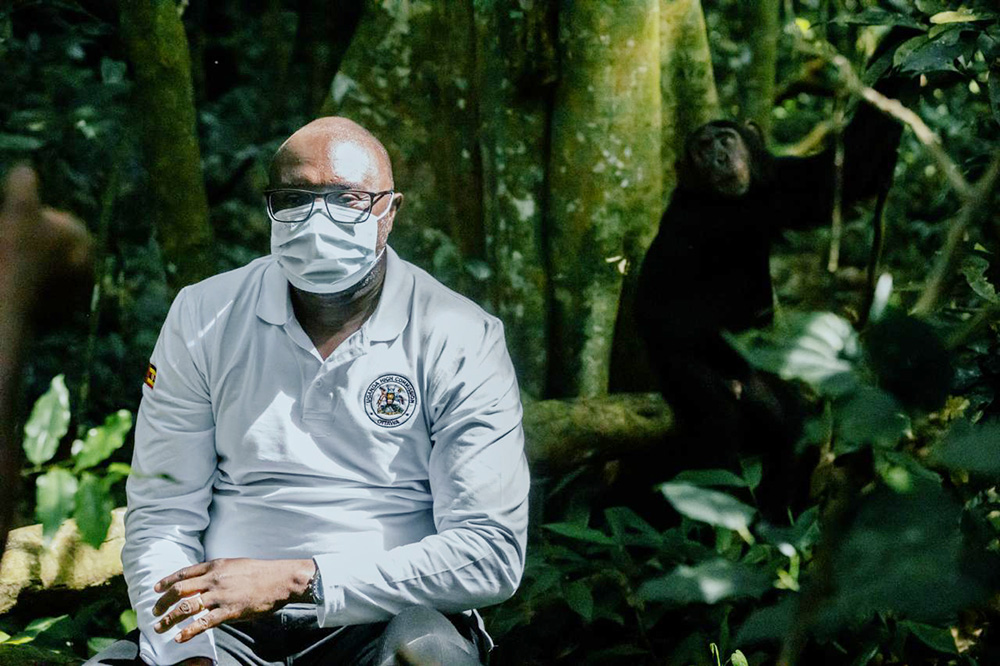
Ambassador Allan Kajik, Chargé d'affaires at the Uganda High Commission in Canada posing infront of a calm juvenile chimpanzee in Kibale National Park. (Courtesy photo)
Leticia Arinaitwe, a ranger guide in Kibale National Park, acknowledged that while disagreements among the great apes do occur, "it is wrong to call it a civil war."
Apart from Ngogo and Kanyantare, other habituated chimpanzee communities in Kibale National Park include Kanyawara, Sebitoli and Kisongi, where chimpanzee habituation experiences are conducted.
Visited places
Beyond chimpanzee and gorilla tracking, which stood out as highlights, the Canadian tourists also visited the Namugongo Martyrs Shrine, Kasubi Tombs and Kabaka’s Palace as part of the Mengo trail before heading to Bwindi the following day for gorilla trekking.
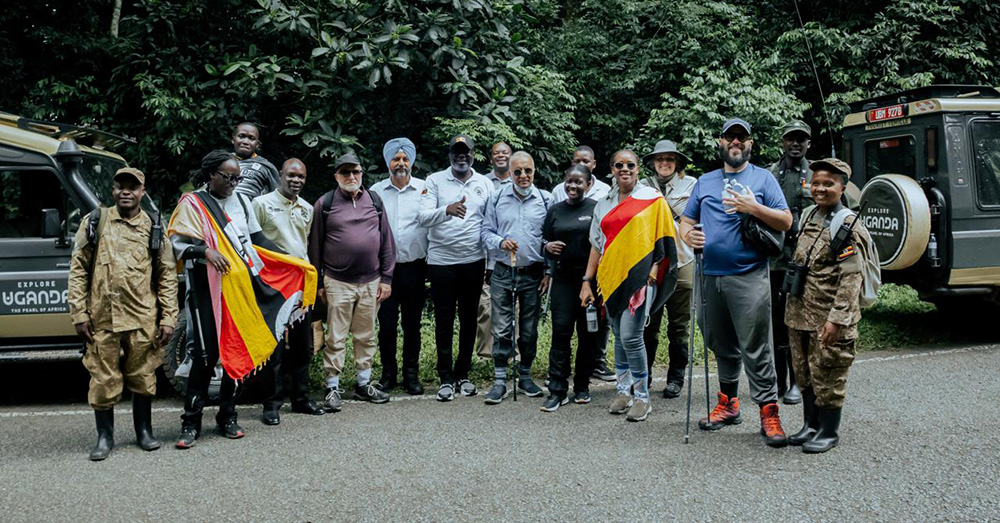
The group of Canadian influential tour operators and media personnel plus the officials from tourism ministry having a photo moment before tracking the chimpanzees in Kibale National Park. (Courtesy photo)
According to Kajik, the visitors were also impressed by upcountry lodges offering high standards of comfort, tranquillity and service.
The group later visited Queen Elizabeth National Park, where, within less than an hour, they observed lions, leopards, buffaloes, hippos and a variety of bird species in one setting. After their experience in Kibale National Park, the Canadian tourists, together with officials from the tourism ministry and the Uganda Tourism Board, returned to Kampala on Wednesday.
From there, they are expected to travel to Jinja, widely referred to as Uganda’s adventure capital.