
Uganda Athletics unveils safeguarding policy to protect athletes
Uganda Athletics’ policy targets a wide range of threats, including financial exploitation by managers, emotional and physical abuse, sexual abuse, bullying, sexual harassment, neglect, gender-based violence and cyber bullying.
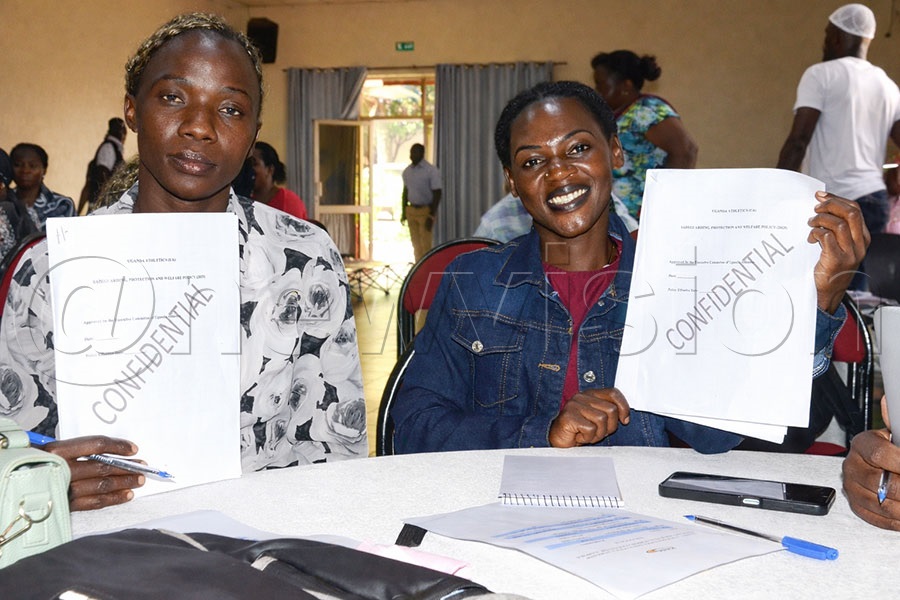
Athletes and officials pose for a group photo after a one day safe guarding program
In a bid to protect athletes both physically and mentally, Uganda Athletics (UA) has unveiled a safeguarding policy aimed at creating a safe and supportive environment for everyone involved in the sport.
The initiative reflects growing concern over the risks athletes face, ranging from exploitation and abuse to neglect and cyber bullying.
The policy was introduced during a one-day stakeholders’ engagement held in Kampala last week, where athletes, coaches, managers and members of the media were invited to contribute ideas before the final document is adopted.
The inclusive approach underlines the federation’s commitment to ensuring that safeguarding measures address real challenges faced on and off the track.
Safeguarding in sport goes beyond protecting athletes from physical harm. Uganda Athletics’ policy targets a wide range of threats, including financial exploitation by managers, emotional and physical abuse, sexual abuse, bullying, sexual harassment, neglect, gender-based violence and cyber bullying. These issues, if left unchecked, can destroy careers, affect mental health and discourage young people from participating in sport.
UA president Dominic Otucet emphasized that safeguarding is central to the future of athletics in the country. He noted that sport can only thrive when it is built on trust and safety.
“Every sport must create a safe environment not only for athletes but also for all stakeholders. When the sport is safe, it will attract many people to participate. Sponsors will also come on board because no one wants to associate with a chaotic environment,” Otucet said.
His remarks highlight how safeguarding is not only a moral obligation but also a strategic tool for development. A safe sporting environment increases participation, boosts public confidence and strengthens the sport’s image locally and internationally.
UA general secretary in charge of development, Beatrice Ayikoru, revealed that the federation is committed to ensuring the policy is not just a document on paper but one that is actively implemented.
“The safeguarding policy is part of our strategic plan and we want to protect everyone in our sport, including athletes’ support staff and anyone vulnerable within athletics, so that they feel safe,” Ayikoru said.
Athletes themselves have welcomed the move, saying it empowers them to speak up and defend their rights. Prisons Athletics Club athlete Evelyn Kole applauded the federation for educating athletes on how to recognize abuse and respond appropriately.
“I have got to know some of my rights, to say no when I feel violated and to act when my fellow athletes are physically or emotionally abused,” Kole said.
Her testimony shows that safeguarding policies are essential in creating awareness and breaking the culture of silence that often surrounds abuse in sport.
The introduction of the policy also aligns Uganda Athletics with global standards. Safeguarding is a mandatory requirement by World Athletics, which obliges all national federations to implement protective measures for athletes and stakeholders.
As Uganda Athletics moves toward finalizing and enforcing this policy, it sends a strong message that athlete welfare comes first. Safeguarding is not only about preventing harm but about nurturing confidence, dignity and long-term success in sport. By prioritizing protection, Uganda Athletics is laying the foundation for a healthier, more inclusive and sustainable future for athletics in the country.