
IOC's Blick calls on government to boost funding for Game Connect project
Game Connect is a structured program aimed at improving the psychosocial well-being and mental health of vulnerable youth aged 10 to 24, both in and out of school, including those with disabilities.
IOC member William Blick speaking at the Game Connect Summit at Hotel Africana on April 9, 2026. Photo: Silvano Kibuuka
International Olympic Committee (IOC) member William Blick has called on the government to increase funding for the Game Connect initiative through key institutions, including the Office of the Prime Minister, the Ministry of Education and Sports, and the Ministry of Health, all of which are actively involved in the program.
Game Connect is a structured program aimed at improving the psychosocial well-being and mental health of vulnerable youth aged 10 to 24, both in and out of school, including those with disabilities.
The initiative operates in Kampala, as well as in the Kyangwali, Rwamwanja, Palabek, and Adjumani refugee settlements and surrounding host communities.
Blick made the remarks during the closing ceremony of the project’s first phase. Uganda has been a key beneficiary, using sport as a tool to reach over two million refugees and members of host communities. He reiterated the immense benefits realized from the six-year implementation of Game Connect and pledged to lobby for its renewal.
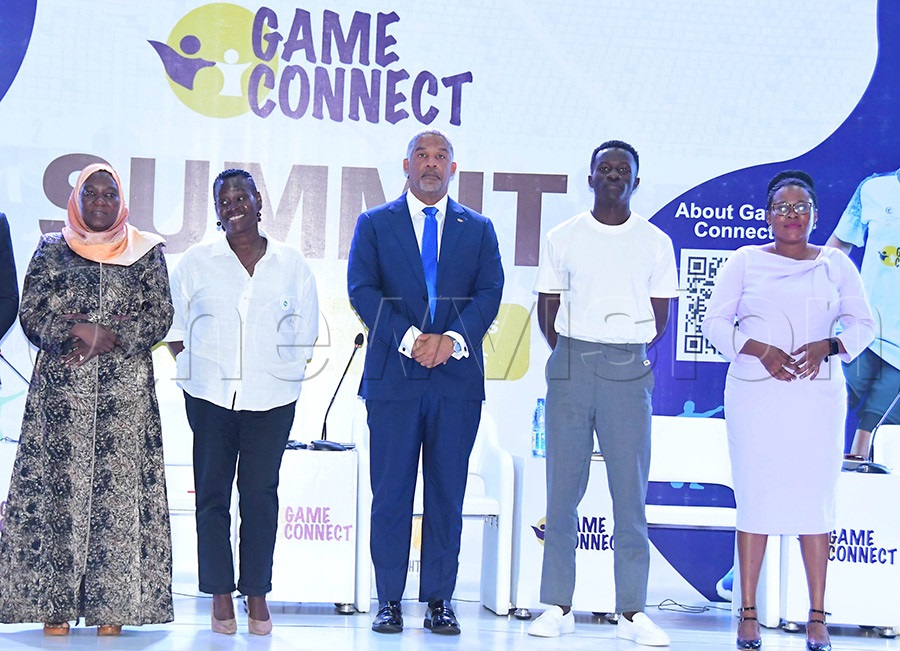
William Blick (centre), proprietor of Game Connect, deliberates at the program's summit at Hotel Africana on April 9, 2026. To his left are Dr. Hasfa Lukwata from the Ministry of Health and Dr. Rita Larok, programs officer at AVSI. To his right are Rebecca Namakula from the Ministry of Education and Sports and IOC Youth Ambassador Ambrose Otim. Photo: Silvano Kibuuka
He noted that the project, introduced in Uganda in 2020, is anchored on promoting Olympic values of respect, friendship, and excellence. Over time, the initiative has grown into a consortium involving organizations such as Right to Play, Youth Sport Uganda, AVSI Foundation, UNHCR, the Olympic Refuge Foundation, the Uganda Olympic Committee, and the Office of the Prime Minister. Other partners include the Ministry of Education and Sports and the Ministry of Health.
Blick emphasized the unifying power of sport, citing Nelson Mandela, who used rugby as a symbol of unity in post-apartheid South Africa.
“In sports, there is always a handshake after competition. You learn respect, friendship, and the pursuit of excellence through hard work and perseverance. Beyond that, there are health benefits and socio-economic opportunities such as employment and business,” Blick noted. He added that many of these benefits have been achieved through the Game Connect consortium, contributing to the United Nations Sustainable Development Goals.
Dr. Hasfa Lukwata from the Ministry of Health, in charge of mental health and substance use, identified stigma, displacement, and poverty as key drivers of mental health challenges among youth. She commended the consortium for using sport as an intervention tool.
“We have the Mental Health Act of 2019, which should be observed,” she noted.
Rebecca Namakula from the Ministry of Education and Sports, under the guidance and counseling department, noted a rising trend of mental health challenges among both learners and teachers. She cited academic pressure and financial hardships as major contributing factors.
“We have intervened by disseminating guideline materials to schools, involving parents, and conducting sensitization programs,” Namakula explained.
Dr. Rita Lorok from the AVSI Foundation highlighted the health benefits of sport, noting that physical activity stimulates hormones that improve blood flow, reduce stress, and enhance overall well-being.
“These benefits are most effective when physical activity is sustained for at least 25 minutes, five days a week,” she said.
IOC Young Ambassador Ambrose Otim, a coach with Youth Sport Uganda, urged stakeholders to renew the project, noting its positive impact in helping youth overcome drug abuse through initiatives such as the Play Pure Project.
Youth groups from various refugee settlements and communities presented position papers to the Office of the Prime Minister, the Ministry of Education and Sports, and the Kampala Capital City Authority (KCCA).