
YouTube exec says goal was viewer value not addiction
Zuckerberg testified last week that he regretted Meta's slow progress in identifying underage users on Instagram, as the plaintiff's legal team sharply criticised the company for deliberately targeting children.
Meta CEO Mark Zuckerberg leaves the Los Angeles Superior Court after testifying on February 18, 2026 in Los Angeles, California. (Credit: AFP)
LOS ANGELES - A landmark social media addiction trial resumed Monday with a YouTube executive insisting that the Google-owned company's aim was to give people value, not hook them on harmful binge-viewing.
YouTube vice president of engineering Cristos Goodrow was pressed to defend the company's self-styled "big, hairy, audacious goal," set more than a decade ago, to increase viewer time to more than a billion hours a day by 2016.
As he did last week when Meta chief executive Mark Zuckerberg testified in the same Los Angeles court, plaintiff's attorney Mark Lanier told jurors that Goodrow's compensation climbed with his company's share price, meaning he profited personally from ramping up user engagement.
"YouTube is not designed to maximize time," Goodrow replied, as he was shown company documents indicating that viewer engagement was a priority for performance at the platform.
"It's designed to give people the most value..."
As a counterpoint, Lanier had Goodrow detail the addition of features including viewing recommendations, auto-play for videos and ads, and a version of YouTube designed specifically for children.
The lawyer said these efforts enticed users to a "treadmill of continuous checking" for new content.
Goodrow contended "we don't want anybody to be addicted to anything" as Lanier pressed him about YouTube features crafted to keep viewers watching.
The executive pushed back against efforts by Lanier to put YouTube on par with social networks such as Facebook or Snapchat, stressing the platform was not a forum for friends to connect or for sharing vanishing messages.
And YouTube would see relentless scrolling by users as a failure, not a success, according to Goodrow.
"We want people to be able to watch what they want to watch as quickly as possible every time," Goodrow told jurors.
"If they scroll, they'll get kind of frustrated."
Lots of scrolling would also mean YouTube's vaunted recommendation software was not doing its job well, he added.
Lanier pointed to internal YouTube documents referencing outside research that found harmful effects from spending too much time watching videos.
Goodrow agreed that children should not be losing sleep watching YouTube, saying that is why the platform came up with features like view timers and prompts to take breaks.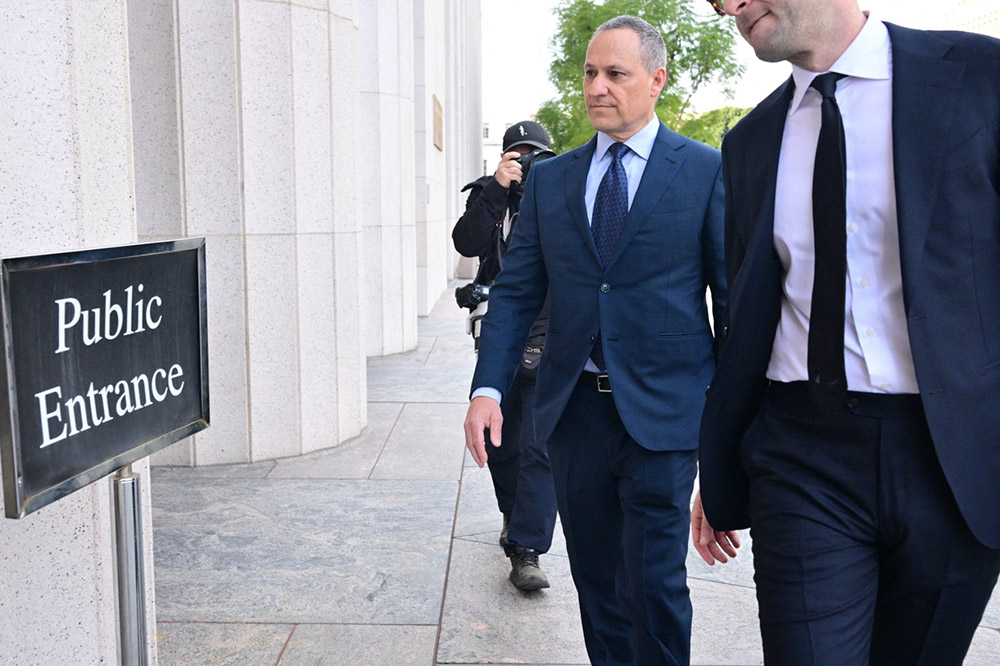
YouTube vice president of Engineering Cristos Goodrow (L) arrives to Los Angeles Superior Court for the social media trial tasked to determine whether social media giants deliberately designed their platforms to be addictive to children, in Los Angeles, on February 23, 2026. (Credit: AFP)
Kaley to testify
The trial is set to last until late March, when the jury will decide whether Meta and YouTube bear responsibility for the mental health problems suffered by Kaley G.M., a 20-year-old California resident who has been a heavy social media user since childhood.
Kaley G.M. started using YouTube at age six, Instagram at nine, and later TikTok and Snapchat.
She is expected to testify this week — perhaps as early as Tuesday, according to her lawyers.
Zuckerberg testified last week that he regretted Meta's slow progress in identifying underage users on Instagram, as the plaintiff's legal team sharply criticised the company for deliberately targeting children.
The trial is the first in a series of lawsuits filed by American families against social media platforms and will determine whether Google and Meta deliberately designed their platforms to encourage compulsive use among young people.
The case is expected to set a standard for resolving thousands of lawsuits that blame social media for fueling an epidemic of depression, anxiety, eating disorders, and suicide.
TikTok and Snapchat, also named in the complaint, reached settlements with the plaintiff before the trial began.