
Science and innovation to drive Uganda’s $500b growth plan — Musenero
“This is the moment when the country moves from understanding to execution, from pathfinding to takeoff. We are no longer asking how science will benefit us; we are showing how it already is,” Musenero said.
Speaking at the launch, science minister Dr Monica Musenero said Uganda is entering a new phase where the focus is no longer on explaining the importance of science but on demonstrating its real-world impact. (Credit: Sharon Nabasirye)
KAMPALA - Uganda is turning to science, technology and innovation as a key driver of its economic future, with government officials saying the sector will be critical in pushing the country toward a $500 billion economy by 2040.
At the official launch of week-long National Science Week 2026 held at the Kampala Serena Hotel on Thursday (April 9), policymakers, scientists and investors outlined plans to demonstrate how innovation is already contributing to economic growth and how it can be scaled up to create jobs, industries and new markets.
The week, themed 'STI Works: Powering Uganda to a US$500 billion economy', is expected to act as a platform for showcasing progress made over the past five years while also inviting scrutiny from the public and investors.
Speaking at the launch, science minister Dr Monica Musenero said Uganda is entering a new phase where the focus is no longer on explaining the importance of science but on demonstrating its real-world impact.
“This is the moment when the country moves from understanding to execution, from pathfinding to takeoff. We are no longer asking how science will benefit us; we are showing how it already is,” she said.
Over the past five years, the government has invested in building the foundations of an innovation ecosystem, from research and product development to early-stage commercialisation.
The next phase, Musenero said, will focus on scaling these innovations into industries that can generate jobs, boost exports and expand Uganda’s economic base.
“We will now measure success not by the number of innovations, but by their impact on the economy."
Central to this year’s Science Week is an effort to connect innovators with capital. Organisers announced a series of investor roundtables, innovation deal rooms and pitch sessions designed to attract high-net-worth individuals, institutional investors and diaspora financing into Uganda’s growing innovation pipeline.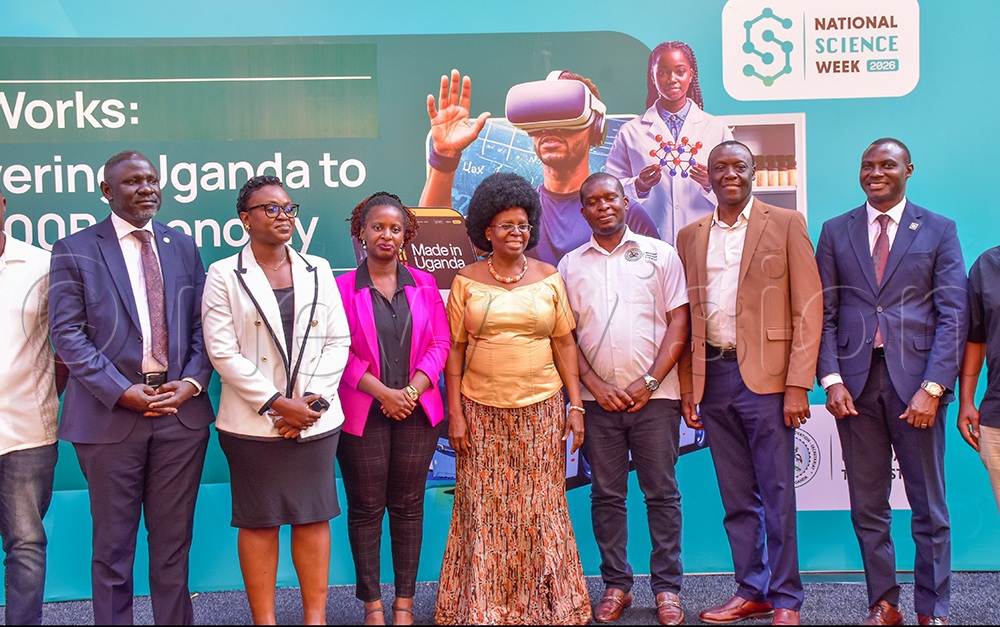
Central to this year’s Science Week is an effort to connect innovators with capital. Organisers announced a series of investor roundtables, innovation deal rooms and pitch sessions designed to attract high-net-worth individuals, institutional investors and diaspora financing into Uganda’s growing innovation pipeline. (Credit: Sharon Nabasirye)
'Science is no longer abstract'
Cathy Muhumuza, the superintendent of support services at the Science Technology and Innovations Secretariat, acknowledged that while Uganda has made progress in developing homegrown solutions, a persistent financing gap has limited their ability to scale.
“We have investors within our country who can take these innovations to market. This year, we are deliberately bringing them into the conversation,” she said.
In a shift from traditional reliance on foreign investment, the government is now actively encouraging domestic investors to channel funds into science-driven enterprises, arguing that local capital is better positioned to understand and grow Ugandan innovations.
Beyond financing, the government is also seeking to address a longstanding trust deficit. Many Ugandans, officials admitted, remain sceptical about how public funds for science are used and whether they yield results.
To counter this, Science Week will include public accountability forums, open policy dialogues and exhibitions where citizens can directly engage with innovators and assess the outcomes of government-backed projects.
“You can touch the results. Science is no longer abstract; it is being laid bare for everyone to see," said Musenero.
Among the highlights expected during the week is the unveiling of new industrial products developed through government-supported research, as well as updates on high-profile projects, including a climate monitoring camera built by Ugandan engineers in collaboration with regional partners and set to be deployed on the International Space Station (ISS).
The event will also feature a national hackathon, with winning teams set to receive up to sh500m (about $130,000) in funding to develop solutions to pressing national challenges.
Peter Oryen, an undersecretary in the STI Secretariat, said such initiatives are designed not only to spur innovation, but also to build a pipeline of scalable enterprises capable of contributing meaningfully to economic transformation.
“Science, technology and innovation have been placed at the centre of Uganda’s transformation agenda. The question now is whether we can translate that into real value for citizens,” he said.