
Ugandan highland communities empowered with sustainable WASH practices
The project initiated the construction of protected spring wells, purchased water harvesting tanks for selected communities, and constructed gravity water systems in some communities.
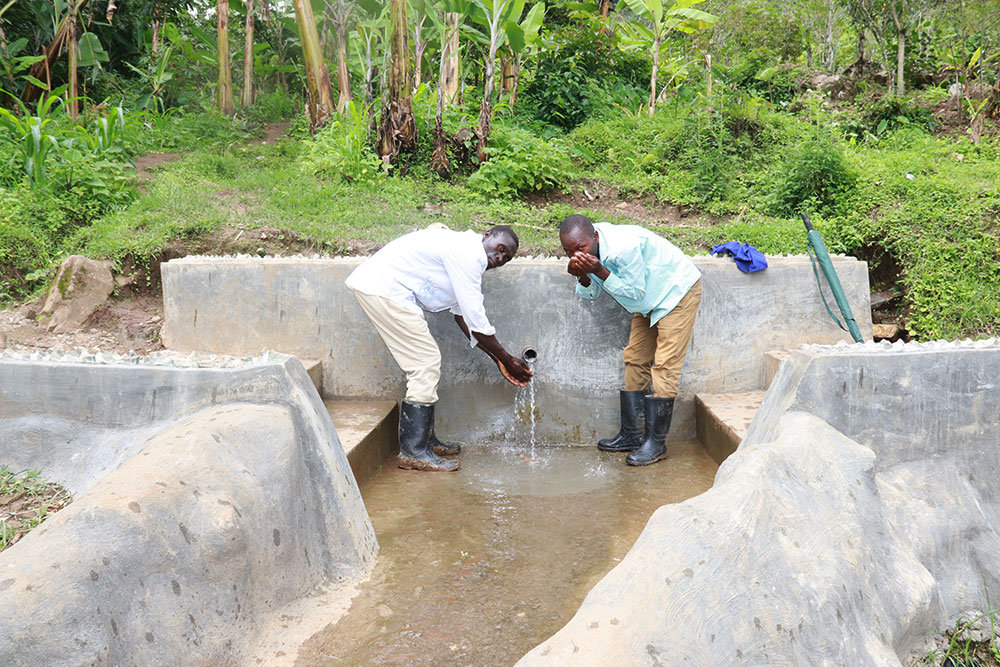
In Bududa, the spring wells are providing clean and safe water
________________________
COMMUNITY EMPOWERMENT
Enthusiasm hits you when you arrive at Nangalo community in Uganda's southwestern highland district of Rubanda in Kigezi sub-region. Residents here are now filled with happiness, unlike before.
Their happiness, according to Silervario Babirekye, the LC1 chairperson for Nangalo Ward located in Hamurwa Town Council, is because of the CommonGround Project, which solved the community’s biggest problem: Poor Water, Sanitation, and Hygiene (WASH) practices.
With the lack of access to clean water, many communities in Kigezi faced severe water challenges. These issues resulted from the mountainous terrain, population pressure, and climate change, which led to acute water shortages.
In some Kigezi communities in Rubanda, Kabale, and Kisoro districts, there has been heavy deforestation and poor farming practices that has led to contamination and drying up of some water sources, including spring wells, swamps, and rivers.
These challenges forced residents, especially women and children, to spend two to three hours daily in search of water. School-going children were often late or missed school altogether due to long queues and distances. 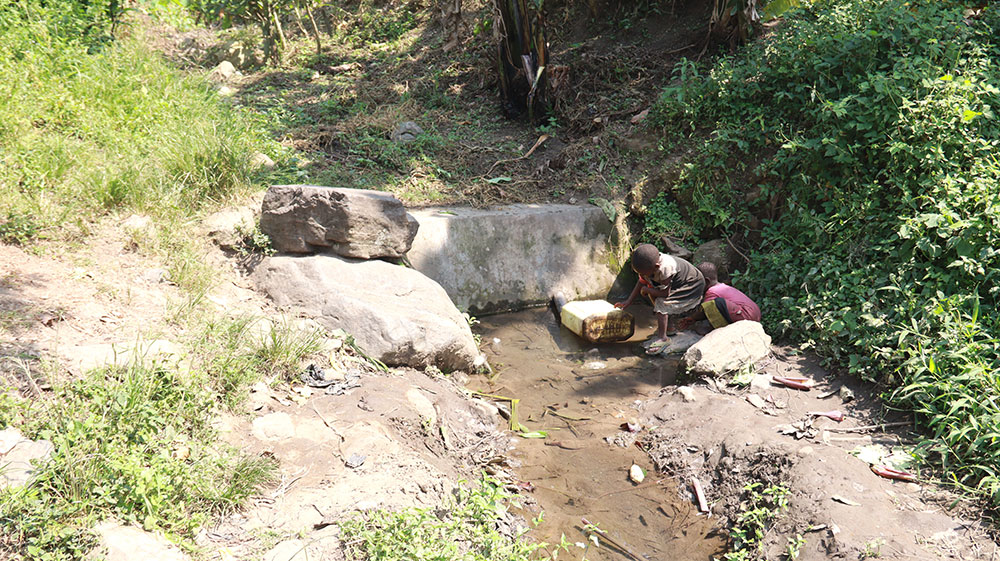
Many wells were in dire state yet they were the only source of water for many residents
In the Bugarama community, located in Buhara Town Council in Kabal, Glorious Tumwekwase practises farming for a living. Before the CommonGround Project came to her community, she would spend valuable time fetching water at the wetlands.
Some days, she was unable to water her vegetables because fetching water would be so tiring. In the end, she would lose most of the vegetables because they lacked enough water.
In the Bwanjojo community, also located in Buhara, community member Innocent Muchunguzi operates a vegetable nursery bed and garden that entirely rely on water. Before the CommonGround Project’s intervention in his community, he would spend valuable time fetching water in the valleys, which made bringing it to his garden — two kilometers away — a big burden.
Muchunguzi was forced to water only once. That means very often, his vegetables would dry up or become malnourished.
Before the project’s intervention in the Kaguma community, located in Buheesi Town Council in Bunyangabu district in the Rwenzori sub-region, community members fetched water from ponds shared with animals. The water was so dirty that whoever fetched it had to first keep it for some hours for the dirt to settle at the base of the container before use.
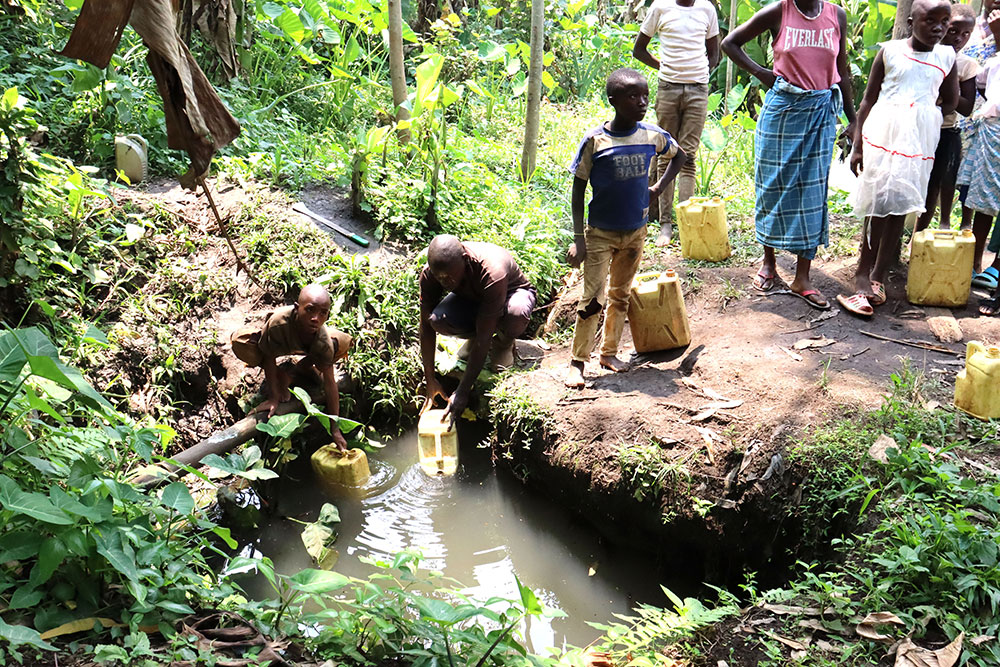
In Bunyangabu district, this water well in Buhesi was very dirty
Erika Wenka, the chairperson of LC1 for Kaguma cell, recalls how waterborne diseases were common because people were drinking water shared with animals.He says most of the ponds used for daily tasks like washing and fetching water were not protected, also exposing the community, especially children, to the risk of drowning. He recalls an incident in 2023 when a school-going boy drowned in the pond after failing to pull out a jerrican from the water.
“The body of the boy was discovered by one of the community members who had come to fetch water at the same spot,” says Wenka.
He says they had written to the town council requesting for clean water, but that their pleas had fallen on deaf ears.
In the Kakindo community in Karugutu sub-county, Ntoroko district, the situation was no different. The entire community had no single source of water. Residents on average trekked two kilometres in search of water for domestic use, which was exhausting and very often caused violence in homes.
For instance, Hellen, a resident whose last name is withheld upon request, reveals that the search for water caused tension in homes; she had to walk three kilometres to the swamps in another village, but when she returned, her husband would hurl insults and sometimes beat her, accusing her of being with other men.
Besides water, the majority of households never had latrines, while those that did lacked handwashing facilities. Garbage disposal was improper, and most households did not have plate-drying stands, so they dried plates on bare ground. These poor practices caused diseases related to poor hygiene.
According to the World Health Organization (WHO), poor sanitation is linked to the transmission of diarrheal diseases such as cholera and dysentery, as well as typhoid, intestinal worm infections, and polio.
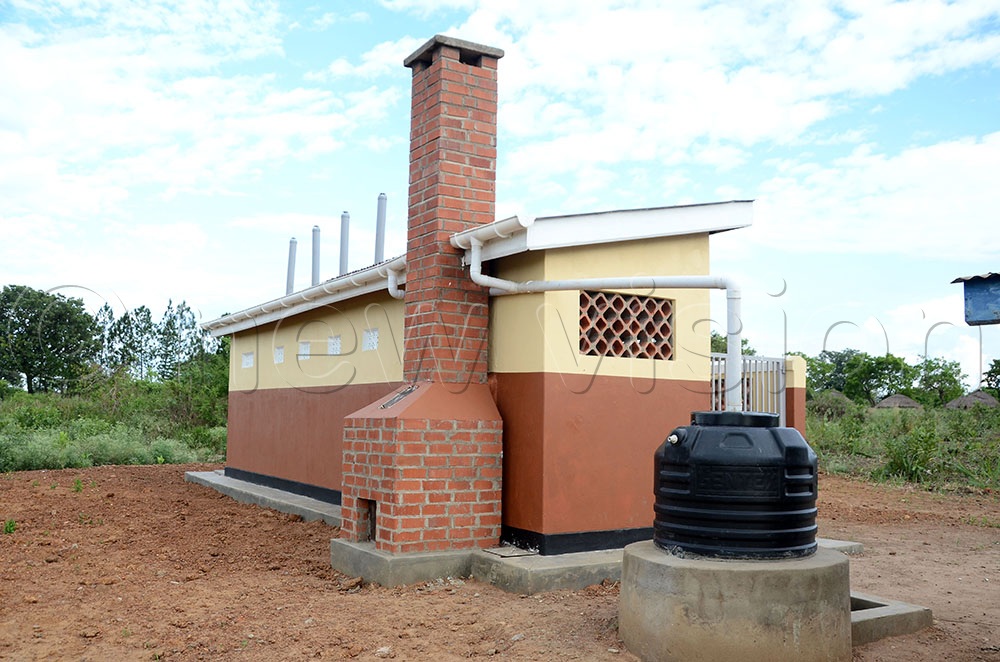
WHO further indicates that over 1.5 billion people still do not have basic sanitation services, such as private toilets or latrines (like the ones pictured below), and of these, 419 million still defecate in the open — for example, in street gutters, behind bushes, or into open bodies of water.
These challenges continued in most highland communities of the Elgon, Kigezi, and Rwenzori regions until the CommonGround Project began implementation in some of these communities. During awareness meetings, various communities singled out the WASH crisis as one of the most serious challenges affecting them.
Many communities were accessing dirty water, sharing it with animals, and often water was unavailable during the dry season.
For some communities, this resulted in waterborne diseases and issues of domestic violence among households, and in some cases, it led to school absenteeism. In some communities, sanitation facilities such as latrines and handwashing stations were lacking.
With the implementation of the CommonGround Project using the Participatory Integrated Planning (PIP) approach through visioning, communities prioritized aspects of WASH practices. The project began training communities in WASH activities to identify infrastructure gaps, implement sustainable solutions, and promote hygiene practices.
Trainings often include practical skills such as how to maintain water points, the need to construct latrines, establish garbage collection points, and build raised plate stands, followed by hygiene education campaigns in the communities.
Immediately, communities started implementing WASH activities at their households.
Many have now constructed raised plate stands for drying plates, unlike before when they dried them on bare ground; constructed and maintained pit latrines; placed handwashing facilities near the latrines; established garbage collection points at every household, among other improvements.
Faith Bintason, from the Nyabusheshe community in Bunyangabu, constructed a plate stand using locally available materials. She used wooden poles from her garden and a few nails, and in one day she had a plate stand.
Today, she washes utensils on a clean stand, unlike before when she used to wash them on the floor.
Bunyangabu chief administrative officer (CAO) Moses Agum appreciates the project for the WASH activities being implemented in the district, explaining that these have created an impact and that communities are yearning to always have clean environments.
All the communities where the project is being implemented have benefited from the sanitation and hygiene training.
Water provision
Although communities began implementing WASH activities, they lacked the necessary resources to access clean water. Based on this situation, the project started supporting the implementation of prioritized targeted investments related to water in different communities.
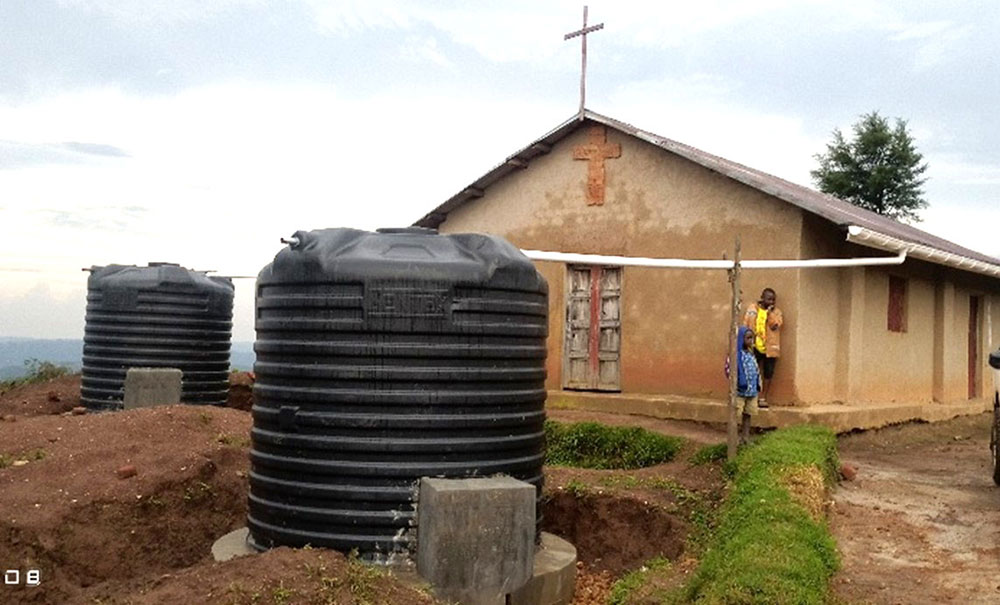
The project initiated the construction of protected spring wells, purchased water harvesting tanks for selected communities, and constructed gravity water systems in some communities.
These initiatives are being implemented across various communities in all three regions: Elgon, Rwenzori and Kigezi.
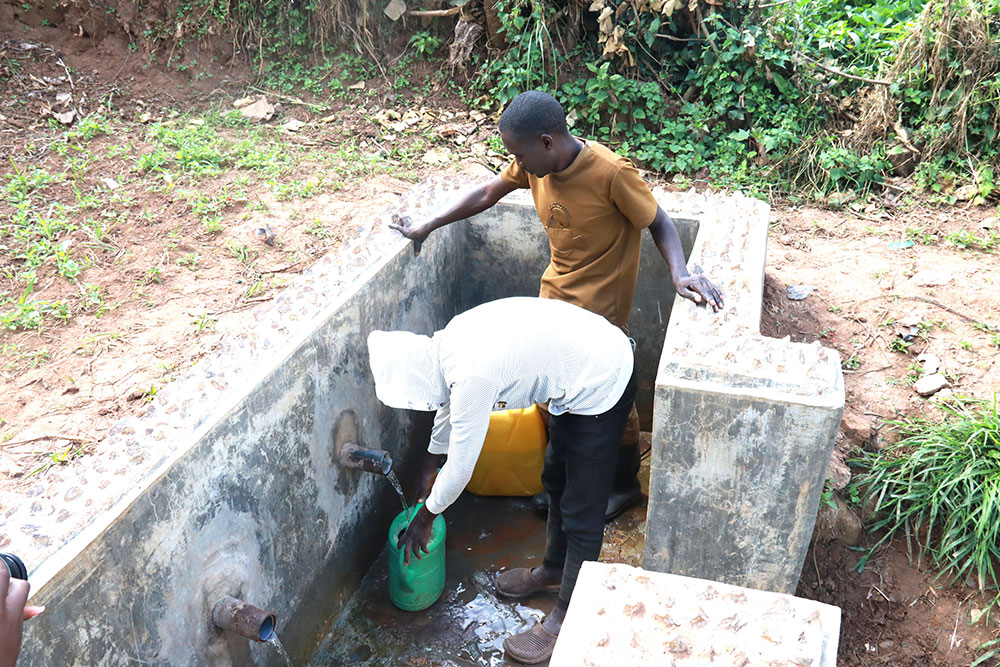
The construted well in Bugarama is supporting communities to grow vegetables during the dry season
The project has provided 202 protected spring wells, 24 (10,000-litre) water tanks, and six gravity water systems in various communities in Elgon. Fifty-five (10,000-litre) water tanks, eight protected spring wells, and three gravity water systems have been provided in various communities in Rwenzori.
In Kigezi (Kabale, Kisoro, and Rubanda), 44 (10,000-litre) water tanks have been installed, 31 spring wells built, and two gravity water flow systems installed in different communities.
On average, each 10,000-litre water tank provides clean water to 20 households; hence, more than 2,460 households are covered with clean water from the 123 water tanks in the three regions.
The 241 spring wells provide water to more than 40 households on average; therefore, over 9,640 households access clean water from the protected wells.
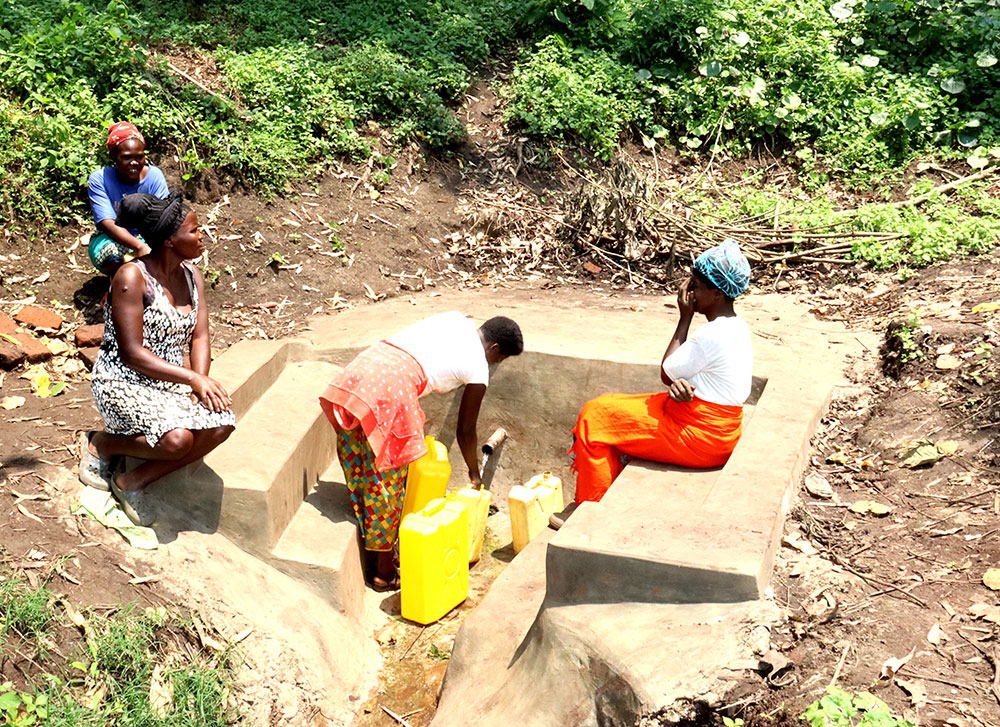
The new well built in Buhesi now provides clean water
In communities where gravity water systems have been installed, more than 50 households access clean water from each system; hence, over 660 households are now benefiting from gravity water.
Josephine Nakanwaji, the regional coordinator of the CommonGround Project, says providing clean water close to the people was the main objective of the project.
She says the water sources are transforming lives by enabling good hygiene, supporting agriculture, and reducing the burden on women and children who previously trekked for kilometres in search of water that was neither clean nor safe.
According to Nakanwaji, the project has created awareness and built the capacity of water users by establishing committees that will mobilize other members to maintain the water sources even after the project ends.
Community members react
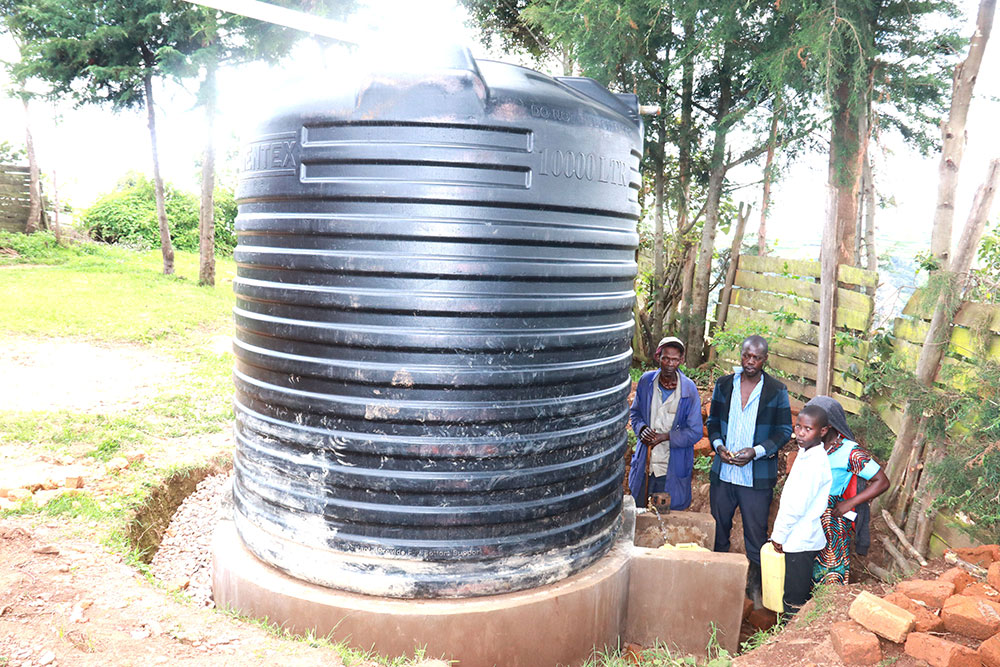
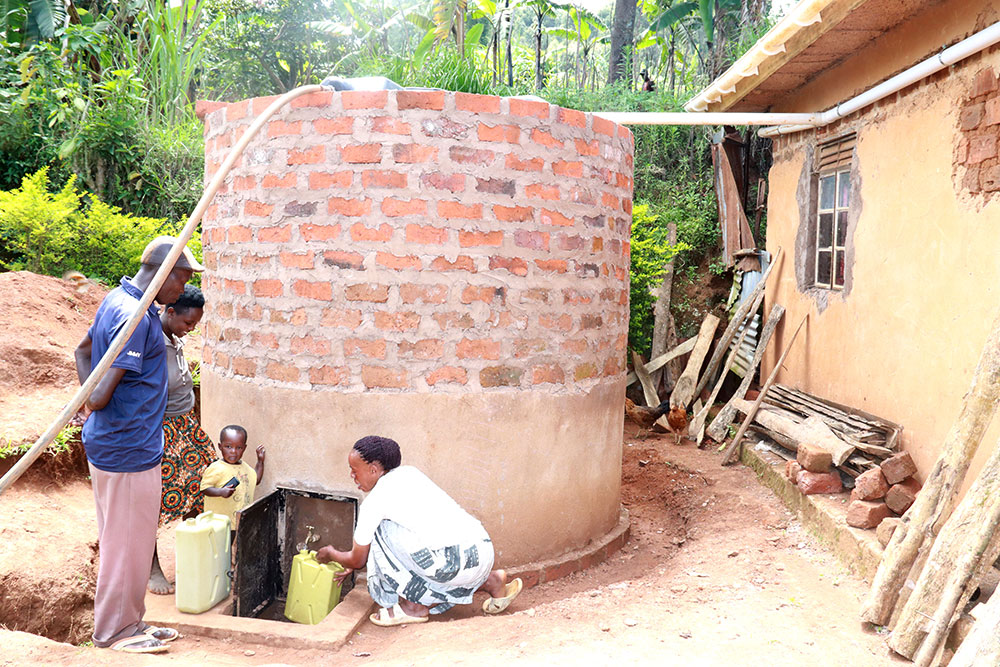
The water tanks installed in Nangalo community in Kabale are supporting over 30 households
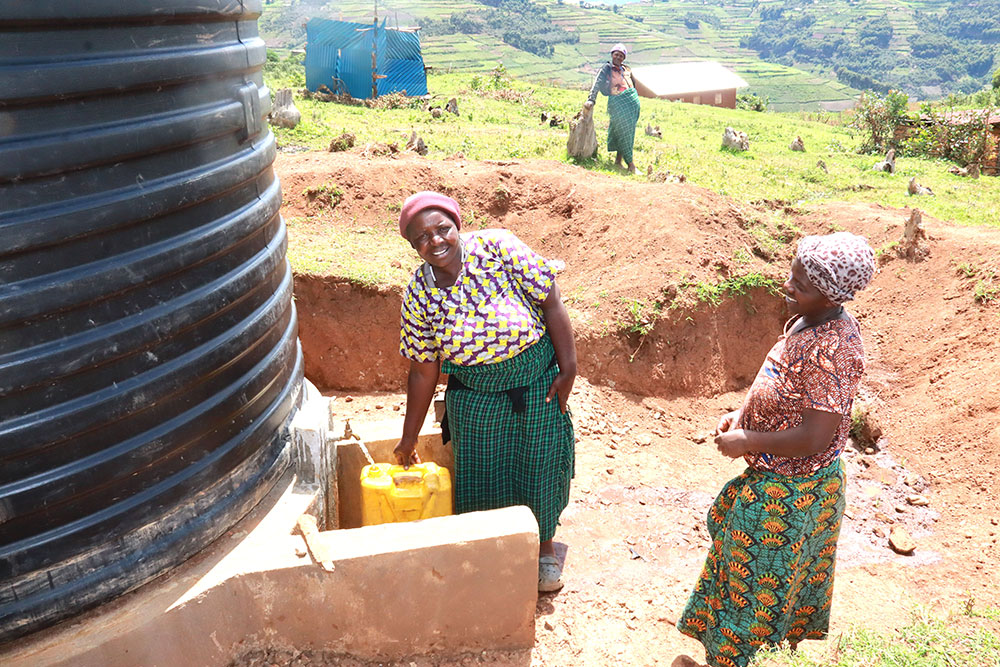
Consolanta Ariheihikwija is a resident of the Nangalo community, where the CommonGround Project installed two water tanks with a capacity of 10,000 litres each.
She is happy that they no longer trek long distances and spend hours in search of water. Previously, to cook meals, wash clothes, and give animals water, she had to fetch water from valleys three kilometres away, which was tiresome. But with water tanks just a few metres from her home, all these challenges have been resolved.
Tumwekwase says that with the tank now installed in her community, fetching water is easy because the distance is shorter. “Now, I have more time to tend to my vegetable garden, a thing that was not possible before."
Muchunguzi from Bwanjojo says that since the construction of the spring well by the project in his community, he can now access water for watering his vegetables and the nursery bed easily and on time.
Mary Namono is a resident of the Bundmbatsu community in Nakatsi sub-county, Bududa district. She says that with clean water now 500 metres from her household, it is easy for her to fetch water, unlike before, when she fetched dirty water from the streams that were shared with animals.
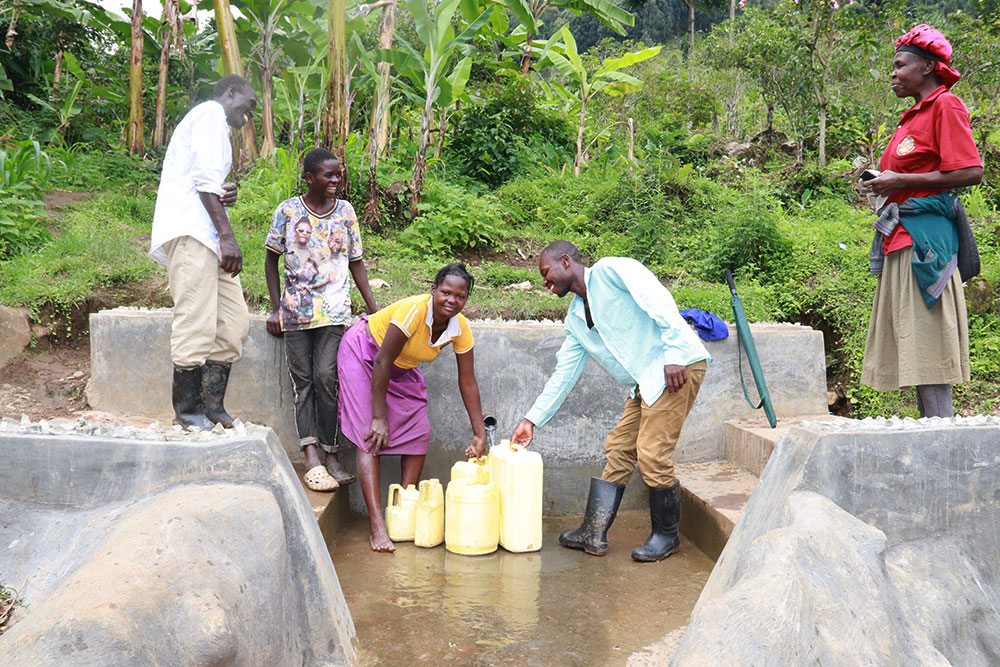
In Bududa, the spring wells are providing clean and safe water
Also in Bududa, Martin Mundeka from the Buraba community in Busiliwa sub-county says the spring well has eased access to clean water.
He reveals that before, cases of violence were common in his home, citing delays at the water sources by his wife as the major cause. But now, with the spring well just near his home, there is no reason for his wife to delay at the water sources.
In the Kakindo community located in Karugutu sub-county in Ntoroko district, Aggrey Baluku says the gravity water system is the first of its kind in the community.
He says that before the project interventions, access to clean water was a big challenge; women and children could go early in the morning to the river, a distance of three kilometres, to fetch water. Sometimes, the long journeys made children miss school.
However, with water just near the school and at households, issues of violence and missed school days have been controlled.
LC1 chairman Wenka of Kaguma cell says the spring wells established in his village have played a big role in stopping domestic violence within households.
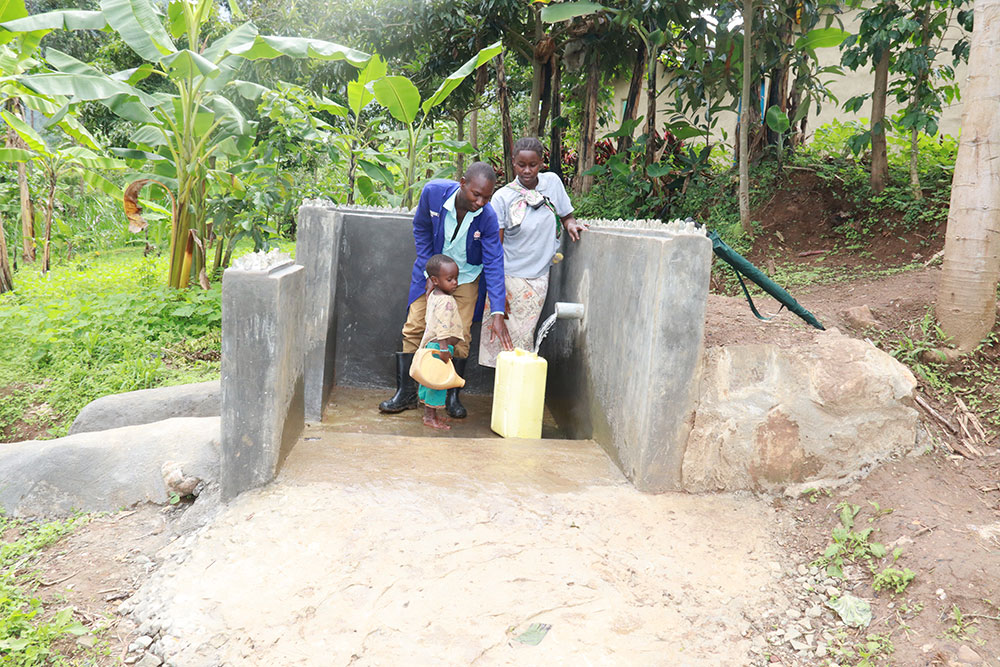
Sam Bogere, the senior assistant chief administrative officer for Bunatsami sub-county in Bududa, hails CommonGround for its efforts in ensuring that communities have access to clean and safe water.
He says that as local governments, they receive meagre funds from the central government, which cannot solve all the community needs; hence, he applauds the project for stepping in to ensure that communities get clean water.
Bogere promises that they will have a small budget aside to facilitate the renovation of the water sources in case of need in the future.
Phiona Nafuna, the parish chief in Bunatsami sub-county, Bududa, says the steep, mountainous landscape of the eastern Uganda district makes the provision of clean water facilities difficult, forcing residents to trek downhill into the valleys to fetch water.
She says water contamination was widespread because of erosion from improper farming on hilly slopes. She is, however, happy that with the construction of protected spring wells in various communities, this challenge has been controlled.
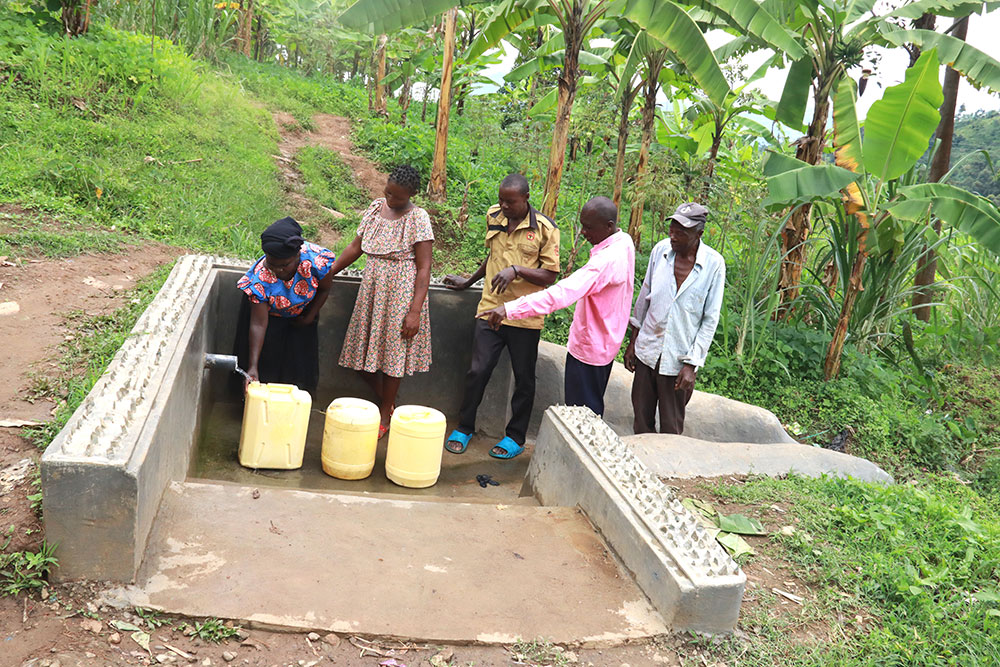
In the Rwamahano community, located in Rubanda's Muko sub-county, Rubanda, Evelyne Catechist, the chairperson of the water user committee, says that with the completion of the water tanks, apparently every household fetches as they wish because the tanks are full in this rainy season.
She says when the rain subsides, they will sit as a community to agree on how to fetch water sparingly.