
Teso’s solution to old age neglect
Across Soroti, Serere, and neighbouring districts, elderly people face poverty, food insecurity, chronic illness, neglect, and psychological distress.
The elderly benefiting from the Emerald Foundation commended the organisation for providing care and safe spaces for them. (Photo by Javier Silas Omagor)
__________________
“Old age is not the problem. Being alone is.”
Those words from Joseph “Yosepu” Ewangu, a retired police officer in his late 70s, capture a reality many elderly people across Uganda’s Teso sub-region know too well.
For years, Ewangu once served the country in Kampala, Masaka, Jinja, and Mbarara has lived quietly in rural Soroti, struggling with eyesight, isolation, and the absence of structured support.
Like many elderly Ugandans, Ewangu spent his productive years raising children and serving the nation, with limited opportunities to save for his old age.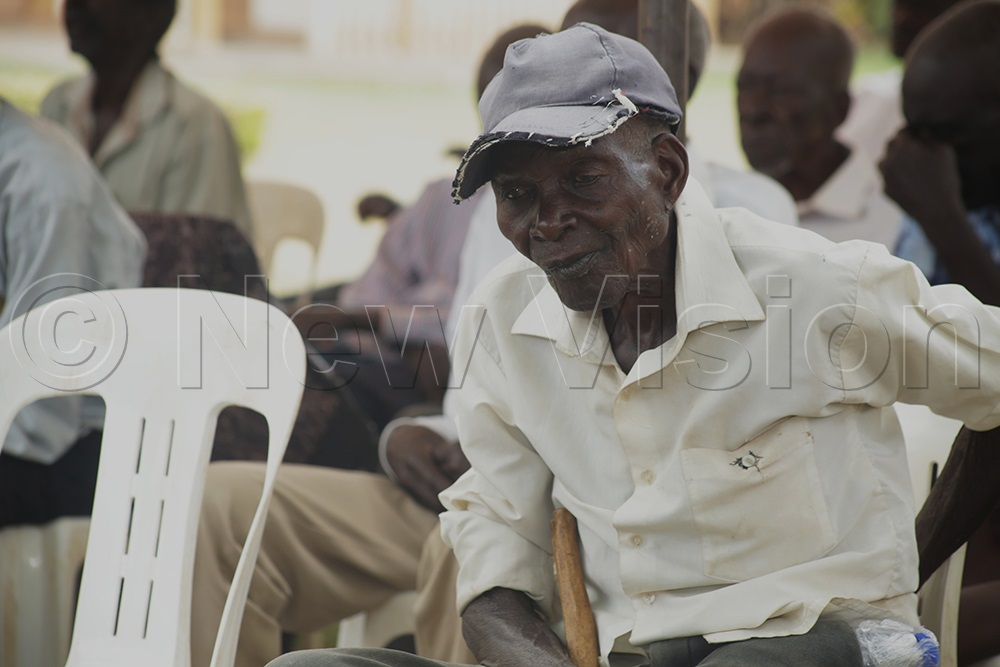
Joseph 'Yosepu' Ewangu speaking to New Vision in an interview where he urged for more mainstream support for the elderly in Uganda. (Photo By Javier Silas Omagor)
Today, he is part of a growing number of older persons who say they are often overlooked, as public and private support largely targets children, youth, women, persons with disabilities, and widows.
Yet, in parts of Teso, that story is beginning to change, not through handouts alone, but through organisation, collective voice, and dignity-driven solutions.
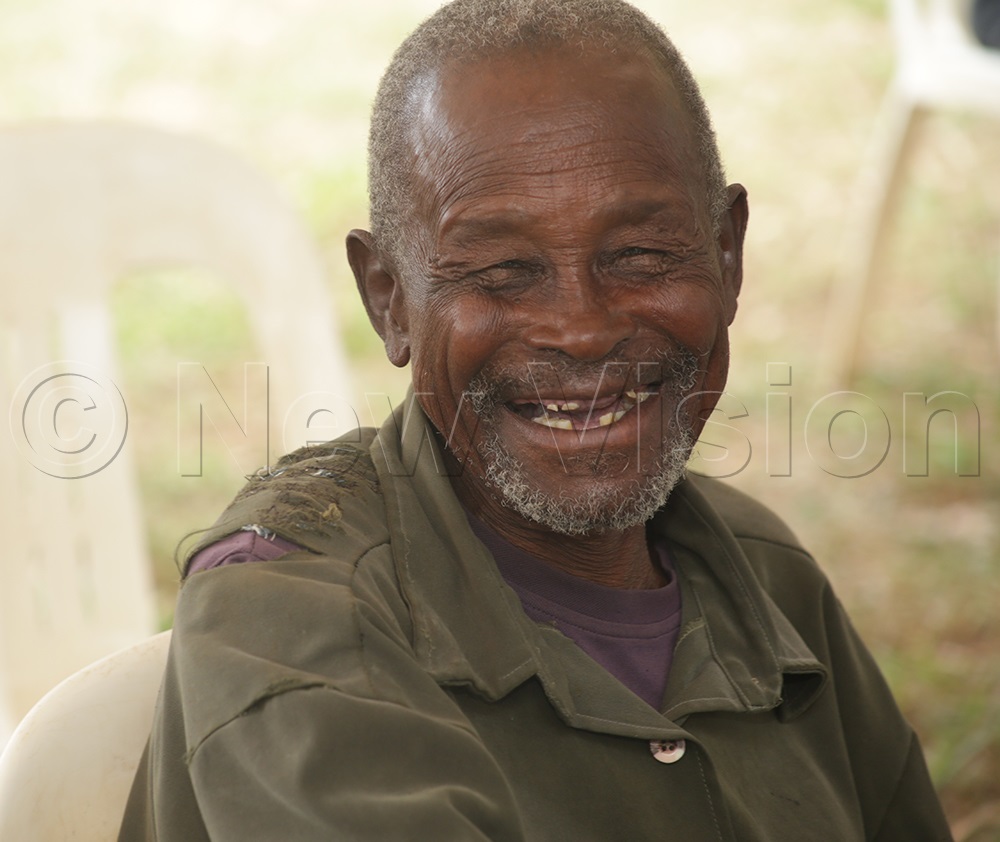
Alexander Emwamu, one of the elderly persons working together in unity to create safe places for the older persons in Teso, smiles during an interview. (Photo by Javier Silas Omagor)
A persistent gap
Across Soroti, Serere, and neighbouring districts, elderly people face poverty, food insecurity, chronic illness, neglect, and psychological distress.
Those without children or whose children have died or migrated are especially vulnerable.
“Some elderly people are mistreated, others extorted, and many suffer silently,” says Deborah Akol, an elderly resident of Serere district. “You depend on neighbours, and not everyone is kind.”
Community advocates also point to rising cases of abuse against elderly people, including sexual violence, often linked to substance abuse among idle youth.
Despite this, Uganda’s policy framework offers limited protection. Elderly care largely appears under directive principles of state policy, without a standalone law, guaranteed funding, or institutionalised safe spaces.
A different response
It was this gap that prompted Salome Solita Okure, founder of Emerald Foundation, to act.
“Supporting the elderly is not charity; it is justice,” Okure says. “These are people who built families, communities, and this country. Yet many are ageing in fear and invisibility.”
Emerald Foundation began with practical interventions: medical referrals, food support, hygiene items, psychosocial counselling, and family mediation.
As festive seasons approached, often the loneliest time for older persons, the organisation deliberately included the elderly in its outreach.
But something unexpected happened along the way.
From beneficiaries to actors
As elderly people gathered during Emerald Foundation activities, they began talking to one another about shared struggles, safety concerns, and survival strategies.
According to Okure, this interaction sparked a shift in thinking.
“They told us, ‘We don’t just want help. We want to look out for each other," she recalled.
With mentorship from the Emerald Foundation, elderly residents in several villages across the Teso sub-region have now started forming informal associations at the village level.
Through these groups, older persons check on one another, share information, respond to emergencies, and collectively raise concerns with local leaders.
For Ewangu, belonging to such a group has reduced the sense of abandonment. “Now, if someone doesn’t see me for a day or two, they come to check,” he says. “That alone gives you courage.”
The associations have also become platforms for advocating for safe spaces-places where elderly people can meet, access information, and report abuse without fear.
Institutional support strengthens the model
The initiative gained momentum when Nazipher Delicate Abigaba, the National Forestry Authority (NFA) Field Supervisor for the Teso sub-region, partnered with the Emerald Foundation after observing social gaps affecting elderly people during her field work.
On December 12, the two organisations hosted elderly residents at Emerald Foundation headquarters in Soroti City.
The elderly were fed, received festive hampers, and were given tree seedlings to plant.
“The elderly are the roots of our nation,” Abigaba said at the event. “When we protect them, we protect our future.”
She encouraged beneficiaries to plant the seedlings as symbols of continuity and relevance, reinforcing the message that old age does not mean uselessness.
Evidence of impact
According to Emerald Foundation records, more than 600 elderly people across Teso have directly benefited from the initiative so far.
Some have regained sight through access to medical glasses; others have recovered from treatable illnesses.
Several families have been reconciled after years of conflict, while food and hygiene support has stabilised vulnerable households.
Crucially, the formation of village-level elderly associations has reduced isolation and strengthened informal protection systems, an outcome Okure believes is as important as material aid.
“When elderly people organise, they regain voice and dignity,” she said.
Policy attention begins to follow
The work has attracted praise from Serere County Member of Parliament Emmanuel Omoding Okabe, who says the approach offers lessons for national policy.
“They identified a social problem and acted, instead of lamenting,” Omoding-Okabe says.
He has pledged to advocate for stronger laws, budgetary commitments, and institutional safe spaces for elderly people.
He notes that the absence of a standalone Elderly Persons Act and guaranteed social protection leaves many older citizens dependent on goodwill rather than rights.
A replicable lesson
While the Emerald Foundation acknowledges that it cannot reach everyone, the experience in Teso shows that solutions for elderly care do not have to wait for a perfect policy environment.
Community-led organisations, supported by responsive institutions, can reduce harm and restore dignity.
For Ewangu and others like him, the change is modest but meaningful.
“We are not asking for luxury,” he says. “We are asking to be seen and to stand together.”
In a region where the elderly were once invisible, their united voice is now becoming part of the solution.