
Innovative sh540m water project excites Ntungamo residents
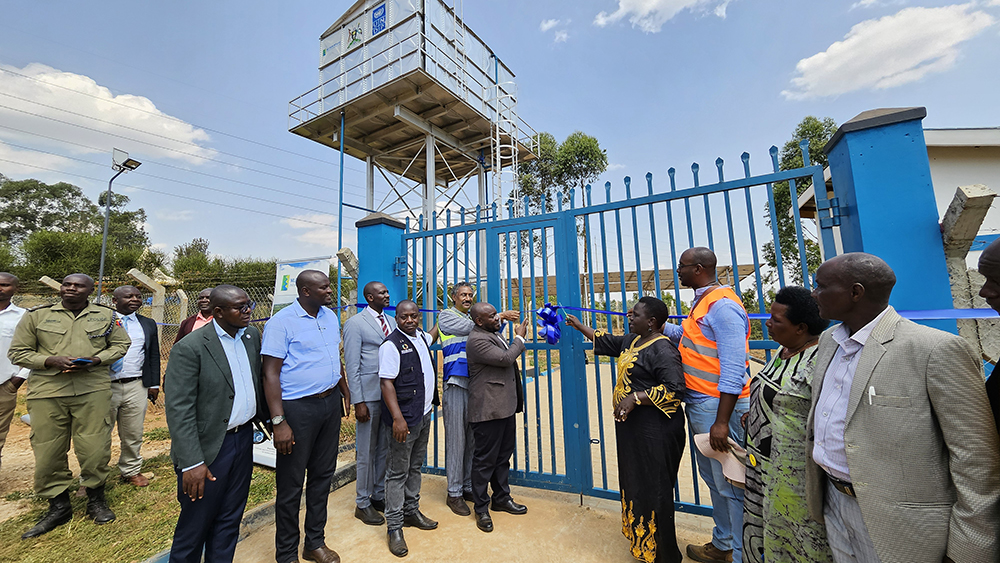
The ministry, through its Department of International Transboundary Water Affairs (ITWA), commissioned the major milestone, which features an advanced underground storage system known as Managed Aquifer Recharge (MAR), on Tuesday, June 30, 2026.
(Courtesy)
________________
In an effort to strengthen water security and climate resilience in the country, the Ministry of Water and Environment has commissioned a sh540m pilot water project in the southwestern rural area of Kakukuru Town Council, Ntungamo District.
The ministry, through its Department of International Transboundary Water Affairs (ITWA), commissioned the major milestone, which features an advanced underground storage system known as Managed Aquifer Recharge (MAR), on Tuesday, June 30, 2026.
The MAR is the intentional process of replenishing groundwater aquifers to enhance water supply, improve water quality, and provide environmental benefits.
The innovative system captures and stores surface water underground during rainy seasons and preserves it for extraction during harsh dry spells. Handing over the solar-powered facility, the Commissioner for International Transboundary Water Affairs, Eng. Sowed Sewagudde, who represented the water ministry's Permanent Secretary, Dr Alfred Okot Okidi, described the system as a gamechanger for Uganda's climate resilience.
Sewagudde extended sincere appreciation to the Nile Basin Initiative (NBI) and the United Nations Development Programme (UNDP) for their financial and technical support in making the investment a reality.
"This vital project demonstrates the value of regional cooperation in addressing shared water challenges and translating that cooperation into tangible benefits for local communities," Sewagudde said.
He explained that the MAR system is an innovative and sustainable solution that is a great alternative to the conventional water gravity schemes.
"The Ntungamo pilot project is designed to utilise both ground and surface water concurrently to ensure an uninterrupted supply across all seasons. As climate variability continues to affect rainfall patterns, such nature-based solutions are becoming increasingly important in enhancing water security, building resilience, and supporting sustainable livelihoods," he added.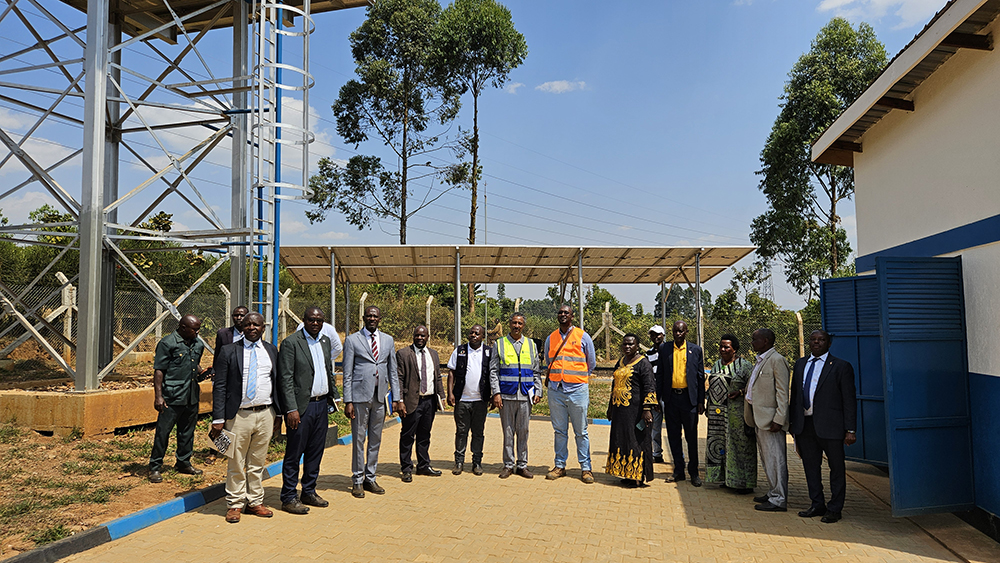
(Courtesy)
According to Sewagudde, the new water and sanitation facility will provide reliable and safe water to approximately 500 households in Kakukuru Town Council and the surrounding communities. Beyond improving access to water for domestic use, the commissioner said the system will reduce the burden of water collection, improve public health, and contribute significantly to the socio-economic development of the area.
Project Sustainability
He encouraged the Umbrella, together with the District Local Government, community leaders, and water users, to work closely to safeguard this valuable investment and ensure its long-term functionality.
The commissioner noted that this project also serves as an important demonstration site for Uganda. "The lessons learned here will inform future groundwater recharge initiatives across the country, particularly in areas facing increasing water stress due to climate change," he said.
Sewagudde commended all partners, who contributed to the successful implementation of the project, including the Ntungamo District Local Government, the technical teams from the Ministry, NBI, UNDP, the contractor, consultants, and, most importantly, the local community for their cooperation throughout the process. He urged all stakeholders to commit to protecting and properly maintain the system so that it continues to serve both the current and future generations.
The Assistant Commissioner in the Department of ITWA, Wycliffe Tumwebaze, highlighted the strong and solid collaboration between the UNDP, NBI, and the Government of Uganda. He noted that this partnership has enabled the successful implementation of the project in Ntungamo, and a similar project in Bulambuli district. He appreciated the NBI and UNDP for selecting Ntungamo, which is among the water-stressed districts in western Uganda.
Tumwebaze revealed that some of the materials used to construct the scheme include hardcore aggregate and sand bedding, alongside geotextile shoring. Additionally, the treatment technique features a direct chlorine dosing unit.
He further noted that the scheme has a capacity of 3.5 cubic meters per hour. However, the pump is currently running at 2.5 cubic metres per hour. But Tumwebaze promised that the supply will increase as demand grows. Regarding coverage, Tumwebaze said the project has the potential to grow its distribution lines, a matter that will be handled by the South-Western Umbrella of Water and Sanitation.
Regional Impact and Alignment
Dr Abraha Adugna, the NBI Deputy Executive Director, emphasised the importance of water in human life and health, pointing out that healthy and clean water saves lives and reduces medical expenses.
The project is a pilot technology in Uganda, currently being implemented in Ntungamo and Bulambuli, with hopes to expand it across the country and throughout the other 10 Nile Basin member countries. Adugna explained that the water system is uniquely designed to utilise both ground and surface water, which should be protected well. He reminded stakeholders that the system aligns with Sustainable Development Goal 6 and Agenda 2063.
Dr Maha Abdelraheem, the Project Team Leader at NBI, thanked the stakeholders for supporting the contractor during the implementation stages and for donating land for the project. She noted that the project team did not record a single case of equipment theft, a gesture that demonstrates the community's commitment to protect the project.
The UNDP Technical Specialist, Collins Tonny Biryomumaiso, urged the district to embrace the project, noting that since this is the first managed aquifer in the region, its sustainable management will enable the roll-out of similar projects across the country.
(Courtesy)
Adella Orishaba, a mother of two and resident of Rwaminaba cell in Ntungamo could not hide her joy as clean water flowed close to her doorstep.
Orishaba highlighted how she previously endured long treks to swamps to collect water for domestic use. According to Orishaba, these long journeys left her and other women with inadequate time to care for their families.
"We used to trek long distances to swamps where we fetched unclean water, and we could not get time to do other household chores on time," Orishaba said, adding; "We thank the Government and everyone who contributed to bringing this project here for changing our lives."
Naboth Ninsiima, the chairperson for Rwabinaba Cell, welcomed the project, describing it as a vital upgrade from the ponds where the community was previously getting water. Ninsiima noted that ponds had tragically claimed the life of a young child some time back.
Ninsiima offered his own land to serve as part of the access route to the water source. He asked the Water User Committee to work closely with the South-Western Umbrella of Water and Sanitation to ensure that the project is well-sustained.
District leaders comment
The Ntungamo district vice chairperson, Asuman Kigongo, thanked the water ministry, UNDP, and NBI for the interventions in the district.
Similarly, Miriam Kagaiga Mugisha, the Ntungamo Resident District Commissioner, commended the Government and partners for extending clean piped water to the district, describing it as a great source of life. She appealed to the water ministry to consider extending the network to unserved communities.
The District Water Officer, Prosper Butubuura, commended the water ministry for piloting the new technology in Ntungamo.
The Chief Administrative Officer, Fidelis Kiiza, noted that the project directly addresses water and sanitation challenges, thereby improving the health and well-being of the people of Ntungamo. He pledged to mobilise district leaders and communities to work alongside the Western Umbrella of Water and Sanitation to ensure proper operation and maintenance.
Kiiza expressed optimism regarding the Umbrella’s management, noting that handing the project over to the utility manager right from the onset helps beneficiaries immediately understand that they need to pay a small fee to support ongoing operations.
The District Natural Resources Officer, Dinah Tumwebaze, commended the stakeholders for their support and urged communities to protect natural resources such as wetlands in order to sustainably manage local water sources.