
Why Jinja PWDs want own aides against EC’s polling assistants
During a stakeholders engagement organisedd by the Kiira regional Electoral Commission (EC) at the Uganda Civil Service College in Jinja city, the commission said it would be improving its polling assistants to help PWDs.
Stephen Tashobya, during the Busoga stakeholders engagement. He said the commission was very set to hold the election in accordance with the law. (Credit: Jackie Nambogga)
JINJA - Jinja district-based people with disabilities (PWDs) have asked the Electoral Commission (EC) to rescind its decision of allocating them its own officials who would be assisting them at polling stations.
Whereas the Commission had announced using their own polling assistants who would be stepping in to help PWDs in case of any need, Muzamiru Musembya, the Jinja district chairperson for PWDs, says this undermines their choices.
In an interview with New Vision Online on Monday, January 12, 2026, Musembya feared that EC’s assistants would end up acting against their choices.
During a stakeholders engagement organisedd by the Kiira regional Electoral Commission (EC) at the Uganda Civil Service College in Jinja city, the commission said it would be improving its polling assistants to help PWDs.
Musembya, who is visually impaired, regretted that the officials would take advantage of their status to go against their own choices.
Abubaker Kirunda, the chairperson of PWDs in Jinja City Council, said the EC should leave them to enjoy the exercise by letting them use their own aides.
Kirunda, who is also in the same boat with Musembya, said the on-spot officials were not aware of their pride. To him, the people they move with are their eyes, and once they (aides) are blocked, it implies plucking out their eyes.
“The person I stay with is my eyes, once they are not allowed, it means you have removed my eyes from me, they know our pride, who we must tick than the EC’s on-spot assistants at polling stations, this should be stopped for us to enjoy the exercise,” he said.
Musembya also pushed for affirmative action, saying polling points should be accessible by all, on top of allowing people with albinism not to line up in scorching sun, as it directly affects their skin.
Special attention
Deo Natukunda, the Kiira regional election officer (REO), said they would be paying attention to special interest groups.
He clarified that aides would not exceed one person, adding that whoever would be appearing vulnerable, including expectant mothers, the presiding officers and police constables would be faster at noticing them to cast their votes and go.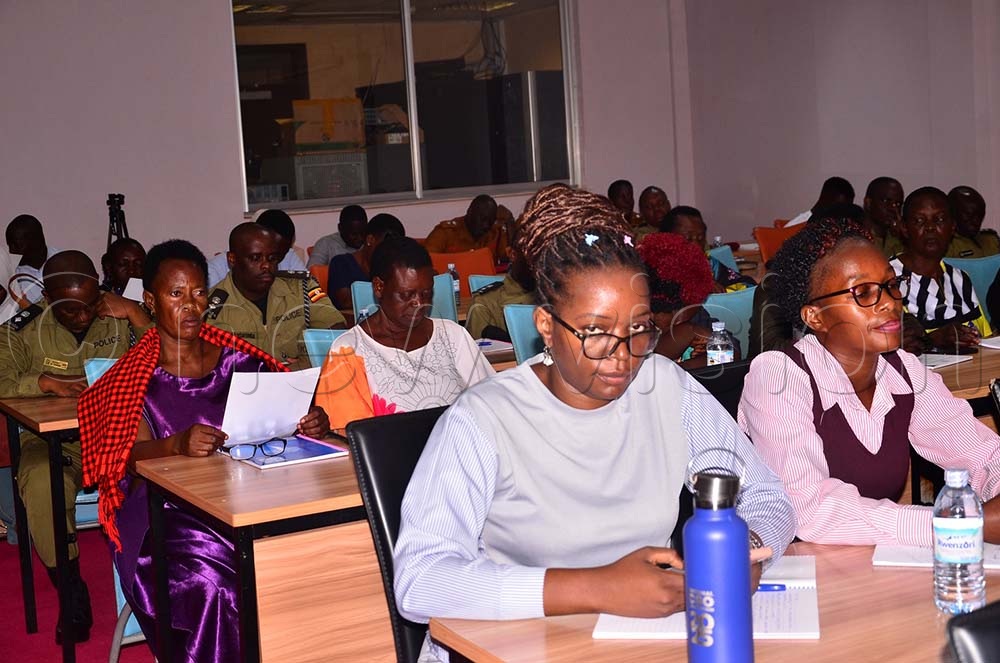
Joy Kawanguzi (L), the Executive Director of FABIO suggested the use of the gramophones commonly known as mukalakaasa in the journey of providing EC updates to leave no one behind. (Credit: Jackie Nambogga)
“We have briefed our team, vulnerable people, including older persons who look frail, should be prioritised to avoid collapsing in lines,” he said.
During the engagement, Natukunda emphasised that use of the Biometric Voter Verification Kits (BVVKs) would be compulsory.
Don’t force polling stations to open
Therefore, Natukunda clarified that no polling station would be opened unless the presiding officer and BVVK operator arrived because they were both behind the entire process at their respective points.
“At a polling station where we miss a presiding officer and a BVVK operator, those stations won't open. The system allows the twins to be at the polling station, so the RDCs and security officers, when they see that a particular point is not open, there is a reason, don’t force it to open,” he said.
Joy Kawanguzi, the executive director of FABIO, a civil society organisation, commended the EC for improving on the applicability of the BVVK as indicators reflected that they had taken ample time to prepare, which was a step ahead in the history of Uganda’s electoral processes.
Whereas the body was engaging the public through different media, she suggested the use of the gramophones commonly known as mukalakaasa in the journey of providing updates.
“Yet it is easy to imagine that everyone has access to the radio, I would request that the messages being disseminated through the media are recorded and zeroed to the grassroots, we leave no one behind,” she prayed.
Meanwhile, the Rev. David Munobwa, the Assistant Vicar of St James Church in Jinja city, wondered why the commission didn’t bring a BVVK to see how practically it worked for them to go with a lot of confidence.
He said there were areas where all voters turn up and asked if they had tried to calculate the turnover time per voter since they would be scanning ballot papers before and after the exercise.
“I don’t know if we are safe in terms of time, yet we have some places where ballot papers arrive at 3:00pm, I think such incidents won’t happen again,” he said.
In response, Kasim Bassajjabalaba, the EC information and technology support officer in charge of Jinja city, said the scanning takes less than 4 seconds to detect details.
This, he said, would deter incidents of multiple voting, ballot stuffing, and other irregularities.
Also, Munobwa asked if the issuance of the 3 ballot papers for the presidential, direct, and women MPs would not confuse locals and end up placing them in different boxes.
Nakukunda explained that apart from the issuance of the 3 ballots at once, the initial three tables had been maintained with their polling assistants for guidance to avoid misplacement in the ballot boxes.
Stephen Tashobya, the commissioner in charge of Busoga region, said they were very set to have the polls in accordance with the law.