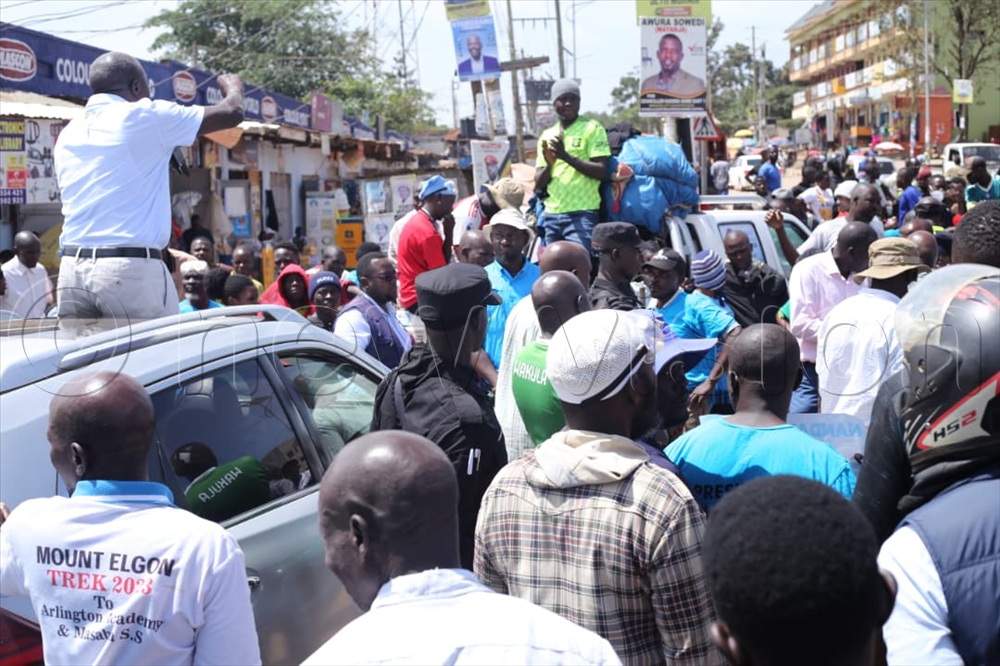
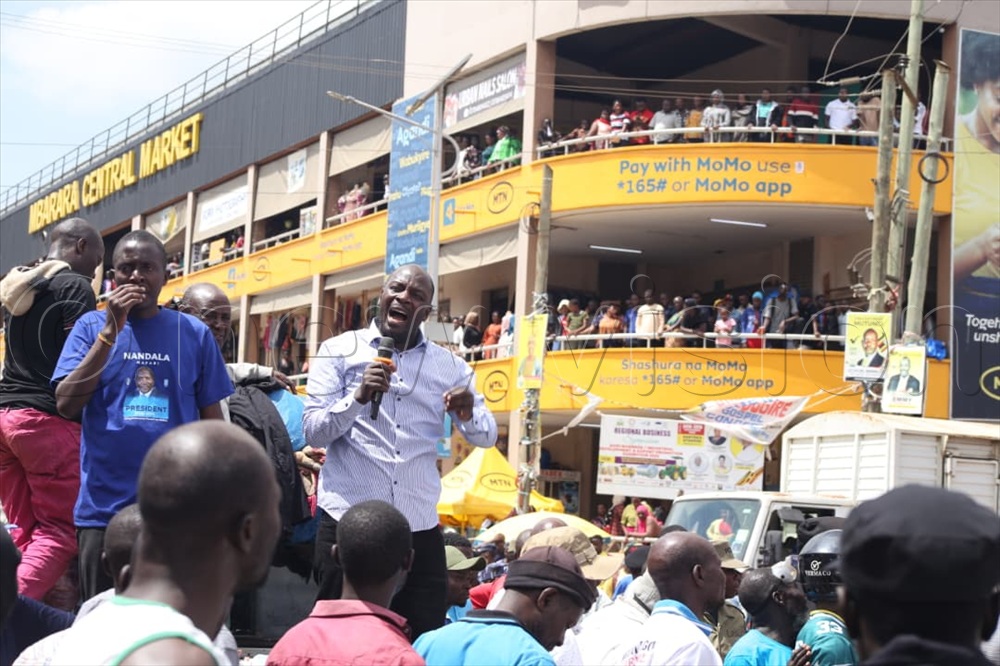
FDC's Nandala courts defectors on Kigezi-Ankole campaign trail
In response, Nandala told his supporters that the FDC doors are open to any Ugandan and promised to continue engaging them because the country needs each of them.
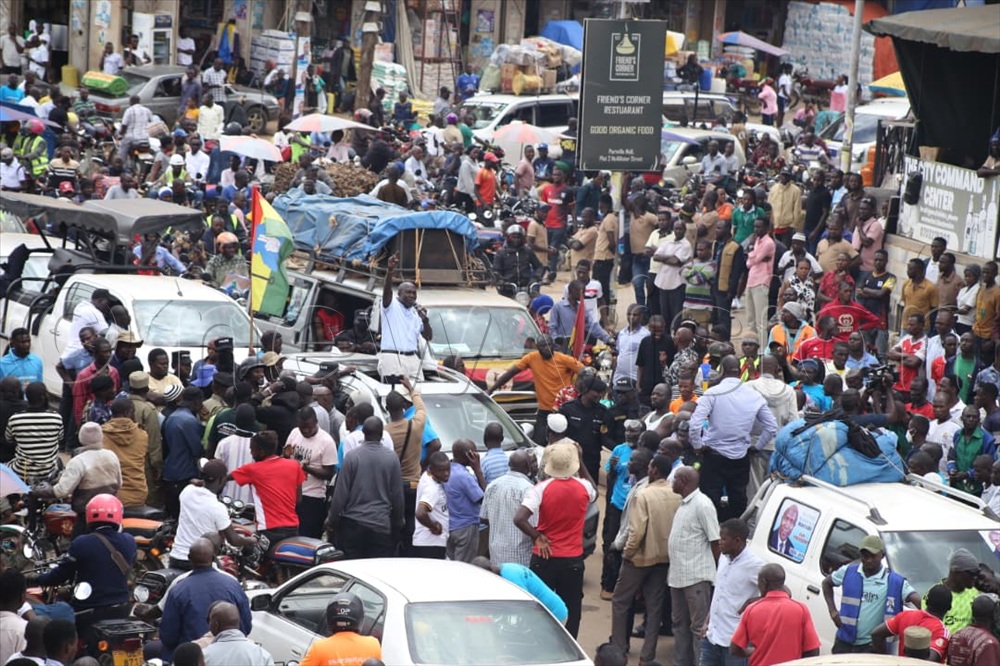
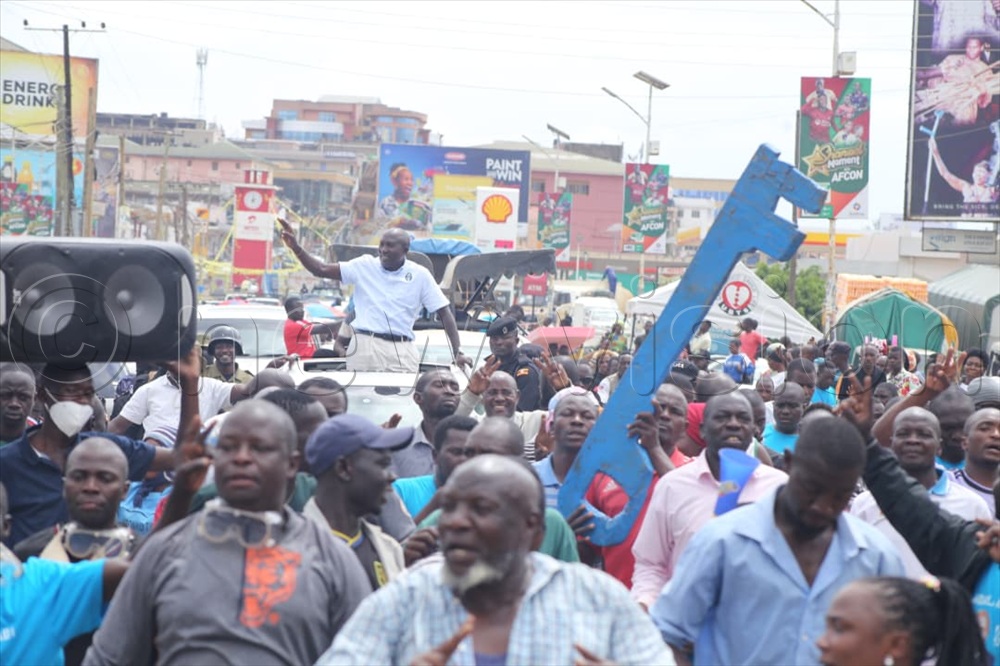
FDC presidential candidate James Nathan Nandala Mafabi interacting with his supporters. (Photos by Alfred Ochwo)
________________
As presidential candidate James Nathan Nandala Mafabi campaigned throughout Kigezi over the weekend, questions from his supporters about Forum for Democratic Change (FDC) founder Kizza Besigye and reconciliation with defectors were at the centre of discussion.
In roadside gatherings and evening rallies, party loyalists pressed him on trust, power and unity, asking whether, after years of splits and defections, he could be trusted with the tools of state power and whether he had a plan to reunite a party that has steadily bled some of its most prominent figures.
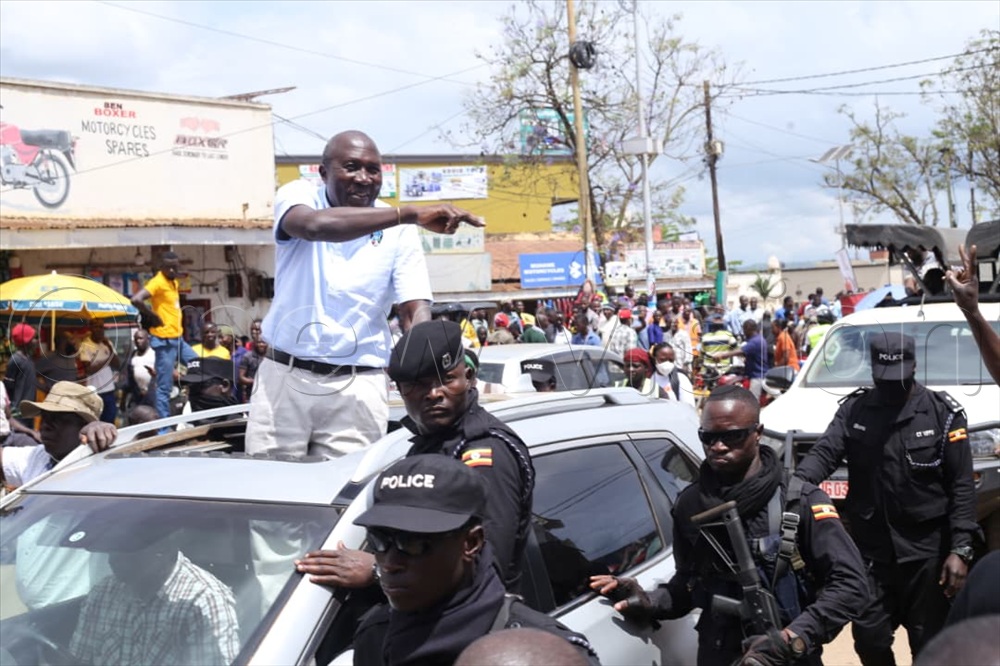
In response, Nandala told his supporters that the FDC doors are open to any Ugandan and promised to continue engaging them because the country needs each of them.
“I got fewer votes after standing with Mugisha Muntu in 2012, but I did not run away after losing. I believed in the party. That is the difference.”
Nandala told supporters. In that race, held on November 24, 2017, Mugisha Muntu, now Alliance for National Transformation president and candidate in the forthcoming general election, defeated him with 641 votes (57.6 per cent) against Nandala’s 463 votes (41.7 per cent).
He argued that many of the exits from FDC were driven not by ideology alone, but by discomfort with internal party discipline.
“Muntu left because he never wanted to be ruled after being defeated by Patrick Oboi Amuriat. But we want them back. We want everybody back, even those in NRM. Uganda is bigger than all of us. We will talk and continue talking because we want them back,” he said.
The message of reconciliation came at a critical moment for the Opposition party. Since 2023, the FDC has endured deep internal ruptures, with senior leaders, including Ibrahim Ssemujju Nganda, Erias Lukwago and others breaking away to form a rival faction based at Katonga Road, citing allegations of dirty money within the Najjanankumbi leadership under Patrick Amuriat and Nandala Mafabi.
The party’s history of high-profile departures loomed large over the weekend’s discussions. From Muntu to four-time presidential candidate and FDC founder president Besigye, who has since distanced himself from the central leadership, FDC has watched its founding pillars drift away.
Former Leader of Opposition Winnie Kiiza, longtime spokesperson Paul Mwiru and former party official Beti Kamya, now a senior presidential advisor in the ruling National Resistance Movement (NRM), are among those who once shaped the party but are now outside.
Even Parliament reflects the FDC fractures. Figures such as Speaker Anita Among and Deputy Speaker Thomas Tayebwa were once associated with FDC before crossing political lines and rising to powerful positions with NRM backing. In June 2025, eight Members of Parliament defected from the Najjanankumbi faction to the newly formed People’s Front for Freedom (PFF), underscoring the fluid and contested nature of opposition politics.
Yet, Nandala insisted that the moment demands humility rather than bitterness.
“We have no problem with any of them,” FDC chairperson for Western Uganda Jack Sabiti said, reinforcing Nandala’s tone.
“We may have different ideologies, but the cause is the same. Liberating this nation is not an individual task.”
Sabiti told supporters in Ankole that the party’s doors remain open.
“As we mobilise and strengthen ourselves, we are also keeping space for those who left to return home one day. Poverty hits everybody. Whether you are NRM, FDC or independent, you feel it in your home,” he said.
On Sunday, December 14, with just 31 days left to the general elections, Nandala traversed the districts of Ntungamo, Rukiga, Rwampara and Isingiro.
Nandala criticised government infrastructure priorities, arguing that development has been confined to major highways while rural communities remain cut off.
“Government should not stop at the main highway. All roads matter because it is those roads that take produce to markets, children to schools and patients to hospitals,” he said.