
Soroti City West: where votes carry the weight of hope
Nearly 70 percent of the division remains rural despite Soroti’s elevation to city status in 2019. Hills roll into wetlands, gardens stretch into trading centres, and villages sit at the edge of what was once a municipality and is now a city largely in name.
Alupo and Echodu joined the supporters for a group picture. (Credit: Godfrey Ojore)
Happy NRM supporters of Soroti city west welcome Alupo to address a rally at Nakatunya Primary School on Tuesday. (Credit: Godfrey Ojore)
As Uganda moves closer to another defining general election, Soroti City West Division, a place where dusty rural roads meet the promise of urban life, is quietly but firmly asserting its voice.
Nearly 70 percent of the division remains rural despite Soroti’s elevation to city status in 2019. Hills roll into wetlands, gardens stretch into trading centres, and villages sit at the edge of what was once a municipality and is now a city largely in name.
Yet for the 29,766 registered voters preparing to cast their ballots on January 15, 2026, the election is not about titles. It is about tangible change.
Four candidates are seeking the mandate.
Incumbent Jonathan Ebwalu of the Forum for Democratic Change (FDC) is defending his seat against National Resistance Movement (NRM) Eastern Uganda vice chairperson David Calvin Echodu, National Unity Platform’s Emmanuel Elau, and Patrick Anoku, who is running as an independent.
Beyond party colours and campaign slogans, residents of Soroti West are asking a simpler question: who will solve their everyday problems?
At the centre of these concerns is a city mortuary that residents say is more symbolic than functional.
“It is a structure without fridges for preserving bodies,” says Levi Ogwadule, the LC1 chairperson of Nursery cell in Nakatunya ward.
“Because there are no fridges, we suffer from the smell of decomposing bodies, especially accident victims whose relatives take time to come and identify them. It is painful and undignified.” Ogwadule explained.
Ogwadule says equipping the mortuary would not only restore dignity to the dead but also save families the high cost of using private facilities.
For Betty Akello, a fish vendor at Nakatunya Market, the struggle is financial.
“Money lenders have destroyed many women,” she says. “They give loans with very high interest and demand payment every day. Women run away from their homes, businesses collapse, and we remain poor. We need affordable financing so that we can grow.” Akello said.
Her concerns echo those of many small-scale traders who say survival has replaced ambition.
Even the small urban portion of the division carries its own burden.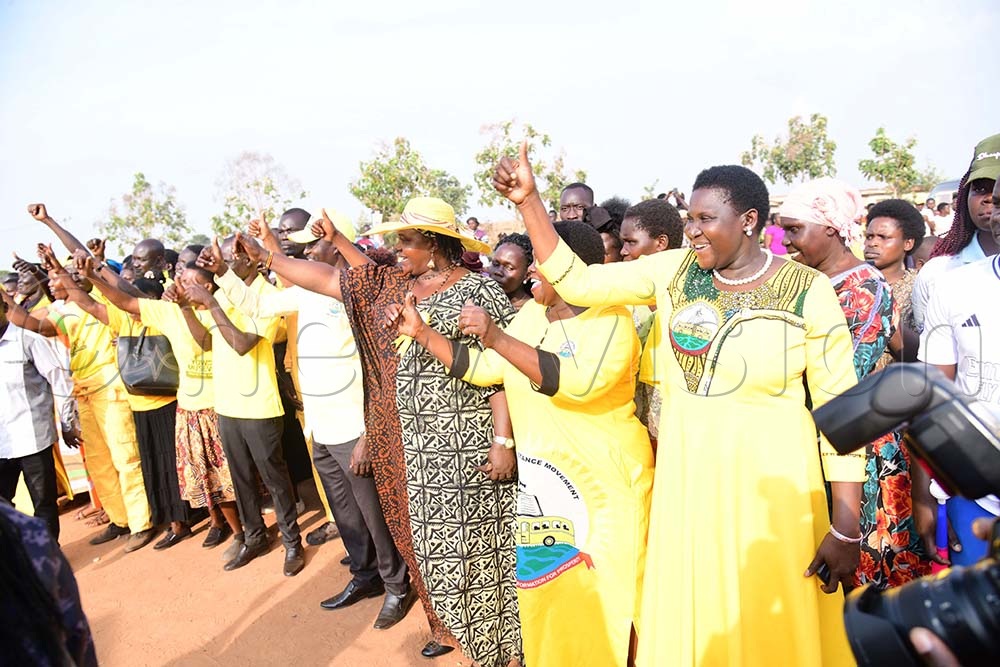
“When it rains, our homes flood because of poor drainage,” says resident Richard Eriau. “We are called a city, but we still suffer like a village. If the next leader fixes drainage, then we shall feel what city life means.” Eriau said.
Incumbent MP Jonathan Ebwalu says his first term focused on opening roads and lobbying for two seed secondary schools at Agora and Arapai. He is now seeking a second term to address the remaining challenges.
His main challenger, David Calvin Echodu, argues that Soroti West needs stronger links to the central government and international investors.
“I will attract investors, establish industries, and create jobs,” Echodu says. “The time for leaders who speak without action is over. I come with new energy.”
Echodu’s campaign has been boosted by high profile endorsements. Vice President Jessica Alupo on Tuesday campaigned for him in the division, describing him as a “bright star” with national and international connections.
“You are lucky to have a leader trusted by 77 districts in Eastern Uganda,” Alupo told voters.
“As a member of the NRM Central Executive Committee and a close ally of President Museveni, Echodu can lobby effectively for your needs,” Alupo said as people cheered her.
Former Deputy Chief of Defence Forces Gen. Peter Elwelu has also endorsed Echodu, describing him as development-oriented.
As the January 15 poll approaches, Soroti West stands at a crossroads between its rural past and its urban promise, between survival and progress, and between frustration and hope.
For voters here, the choice is not merely political. It is deeply personal.
It is about whether the city mortuary will finally preserve dignity, whether markets will offer prosperity, whether flooding will stop at the doorstep, and whether leadership will finally feel present.
In Soroti City West, the ballot is not just a piece of paper. It is a declaration of the future that people believe is possible and who they trust to build it.