
Nigeria’s Goodluck Jonathan, Zambia’s deputy speaker rally Ugandans to vote
Jonathan, who in 2015 called his rival Muhammadu Buhari to concede defeat in Nigeria’s presidential election, encouraged Ugandans to vote and maintain peace on Thursday, January 15.
Former President of Nigeria appealed to Ugandans to do all that is in their power to ensure the election is peaceful. (Photo by Patrick Kibirango)
________________
In May 2011, President Goodluck Jonathan of Nigeria jetted into Uganda to attend the swearing-in ceremony of his Ugandan counterpart, President Yoweri Museveni, at Kololo Independence Grounds.
Eleven years later, on Friday, January 9, 2026, he returned as the head of the African Union (AU), Common Market for Eastern and Southern Africa (COMESA) and the Inter-Governmental Authority on Development (IGAD) Elections Observation Mission.
His message to Ugandans and the rest of Africa was clear: “The ballot paper must determine who becomes a leader in Africa.”
Jonathan, who in 2015 called his rival Muhammadu Buhari to concede defeat in Nigeria’s presidential election, encouraged Ugandans to vote and maintain peace on Thursday, January 15. He made the appeal during his visit to the National Peasants Party offices in Rubaga division, Kampala, on Sunday, January 11.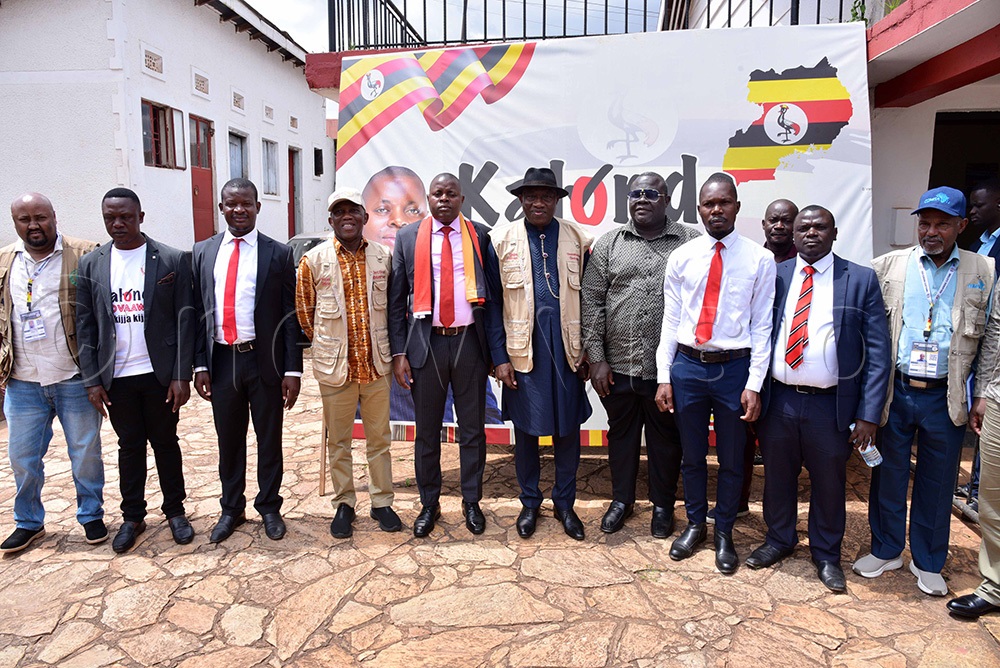
“In Africa, we must elect our leaders. The ballot paper must dictate who becomes a leader. If we don’t get to a position where the ballot paper decides who becomes a leader, then we shall not be practising democracy,” he said.
Ugandans will on Thursday, January 15, choose their next president and parliamentary representatives in a general election. The eight presidential candidates are: Yoweri Museveni of the National Resistance Movement, Robert Kyagulanyi of National Unity Platform(NUP), Nathan Nandala Mafabi (Forum for Democratic Change), Mugisha Muntu (Alliance for National Transformation), Joseph Kasibante (National Peasants Party), Mubarak Munyagwa (Common Man’s Party), Frank Bulira Kabinga (Revolutionary People’s Party) and Robert Mabirizi (Conservative Party).
Also to be voted for will be 353 directly elected Members of Parliament (constituency representatives) and 146 district women representatives to Parliament (one for each district). According to the law, all campaigns will stop on Tuesday, January 13.
Most opinion polls show that the incumbent, President Museveni, is in the lead, followed by Kyagulanyi. According to the poll conducted by an independent research firm — Marsh Africa — if Ugandans were to elect the president today, Museveni would get 64.8% of the vote. His closest rival, Kyagulanyi of the National Unity Platform (NUP), poll results indicated, would get 27.2% of the vote. Museveni, the incumbent, is running for the fifth term, having won the first one in 1996. His closest rival, Kyagulanyi, is challenging him for the second time.
Jonathan’s appeal
In his appeal, Jonathan appealed to Ugandans to do all that is in their power to ensure the election is peaceful.
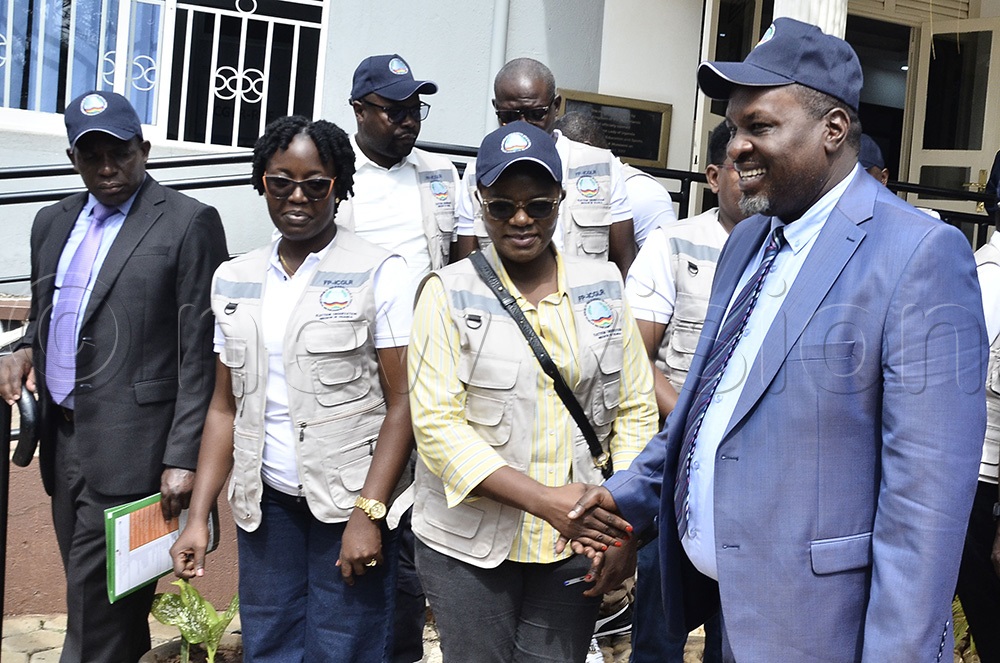
The leader of the Forum of Parliaments of the International Conference on the Great Lakes Region, Moses Frank Moyo (right) being receive by members of the forum before the official launch of 2026 Uganda election observation mission on 9th January 2026 at Munyonyo. (Photo by Ronnie Kijjambu)
“Uganda gained independence in 1962, and like you said, elections have been chequered in a way. We believe that is history, and we can do things better,” he appealed.
President Jonathan’s message was also re-echoed by the Second Deputy Speaker of the National Assembly of Zambia, Moses Frank Moyo, who is leading the Forum of Parliaments of the International Conference on the Great Lakes Region (FP-ICGLR) election observer mission in Uganda.
Speaking during a meeting at the FP-ICGLR centre in Munyonyo, Kampala on Friday, Molo said Uganda’s election is important to not only citizens, but also other countries in the region because it is an island of stability, hosting thousands of refugees and undertaking many peace missions. He appealed to Ugandans to peacefully exercise their democratic rights in the Thursday general election.
“Avoid confrontation and violence at all costs. In this respect, the forum encourages all stakeholders to dialogue and work together to ensure that the Ugandan people can work together to choose future leaders in accordance with the constitution,” Molo said.
The election observers’ messages come at a time when leaders from different creeds are rallying Ugandans to ensure they participate in the democratic processes of their motherland.
Voter apathy
In the past elections, civil society organisations have noted high levels of voter apathy. For example, in the 2021 general election, the voter turnout was 59.35% of the 18 million who had registered. This was a decline from the 67.61% registered in the 2016 general election. In the 2011 general election, the turnout was 59.2%. In 2006, it was 69%, while in 2001, it was 70%. The highest voter turnout that Uganda registered was in 1996 at 72%.
Observers, however, attribute the high voter apathy to factors such as fatigue and mistrust. They note that the increasing voter apathy is global and not limited to Uganda.
Timothy Chemonges, the executive director of the Centre for Policy Analysis, a civil society organisation, attributes the increasing voter apathy to the fact that loss of trust in the process.
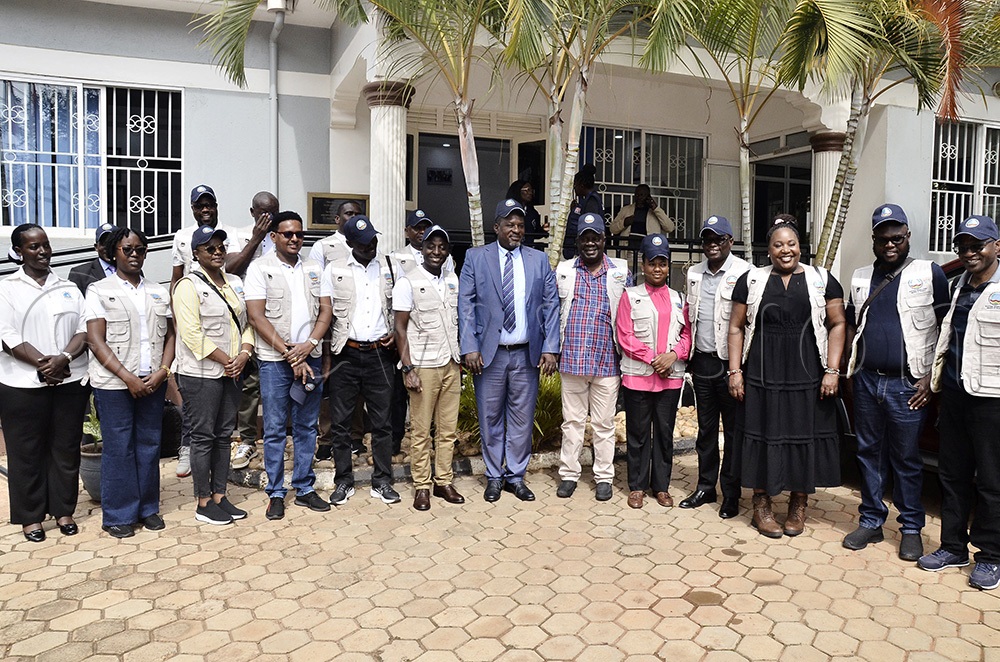
Members of the Forum of Parliaments of the International Conference on the Great Lakes Region, pose for a group photograph after the official launch of 2026 Uganda election observation mission on 9th January 2026 at Munyonyo. (Photo by Ronnie Kijjambu)
“In Uganda, like in several African countries, people see repeated patterns of limited competition, uneven playing fields and elections whose outcomes seem predictable long before polling day. When political institutions appear unresponsive, and public services do not improve regardless of who is elected, voters lose confidence that their participation truly matters,” he said.
Chemonges said to reverse the situation, stakeholders must rebuild trust in the electoral process and in public institutions.
“This means ensuring a more level playing field for candidates, improving transparency in the vote tallying process, and strengthening civic education so citizens understand both their rights and the value of their vote. Equally important is delivering visible improvements in governance when people see concrete results from political decisions, their motivation to participate naturally increases,” he says.
The Electoral Commission has, however, assured all stakeholders of a free and fair process.
While addressing election observers at Mestil Hotel in Kampala yesterday, the Electoral Commission chairperson, Simon Byabakama, said the election would be conducted in a free and fair manner. He encouraged observers to feel free to travel to any part of the country.
“Observers are encouraged to carry accreditation cards at all times. You are free to go to any part of the country,” he assured the observers.