
New poll: Museveni leads with 64%, Kyagulanyi at 27.2%
Age and gender patterns also show Museveni dominant across all demographics, especially among older voters, while Kyagulanyi’s appeal is stronger among younger respondents.
Museveni dominates among women and rural voters, with 76% support in both segments, indicating his strong base outside urban centres and among female voters.
🗳️ NEW POLL
KAMPALA - With barely two months to the January 15, 2026, elections, a new poll has put the National Resistance Movement (NRM) candidate, Yoweri Museveni, in the lead of the presidential race.
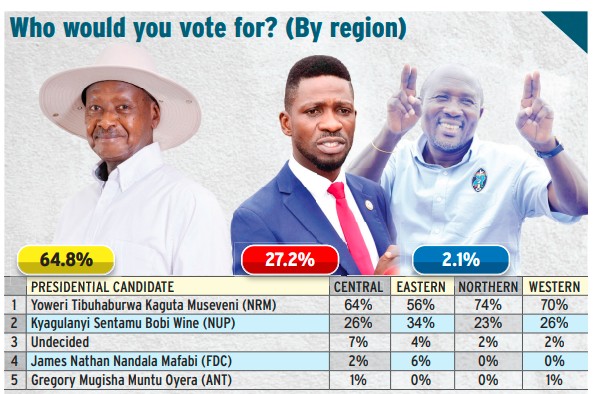
According to the poll conducted by an independent research firm — Marsh Africa — if Ugandans were to elect the president today, Museveni would get 64.8% of the vote. His closest rival, Robert Kyagulanyi of the National Unity Platform (NUP), poll results indicated, would get 27.2% of the vote.
“Current voting intention stands at 64.8% for Museveni, 27.2% for Kyagulanyi (Bobi Wine), with the remaining 8% scattered or undecided. This represents a 38-point lead — the widest margin recorded in independent polling since 2021 and points to a comfortable first-round landslide victory (65–70% range) if current trends hold,” Mash Research Africa officials noted in a detailed report about the poll.
A total of 9,812 participants were interviewed by Mash Research Africa officials from across different regions, age groups, gender and socio-economic categories of the country.
Out of the 9,812 sampled participants, 5,279 respondents (54%) were drawn from rural areas, compared to 4,534 respondents (46%) from urban areas. Respondents were asked a direct question: “If the 2026 presidential election were held today, who would you vote for?”
According to the poll, James Nathan Nandala Mafabi of the Forum for Democratic Change (FDC) is at 2.1%, Gregory Mugisha Muntu of the Alliance for National Transformation (ANT) is at 0.9%. Other candidates in the presidential race include Mubarak Munyagwa Sserunga of the Common Man’s Party (CMP), Robert Kasibante of the National Peasants Party (NPP), Joseph Mabirizi of the Conservative Party (CP) and Frank Bulira Kabinga of the Revolutionary People’s Party (RPP).
The chairperson of the Electoral Commission (EC), Justice Simon Byabakama ,said Uganda currently has 146 districts with 312 counties, 353 constituencies, 2,191 sub-counties/towns/municipal divisions, 10,717 parishes, 71,2146 villages, 50,739 polling stations and 21.6 million registered voters.
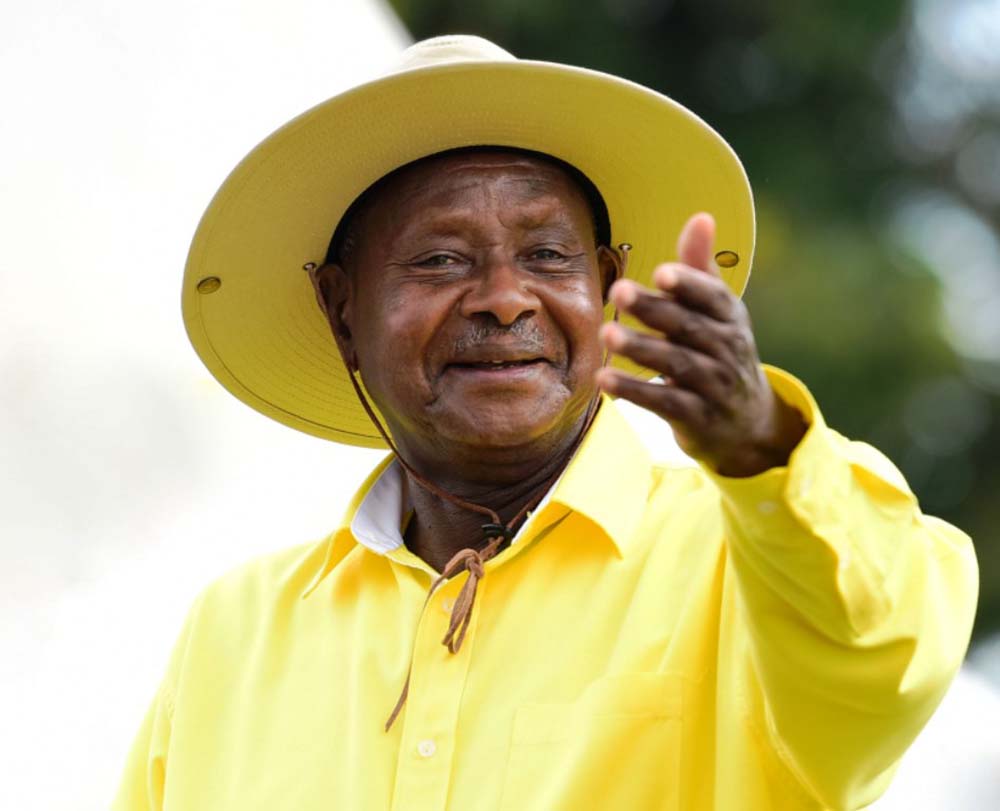
Yoweri Kaguta Museveni
Objective
Mash Research Africa officials said the objective of the poll, which was conducted in October this year, was to test the political pulse across the country as Ugandans prepare for the 2026 general election.
According to the research results, 67% of the sampled respondents prefer NRM, while 35% settled for NUP. Asked why they prefer Museveni, 72% of the sampled respondents cited security, while other respondents said his experience and the ability to stabilise the country over the years makes him tick.

Robert Kyagulanyi Ssentamu
On geographic dominance, Mash Research Africa officials said in the poll that: “Museveni wins every region and in 140 of 146 districts.” “Overall, public sentiment toward President Museveni remains broadly favourable, with a combined 72% rating him either very favourable or somewhat favourable, while 16% express unfavourable views. Support for Kyagulanyi presents a more polarised picture, with lower overall favourability, but a significantly higher share of neutral and negative sentiment, highlighting a more divided electorate,” Mash Research Africa officials said.
“Regionally, Museveni enjoys particularly strong backing in western and central Uganda, whereas Kyagulanyi performs more competitively in central and eastern regions. Age and gender patterns also show Museveni dominant across all demographics, especially among older voters, while Kyagulanyi’s appeal is stronger among younger respondents,” Mash Research Africa officials added.
The report further states: “When comparing current support to the 2021 election, most Museveni supporters say their support has either increased or remained the same, suggesting consolidation rather than erosion of his base. Kyagulanyi’s voters, however, report higher levels of decreased support over time, though he retains a significant share who say their support remains unchanged.
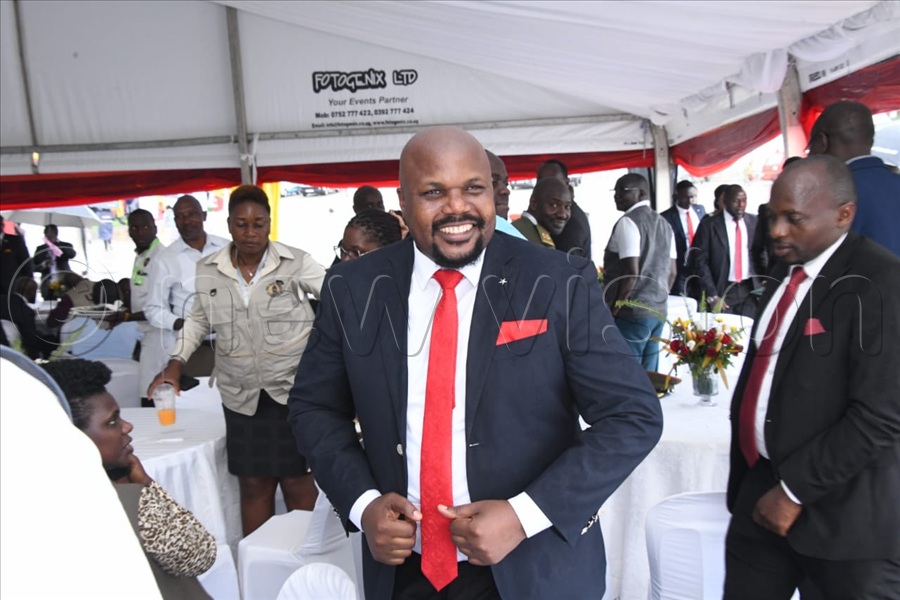
Mubarak Munyagwa Sserunga
Reason-based analysis shows Museveni’s support anchored heavily in perceptions of good leadership, party loyalty and economic performance, reflecting a stability-driven and experience-based voter motivation. Kyagulanyi’s backing, by contrast, tends to be emotionally driven, youth-oriented, and anchored in the desire for change.”
Across education, age, region, and gender, Mash Research Africa officials said Museveni continues to command a structurally strong coalition that is reinforced by incumbency and long-standing institutional trust.
On the other hand, Kyagulanyi’s support shows clear demographic concentration — primarily the youth and urban-leaning segments — indicating potential growth but also volatility.
“The research suggests a political landscape where Museveni maintains a dominant, but aging support base, while Kyagulanyi holds a passionate but fluctuating constituency, leaving Uganda’s electoral dynamics defined by continuity versus change,” Mash Research Africa officials said.
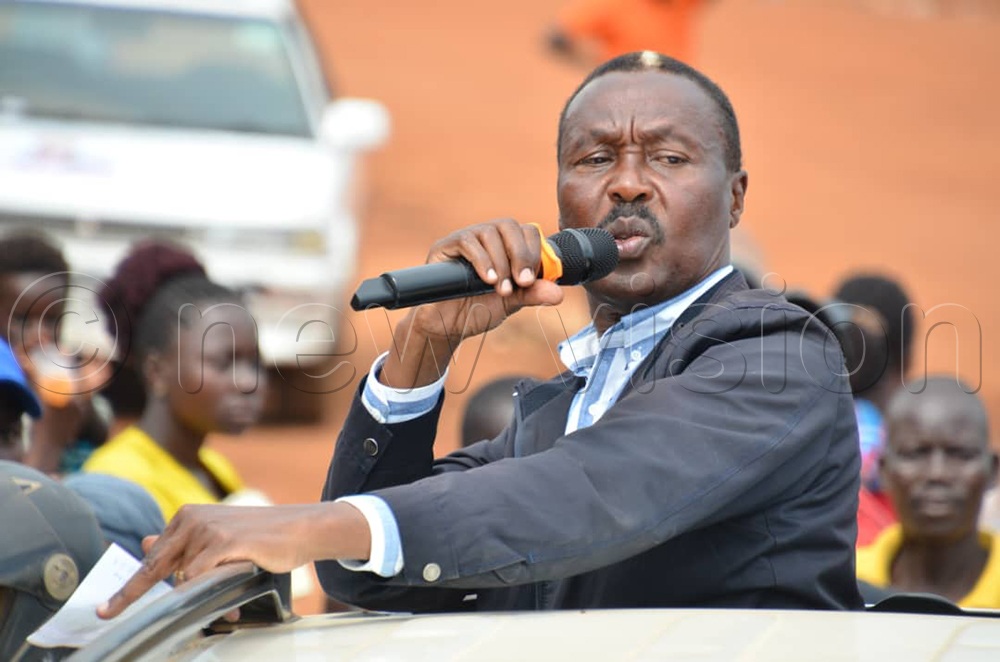
Gregory Mugisha Muntuyera Muntu
Regional dynamics
Going by region, the NRM presidential flag-bearer, Museveni, commands support from all the regions — western, eastern, northern and central.
In central region, 64% of the sampled respondents said they would vote Museveni, while 26% said they would vote Kyagulanyi if elections were to be held today. Mafabi is at 2%, while Muntu is at 1% in central region.
For eastern region, the poll indicates that 56% of the sampled people want Museveni. Kyagulanyi is at 34%, while Mafabi is at 6%.
Within northern Uganda, Museveni is in the driving seat with 74%. Kyagulanyi is at 23%. A similar pattern, according to the poll, is shaping up in western Uganda, with Museveni commanding with 70%.
Kyagulanyi’s support in western Uganda, which is Museveni’s political backyard, is at 26%.
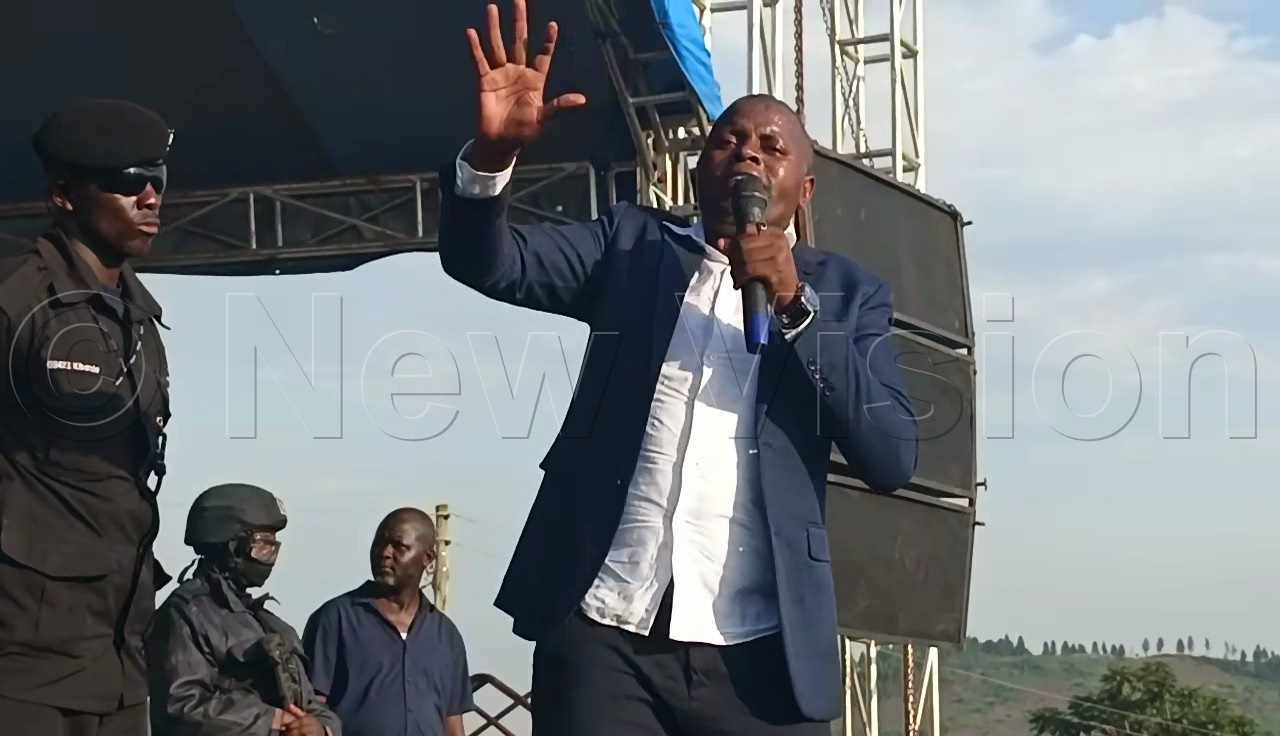
Robert Kasibante
“Museveni wins every single region by double-digit margins — including Buganda. The national 64.8%-27.2% landslide is not an artefact of rural weighting; it holds even in the opposition’s best area eastern,” Mash Research Africa officials said.
The poll indicates that Museveni enjoys more support in northern region (74%). This is followed by western region at 70%, central region at 64% and eastern region at 56%.
On the other hand, the poll shows that Kyagulanyi enjoys more support in eastern Uganda (34%). Eastern region is followed by central region, where 26% of the sampled respondents said they would vote Kyagulanyi if elections were to be held today.
In western region, 26% sampled voters sided with Kyagulanyi, while 23% in northern region said they would vote the NUP presidential candidate. For Mafabi, he enjoys more support in eastern region (6%).
This is followed by central region at 2%.
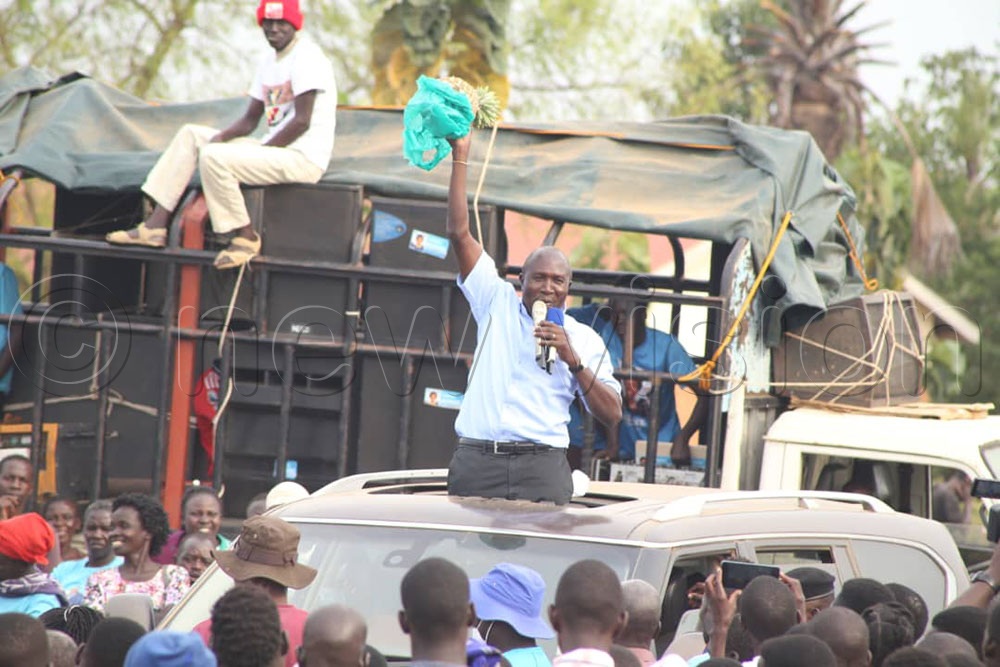
Nathan Nandala Mafabi
“The only region where Museveni dips below 60% and Bobi Wine leads the opposition chase with 34%. This is the clear soft spot: Basoga, Iteso and Bagwere frustration over sugar industry issues, youth unemployment, and perceived neglect give NUP its highest regional score. FDC’s residual 6%, likely Mafabi’s home area pull, further fragments the anti-NRM vote,” Mash Research Africa officials said in their poll report.
Museveni also maintains a commanding lead across every educational category, ranging from 51% for Ugandans who have attained secondary education to 78% among Ugandans with no formal education.
Age demographic
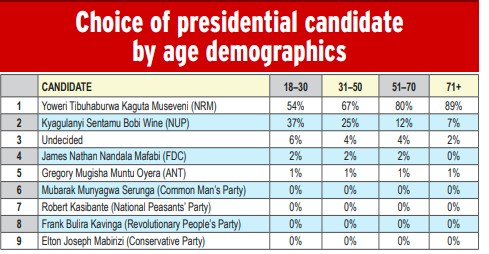
According to the poll, the preferences of the voters were also assessed basing on the age demographics, with Museveni gaining dominance progressively with age, peaking among those 71 years and above. On the other hand, NUP’s Kyagulanyi performs strongest among the 18-30 age group.
FDC’s Mafabi and ANT’s Muntu, according to poll results, retain marginal but visible support (1-2%), among younger and middle-aged adults.
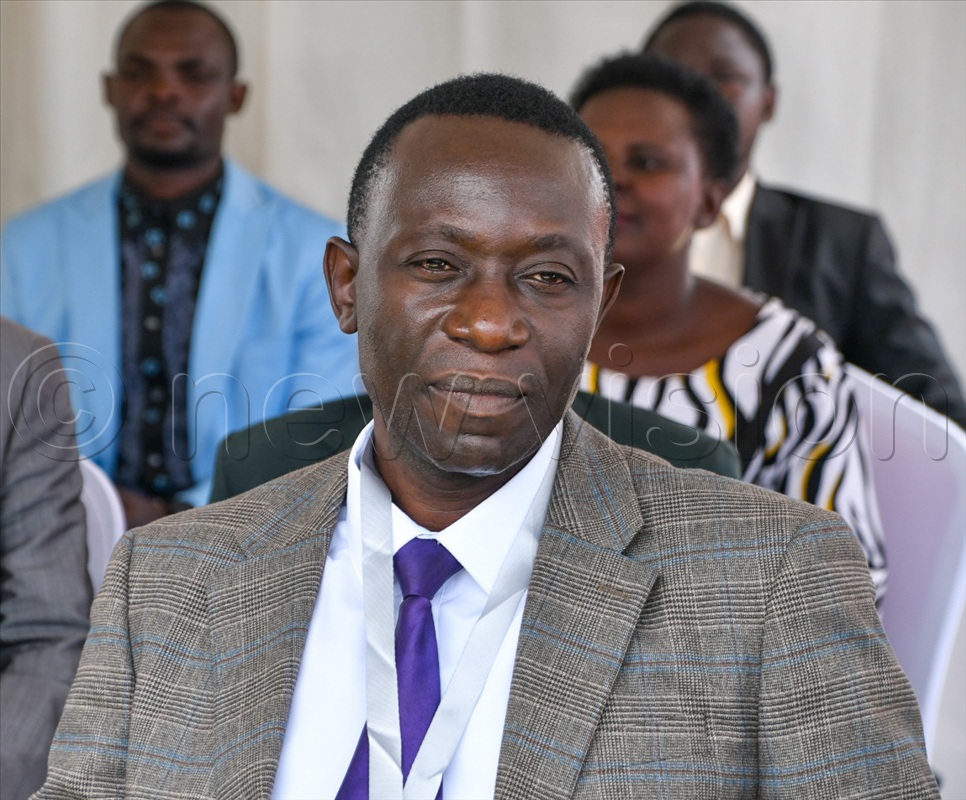
Elton Joseph Mabirizi
“Support for the NRM and its candidate, Museveni, increases steadily with age, while enthusiasm for Robert Kyagulanyi and NUP is strongest among the youth. Among voters aged 18-30, Museveni leads with 54%, followed closely by Kyagulanyi at 37%, indicating relatively diverse political leanings within this group,” Mash Research Africa officials said.
They added: “The 31-50 age group remains a strong NRM base, with Museveni commanding 67% support and Kyagulanyi’s share dropping to 25%. Support for Museveni becomes overwhelming among older voters, reaching 80% among those aged 51-70 and 89% among those above 71, highlighting a consistent trend of increasing loyalty to the NRM with age and minimal support for alternative candidates among the elderly.”
Urban dominance
According to the poll, Kyagulanyi’s top 10 districts where the majority of supporters are include Wakiso, Kampala, Mukono, Jinja, Iganga, Busia, Kitgum, Kasese, Butaleja and Gulu.
“Kyagulanyi dominates the urban and peri-urban belt. Museveni remains strong in Kampala (207), indicating a split urban vote. The district data confirms President Museveni has a geographic landslide of historic proportions.
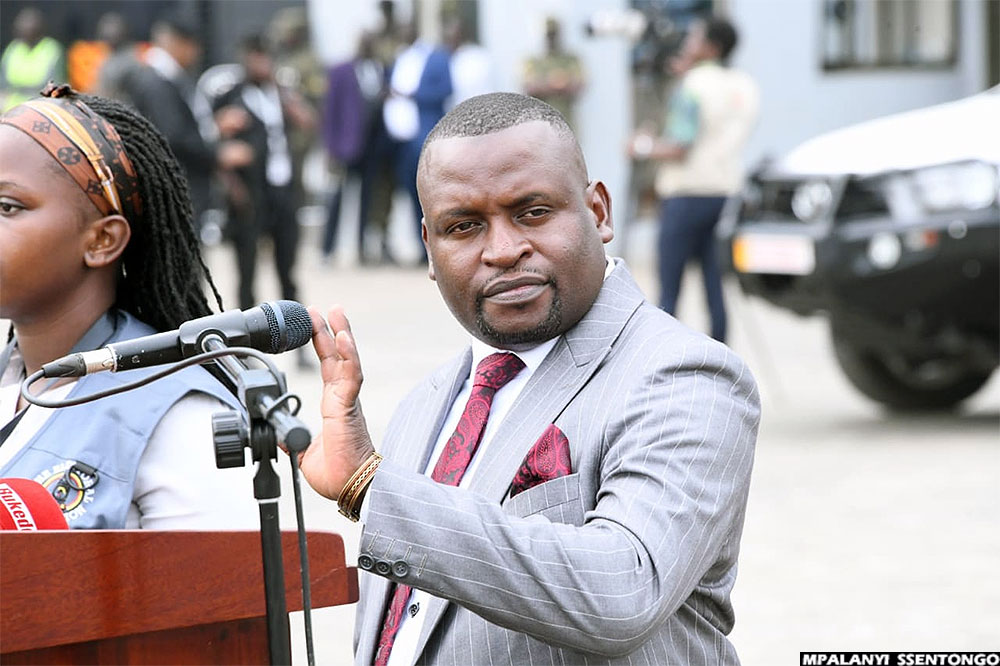
Frank Bulira
“NUP remains trapped in the same 2021 urban/ West Nile enclaves with no evidence of rural breakout. With turnout discipline and targeted saturation of the five alert zones, the campaign can deliver Museveni 68-72% nationally than currently projected. The opposition is currently geographically quarantined,” Anthony Tenywa, the lead researcher at Mash Research Africa, said.
Urban trends
The data also reveals a consistent lead for Museveni across both rural and urban areas, though with stronger dominance in rural communities. Museveni commands the rural and urban support with 68% and 62% respectively.
Overall, poll results underscore a strong NRM rural base, contrasted with a more competitive urban landscape where NUP shows meaningful traction. Poll results project Kyagulanyi as the main challenger, performing notably better in urban areas, where he commands 30% support compared to 24% in rural areas.
“This demonstrates a clear urban tilt towards the opposition, driven largely by younger urban populations. Support for other candidates — including ANT’s Muntu and FDC’s Mafabi — remains minimal and stable across geographic segments (1-2%), indicating limited penetration beyond their core constituencies.
The share of undecided voters is also slightly higher in urban areas,” the lead researcher at Mash Research Africa, Anthony Tenywa, said. On political favourability, 53% of respondents rate Museveni as very favourable.
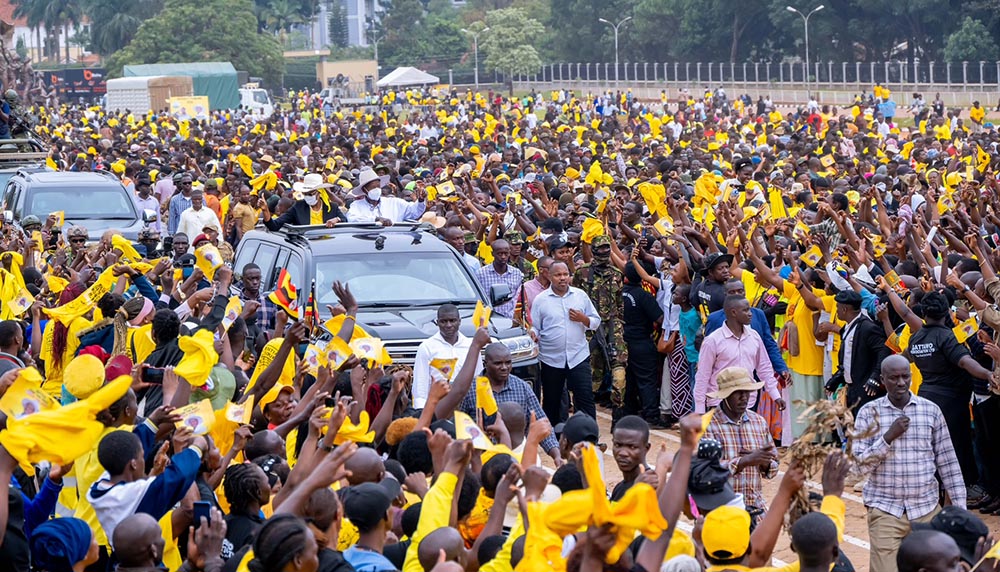
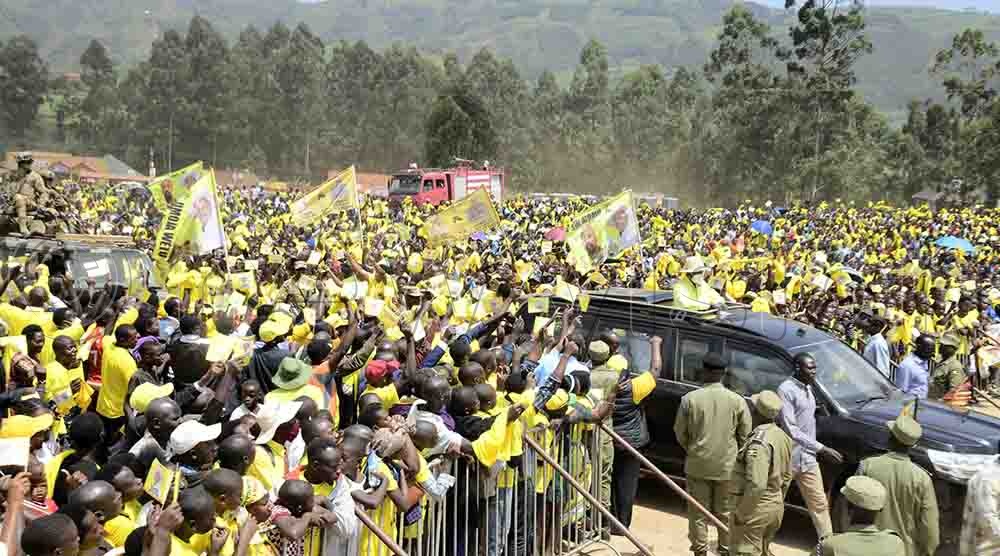
NRM supporters receiving President Museveni (standing through car sunroof) as he arrived for a rally.
“Across all regions, the majority of respondents hold a favourable view of Museveni, with over 70% rating him either very or somewhat favourable. Overall, President Museveni’s favourability is highest in the western (60.6% very favourable) and central (52.3% very favourable) regions, while the northern region shows a larger share of somewhat favourable opinions (26.8%).
Neutral opinions are relatively evenly spread, though slightly higher in central and eastern regions. Negative perceptions, including unfavourable and very unfavourable ratings, are slightly more pronounced in eastern Uganda (20.7%),” Tenywa said.
Overall, data results indicate that favourable opinions dominate in every age bracket, highlighting broad support across generations.
“President Museveni maintains strong favourability across all age groups, with the highest support among the 31-50 age group and 18-30 age group. Moderate support is observed in the 51-70 group, while the 71-plus age group shows the smallest absolute numbers, but still a majority favourable.
Neutral opinions are most common among younger respondents (18-30), whereas negative opinions, including unfavourable and very unfavourable, are relatively low across all age groups,” Tenywa said.
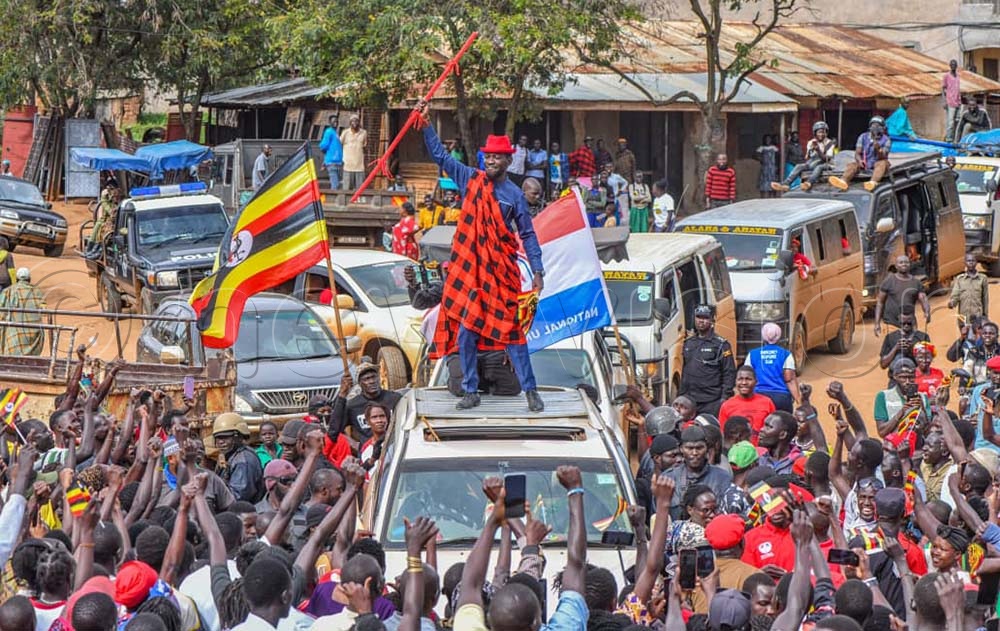
NUP presidential candidate Robert Kyagulanyi Ssentamu heading to one of his rallies.
He added: “Kyagulanyi, on the other hand, leads in neutral opinion (26%), indicating a large group of respondents who are undecided or less certain about him. He also faces higher negative sentiment, with 25% unfavourable and 13% very unfavourable, compared to Museveni’s combined 16% negative.”
Shift in support
Poll results also show a shift in support for Museveni and Kyagulanyi compared to the 2021 general election.
“Museveni shows stability with a loyal base experiencing fewer declines, while Kyagulanyi demonstrates growth potential among new voters, but also faces more volatility in his support. The data shows contrasting momentum for the two leading candidates when voters compare their current support levels to the 2021 election. Museveni retains a stronger share of voters who say their support has increased (43%) compared to Kyagulanyi (25%), reflecting gains among some segments,” Tenywa said.
During the 2021 general election, Museveni got 6,042,898, which was 58.38% of the 10,350,819 valid votes, while Kyagulanyi got 3,631,437, which was 35.08% of the valid votes.
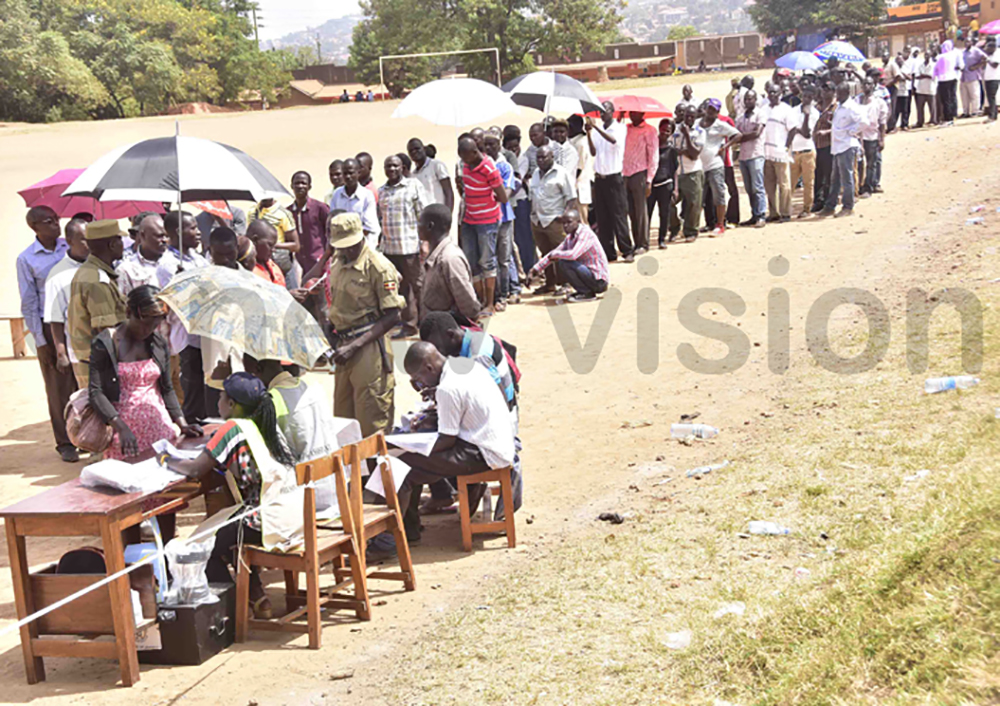
A file photo of a voting exercise.
‘Why we support Museveni’
Poll results indicate that security and peace (72%) are the major strong points for Museveni’s support. Experience and stability (57%) are the other factors that sampled voters cited, noting that they still value continuity and “known quantity” over change, especially among older and rural voters.
Development (36%) and especially economic growth (29%) trail far behind, confirming that bread-and-butter economic concerns are now the main vulnerability, particularly among the youth.
The data shows that support for Museveni is driven primarily by perceptions of good leadership, cited by 68% of his supporters, making it the most influential factor of people’s support. Other reasons the sampled respondents gave for supporting Museveni include party loyalty (38%) and economic performance (34%).
“A smaller yet notable portion of respondents (23%) say the candidate personally resonates with them, highlighting the importance of emotional and relational connection. Finally, 7% attribute their support to other miscellaneous reasons.
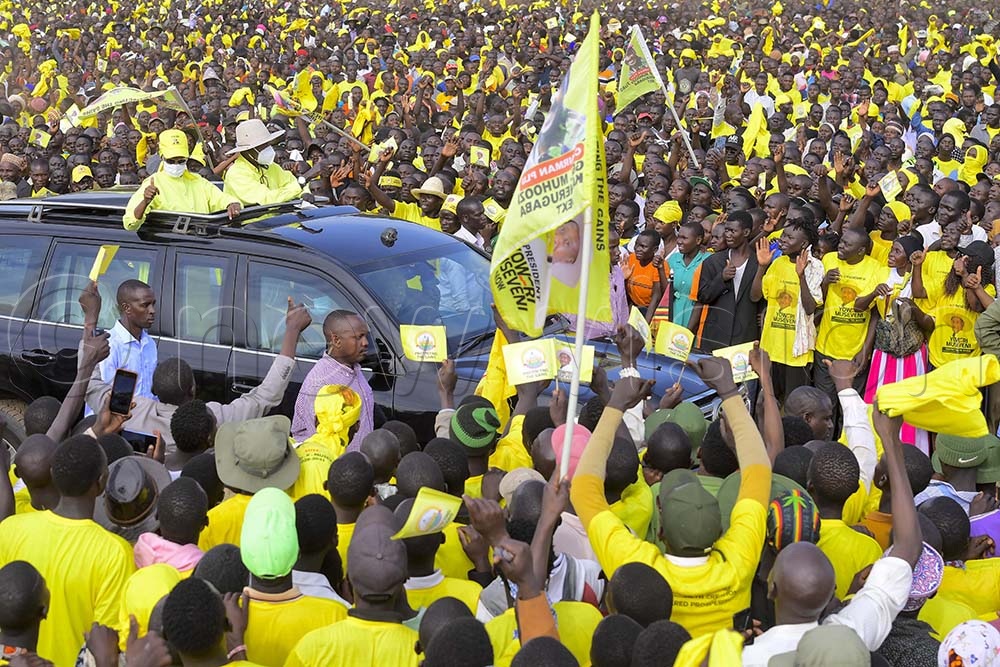
Museveni accompanied by the First Lady at one of his Campaign rallies.
Overall, Museveni’s backing is strongly anchored in leadership credibility, institutional loyalty, and perceptions of economic management,” Tenywa said.
The data shows that dissatisfaction with Museveni is largely driven by governance and leadership concerns, while electoral competition also plays a meaningful role.
“The primary reasons cited for not supporting President Museveni are corruption concerns (87%) and age/leadership fatigue (77%), indicating widespread perceptions of governance issues and a desire for generational change. These two factors dominate respondents’ motivations, reflecting a significant concern about leadership longevity and ethical governance.
A smaller but notable portion of respondents (26%) feel that alternative candidates are stronger, suggesting that some voters are attracted to the policies, image or appeal of opposition leaders rather than actively opposing Museveni’s record.
This highlights the role of competition and the relative strengths of challengers in shaping voter sentiment,” Tenywa said.
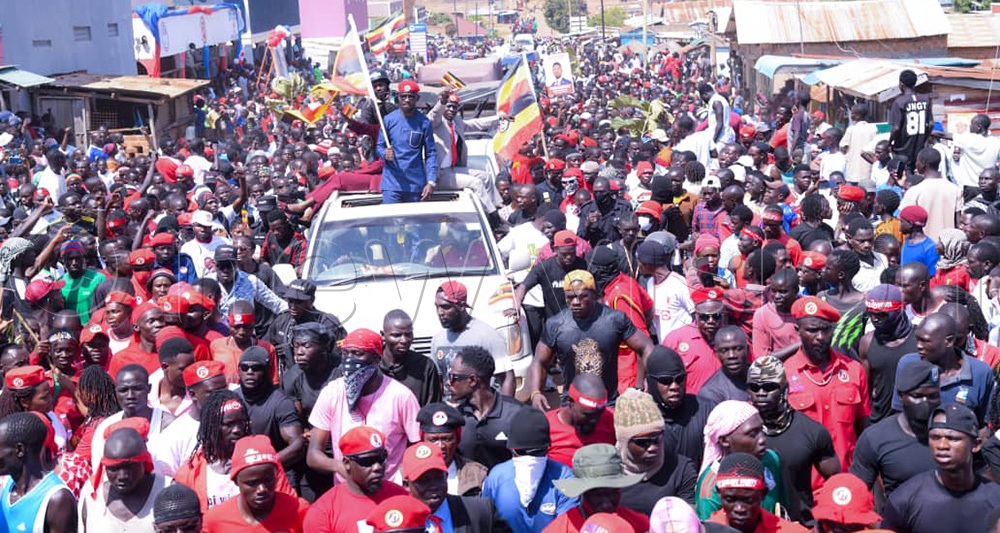
Robert Kyagulanyi Ssentamu at one of his campaign rallies.
‘Why we support Kyagulanyi’
According to the poll, 26% of Kyagulanyi’s supporters cited age as a major factor for supporting him.
Explaining the data results, Tenywa said: “This underscores the perception that youthfulness and energy are important qualities in a presidential candidate. The next most cited reasons are candidate resonance (21%) and party loyalty (19%), indicating that personal connection, identification with his values or message, and alignment with his political party play significant roles in mobilising his base.
Good leadership record (18%) and economic performance (8%) are secondary motivations, showing that while governance and policy matter, Kyagulanyi’s appeal is more strongly driven by age, identity and relatability. Other reasons (7%) reflect additional, less common factors influencing support.”
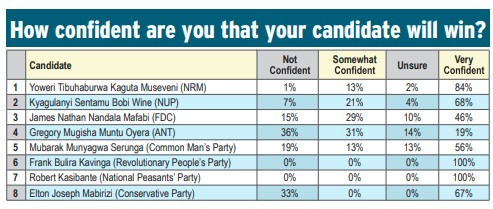
Confidence in candidates
Sampled respondents were also asked a question: How confident are you that your preferred candidate can win the 2026 election? “Supporters of smaller parties such ANT and FDC exhibit more mixed confidence levels, and minor candidates like Mabirizi, Kabinga, and Kasibante have very small supporter bases, and sample sizes are extremely small,” Tenywa said.
On the perception of political parties, 67% of the sampled respondents said they view NRM as a massive political entity that can shape the country’s future. On the other hand, 35% sided with Kyagulanyi’s NUP.
About the issues that are likely to tilt the 2026 general polls, sampled respondents cited economic issues, youth employment, governance and service delivery.
Candidates’ support per district
According to the poll, Museveni’s strongest district in Arua. It is followed by Lira, Kampala, Wakiso, Kyenjojo, Kisoro, Rubanda, Tororo, Kiryandongo and Kakumiro districts. Kyagulanyi, according to poll results, is more in the districts of Wakiso, Kampala and Tororo.
Mash Research Africa officials noted that: “The research has observed a generational and geographic divide in the electorate: Museveni dominates older, rural and female segments, while Kyagulanyi leads among the youth and urban voters.
Museveni dominates among women and rural voters, with 76% support in both segments, indicating his strong base outside urban centres and among female voters. Youth support is lower at 37%, reflecting weaker resonance with younger voters.”
“Urban support is moderate at 44%, suggesting Museveni’s appeal is less dominant in cities. Kyagulanyi is highly popular among the youth (58%) and urban voters (48%), indicating a strong appeal to younger and more urbanised populations. His support among women and rural voters is lower (19% each), highlighting a demographic gap compared to Museveni.
Other candidates (Mabirizi, Kabinga, Muntu, Munyagwa, Kasibante, Mafabi) have negligible support across all segments, suggesting a highly concentrated two-party competition. Undecided voters are a small, but slightly larger portion in urban areas (6%), reflecting potential swing voters,” Masha Research Africa officials said.
The poll further states: “Bunyoro and Toro sub-regions (Kyegegwa, Kakumiro, Kiryandongo, Kyenjojo) show the softest performance, with Bobi Wine reaching 26–35%, but still fell short of competitiveness.
Kasese is the sole outlier where NUP leads — driven by long-standing local grievances and kingdom politics — but the district’s small population limits national impact.” In Alebtong, Amudat, Amuria, Isingiro, Kiruhura, Yumbe, Terego, Zombo, Nebbi, Kisoro and Kyenjojo, poll results show that Museveni also enjoys a commanding lead.
Other districts where Museveni enjoys a comfortable lead include Mbarara (70%), Kiryandongo (70%), Bukwo (69%), Kyegegwa (68%), Lyantonde (71%), Lira (75%), Abim (72%), and Gulu (64%).
However, in other districts, Museveni’s support dropped, according to the survey.
These include Kabale (51%), Masaka (50%), Kamuli (50%), Bugiri (57%), Soroti (56%), Pallisa (54%), Tororo (66%), Namutumba (66%), Bundibugyo (66%), Kasese (46%) and Hoima (61%). Others include Iganga (48%), Wakiso (47%), Mbale (47%), Rukungiri (48%) and Kyotera (49%).
Museveni dominates among women and rural voters, with 76% support in both segments, indicating his strong base outside urban centres and among female voters. Youth support is lower at 37%, reflecting weaker resonance with younger voters.”
How survey was conducted, previous poll by Vision Group
The lead researcher at Mash Research Africa, Anthony Tenywa, said the survey was conducted in October, 2025. He sad a total of 9,812 participants were interviewed in the opinion poll, providing a comprehensive and balanced representation of the population across different regions, age group, gender, and socio-economic categories.
The sample shows a slightly higher representation from rural areas, with 5,279 respondents (54%), compared to 4,534 respondents (46%) from urban areas.
“The research was conducted in the month of October, analysed and presented in November,” Tenywa said.
Mash Research Africa Limited is a premier research and analytics firm headquartered in Naguru, Kampala, with an expanding presence across Sub-Saharan Africa. With over 25 years of experience, it specialises in social, market, and health research, as well as monitoring and evaluation, capacity building, and strategic policy development.
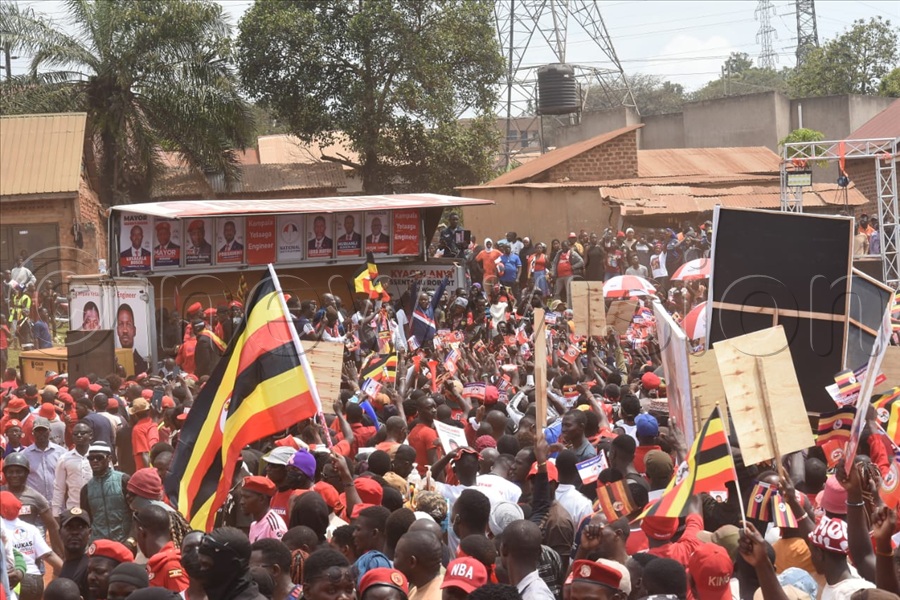
The poll further states: “Bunyoro and Toro sub-regions (Kyegegwa, Kakumiro, Kiryandongo, Kyenjojo) show the softest performance, with Bobi Wine reaching 26–35%, but still fell short of competitiveness.
Previous poll
This year, the Vision Group research team also conducted an opinion poll between March and May, covering 6,006 respondents in 45 districts, which put Yoweri Museveni in the lead of the presidential race.
Seventy-three per cent of Ugandans sampled said they would vote for Museveni. He has been president since 1986.
The New Vision poll also put Robert Kyagulanyi, aka Bobi Wine, in the second position, with 19% of the interviewed citizens saying they would vote for him as president. The survey covered all 17 sub-regions of Uganda.
The respondents were randomly sampled from both rural and urban areas. Of the total respondents, 2,433 were from urban areas, while 3,573 were picked from rural areas.
The objective of the survey was to gauge the public’s perceptions and preferences about the political climate and the general political pulse ahead of the 2026 general election.
The respondents were not given names of candidates and were randomly asked the question: “Which presidential candidate will you most likely vote for next year?”