
Politics
Museveni pledges to restore night ferry operations in Kalangala
“On the issue of ferries, I am told they are few, operate for only a few hours, and do not run at night. I do not know why this is the case. We are going to look into the issue. I will ask why."
Museveni pledges to restore night ferry operations in Kalangala
By: Admin ., Journalist @New Vision
__________________
President Yoweri Kaguta Museveni has moved to address the longstanding challenge of limited ferry operations on the Ssese Islands, pledging to restore night ferry services to ease movement and boost trade for residents of the island district of Kalangala.
Museveni told a campaign rally at Kibanga Primary School playground in Kalangala on Saturday (December 20) that he had been notified of the islanders' transport challenges.
“On the issue of ferries, I am told they are few, operate for only a few hours, and do not run at night. I do not know why this is the case. We are going to look into the issue. I will ask why," he said.
“Back in the day, we used to travel at night to Mwanza and Bukoba. I remember travelling from Bwama at night; they brought fish, and I didn’t eat it and slept hungry because I don’t eat fish. Later, we went to Kenya.”
Haruna Kasolo Kyeyune, the NRM vice-chairperson for the Central region, had informed Museveni about the concerns of the islanders, including limited ferry schedules that slow down business and trade on the islands.
Ferries are a lifeline for the island population, linking residents to the mainland and facilitating transport of goods, services, and people.

Currently, most ferries run only during daytime, with a few night services. This restricts fishermen, traders, and commuters, slowing business activities and increasing costs. Residents have long called on the government to expand ferry schedules and improve reliability.
'Don't catch young fish'
Addressing other local concerns, the National Resistance Movement (NRM) presidential candidate said: “This area has not seen war in 40 years, that is all the work of the NRM. Although there are issues of theft on the Ssese Islands that have been noted, I am going to look into this matter seriously.”
He also touched on the condition of roads, noting that the Bugoma-Kalangala Road needs upgrading.
“It has taken a long time, possibly because of changing Members of Parliament. I do not even know your MPs; they have not demanded these roads. I appeal to you to vote for MPs who will work for your needs.”
Museveni commended locals for embracing palm oil cultivation.
“When we brought the palm oil trees, you embraced them, and now you are benefiting. Your lives are changing for the better. I advise those with palm oil trees to also engage in cattle keeping and poultry farming.”
On fishing, he warned against overharvesting. “Do not catch young fish; stick to what you have. We shall also look into the issue of cage fishing.”
'Do not despair'
Kalangala has 23 government primary schools and four secondary schools across seven sub-counties.
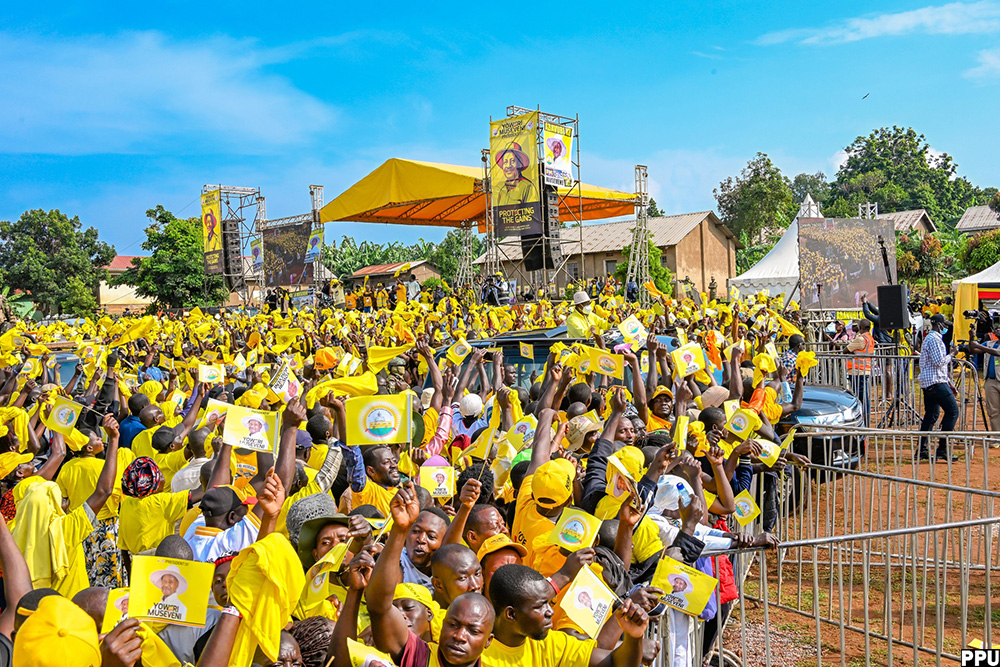
Candidate Museveni urged local authorities to ensure that every sub-county first receives a primary school before additional schools are allocated. “We hope to get every parish a government secondary school."
On water, he reported that only 18 of Kalangala’s 97 villages do not have access to safe water.
“We are constructing and rehabilitating several piped water supply systems, including Dajje GFS in Bujjumba, Kisujju GFS in Kisujju, and Buziga Water Supply System. Urban and rural growth centres are also fully served."
Museveni also talked about economic empowerment.
“You cannot sleep on a tarmac road at night; poverty will welcome you if you do not improve your livelihoods. In the ghettos, I joined the people in Katwe in 1968. It is possible to change your lives. Do not look at the rich and despair; instead, learn how to benefit from opportunities."
He also encouraged youth to engage in diversified income sources, including commercial agriculture, livestock, and small businesses.
The President handed over the NRM flags to aspiring MPs, LC5 chairperson, councillors, and other party candidates in Kalangala, formally endorsing their participation in the 2026 elections.
Around the clock ferry operations
On his part, Kasolo welcomed President Museveni to Kalangala and praised the local NRM leadership for their work at all levels, from district to village structures.
He also commended Lt. Col. Mercy Tukahirwa, Commander of the Uganda People’s Defence Forces (UPDF) Fisheries Protection Unit (FPU), for fostering co-operation between the army and local fishermen.
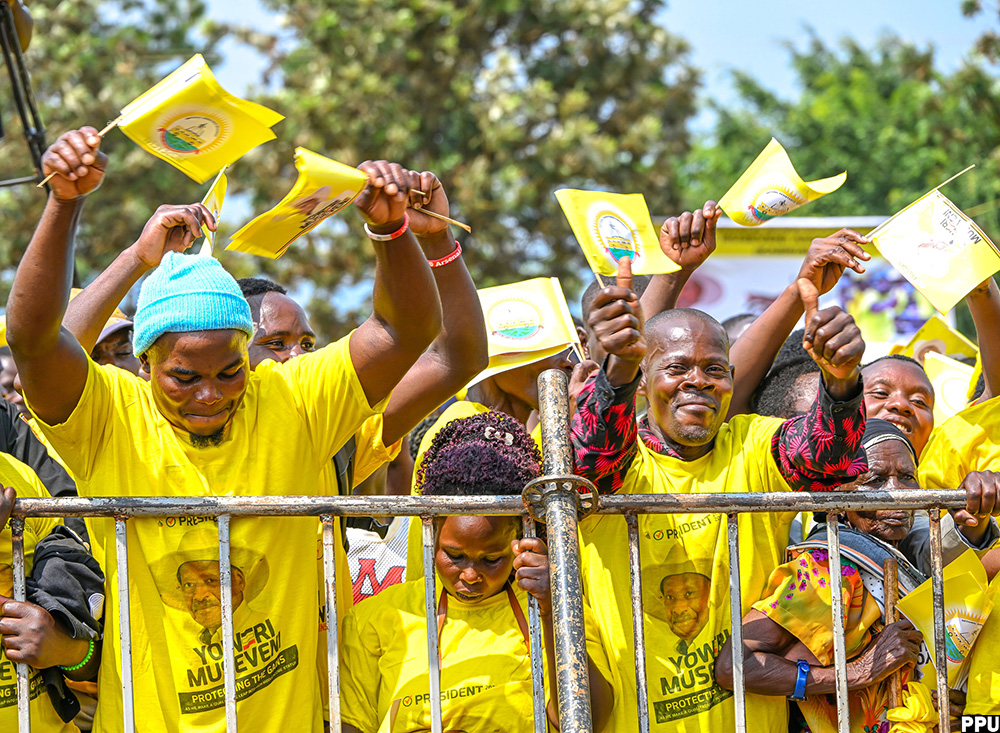
“The collaboration between the UPDF and fishermen has tremendously inspired confidence in our fishing communities."
Residents highlighted ongoing challenges, including crimes of theft and murder.
Kasolo called for stronger enforcement of security measures and requested official recognition by the Ministry of Fisheries for law enforcement at the fishing docks.
Kalangala’s infrastructure needs were also emphasised, with Kasolo requesting support for the construction of the Bukakata-Bulala Road and urged the expansion of the district’s two ferries to operate at night.
“Kalangala would have developed a lot more if our ferries could operate around the clock, enabling the movement of trading vehicles and goods."
Kasolo acknowledged the economic progress under Museveni’s leadership. “We are grateful for the palm oil that we now get from the trees. This is because of your wise leadership."
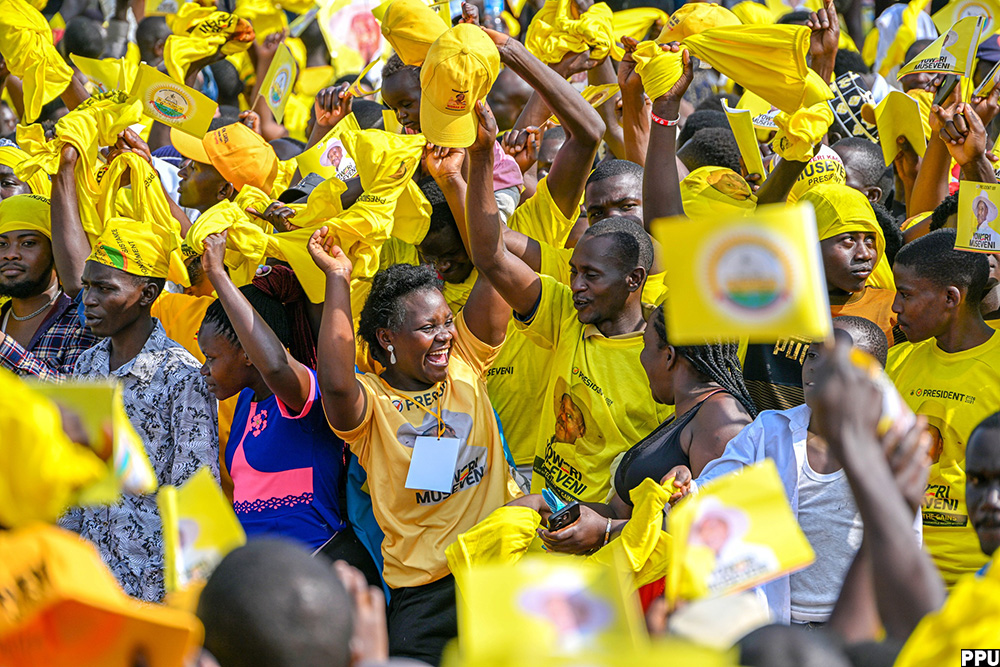
Gerald Kayita, the NRM district chairperson for Kalangala, commended the President for strengthening security on the Ssese Islands, particularly at fishing landing sites and ferry docks, saying the presence of security forces has restored confidence among fishing communities.
“We thank you for the people-friendly forces deployed at the fishing islands. Their presence at ferry points and fishing docks has brought security,” he said, while appealing to the Ministry of Fisheries to formalise and operationalise the security framework governing fishing activities.
Kayita noted that despite progress, challenges remain, saying: “We still have cases of theft and murder on some fishing islands, and we request continued support to address these crimes."
He said palm oil growing is a "game-changer" for the island economy, and that "our people now have a steady source of income".
Kayita said the gains registered in security, wealth creation, education, health, water and energy demonstrate the government's commitment to transforming island communities, while calling for sustained support to address remaining gaps, particularly crime at fishing islands and access to services in underserved areas.
Kalangala at a glance
With a population of 74,411 (according to the 2024 national census), the island district has seven sub-counties and town councils, 17 parishes and 97 villages.
Under the Parish Development Model (PDM), all the 17 parishes have cumulatively received over 6.07 billion shillings, with 5.17 billion shillings (86%) already disbursed to 5,170 beneficiary households. Out of the district’s 26,564 households, 19.4% have so far benefited, with more households expected to be supported in subsequent phases.
Through the Emyooga programme, Kalangala has 34 SACCOs with a total membership of 11,794 people, and the government has disbursed 1.6 billion shillings to boost small businesses and income-generating activities.
In the education sector, the district has 23 government primary schools with an enrolment of 7,573 pupils, and four government secondary schools serving 1,028 students.
All government secondary schools offer Universal Secondary Education and Universal Post-O-Level Education and Training.
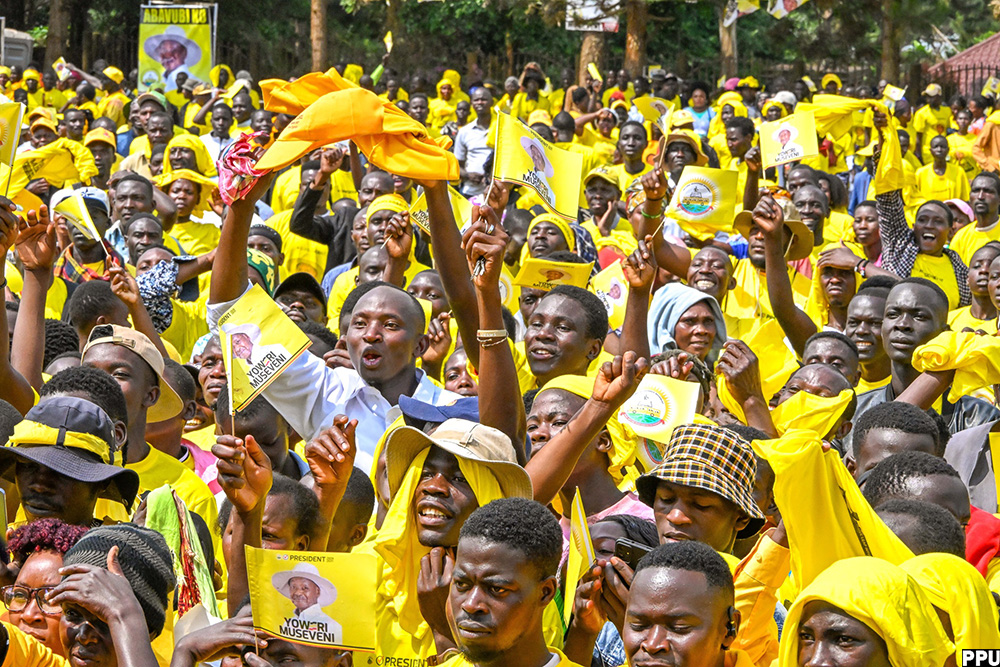
While 14 of the 17 parishes have at least one government primary school, three parishes are still without. At secondary level, only four of the seven sub-counties have a government secondary school.
However, the government is constructing three seed secondary schools, a move that will ensure every sub-county in Kalangala has a government secondary school once the projects are completed.
All the seven sub-counties in Kalangala now have access to a health facility, with two HC4s and six HC3s across the district.
Access to safe water stands at 81 per cent, with 79 out of 97 rural villages served. Several piped water systems have been constructed or rehabilitated, including Dajje, Kisujju, Buziga, Kachungwa and Kitobo systems. In addition, multiple urban and rural growth centres across the islands are now served by fully operational piped water systems.
Kalangala has also been connected to the national electricity grid. The government has committed to extending power to the remaining three sub-counties of Bufumira, Kyamuswa and Bubeke in the next term.