
Lira’s defining MP contest: Power, legacy and the battle for Lango’s political soul
What began as a routine contest for the Woman Member of Parliament (MP) seat has transformed into one of the most consequential and emotionally charged races in northern Uganda.
Jimmy Akena joins his wife Betty Amongi, a contestant for Lira City Woman MP. This was during her campaign rally at Kakoge 'C' Cell in Lira City West Division last week. (Photo by Hudson Apunyo)
__________________
As polling day draws closer, Lira City is no longer merely hosting an election campaign; it is undergoing a political reckoning.
What began as a routine contest for the Woman Member of Parliament (MP) seat has transformed into one of the most consequential and emotionally charged races in northern Uganda.
Two powerful Cabinet ministers now face off, reopening old wounds within the Uganda People’s Congress (UPC) and forcing voters to confront deeper questions of leadership, loyalty and legacy in Lango.
On one side is health minister Dr Jane Ruth Aceng Ocero and incumbent MP, a technocrat whose tenure has left a visible mark on health service delivery in the region. On the other hand is gender minister Betty Amongi Ongom, and former Oyam South MP. She is the wife to UPC president Jimmy Akena, a seasoned politician whose candidacy has triggered open rebellion among sections of her traditional support base.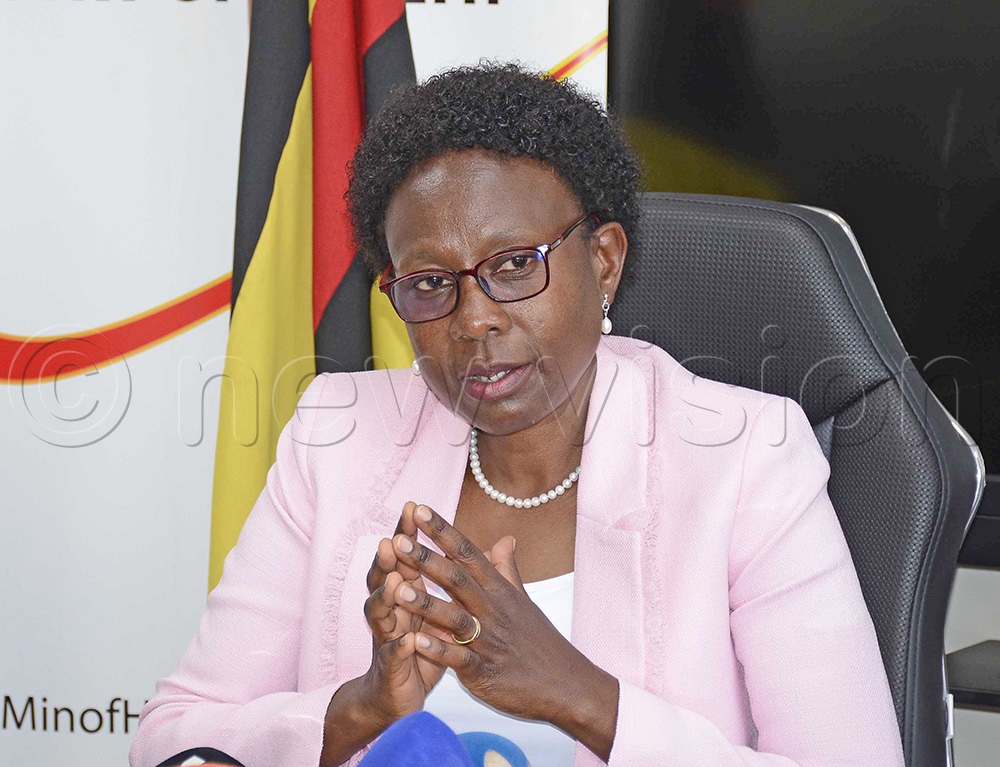
Health minister and incumbent MP for Lira city Dr Jane Ruth Aceng Ocero
When party lines collapse
The political temperature rose sharply over the weekend when UPC-leaning politicians, activists, and opinion leaders convened a rare and blunt press conference at Gracious Palace Hotel in Lira. What unfolded was less a campaign mobilisation than a public rupture.
Speaker after speaker distanced themselves from Amongi, accusing her of political opportunism, mixed messaging and disrespect for the legacy of Dr Apollo Milton Obote, a figure whose name still carries deep emotional weight in Lango.
Patrick Okwir Jaramogi, speaking with visible emotion, framed the election as a defining moment for the sub-region.
“This is not just about voting,” he said. “It is about the future of Lango, about clarity of leadership and about respecting where we come from.”
Jaramogi, who openly sympathised with UPC ideology, accused Amongi of confusing supporters by quietly aligning with President Museveni while publicly presenting herself as a UPC stalwart. He said this contradiction has left voters disoriented and angry.
He and other speakers also took issue with Amongi’s remarks about Mama Miria Obote, widow of the former president, describing them as deeply disrespectful.
“To abuse that family is to abuse our collective history,” Jaramogi said. “We cannot sit and watch.”
The Akena factor
Hovering over the contest is the complex role of Jimmy Akena—UPC president, son of Obote and husband to Amongi. His shifting signals on the presidential race, first urging supporters to back Museveni and later suggesting protest votes, have deepened unease within UPC ranks.
Critics warned that calls to write in names not appearing on the ballot would only produce invalid votes, weakening Lango’s bargaining power nationally.
“How do we go back to government and demand development when we wasted our votes?” asked Jimmy Awany Cingmalo, an independent MP aspirant for Lira City West and long-serving UPC member.
Cingmalo traced UPC’s paralysis to what he described as a verbal political arrangement between senior UPC figures and the NRM dating back to 2014—an arrangement he said benefited a few individuals with ministerial appointments while ordinary party members were sidelined.
“For too long, we have been held hostage,” he said. “A few families benefit, while the rest of Lango remains poor.”
From ideology to pragmatism
What makes the Lira City race exceptional is not only the scale of internal UPC dissent, but the emergence of Dr Jane Aceng as a rare cross-party consensus figure. Even opposition leaders increasingly speak of her less as an NRM politician and more as a regional asset.
Speakers cited tangible achievements: upgraded health centres across Lango, modern diagnostic equipment at Lira Regional Referral Hospital, dialysis services, a CT scan, a blood bank under construction, and national projects such as Akii Bua Stadium.
“These are not NRM projects or UPC projects,” one speaker argued. “These are Lango projects.”
Joel Okao Tema, a senior FDC leader, urged voters to reject what he called “politics of theatrics” in favour of leadership that delivers lasting value.
“Our people are wiser now,” he said. “They want leaders who know how to extract value from government for generations to come.”
A choice beyond parties
For Betty Amongi, once a dominant political force in northern Uganda, the race has become a fight to retain relevance amid growing criticism. While supporters say she is being unfairly targeted, critics argue her personal ambition has undermined party unity and regional cohesion.
As election day nears, the Lira City contest has come to symbolise a broader shift in Lango politics—from ideology to pragmatism, from party loyalty to performance.
“Dr Aceng may leave office one day,” a speaker observed, “but the hospital will remain. The stadium will remain. The equipment will remain.”
Whatever the outcome, Lira City has already crossed a political threshold. The debate is no longer whispered; it is public, loud and irreversible—and the decision at the ballot box may define Lango for a generation.