
Why Catholics want Archbishop Kiwanuka canonised
Archbishop Kiwanuka, formerly Bishop of Masaka and later Archbishop of the former White Fathers’ Archdiocese of Lubaga, was the first native Catholic Bishop in Africa south of the Sahara. He was consecrated by Pope Pius XII at St Peter’s Basilica in Rome in 1939.
Archbishop Dr.Joseph Nakabaale Kiwanuka (June 25, 1899 - February 22, 1966)
__________________
After proclaiming, singing and writing about his remarkable works and achievements for six decades since his death, Catholics are now openly calling for the canonisation of Archbishop Dr Joseph Nakabaale Kiwanuka.
In the Roman Catholic Church, canonisation is the formal declaration by the Pope that a deceased Christian is a saint and is dwelling in heaven in the presence of God and the angels. For one to be declared a saint, the Church must be satisfied that the individual lived a holy and virtuous life.
The Vatican must also investigate and verify evidence of favours or miracles received through the intercession of the person proposed for sainthood.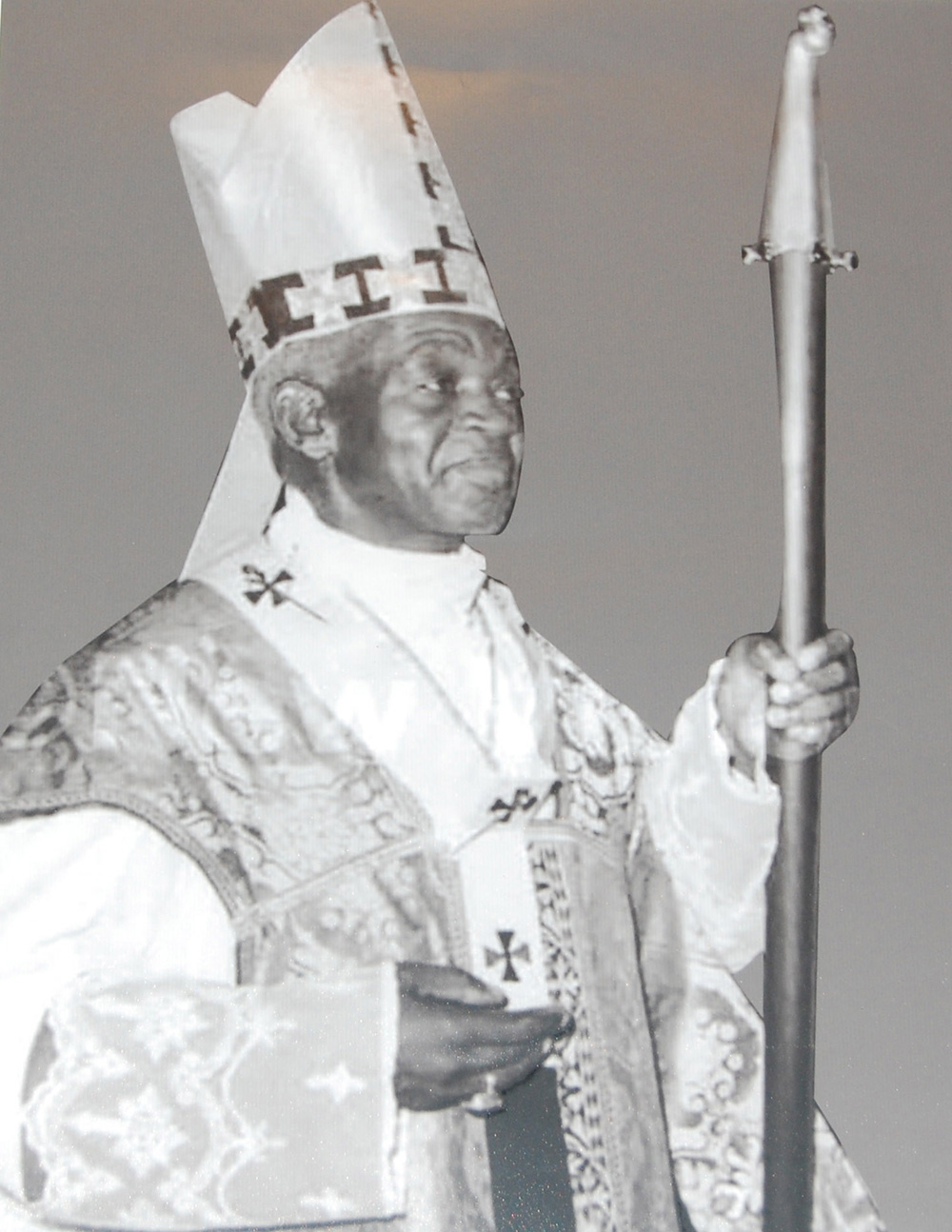
Archbishop Dr.Joseph Nakabaale Kiwanuka (June 25, 1899 - February 22, 1966)
Archbishop Kiwanuka, formerly Bishop of Masaka and later Archbishop of the former White Fathers’ Archdiocese of Lubaga, was the first native Catholic Bishop in Africa south of the Sahara. He was consecrated by Pope Pius XII at St Peter’s Basilica in Rome in 1939.
Calls for his elevation to sainthood became even more pronounced during a memorial lecture organised in his honour by Lubaga Cathedral National Foundation at Pope Paul VI Memorial Hotel in Lubaga last week.
Fred Jachan Mandir was among those who spoke passionately, urging Church authorities to begin the formal process of beatification and eventual canonisation.
“We have had enough information about him during the successive memorial lectures. Nobody can doubt his piety. The Church can initiate the formal process and give him the title of Servant of God,” Omach pleaded.
Earlier, the keynote speaker, Sr. Dr Frances Ambrosia Nakiwala of the Pontifical Institute of the Daughters of Mary, locally known as the Bwanda Sisters, praised Archbishop Kiwanuka for his dedication to Catholic evangelism, education, healthcare, ecclesial self-reliance, youth and women empowerment, and socio-economic development.
Visionary and prophetic leader
Kampala Archbishop Paul Ssemogerere described Archbishop Kiwanuka as a visionary and prophetic Church leader whose influence remains evident six decades after his death.
“He was indeed a visionary and prophetic Church leader. He rejuvenated Africa in academics and ecclesial leadership.
He was the first Ugandan to join the religious missionary society of the White Fathers. He successfully defended his doctorate during a challenging time, when many Europeans still doubted African academic competence.
He led the Church with commitment and integrity. He was an ardent advocate of human rights and democratic governance. He insisted on truth and justice.
He demonstrated that true leadership is in serving others, not self-service,” Ssemogerere said.
Ssemogerere further commended Kiwanuka for his strong stance on human dignity and women’s rights, particularly his opposition to the commercialisation of marriage through bride wealth.
“He was against exorbitant bride-wealth. Parents were demanding a lot of money and material goods for their daughters as if they were economic commodities to be sold at the highest price possible.”
However, he expressed concern over what he described as a worrying regression.
“I think we have gone back to the old days. Today, some parents even ask for cars! Surprisingly, sometimes, the spouses-to-be are the ones who opt to buy the expensive gifts even without being asked by the parents; they want to impress. No wonder such marriages usually collapse because they are founded in deceit,” Semogerere said.
He also hailed Archbishop Kiwanuka for preparing Ugandans for political independence and encouraging responsible civic engagement.
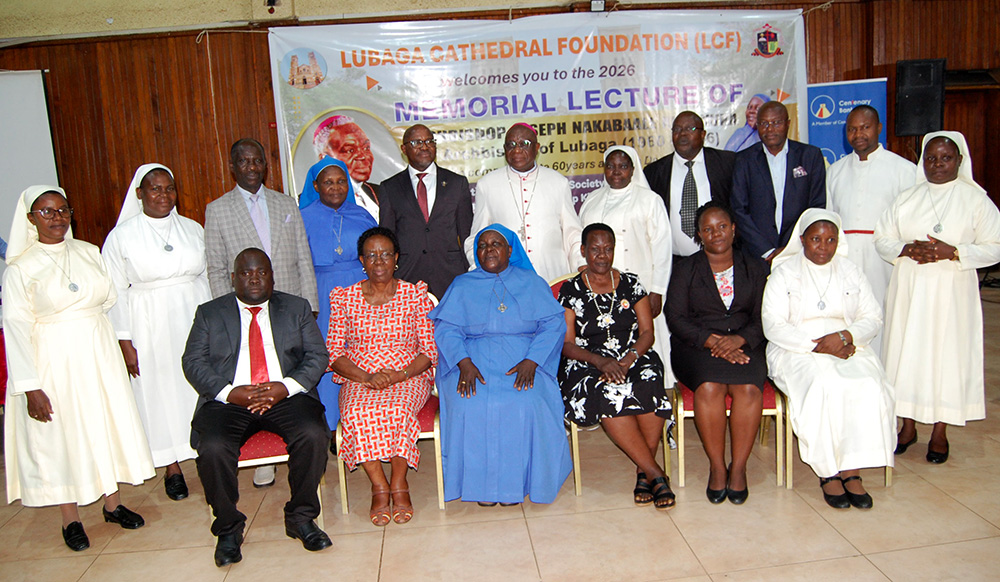
Archbishop Paul Ssemogerere (wearing a skull-cap) shares a photo moment with the Chief Guest Dr. Fabian Kasi (on the archbishop's immediate right), Catholic nuns and some members of Lubaga Cathedral National Foundation. (Photo by Mathias Mazinga)
According to Ssemogerere, political participation is a fundamental right, and members of the Church should not shy away from civil leadership.
Other speakers, including Lubaga Cathedral National Foundation Chairperson Prof. Jane Mulema, Vice-Chairperson Prof. Maria Goretti Nassali Musoke, Very Rev. Fr. Richard Nnyombi of the Missionary Society of the White Fathers, Centenary Bank CEO Dr Fabian Kasi, and lawyer Assumpta Mujuzi, echoed similar sentiments.
They credited Archbishop Kiwanuka with rejuvenating Uganda and Africa through his contributions to academia, education, healthcare, social development and ecclesial administration.
A Brief Biography of Archbishop Kiwanuka
- Born at Nakirebe in Mpigi District on June 25, 1899, to Felicitas Nankya and Victoro Katumba Mundu-ekanika.
- Studied at Mitala-Maria Primary School (1910-1914), Bukalasa Minor Seminary and Katigondo National Major Seminary.
- Bishop Streicher ordained him a priest at Villa-Maria Proto-Cathedral on May 26, 1929.
- Joined the novitiate of the White Fathers in Algeria and became a member of the congregation on October 12, 1933.
- In 1939, he was appointed Bishop of Masaka, and on December 20, 1960, he was elevated to Archbishop of Lubaga Archdiocese.
- He participated in the Second Vatican Council (1962-1965), during which he assisted Pope Paul VI in canonizing the Uganda Martyrs on October 18, 1964.
- Archbishop Kiwanuka played a pivotal role in promoting constitutional and democratic governance in Uganda.
- He advised political leaders and took part in the Namirembe Conference, which improved relations between Buganda and Uganda.
- His most celebrated contribution remains the 1961 Pastoral Letter, Church and State; the Guiding Principles, written to prepare Ugandans for independence. The document reflected his prophetic insight and deep patriotism.
- Died at Lubaga Hospital on February 22, 1966, and was laid to rest at Lubaga Cathedral, a resting place that many faithful now hope will one day be officially recognised as the tomb of a saint.