
WFP new global fleet to create more jobs for Ugandans, support local economy
Speaking at the signing ceremony, foreign affairs ministry chief of protocol Ambassador Charles Ssentongo described Uganda’s selection as a recognition of the country’s growing role as a regional partner in humanitarian assistance.
(L-R) Apollo Kashanku Asistant Commissioner at the Ministry of Works and Transport, Charles Ssentongo, Chief of Protocol at the Office of Foreign Affairs and Marcus Prior, Deputy Country Director of WFP, fitting a unique number plate on a truck during the launch of the Global Fleet Unique number plate at Speke Resort Munyonyo. (Credit: Barbra Kabahumuza)
Apollo Kashanku giving his speech during the ceremony. (Credit: Barbra Kabahumuza)
Uganda is set to benefit from a major humanitarian and economic initiative, as the United Nations World Food Programme (WFP) designates the country as the home of its new Global Fleet Hub.
The hub is intended to accelerate emergency food and aid responses across Africa.
This follows an amendment to the memorandum of understanding (MoU) between Uganda and the WFP, officially confirming Kampala as the operational centre for the fleet.
Speaking at the signing ceremony, foreign affairs ministry chief of protocol Ambassador Charles Ssentongo described Uganda’s selection as a recognition of the country’s growing role as a regional partner in humanitarian assistance.
However, he also emphasised the hub’s potential to create jobs and strengthen the local economy.
“From drivers and turn-boys to mechanics, as well as the supply chain for fuel and lubricants, this initiative will generate significant employment opportunities,” Ssentongo says.
He noted that for a fleet of 1,000 trucks, the jobs and training opportunities for Ugandan youth will be tremendous.
He stressed that Uganda’s peace and stability were key factors in its selection, highlighting the country’s strategic role in supporting emergency humanitarian operations across the continent.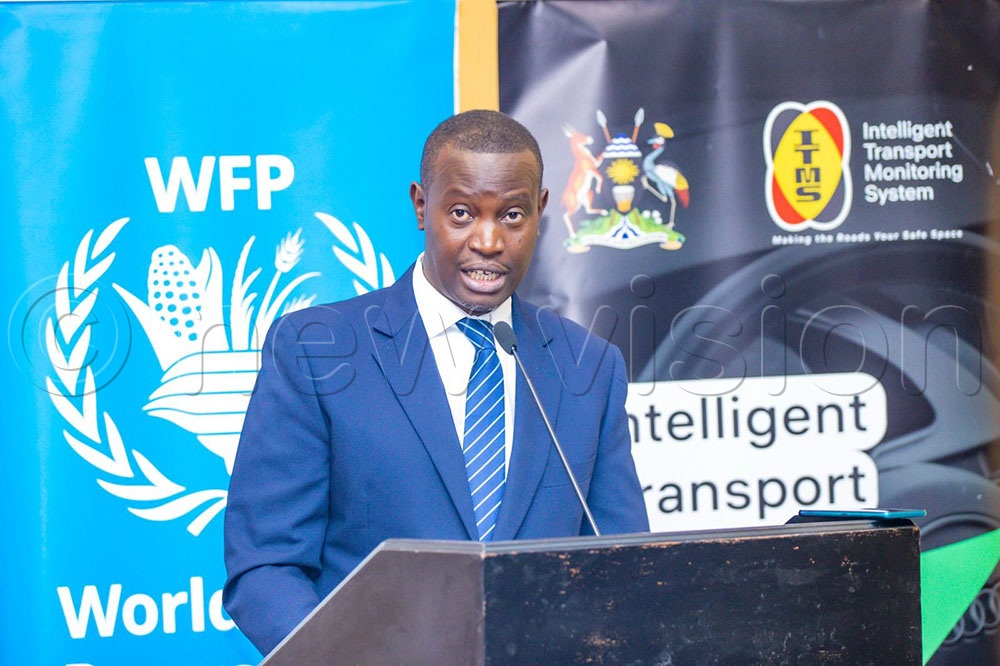
What the agreement means
The new agreement allows WFP to operate an emergency fleet using unique UN/WFP number plates that are recognised across the continent.
The special plates, issued by the Intelligent monitoring system, remove the need for repeated vehicle registration at every border, cutting deployment times from weeks to days or even hours.
Speaking at the launch of the Global Fleet Unique Number Plates at Speke Resort Convention Centre on December 3, 2025, WFP deputy country director Marcus Prior said the hub will play a critical role in rapid emergency operations.
“This hub will house WFP-owned emergency response vehicles bearing distinctive United Nations/WFP license plates designed, issued and managed by WFP,” he said.
He said the number plates symbolise humanitarian neutrality and enable seamless cross-border operations, and that the new system removes major bureaucratic delays that often slow down aid delivery.
“When floods displace thousands, drought threatens livelihoods, conflict drives refugees across borders, every hour matters. Red tape will no longer stand between humanitarian need and response,” he said.
According to Prior, Kampala will now serve as the launch point for rapid regional deployment, supported by Uganda’s strong logistics capacity.
In 2024, WFP Uganda delivered nearly 174,000 metric tonnes of food to 545 locations, reaching over two million people.
Assistant commissioner Apollo Kashanku, who was representing the works and transport ministry, said government agencies worked together to adjust policies to support the initiative.
“We are extremely excited… Uganda has always had the dream to be a logistics centre of this region because of our unique geographical location,” he said.
He noted that this is the first number plate in Uganda not linked to any specific country, requiring legal reforms to enable cross-border movement without hindrance.
“We had to change our policies and laws to make sure that we accommodate such an initiative. This number plate will be able to circumvent non-tariff barriers,” he said.
Joseph Tumwine, Head of Installation at the Intelligent Transport Monitoring System, said the smart plates also enhance real-time tracking.
“These smart plates are the future of logistics in Uganda and across Africa. The QR codes and unique identifier allow for instant tracking of every truck in real time,” he said.