
UWONET celebrates veteran women leaders, seeks new generation of female leaders
The summit, convened by the Uganda Women’s Network (UWONET) under the theme: “Her Voice: Uniting for Gender Transformation and Cohesion in Uganda,” brought together over 80 women leaders from Parliament, civil society, academia and local governments across the country.
Rita Aciro (left) the Executive Director for Uganda Women's Network chats with Alice Alaso, the national cordinator, Alliance For National Transformation (ANT) party and Lina Zedriga acting president of the National Unity Platform (NUP) at the National Women in Leadership Conference on 6th May 2026. (Photo by Nicholas Oneal)
________________
Veteran women leaders, including former Vice-President Specioza Wandera Kazibwe and former Speaker of Parliament Rebecca Kadaga, have been recognised and celebrated as trailblazers.
The recognition was on May 6, 2026, during the National Women’s Leadership Summit at Four Points by Sheraton Kampala.
The summit, convened by the Uganda Women’s Network (UWONET) under the theme: “Her Voice: Uniting for Gender Transformation and Cohesion in Uganda,” brought together over 80 women leaders from Parliament, civil society, academia and local governments across the country.
The gathering aimed to reflect on Uganda’s women’s political journey, address persistent barriers and chart strategies for stronger, more unified leadership ahead of future elections.
Delivering the keynote address, politician and author Alice Alaso traced Uganda’s women’s electoral journey, highlighting milestones that have shaped female political participation.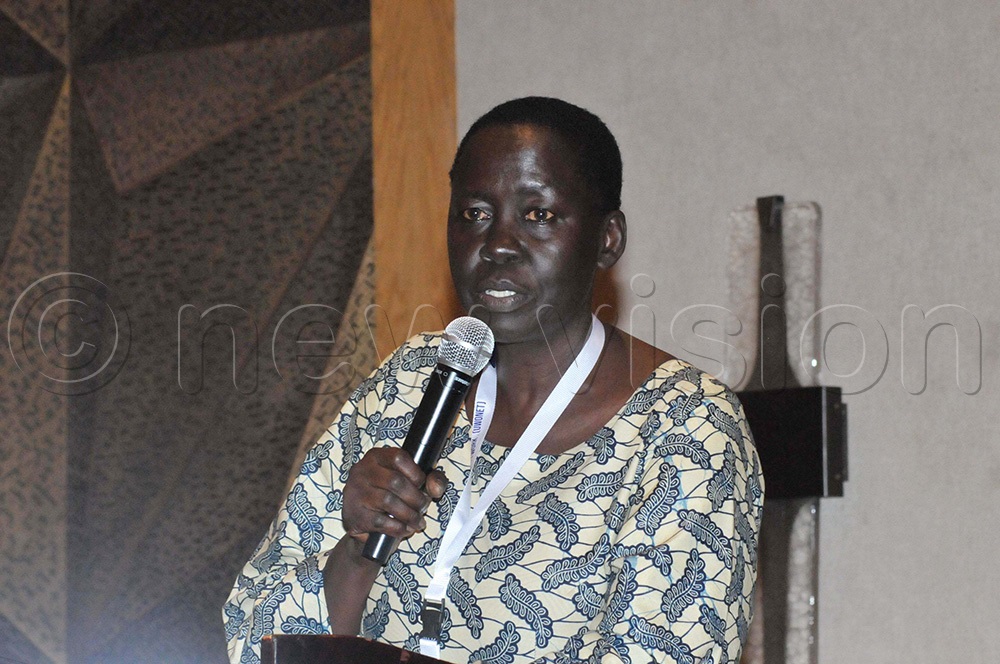
Alice Alaso, the national Cordinator for the Alliance For National Transformation (ANT) Party, speaking during the National Women in Leadership Conference on 6th May 2026. (Photo by Nicholas Oneal)
She referenced the historic entry of Sarah Ntiro into the Legislative Council in 1954 and the introduction of affirmative action policies under the 1995 Constitution as critical turning points.
Alaso praised pioneers such as Rhoda Kalema and Joyce Mpanga, noting that their resilience laid the foundation for today’s progress. However, she cautioned that symbolic representation without real influence undermines true empowerment.
“Any democracy that excludes women from meaningful power is not democratic,” Alaso said, urging participants to interrogate whether Uganda’s political systems genuinely enable women to influence decision-making or merely include them for representation.
Growing concerns
She also raised concern over what she termed as increasing violence in electoral processes, describing it as a “silent emergency” that disproportionately affects women candidates.
According to Alaso, fear, intimidation and systemic barriers continue to discourage women from fully participating in politics despite existing affirmative action measures.
Echoing these concerns, UWONET executive director Rita Aciro emphasised the need for unity among women across political, social, and generational divides.
She noted that while women make up more than half of Uganda’s electorate, their influence remains constrained by structural and cultural barriers.
“Women constituted about 53 per cent of registered voters in the 2026 elections, yet they continue to face high nomination fees, limited financing, and persistent societal bias,” Aciro said. “We must unite beyond our differences to protect the gains made and push for meaningful inclusion.”
Experience sharing
Aciro added that the summit sought to create a platform for experience-sharing, mentorship and the development of a collective action agenda aligned with the Women’s Manifesto 2026–2030.
Meanwhile, Tororo District Woman MP Sarah Opendi challenged women to actively support one another and contest beyond traditional affirmative action seats.
She highlighted the paradox many female politicians face—being pushed away from constituency seats while also being criticised within women’s representation spaces.
“Where is a woman’s place?” Opendi said.
“We are told to leave constituency seats for men, and when we take women’s seats, we are told to return. We must deliberately support women to contest across all positions.”
She further urged early identification and backing of female candidates, including a potential woman presidential contender, arguing that Uganda’s demographics provide a strong foundation for such a breakthrough if women unite behind a common candidate.
Adding a personal perspective, Jacklyn Jolly Tukamushaba recounted her experience of alleged abduction during the 2026 campaigns, which she said disrupted her ability to participate in the electoral process. Her testimony emphasised the risks women face in Uganda’s political landscape and sparked calls for stronger protections for female candidates.
The summit concluded with calls for sustained solidarity, increased civic education, and structural reforms to ensure women’s participation translates into tangible political power.
Participants from all over the country, from parts such as Kasese, emphasised that honouring pioneers like Kazibwe and Kadaga must go hand in hand with building a new generation of women leaders capable of shaping Uganda’s democratic future.