
Ugandans urged to embrace philanthropy, community savings groups in hunger fight
During a joint stakeholders’ discussion on food and nutrition held at Golden Tulip Hotel in Nakasero, outgoing Kyegegwa Woman MP Flavia Kabahenda urged communities to embrace philanthropy, savings groups and risk-pooling initiatives instead of depending entirely on government support.
Members of Parliament and participants pose for a group photograph during the stakeholders nutrition accountability dialogue at Golden Tulip Hotel in Kampala on May 22, 2026. (Photo by Francis Emorut)
_________________
As concerns over food insecurity and poor nutrition continue to grow, leaders and stakeholders are pushing for more community-driven solutions to strengthen household resilience across Uganda.
During a joint stakeholders’ discussion on food and nutrition held at Golden Tulip Hotel in Nakasero, outgoing Kyegegwa Woman MP Flavia Kabahenda urged communities to embrace philanthropy, savings groups and risk-pooling initiatives instead of depending entirely on government support.
The remarks were made ahead of the 5th Parliamentary Nutrition Week 2026, which will be held in Iganga next month.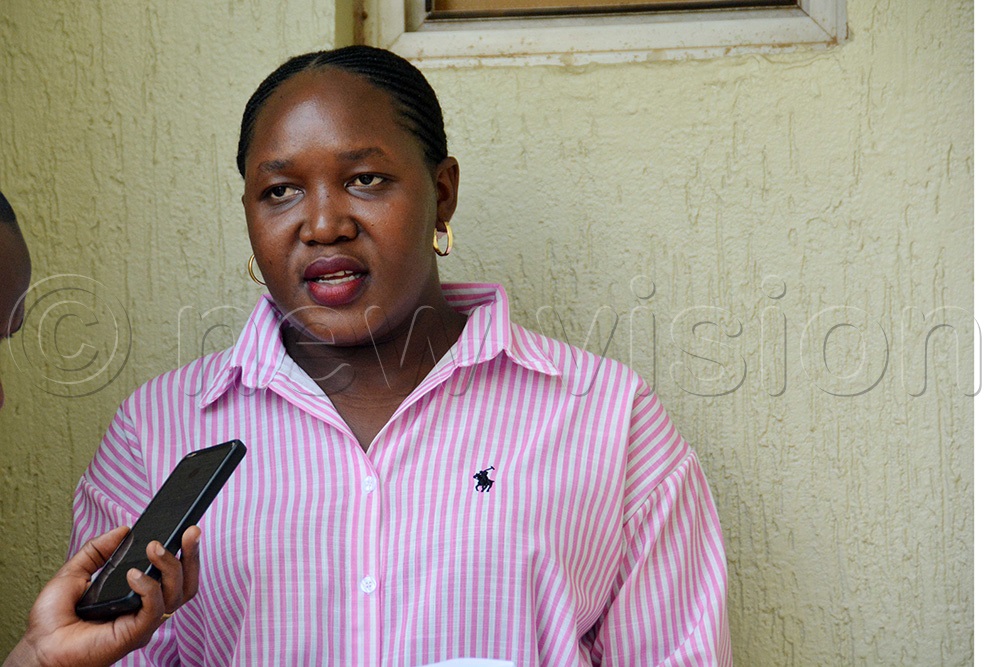
PELUM advocacy Officer Mary Apio addressing the media. (Photo by Francis Emorut)
The event on May 22, 2026, brought together several Members of Parliament (MPs), civil society organisations (CSOs), district leaders and planners, nutritionists and international development partners, including representatives from World Vision, Food Rights Alliance and GIZ, among others.
Kabahenda said Ugandans have repeatedly demonstrated generosity during times of crisis, citing the COVID-19 pandemic when communities mobilised food and other forms of support for vulnerable families across the country.
“Ugandans are very philanthropic. It is only trust and accountability that puts them back,” Kabahenda said.
She argued that with stronger accountability systems and transparent management structures, many citizens would willingly contribute resources towards food security initiatives and support for vulnerable households.
The outgoing legislator proposed that the National Planning Authority develop frameworks that encourage organised philanthropy and public participation in addressing hunger and malnutrition.
“We have seen it during COVID when the government called on people to support, and food was pouring in from everywhere, including my district,” she said.
Kabahenda also urged government and development partners to integrate food security interventions into existing Village Savings and Loan Associations (VSLAs) and community economic groups, particularly in rural areas.
According to her, many community groups in western Uganda are often formed around bereavement and burial support, yet they could be transformed into platforms for food production, agricultural insurance and household resilience.
“Before burial, we need to be alive. We need to eat and be healthy,” she said.
Drawing lessons from India, Kabahenda said Uganda could adopt community-based agricultural insurance and seed-saving systems where farmers preserve part of their harvest to cushion themselves during climate-related disasters and unpredictable seasons.
She warned that climate shocks, including prolonged droughts and floods, continue to threaten food production and household incomes despite Uganda’s agricultural potential.
Kabahenda further questioned whether Uganda’s agricultural agenda is placing excessive emphasis on commercialisation at the expense of sustainable food production.
“Commercialisation versus sustainable production, I fail to balance the two. Are we talking commercialisation or are we talking about sustainability?” she asked.
She stressed the need for stronger coordination among institutions responsible for agriculture, nutrition, water and food systems, saying fragmented interventions continue to undermine progress in addressing malnutrition.
School feeding crisis
Meanwhile, Mary Immaculate Apiyo, an Advocacy Officer at PELUM Uganda, warned that millions of children in Uganda continue to study on empty stomachs despite overwhelming evidence linking school feeding to improved attendance, concentration and academic performance.
Apiyo said about 67% of children in Universal Primary Education (UPE) schools attend classes without meals, while only about 48,000 out of more than 8.2 million learners benefit from government-supported feeding programmes, many of which rely heavily on donor funding from organisations such as the World Food Programme.
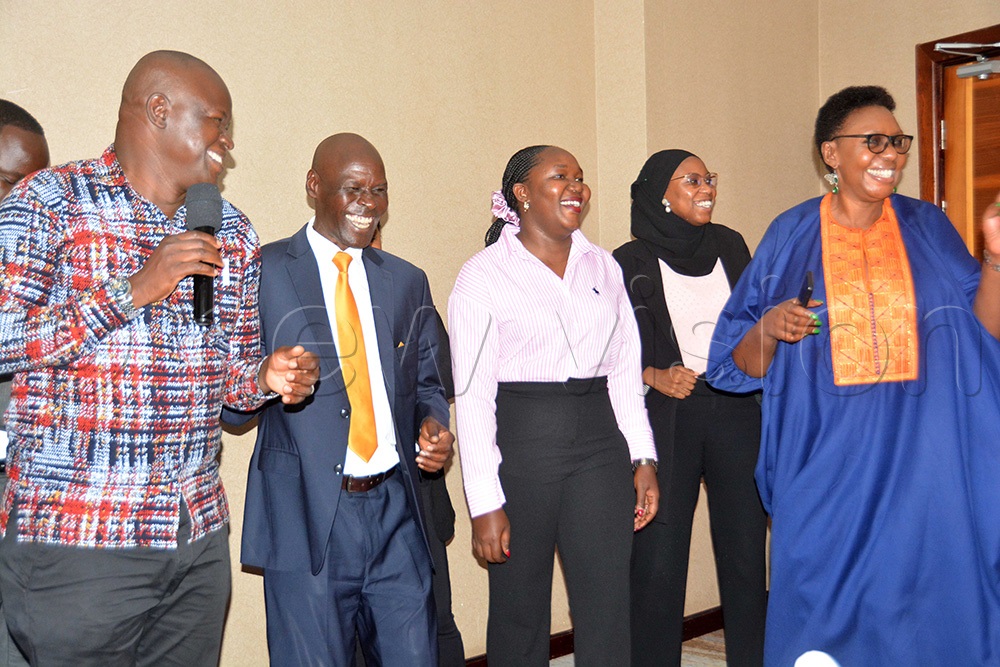
Bukholi Island county MP Peter Okeyoh (second left), Mary Apiyo (centre) PELUM advocacy Officer, outgoing Kigulu south MP Milton Muwuwa (left), Agnes Kirabo (right) Food Rights Alliance executive director during the stakeholders nutrition accountability dialogue at Golden Tulip Hotel in Kampala on May 22, 2026. (Photo by Francis Emorut)
“Children who go to school hungry struggle to concentrate, are more likely to drop out and suffer long-term effects such as stunting and poor cognitive development. These are the future leaders and workforce of Uganda, and if we fail to invest in their nutrition now, the country will continue to face low productivity levels,” Apiyo said.
She explained that this year’s Parliamentary Nutrition Week, which coincides with World Nutrition Day on May 28, will focus on advancing Sustainable Development Goal Two on Zero Hunger and Uganda’s commitments under the Uganda Nutrition Action Plan II.
Apiyo said civil society organisations are advocating a home-grown school feeding model linked to agroecology, where schools procure food directly from local smallholder farmers practising sustainable agriculture.
According to her, the approach would not only provide nutritious meals to children but also create reliable markets for farmers while promoting environmentally friendly farming practices.
“Food security alone is not enough. Uganda may be considered a food basket, but food security does not automatically mean nutrition security. The methods of production matter because unsafe and chemically produced foods also affect people’s health,” she added.
PELUM Uganda and its partners are also pushing the government to fast-track the Food and Nutrition Bill, finalise the National Agroecology Strategy and strengthen agricultural extension services to support nutrition-sensitive farming practices.
Apiyo further called for the expansion of school gardens, agroecology clubs and nutrition education programmes to promote healthy feeding habits among children and reduce dependence on ultra-processed foods.
Taking nutrition local
Also speaking at the event, Peter Okeyo, the Member of Parliament representing the island constituencies of Bukooli in Namayingo district, said lawmakers have intensified community outreach programmes aimed at changing public attitudes towards agriculture and nutrition.
“The mere fact that Members of Parliament have gone out and seen it has motivated them,” Okeyo said.
He explained that MPs have been visiting districts such as Kamwenge, Moroto, Kamuli and Iganga to interact with farmers, promote school gardens and encourage communities to embrace nutrition-sensitive agriculture.
Okeyo noted that many young people have traditionally viewed farming as punishment because agricultural work was often used as a disciplinary measure in schools.
“We want students to develop a feeling that agriculture is not a punishment,” he said.
The legislator said improved feeding practices would significantly reduce preventable illnesses and healthcare costs for families.
“If there is good feeding, very few people will be sick. And therefore the money that would be spent on treatment would be saved if people were given nutritious food,” Okeyo said.
He commended development partners such as CARE International, Food and Agriculture Organisation, and Sasakawa Global 2000 for supporting communities with seeds, school gardens and farmer training programmes.
Okeyo also cautioned communities against selling all their nutritious produce for income while leaving households malnourished.
“You find that people sell all the fish and only eat the bones. Even children do not access fish because much of it is sold,” he said.
He said MPs are now moving beyond conference halls and hotels to directly engage communities on nutrition, food production and household resilience.
“We are leaving our boardrooms in Kampala. We are leaving hotels to go down to districts and communities to sensitise people and tell them that we can save a lot,” Okeyo added.