
Ugandans influenced final Sovereignty Bill—Parliament committee chairperson Kajwengye
Speaking during the Judicial Service Conversations hosted by city lawyer Elison Karuhanga on May 6, 2026, Kajwengye said many of the contentious clauses in the original draft were “surgically removed, improved and smoothened” before Parliament passed the Bill a day earlier.
The chairperson of the Parliamentary Committee on Defence and Internal Affairs, Wilson Kajwengye, speaking during the Judicial Service Conversations hosted by Elison Karuhanga. (Courtesy photo)
__________________
Parliament made significant revisions to the controversial Protection of Sovereignty Bill, 2026, following extensive public consultations that raised concerns about vague definitions, excessive ministerial powers and restrictions on civic participation, parliamentary committee on defence and internal affairs chairperson Wilson Kajwengye has said.
Speaking during the Judicial Service Conversations hosted by city lawyer Elison Karuhanga on May 6, 2026, Kajwengye said many of the contentious clauses in the original draft were “surgically removed, improved and smoothened” before Parliament passed the Bill a day earlier.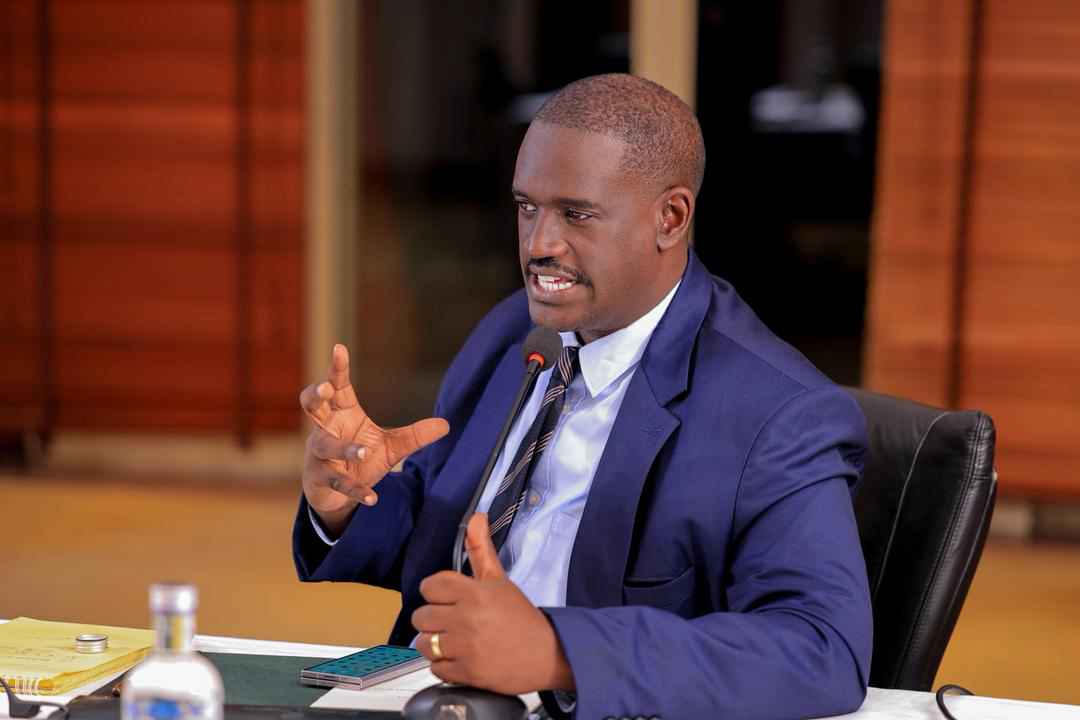
Elison Karuhanga aka the Lawyers Lawyer speaking during Judicial Service Conversations which he hosts. (Courtesy photo)
The controversial Protection of Sovereignty Bill, 2026, was passed by Parliament on May 4 after what Speaker Anita Among described as a historic sitting marking the final legislation of the 11th Parliament. The Bill now awaits assent by President Yoweri Museveni to become law.
The Protection of Sovereignty Bill is part of government efforts to shield Uganda’s governance systems from external influence. The Bill had proposed a cap on foreign funding set at sh400m annually, which financial experts had argued was fundamentally misaligned with the scale of Uganda’s financial system.
However, unlike the original Bill, the passed legislation includes exemptions for diaspora remittances, humanitarian assistance and legitimate commercial transactions, safeguards government says will prevent unintended harm.
While the Government has defended it as a necessary safeguard against foreign interference, critics argue its implications could be far-reaching.
Attorney General Kiryowa Kiwanuka told Parliament that the Bill had been substantially revised, with at least 18 amendments introduced to address concerns raised during public scrutiny. He said the law now primarily targets non-citizens and individuals acting on behalf of foreign political interests.
Kajwengye said the proposed law is intended to protect Uganda’s sovereignty without undermining lawful participation by citizens, civil society organisations, businesses and Ugandans living abroad.
“This was never about shutting people out. A Bill is only a proposal. Parliament listened to the concerns of Ugandans and improved the legislation,” he said.
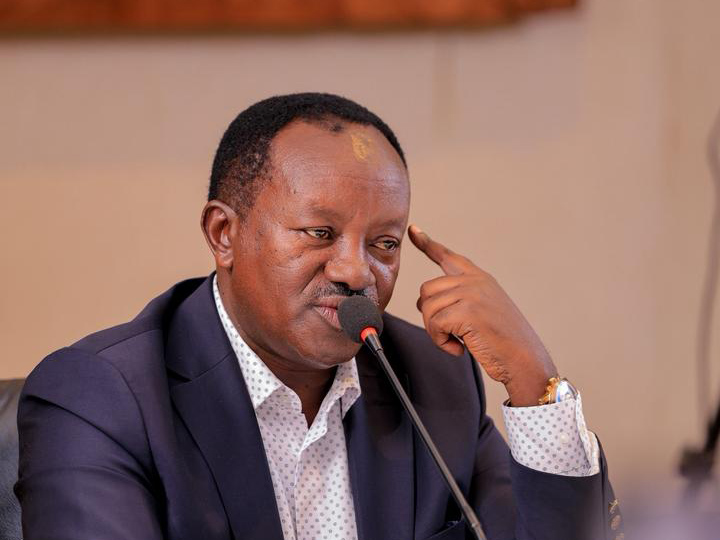
The chairperson of the Parliamentary Committee on Defence and Internal Affairs, Wilson Kajwengye, speaking during the Judicial Service Conversations hosted by Elison Karuhanga. (Courtesy photo)
According to Kajwengye, Parliament received about 250 memoranda from stakeholders, including political parties, the Uganda Law Society, civil society organisations, traders, media practitioners, financial institutions and Ugandans in the diaspora.
He said the committee opened consultations to the public and even allowed Ugandans abroad to present their views virtually.
“We gave Ugandans an opportunity to exercise their sovereignty. People appeared physically, others online, and all their concerns were considered,” Kajwengye said.
One of the biggest concerns centred on Clause One of the original Bill, which defined terms such as “foreigner” and “agent of a foreigner.”
Critics argued the definitions were too broad and risked affecting ordinary Ugandans, non-governmental organisations and diaspora communities.
Kajwengye acknowledged the concerns, saying lawmakers agreed that parts of the draft suffered from what stakeholders described as “regulatory contamination.”
“The definitions were overly broad. We listened and refined them,” he said.
He added that fears among Ugandans abroad that they could be treated as foreigners under the law had been addressed.
“Ugandans in the diaspora are not foreigners,” he said.
The committee also reviewed clauses that critics said concentrated excessive powers in the hands of the Internal Affairs minister, criminalised legitimate civic activity and created vague offences such as “economic sabotage” and “interference.”
Kajwengye said stakeholders warned that some clauses could unintentionally criminalise lawful advocacy, civic engagement and private sector activity.
“People told us the language was too vague and that some clauses risked affecting legitimate conduct. Parliament took those concerns seriously,” he said.
The MP defended the consultation process as one of the most extensive that Parliament has undertaken on a controversial Bill.
Among those who appeared before the committee were representatives from the Bank of Uganda, Financial Intelligence Authority, Uganda Human Rights Commission, Uganda Law Society, opposition political parties, traders’ associations and content creators.
Kajwengye said the process demonstrated that Parliament remains accountable to citizens.
“Power belongs to the people. The wisdom is the wisdom of the people,” he said.
He noted that the debate around the Bill had opened wider discussions about public participation in lawmaking and could shape how future legislation is handled.
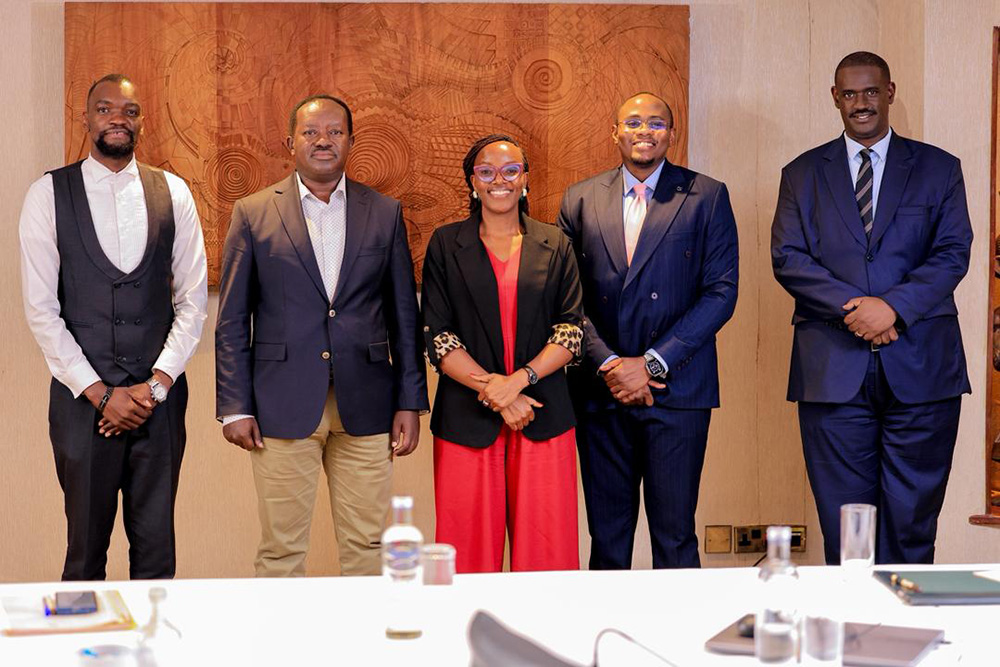
The chairperson of the Parliamentary Committee on Defence and Internal Affairs, Wilson Kajwengye (2L) and Elison Karuhanga (R) pose for a photo with part of the team behind the Judicial Service Conversations. (Courtesy photo)
“The lesson we have picked is that citizens want to participate directly in legislation that affects them,” he noted.
Opposition to the passing of the Bill
Opposition MPs, through five minority reports, warned that the Bill’s impact goes beyond technical drafting concerns. Legislators, including Wilfred Niwagaba, Medard Ssegona, Betty Nambooze, Abdallah Kiwanuka and Jonathan Odur, argue that the law risks concentrating excessive power in the state while shrinking civic space.
In his minority report, Odur warned that the Bill, if assented to in its current form, could erode fundamental rights guaranteed under the Constitution.
“This Bill is not merely regulatory; it fundamentally alters the constitutional balance by placing excessive controls on citizens based on perceived foreign links,” he said.
He cited potential conflicts with several constitutional provisions, beginning with Article 26 on property rights. According to Odur, the law could enable state overreach, particularly in cases where citizens resist government-backed investments.
“A Ugandan who refuses to surrender land for a government-backed investor risks being labelled as someone disrupting government policy,” he argued, warning of what he described as “forced or disguised acquisition of private property.”