
Uganda to mark 40 years of liberation as 33 set to receive national medals
The Liberation Day event will be crowned by the awarding of national medals to 33 distinguished Ugandans in recognition of their service and sacrifice to the country, the Minister for the Presidency, Milly Babalanda Babirye, announced on Friday (January 23).
Uganda to mark 40 years of liberation as 33 set to receive national medals
__________________
Uganda will on Monday, January 26, mark 40 years since the National Resistance Army (NRA) captured power, with the golden jubilee-style celebrations set to take place at Kololo Ceremonial Grounds in Kampala.
The Liberation Day event will be crowned by the awarding of national medals to 33 distinguished Ugandans in recognition of their service and sacrifice to the country, the Minister for the Presidency, Milly Babalanda Babirye, announced on Friday (January 23).
Addressing journalists at the Media Centre in Kampala, Babalanda said the anniversary celebrations would be held under the theme, “Tribute to the patriots who ushered in a fundamental change.”
She noted that the occasion would be doubly significant, coming just days after President Yoweri Kaguta Museveni was declared winner of the recent presidential election with what she described as a decisive mandate.
She said the President-elect, who is also the NRM chairman, will be the chief guest at the function and will be joined by dignitaries from within Uganda and abroad.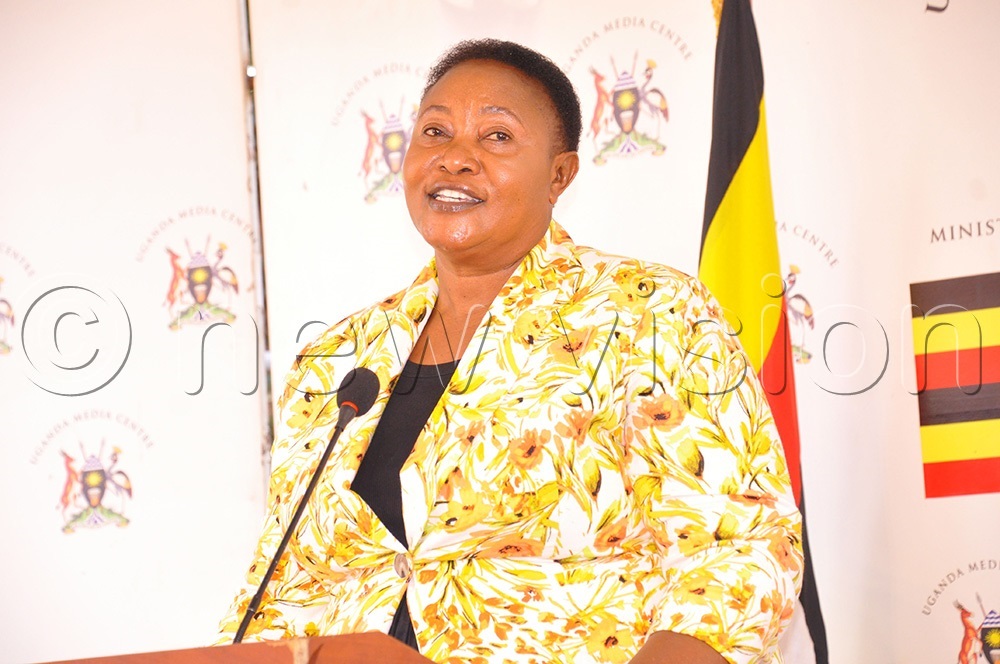
Milly Babalanda Minister of Presidency addressing journalists during a press conference at the Uganda Media Centre on January 23, 2026. (Photo by Nancy Nanyonga)
The day will be marked by a special military parade featuring the Uganda People’s Defence Forces, the Uganda Police Force, the Uganda Prisons Service and the Uganda Wildlife Authority, alongside cultural and entertainment activities befitting the milestone.
According to Babalanda, Museveni will on that day confer medals on 33 Ugandans who have made outstanding contributions to the nation’s development in different spheres.
She described the awardees as patriots who had played a role in shaping the country’s progress since the NRM took power in 1986, adding that their recognition was meant to honour both historical sacrifice and contemporary service.
The minister traced the significance of January 26 to the capture of Kampala by NRA fighters, which ended the rule of the Uganda National Liberation Army junta and ushered in a new political order.
She said Museveni’s subsequent swearing-in as Uganda’s ninth president marked a turning point in the country’s governance and stability, following decades of coups, conflict and economic collapse.
NRM’s achievements
Babalanda highlighted what she called major gains registered over the past four decades, starting with security.
She said Uganda is now largely peaceful, with secure borders, despite regional instability in neighbouring countries that continues to cause refugee inflows and the spread of illicit arms. She added that the relative stability had laid a foundation for sustained economic growth.
On the economy, the minister said Uganda has built resilience through liberalisation and public sector reforms, which improved revenue collection and restored investor confidence.
She cited expansion in the energy sector, noting that the country has moved from relying on a single hydropower station in 1986 to multiple large plants and alternative energy sources today, significantly boosting installed electricity generation capacity.
She also pointed to progress in health and education, saying government investments have expanded specialised medical facilities, including cancer and heart institutes, and strengthened referral hospitals.
In education, she said the introduction of Universal Primary Education and Universal Secondary Education dramatically increased enrolment, while the growth of public and private universities widened access to higher learning. She added that curriculum reforms were now shifting learning toward practical skills.
Babalanda further referenced improvements in water access, infrastructure and digital transformation, saying most households now have improved water sources, while major road, railway and aviation projects were enhancing connectivity.
She said government was also prioritising ICT through a national digital roadmap aimed at building a knowledge-based economy and improving service delivery.
Corruption still a challenge
Responding to questions, the minister dismissed claims of failure, saying the NRM government faced challenges rather than collapse. She acknowledged corruption as a persistent problem but said institutions such as the courts and the Inspectorate of Government were being used to address it.
She also said party members who had lost elections would still be considered for service in other capacities.
Criteria for choosing awardees
Tony Mulambe, a Principal Assistant Secretary in the Chancellery Department, explained the criteria used to select medal recipients.
“Individuals are identified based on exceptional and distinguished service at national, regional or international level, and verification is conducted through grassroots consultations and, in the case of fallen heroes, coordination with security agencies,” Mulambe said.
He added that the process follows a simplified framework to ensure transparency and merit.
The minister concluded by congratulating all newly elected leaders and urging Ugandans to view the anniversary as a moment to reflect on the country’s journey and consolidate past gains.
According to her, the 40th Liberation Day would be both a celebration of history and a recommitment to national unity and development.