
Trade to drive Uganda's Tenfold Growth Strategy — minister Mbadi
"This is not merely a conference for discussion. It is a working platform to move from policy intent to implementation," says minister Mbadi of the upcoming National Trade Review Conference 2026.
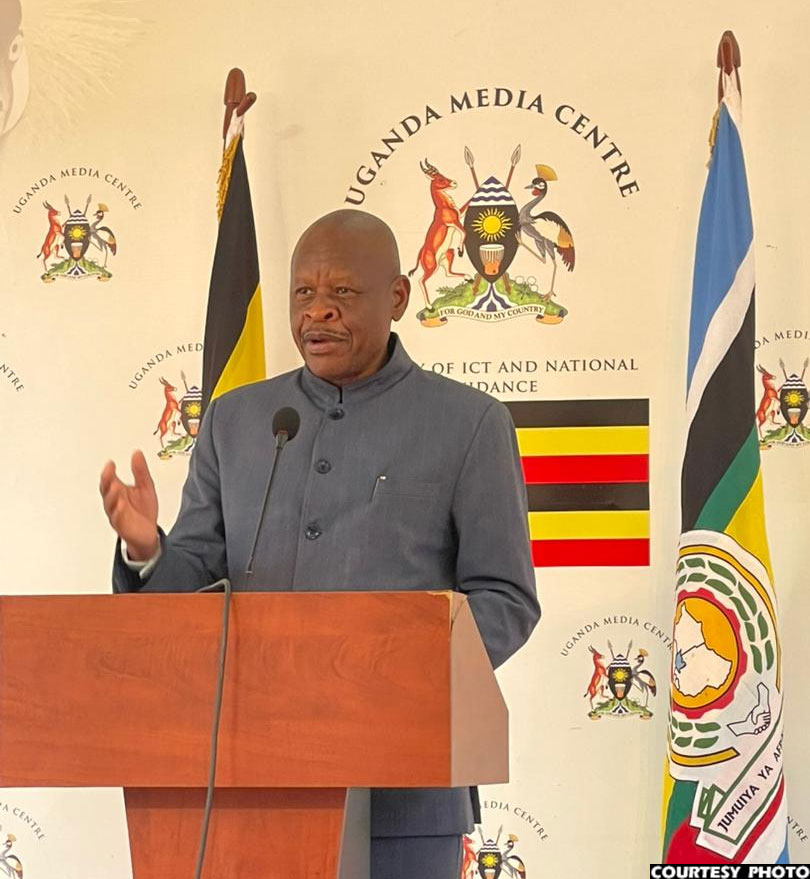
The Minister of State for Trade, Industry and Cooperatives, Gen. Wilson Mbasu Mbadi, addresses a conference on the March 4-5 National Trade Review Conference 2026, at the Uganda Media Centre on February 24, 2026. (Courtesy photo)
__________________________
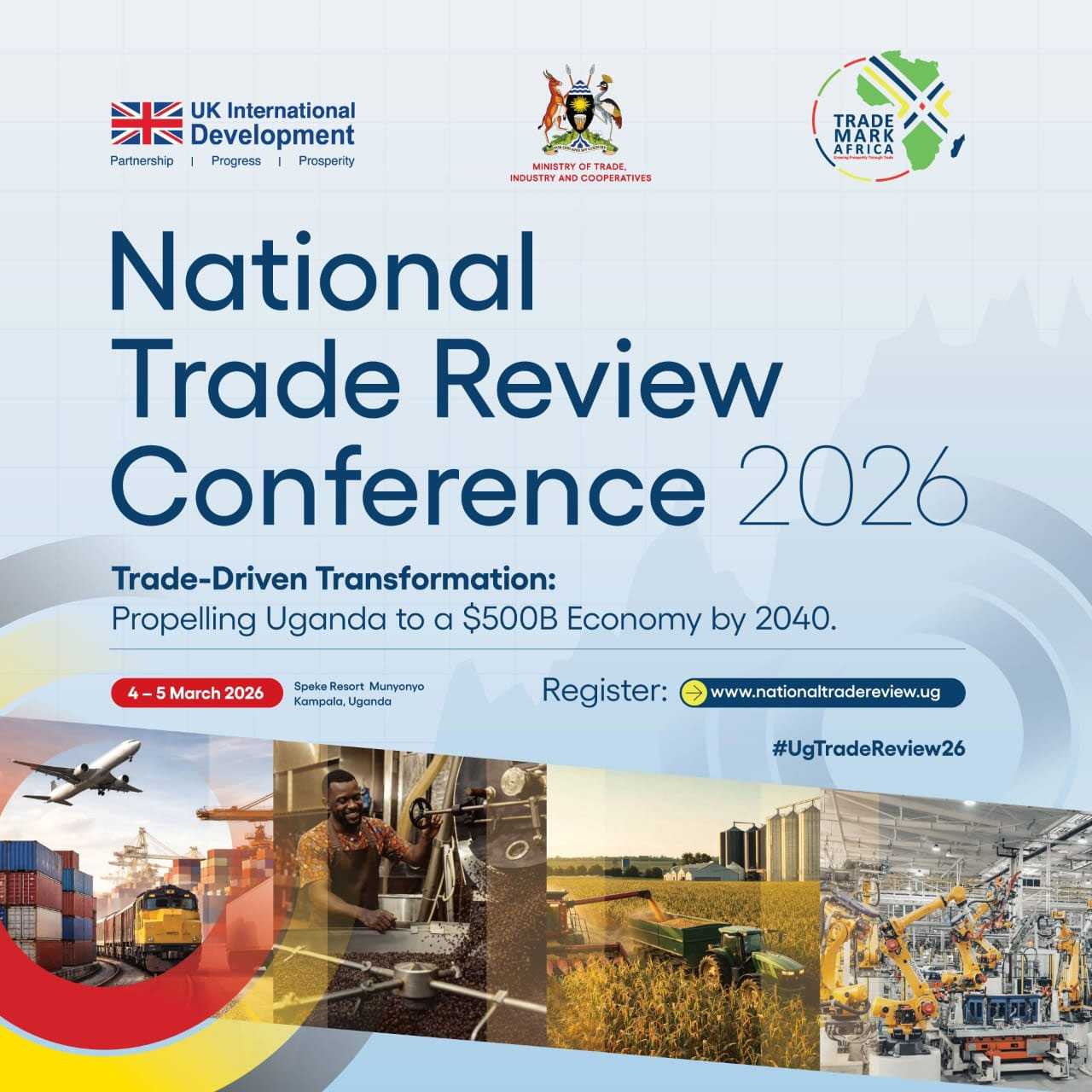
NATIONAL TRADE REVIEW CONFERENCE 2026
The big question is: how does Uganda convert the significant strides it has made in trade, industrialization and cooperative development in the last five years into sustained, ten-fold growth strategy pillars that propels the East African nation to a $500b economy by 2040?
Now this is what will be at the heart of discussions during the upcoming National Trade Review Conference 2026 in Kampala.
The March 4-5 conference will be held at the Speke Resort Convention Centre in Munyonyo.
"This is not merely a conference for discussion. It is a working platform to move from policy intent to implementation," the Minister of State for Trade, Industry and Cooperatives, Gen. Wilson Mbasu Mbadi (pictured below), told reporters at the Uganda Media Centre on Tuesday.
He said critical issues shaping Uganda's trade future will be explored during the two-day gathering.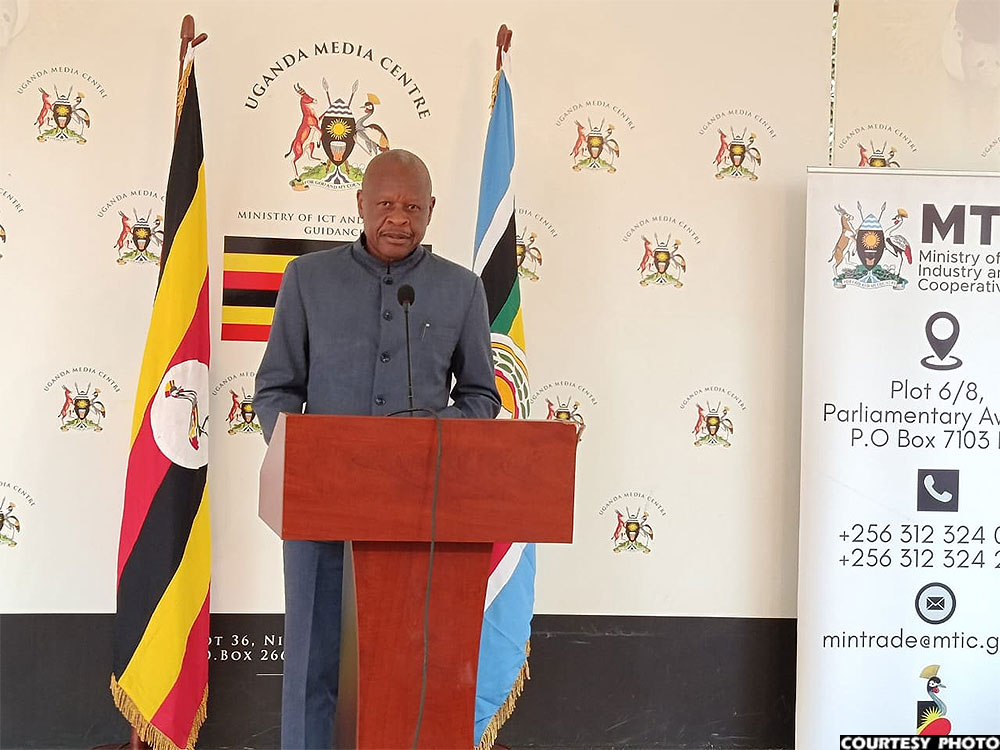
Uganda's ambitious Tenfold Growth Strategy is anchored on agro-industrialization, tourism, mineral development, as well as science, technology and innovation (STI) and creative industries.
"Trade is the engine that will drive this strategy as it connects production to markets, generates incomes, and distributes wealth across the economy," said the minister.
Among other things, next week's conference will take stock of Uganda’s trade performance and readiness to support ten-fold growth as well as generate actionable policy and regulatory reforms to boost exports and value addition.
"We are expecting Cabinet to approve the Revised National Trade Policy (NTP) and the National Export Development Strategy (NEDS), which will also be launched," said Mbadi.
In the 2024-2025 financial year, Uganda's total exports of goods and services reached around up to $13.4b while merchandise exports alone accounted for about $10.6b.
A performance bettering the previous years, it was seen as a reflection of improved commodity prices, higher export volumes, and expansion of export markets.
According to minister Mbadi, this was a growth largely driven by strong performance in coffee, mineral products (especially gold), cocoa beans, sugar, and fish.
He was keen to note that those gains are "not accidental".
"They are a result of deliberate visionary leadership of our President, His Excellency Yoweri Museveni, that has seen policy reforms, improved trade facilitation, industrial infrastructure development, cooperative strengthening, and strong public–private collaboration."
Eyes are now set on steering Uganda to a $500b economy within the next 14 years, with trade as the driving force.
Next week's conference will feature sessions discussing the following:
▪️ Navigating a fragmented global trading system and Uganda’s graduation from Least Developed Country status
▪️ Scaling agro-industrial value chains for predictable export performance and import substitution through increased industrialization
▪️Competing in regional services markets under EAC, COMESA and AfCFTA
▪️Minerals-based industrialization and domestic value addition
▪️Leveraging science, technology and innovation for high-value manufacturing
▪️ Strengthening cooperatives, SME growth as engines of export competitiveness and import substitution
▪️Applying trade policy to promote order, quality and standardization in markets
'Next step is to scale'
"These sessions are designed to produce concrete commitments, not just diagnosis," Mbadi told reporters.
He said that with cooperatives being revitalized and trade volumes rising, the task ahead for Uganda is clear: safeguard global competitiveness, deepen domestic value addition, expand regional market access, as well as align production with standards and demand.
Equally important is to ensure that growth translates into jobs, incomes and prosperity for all Ugandans.
"Uganda has demonstrated that growth is possible. The next step is to scale," said the trade minister, also using the platform to invite stakeholders to "actively participate in shaping the next phase of Uganda’s trade journey".