
Terrorist organisations acquiring new technologies to launch attacks — BRICS+ experts
Stephen Chwinya, Director Counter Terrorism at Uganda’s Internal Security Organisation (ISO), told the meeting that countries now need to measure up in order to put up an effective fight.
Uganda’s Stephen Chwinya, also the Director Counter-Terrorism at the Internal Security Organisation (ISO), speaking during the BRICS+ Counter-terrorism conference in Moscow, on December 3, 2025. (Credit: Hajarah Nalwadda)
MOSCOW - Counter terrorism experts meeting in Moscow on Wednesday warned that terrorist organisations are acquiring newer technologies to advance their attacks.
The experts are meeting at the two-day BRICS+ Counter-terrorism conference called to discuss national, regional and international strategies to combat the vice that is described as a threat to global peace and security.
Some of the challenges countries are facing include terrorist organisations acquiring drones, which they use for surveillance and dropping bombs on civilian targets and security installations.
Stephen Chwinya, Director Counter Terrorism at Uganda’s Internal Security Organisation (ISO), told the meeting that countries now need to measure up in order to put up an effective fight.
Chwinya, who headed the Uganda delegation, said terrorist organisations are also using Artificial Intelligence to recruit followers. They also use cryptocurrency to finance their operation.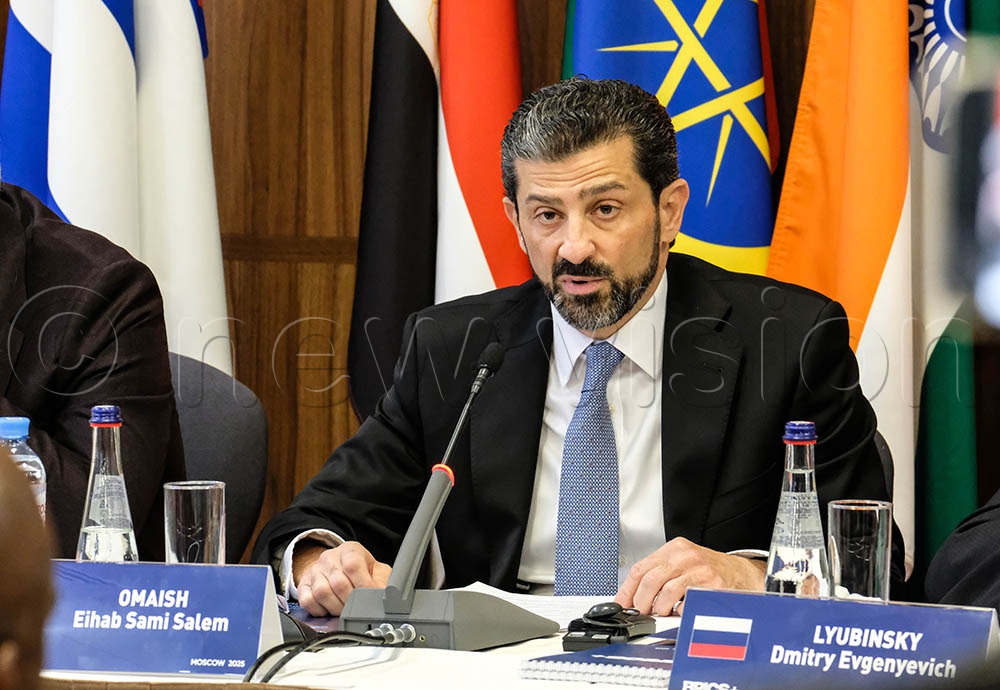
Omaish Eihab Sami Salem, Deputy Head of the UN Office of Counter terrorism speaking during the BRICS+ Counter-terrorism conference in Moscow, on December 3, 2025. (Credit: Hajarah Nalwadda)
Many countries do not have the legal framework to monitor the use of cryptocurrency.
The Ugandan expert cited the example of suicide bombers in the East African country, who carried out attacks without being trained outside the country, but rather through social media and internet platforms.
The main driver of terrorism in eastern Africa is unresolved inter-religious and ethnic tensions, according to Chwinya.
Omaish Eihab Sami Salem, Deputy Head of the UN Office of Counterterrorism, told the meeting that the Sahel region faces some of the worst terror activities on the continent.
"Today, over half of all terrorism casualties are in the Sahel, unleashing massive suffering," Omaish said.
Terrorist organisations are expanding their area of influence in Africa. Omaish cited the Somali militant group Al Shabaab, which has a bigger area of control than the government.
Omaish argued that regional strategies are needed to combat terrorism from a local perspective.
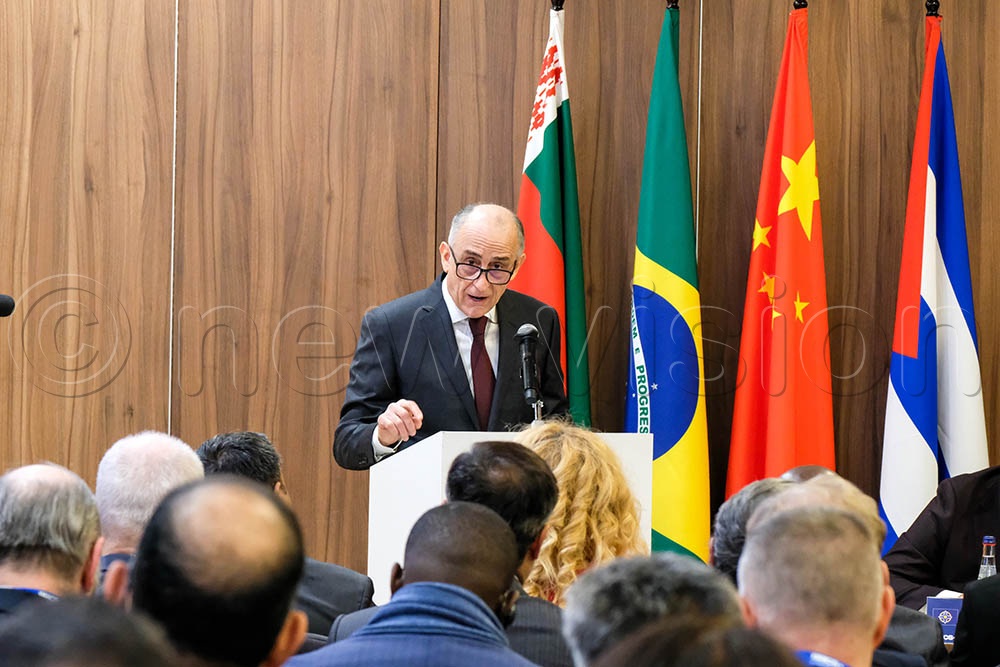
Yuriy Aleksandrovich, Deputy Secretary of the Security Council of the Russian Federation, giving opening remarks during the BRICS+ Counter-terrorism conference in Moscow, on December 3 2025. (Credit: Hajarah Nalwadda)
"Terrorism, although a global challenge, its manifestations are local. Regional organisations like the African Union play a critical role in tailoring responses to specific contexts," Omaish added.
Don Mello Ahoua, Vice President of BRICS International Alliance, a non-governmental organisation monitoring West and Central Africa, told New Vision Online on the sidelines of the meeting that the region faces a multifaceted problem of neocolonialism and terrorism, driven by extreme levels of poverty.
Ahoua said the use of new technologies by terrorist organisations is complicating the fight against terrorism amid reduced global financing.
He called for a Marshall Plan, largely driven by the BRICS+ bloc, which has no history of colonialism and has the interests of the developing world at heart. The Marshall Plan should address both the development and security issues affecting the region.
Yuriy Aleksandrovich, Deputy Secretary of the Security Council of the Russian Federation, said the BRICS+ has become a key bloc in forming a multipolar world that can jointly combat terrorism.
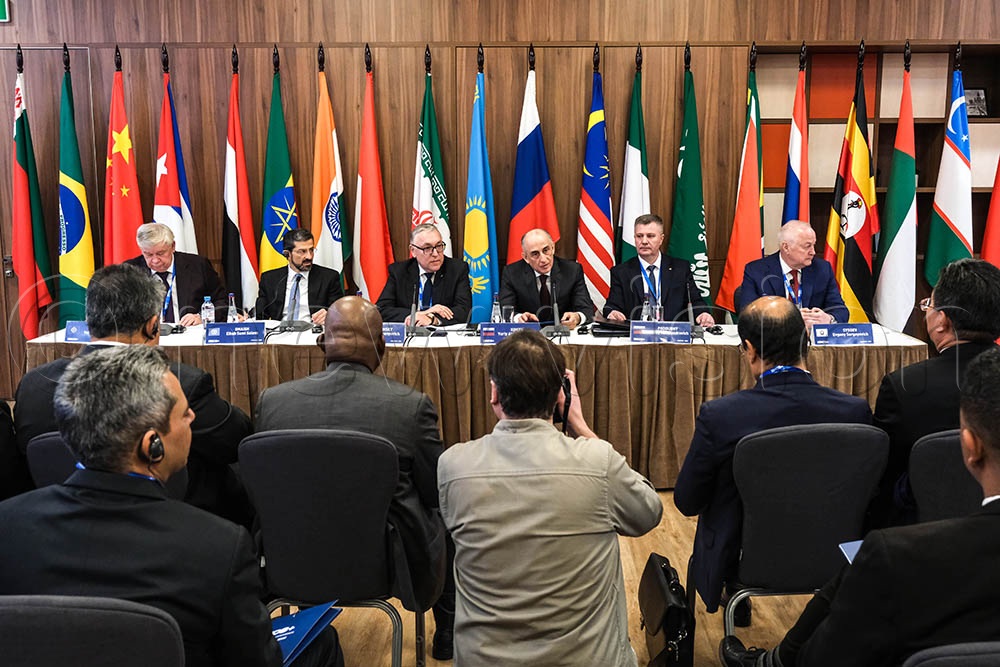
Yuriy Aleksandrovich (C), Deputy Secretary of the Security Council of the Russian Federation, giving opening remarks, during the BRICS+ Counter-terrorism conference in Moscow, on December 3 2025. (Credit: Hajarah Nalwadda)
Aleksandrovich argued that hegemonism, exclusiveness or national superiority should not be given space because it undermines joint efforts in combating global challenges like international terrorism.
The Russian official said issues of migration of refugees from conflict countries, aiding the spread of terrorism and radicalism, need to be addressed, as well as refugee camps being used as a safe haven.
Russia has been a critical supporter of fighting terrorism in Africa. In West Africa, Russia supplies intelligence information, training and logistics, according to Ahoua. Ahoua argues that this support is important in fighting terrorism in the region.
In Uganda, Russia has supported the East African by donating military equipment and training. Chwinya said the Russian support has been critical in boosting Uganda's fight against terrorism.
Uganda has deployed its troops in Somalia, as part of the African Union peacekeeping force fighting Al Shabaab. Uganda is also fighting the ADF in eastern Democratic Republic of Congo.
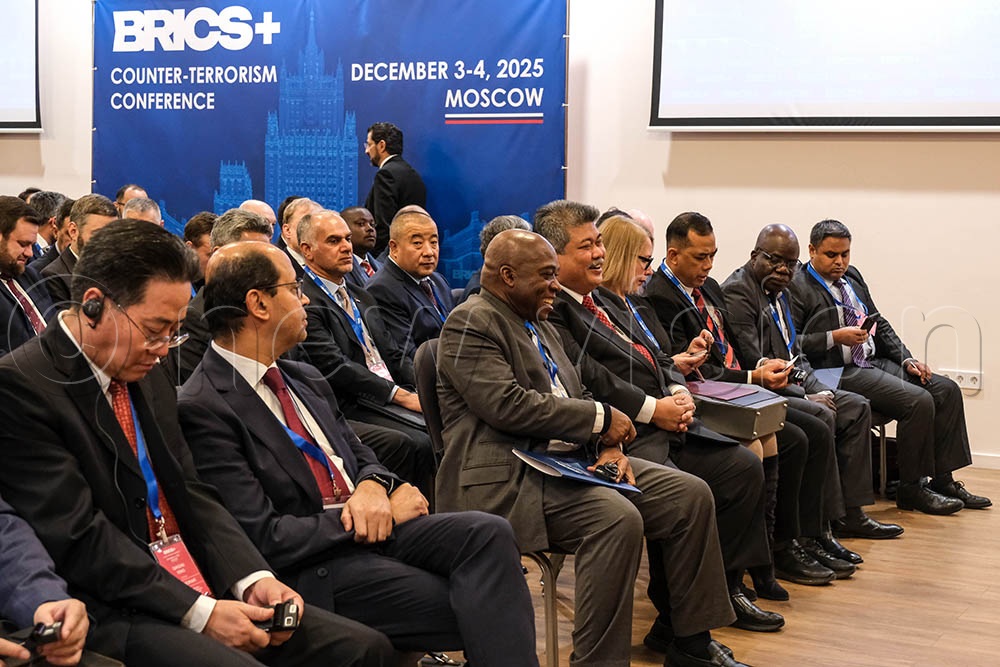
Delegates attending the BRICS+ Counter-terrorism conference in Moscow, on December 3 2025.
The conference is attended by government representatives, civil society and academia engaged in extensive studies on counter terrorism and anti-extremism.
Experts from counter terrorism structures of the United Nations, Shanghai Cooperation Organisation (SCO), Commonwealth of Independent States (CIS) and Collective Security Treaty Organisation (CSTO) are also attending.
Uganda became a partner state of the BRICS+ bloc early this year. The East African country has participated in regional efforts to fight terrorism.
The country currently has its troops deployed in Somalia under an African Union peacekeeping mission.
Uganda has also deployed troops in eastern Democratic Republic of Congo, where they are fighting the rebel Allied Democratic Forces, an armed group linked to ISIL (ISIS).