
Solar-powered water transforms health, safety in eastern Uganda
“My husband has beaten me over 20 times for coming late from the well. I still have some injuries from beatings,” she says. Since solar-powered water was introduced, she can now fetch water from a nearby tap and feels relieved and healthier.
At Kapir Primary School, headteacher Gerald Aikomo says learners’ hygiene has greatly improved. (Credit: Ibrahim Ruhweza)
Proscivia Alimo, a 25-year-old mother of two, has lived with unsafe water for nearly her entire life. Since birth, she had never seen tap water in her village of Atapar in Kapir subcounty, Ngora district.
Her two children have repeatedly suffered from severe typhoid, and her firstborn almost died from diarrhoea. She recalls that the village once had a borehole, but it broke down and was never repaired.
Most residents in Atapar parish collected water from Awoja swamp, a source shared with livestock and contaminated with waste.
“You go sometimes and find cow dung floating on top of the water, and we have to collect it because it’s the last option,” she says.
During a recent visit, Alimo was at one of the newly installed taps constructed by the Ministry of Water and Environment and development partners. Her excitement was evident as she proudly collected four jerrycans of clean water.
“This tap is the first of its kind in our village; we never had hopes that we would one day see it,” she told New Vision on November 11 2025.
Since the launch of solar-powered clean drinking water by the water Ministry in 2024, Alimo’s children no longer fall sick frequently. She says that in Teso, clean water is proving to be more than a basic need; it is a lifeline in a region long affected by diarrhoea and typhoid.
Godwin Atim, the acting subcounty chief of Atapar parish, says most villages in the Teso sub-region depended on swamp or river water, which was unsafe. She reports that typhoid cases have reduced by 50 percent since the parish received solar-powered water, attributing the improvement to the safer water supply.
She adds that households are now saving money previously spent on medical treatment and investing it in other forms of development. “No cases of domestic violence, and all girl children can go to school,” she says.
Dr Richard Opolot, senior clinical officer in charge of Kapir Health Centre III, says that in 2023, they recorded over 100 monthly diarrhoea cases among children aged six to ten. Such cases have now reduced by 50 percent, and he expects the number to continue falling.
Charles Ebiau, the LC3 chairperson of Kapir subcounty, Ngora district, says that about 1,000 people benefit from the clean water. Previously, the three available boreholes were unreliable, especially during the dry season.
“The community and the school are enjoying clean water,” he says.
At Kapir Primary School, headteacher Gerald Aikomo says learners’ hygiene has greatly improved. Previously, a single borehole served the school, health centre, and surrounding community, leading to severe scarcity. This term, the school was finally connected to clean water, reducing absenteeism among the 508 learners.
In Kakures subcounty in Kumi district, residents once relied on open swamps, and the 15 boreholes frequently dried up. Subcounty chairperson Everests Maranga says the continued uptake of clean water is set to transform lifestyles.
Domestic violence
Clean water has also reduced domestic violence in several communities.
In Oderekai village in Kumi district, LC1 chairperson Leah Acipa says husbands previously beat their wives for returning home late from distant water sources.
In Matawa A village, Nyamalogo parish, Siwa subcounty, Tororo district, LC1 chairperson Dominic Odoi says he used to receive about three domestic violence cases weekly. At the start of this year, no cases had been recorded.
Annrose Athieno, a 51-year-old mother of ten, says her husband beat her multiple times in 2023 because water points were far.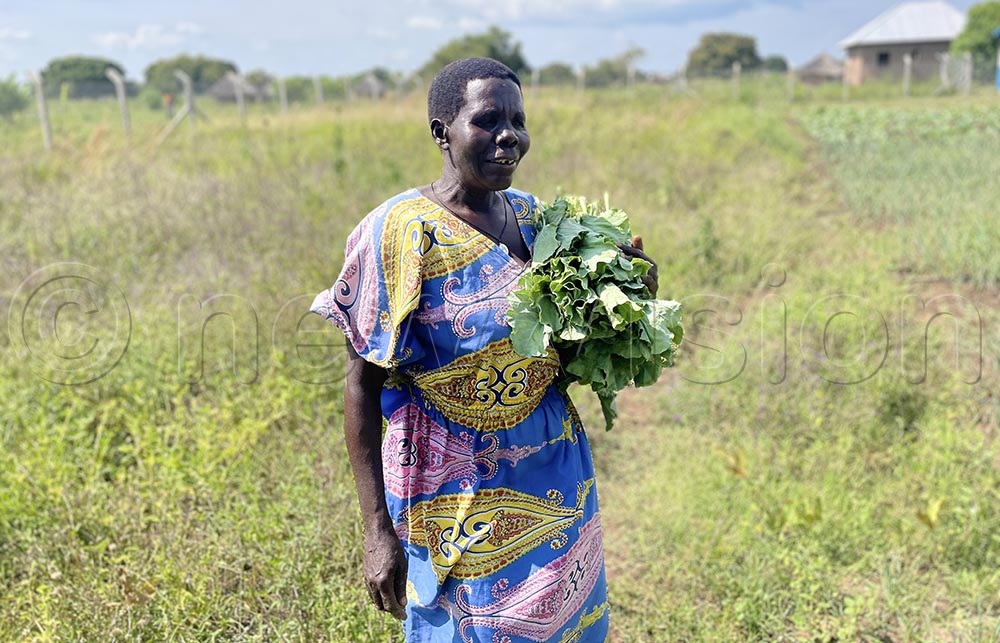
“My husband has beaten me over 20 times for coming late from the well. I still have some injuries from beatings,” she says. Since solar-powered water was introduced, she can now fetch water from a nearby tap and feels relieved and healthier.
Similarly, 71-year-old father of eight, Pius Ofwono from Matawa village, Tororo district, admits he previously beat his wife over delayed trips to distant water sources. “About a year ago, I beat my wife for coming from fetching water late; she had even broken the pot of water,” he says.
Siwa subcounty councillor Alex Bola says that before the solar-powered water project, 11 boreholes served a population of 13,650 people, but seven were broken. The new project has eliminated long distances and reduced stress on families.
In Lugonyolo B village, Kaliro district, LC1 chairperson Yulio Mwidu says domestic violence cases have dropped from 80 percent to 20 percent, with families now more stable.
In Bugole village, Iganga district, general secretary David Wakayayu says women and girls were often raped when fetching water from distant sources. Two cases were officially recorded in early 2024, though many more went unreported. Solar-powered clean water has changed the situation, allowing women and girls to collect water safely near their homes.
Improved farming and better yields
Farmers in Luuka district benefiting from the solar-powered irrigation scheme have seen significant improvements in crop quality.
Shaban Kifuba from Waibuga subcounty previously grew sugarcane with little success. After shifting to tomatoes and eggplants under irrigation, he now earns about sh6m each season. His children are back in school, and he is able to support his family.
Food security
In Lulikoyo, Tororo district, tomato farmers Tonny Opio and Jane Apio say food security has drastically improved. Their families once survived on processed maize flour, but they now harvest and consume cabbage, carrots, cassava, and other nutritious foods.
What the ministry says
According to Noel Muhangi, head of public relations at the Ministry of Water and Environment, current government interventions align with Sustainable Development Goal Six, prioritising access to clean water, sanitation, and irrigation.
“Bringing piped water closer to families has reduced water-borne diseases, improved school attendance, and allowed households to save money that is now being reinvested into income-generating activities,” Muhangi said.
He added that increased adoption of solar-powered irrigation in Katakwi, Tororo and Bukedea is raising food production, land value and year-round employment.
“Irrigation is central to the President’s vision of driving agricultural productivity and ensuring food security,” he said.
Muhangi encouraged communities to sustainably manage water systems, pay user fees, and protect water sources to ensure long-term benefits.