
Refugees, hosts in West Nile benefit from humanitarian development, peace initiative
Opira Churchill Kamau, a Danida SP2 project officer, said students and instructors in the three partner schools were equipped with practical livelihood skills and trained in climate justice.
Commissioning of the new toilet and incinerator at Lodonga Polytechnic School, constructed under the Danida SP2 project
In a bid to achieve a peaceful, gender and climate-just society in three West Nile districts, a consortium three years ago rolled out a project to revitalise technical education, promote human rights through the promotion of peaceful co-existence, delivery of livelihood and food security, education, climate change, and economic and social justice intervention in the West Nile region.
Under the humanitarian Development and Peace Initiative for Crisis Affected Population in Uganda, led by Oxfam in Uganda, critical infrastructure and skills development projects were commissioned on December 5, 2025.
The interventions, implemented by Luigi Giussani Foundation, range from solar-powered classrooms to climate-resilient water systems, are empowering over 700 students in Omugo Technical School (Terego district), Inde Technical School (Madi-Okollo district), and Lodonga Technical School (Yumbe district). 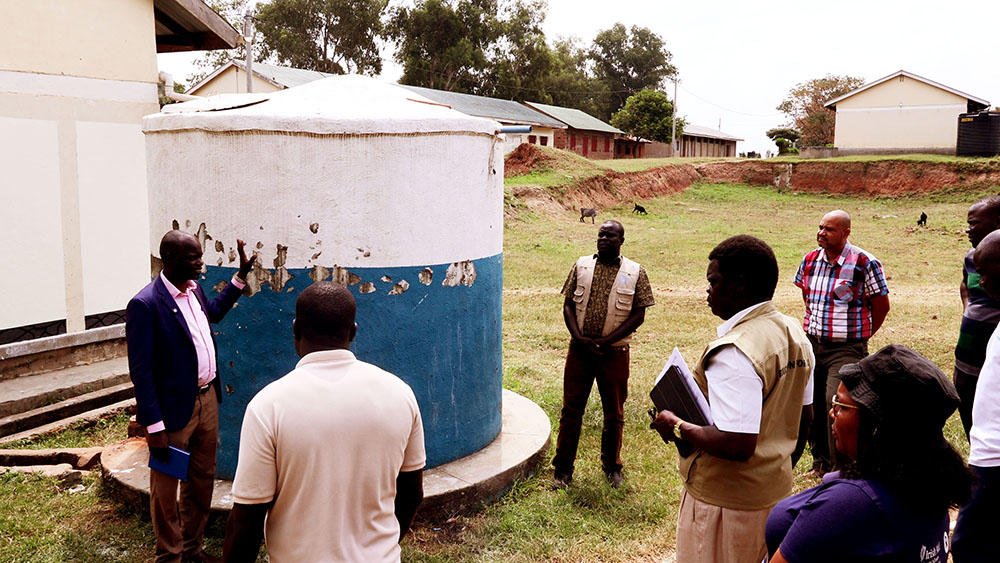
Patrick Ejume, head trainer Omugo Technical school, explains that water from the tank is used by students and for irrigation of vegetables. (Credit: Geofrey Angupale)
Oxfam in Uganda received a Euros 810,047(about shillings 3.3 billion) funding from DANIDA (Danish International Development Agency) through Oxfam IBIS for contextualised strategic partnership with the indicative budget frame to Uganda on economic justice and inclusive democracies, education for active citizenship, inclusive peacebuilding, humanitarian action & resilience.
The four-year (2022-2025) Danida Sp2 project, implemented by several refugee-led organisations, with Luigi Giussani Foundation implementing the education component to skill students as well as empower instructors. Omugo, Inde and Lodonga each got an infrastructural boost, including drainable 5-stance VIP latrines, child care centres for studying teenage mothers, incinerators, 10,000-litre water tanks, woodlots and solar panels.
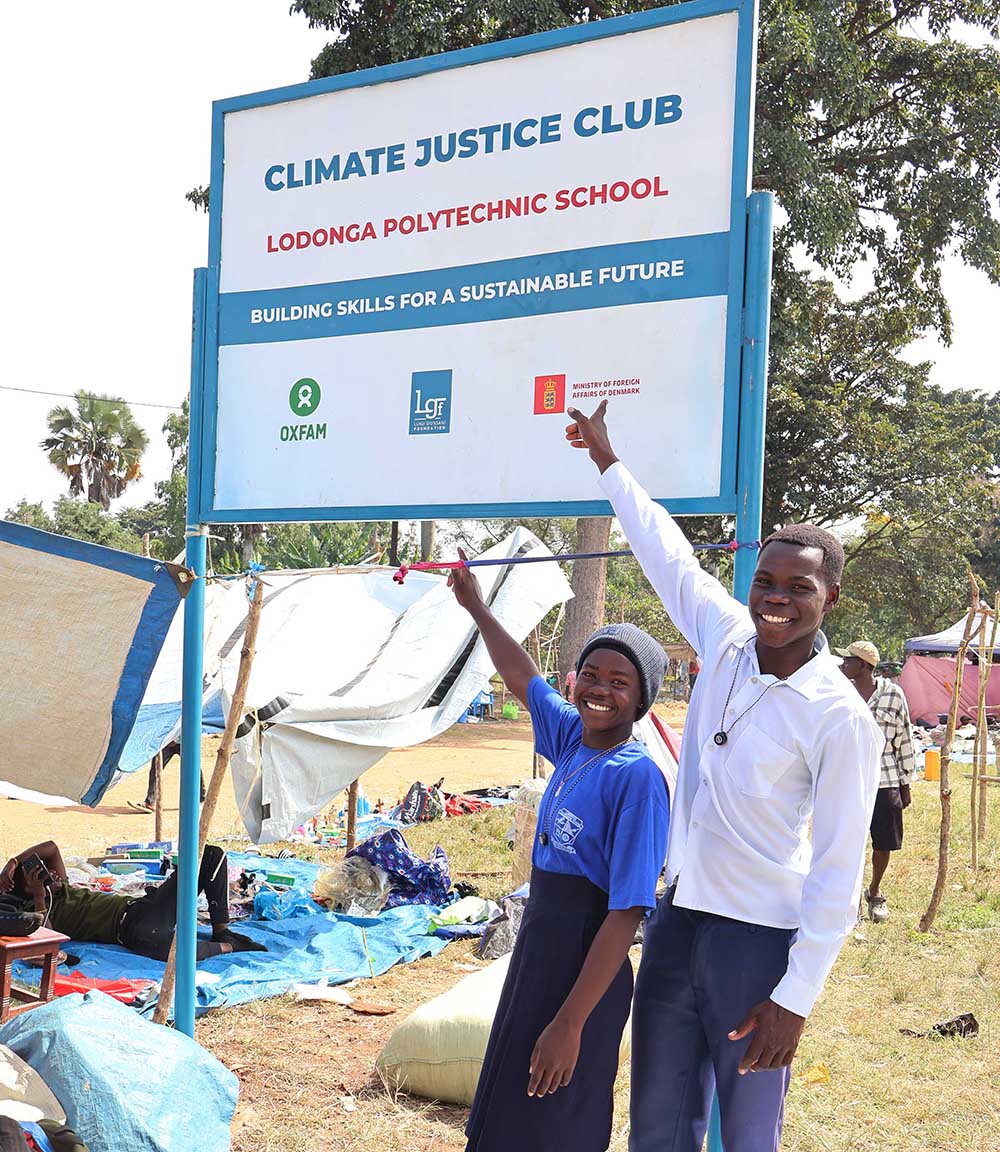
Opira Churchill Kamau, a Danida SP2 project officer, said students and instructors in the three partner schools were equipped with practical livelihood skills and trained in climate justice. Inde, Omugo and Ludongo formed climate justice clubs that are in charge of green initiatives at their respective schools, such as tree planting.
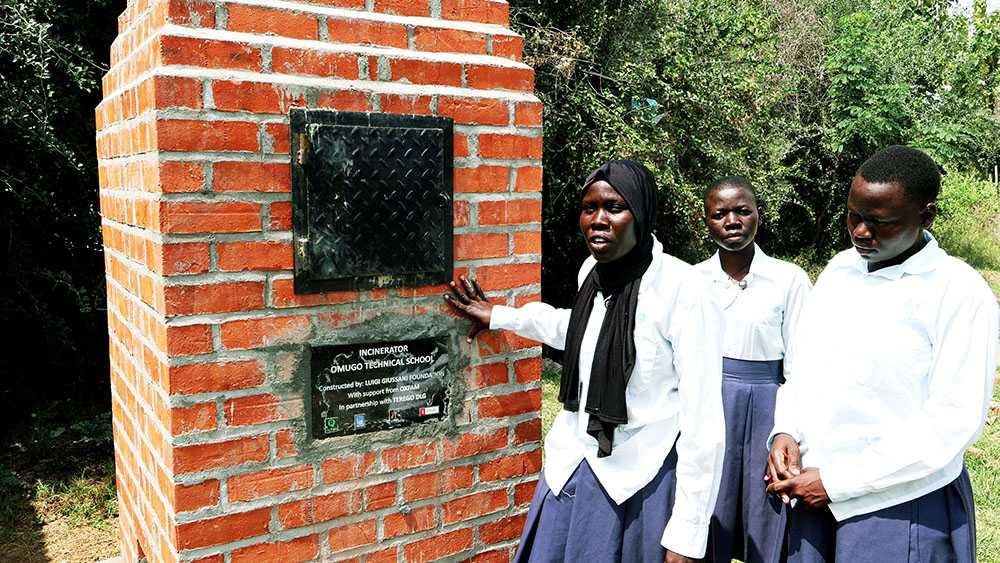
A section of girls from Omugo technical school explaining how the incinerator helps them to burn sanitary wears. (Credit: Geofrey Angupale)
“We trained and certified 508 out-of-school host community and refugee youth aged between 15-35 years in green skills. We have done 15 different trainings for capacity building for the instructors focusing on the teachers’ professional development, formed climate justice clubs, planted trees and facilitated proper waste management,” he said.
Opira said that through gender awareness, the project increased the enrolment of girls to 120 from 55 at Omugo school.
Community impact and gratitude
At Omugo Technical School, board chairperson Fr Ayiko Robert praised the solar installations and water tanks, saying, “Students no longer study in darkness, and the agricultural department finally has reliable water. These projects are life-changing.”
Oxfam representative Rebecca Aber commended the school’s flexibility during construction.
Terego district environment officer John Engamvile urged policymakers to prioritise inclusivity saying, “These projects prove development must factor accessibility for all. Let us carry this lesson forward.”
The sustainability question
Luigi Giussani Foundation pledged continued support with the project manager, Allen Onzima, announcing plans for energy-saving stoves. “Students will construct these stoves themselves, ensuring ownership and sustainability. We’re already finalising funding,” he said.
Terego district engineering assistant Fred Guma said after identifying gaps in the implementation of the projects, they allowed the students to offer skilled labour to offer an opportunity to those who pay their own tuition fees to support their education.
Adolescent girls at Omugo said the incinerator has facilitated good personal hygiene and proper sanitation at their school. “We do not have to worry about where to dispose our used pads. That prevents pollution of the environment,” Hatima Anderu said.
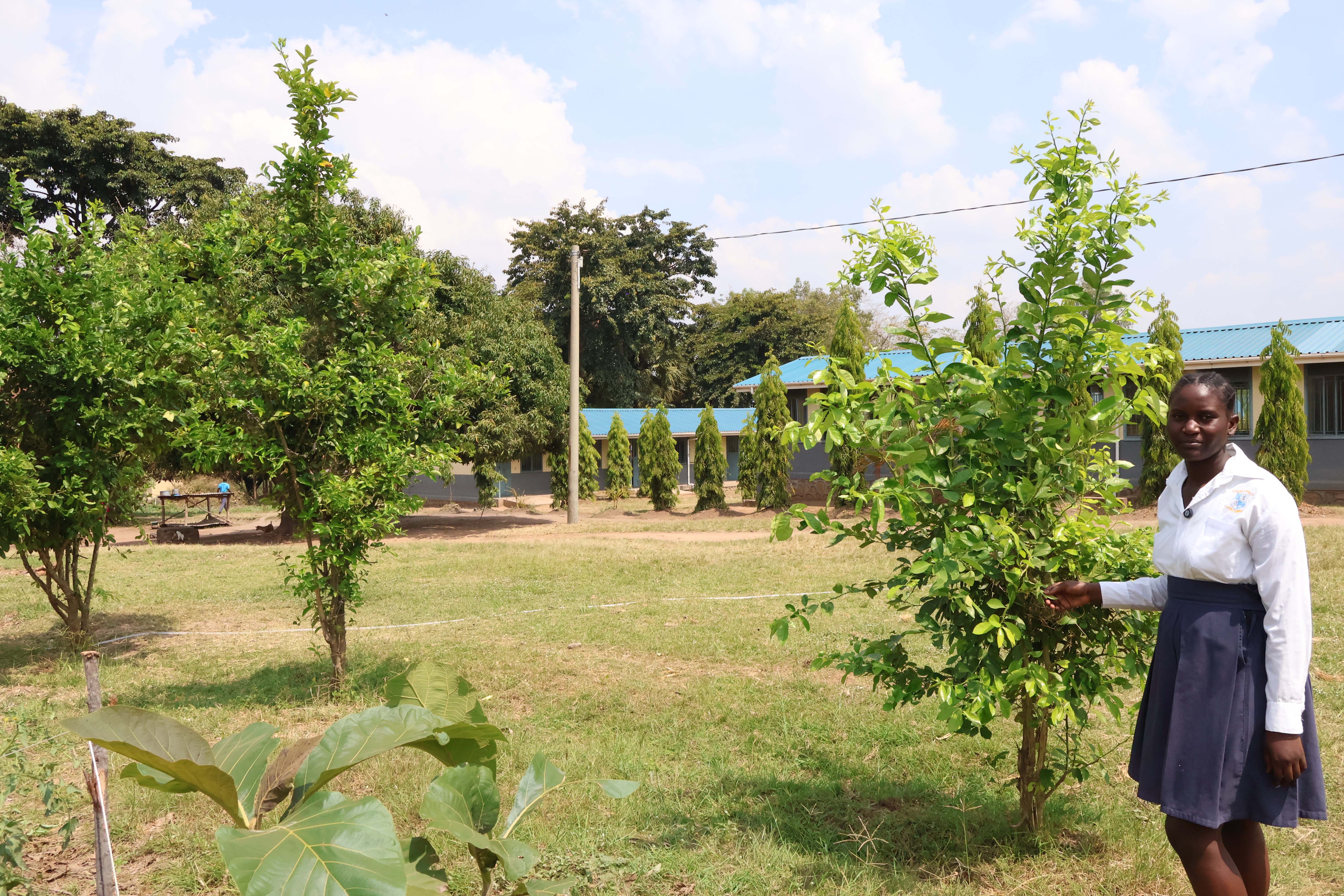
Dorothy Nanyuma, a member of Climate Justice Club who participated in planting trees around the school, said the school is climate-conscious and focused on conserving the environment of the area, which experiences drought-like conditions due to climate change.
Beneficiary Awelega James, a community member who received 500 pine and jackfruit seedlings, said: This project will transform my livelihood. I am ready to grow and sell these trees so that I can get fees for my household.
However, Terego district education officer Charles Ajidra Dradria emphasised the school’s growing demand.
“With over 700 students in its large catchment area, Omugo needs more partners to scale these gains. Luigi Giussani Foundation’s involvement in conservation and stakeholder engagement sets a strong example.”