
Outcry as power outages disrupt business operations in five districts
The KADAK (Kaberamaido, Amolatar, Dokolo, Alebtong, Kalaki) business community held a heated meeting with officials from the Uganda Electricity Distribution Company Limited (UEDCL), Resident District Commissioners (RDCs)and District Internal Security Officers (DISOs) at Helmarts Hotel in Kaberamaido
Kennedy Ben incharge of operations at Dokolo UEDCL main center addressing leaders eduring a meeting in Kaberamaido district. (Photo by Michael Onyinge)
________________
KABERAMAIDO – Business owners across the districts of Kaberamaido, Amolatar, Dokolo, Alebtong and Kalaki have raised an alarm over persistent power outages that they say are crippling economic activities and essential services.
The KADAK (Kaberamaido, Amolatar, Dokolo, Alebtong, Kalaki) business community held a heated meeting with officials from the Uganda Electricity Distribution Company Limited (UEDCL), Resident District Commissioners (RDCs)and District Internal Security Officers (DISOs) at Helmarts Hotel in Kaberamaido on May 6, 2026, about the deteriorating electricity situation that has pushed many businesses to the brink.
KADAK chairperson John Ecelu expressed frustration of business leaders who have grown weary of what they describe as "false excuses" from UEDCL: "The inconsistent power supply has affected us businesspeople a lot as we make losses. As we make losses, we fail to pay back the loans, and the Government also fails to get revenue."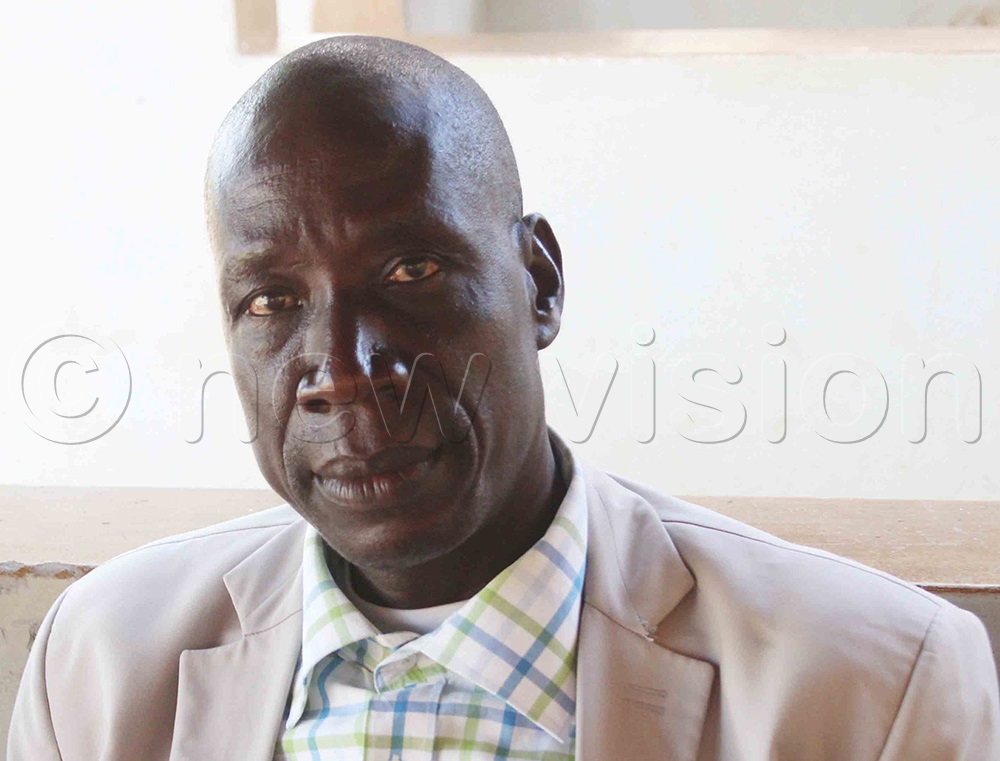
John Ecelu, the chairperson of the business community of Kaberamaido district says power outages have affected business operations in the district. (Photo by Michael Onyinge)
The meeting revealed a dire situation across the five districts, with Susan Achen, a businesswoman from Itam town council in Amolatar district, reporting one year and one month without reliable power: "We only have wires that act as decorations, but with no power. It is now even a surprise that our children did not perform well on exams because of the absence of electricity." Achen emphasised that schools, health facilities and administrative units in her area have been "fully affected" by the power crisis.
Amolatar business community chairperson Samuel Odongo voiced disappointment with a service that promised much but delivered little.
"We were very happy when the Government brought us power, but we are now disappointed as it was not serving the intended purposes."
He noted how the power shortages have particularly impacted youth initiatives: "Some of the youth who are supposed to be using the same power to fight poverty and unemployment by having salons and welding workshops were already affected."
Margaret Amuge, who operates both a guest house and supermarket, said, "I discarded ice cream juice worth shillings 400,000 because of power blackouts."
She further criticised UEDCL's slow response times and alleged that some officials demand bribes when addressing complaints.
Ecelu added that continuous power fluctuations have damaged business appliances without any compensation, while essential services like healthcare and digital systems suffer: "Patients were failing to get treatment in health facilities, and computers cannot be used due to the absence of electricity in digitalised systems these days."
UEDCL responds
In response, Kennedy Ben, the officer in charge of operations at the Dokolo UEDCL office, acknowledged the interruptions but attributed them to multiple factors.
"Bad weather, where sometimes rain comes with a heavy storm, cause power interruptions."
He also said sometimes power goes off due to their equipment failures and the other was because of human activities, where trees were felled on the wires."
According to Ben, 70% of power interruptions are because of vegetation and human activities along the power lines, and he maintained that "it is always our joy to see power stability to serve our customers. However, sometimes, it goes beyond our efforts to natural interruptions."
Despite these explanations, business leaders remained unconvinced, with many expressing they would "even wish to have UMEME back even if it was expensive to have their services as long as power supply would be reliable."
Representing the five districts' RDCs, Godfrey Nyakahuma of Kaberamaido acknowledged the shared hardship.
"I have lost some of the electronic appliances due to the power outages like yours."
He promised decisive action.