
No peace, no development: Experts warn on DRC crisis
In his presentation, Dr. Winyi examined why the insurgency in the DRC has persisted for nearly three decades and proposed possible solutions. He argued that peace efforts have been undermined because some mediators are also stakeholders with strategic or economic interests.
Dr. Winyi called for stronger coordination by the African Union (AU) to align regional initiatives and reduce duplication, particularly among blocs such as the East African Community (EAC) and the International Conference on the Great Lakes Region (ICGLR). Credit: Maureen Nakatudde)
The Uganda Management Institute (UMI) held a public dialogue on May 30, focusing on the pacification of the Democratic Republic of Congo (DRC) and the wider Great Lakes Region.
Solomon Winyi, a lecturer in the Department of Political Science and Public Administration at Makerere University, led the discussion.
In his presentation, Dr. Winyi examined why the insurgency in the DRC has persisted for nearly three decades and proposed possible solutions. He argued that peace efforts have been undermined because some mediators are also stakeholders with strategic or economic interests.
He called for stronger coordination by the African Union (AU) to align regional initiatives and reduce duplication, particularly among blocs such as the East African Community (EAC) and the International Conference on the Great Lakes Region (ICGLR).
Dr. Winyi emphasised that African-led solutions can only succeed if they are transparent, accountable, and inclusive of local communities.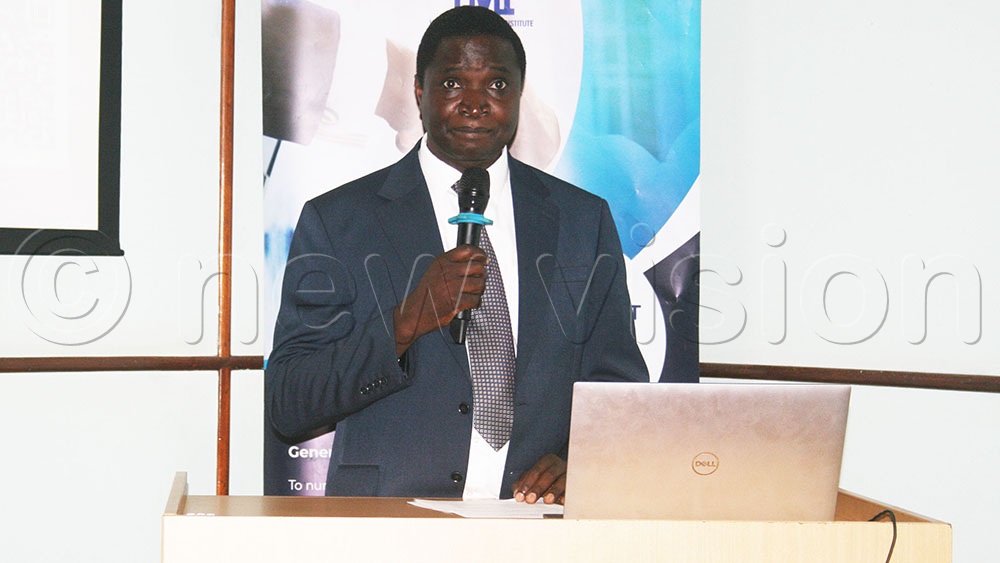
Ambassador Leonard Mugerwa, Head International Legal and Social Affairs Department at the Ministry of Foreign Affairs remarks. (Credit: Maureen Nakatudde)
He added that sustainable peacebuilding must go beyond military interventions to address community reconciliation, land disputes, livelihoods, youth engagement, displacement, and governance reforms.
“The AU’s strongest value in the DRC lies in political leadership, regional coordination, and long-term peacebuilding—not in replacing the UN or relying solely on military deployment,” he noted.
He further stressed that lasting peace will depend on tackling governance deficits, illicit resource exploitation, and regional security challenges, alongside strengthening institutional capacity, financing, and political commitment among member states.
The discussant, Andrew Masiko, a lecturer in International Relations, Diplomacy, and Foreign Policy at UMI, questioned whether the DRC would remain stable if all peacekeeping missions withdrew.
He urged Congolese authorities to prioritise equipping and training a military suited to the country’s geographical realities.
While acknowledging the AU’s efforts through its Peace and Security Council and related frameworks, Dr. Masiko stressed the need to strengthen the DRC’s ability to manage its own borders as a central priority.
Speaking on behalf of the Director General of UMI, Gerald Kanyeija noted that regional peace and security remain underexplored in academia.
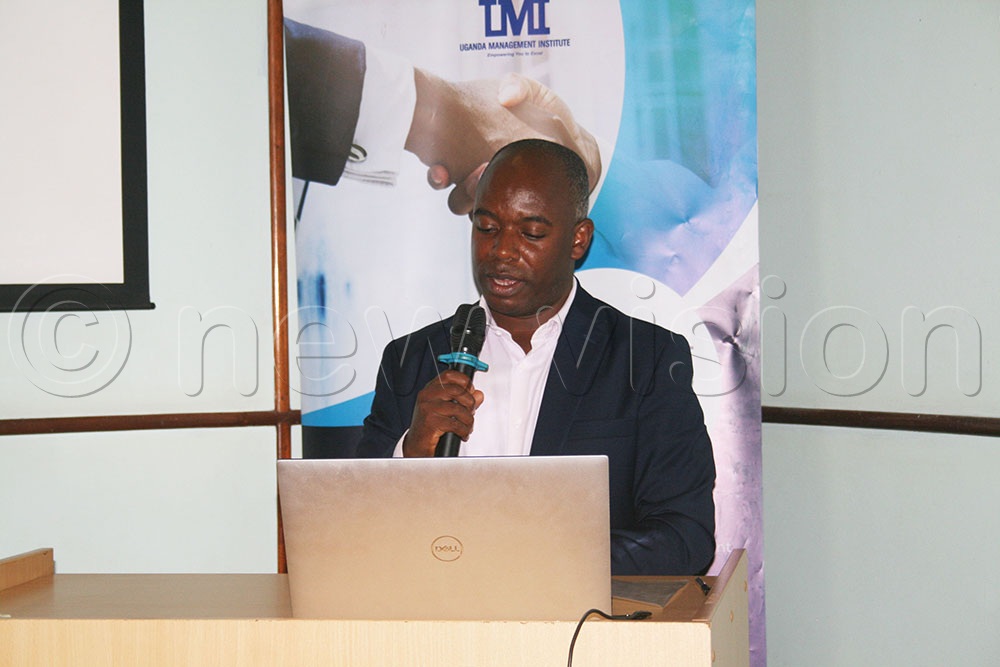
Dr. Andrew Masiko remarks. (Credit: Maureen Nakatudde)
He highlighted the growing importance of evidence-based policymaking and said UMI aims to lead efforts in integrating research and policy engagement in this area.
The event’s chief guest, Uganda’s Minister of Foreign Affairs, Jeje Odongo, was represented by Leonard Mugerwa, Head of the International Legal and Social Affairs Department at the Ministry of Foreign Affairs.
Mugerwa reiterated President Yoweri Museveni’s three-pronged approach to peacebuilding: national responsibility, regional intervention, and, if necessary, international support.
“There is no way anyone can understand a country’s challenges better than its own people and leadership,” Mugerwa said.
“The region comes next because it understands the context, and the international community should only support these efforts.”
He underscored that peace and security are prerequisites for development, noting that countries once prosperous have fallen into ruin due to conflict. He added that Uganda’s relative stability has enabled it to host nearly two million refugees from across the region.
Mugerwa concluded that the study and its recommendations would play an important role in advancing peace and security efforts and in helping to resolve ongoing conflicts in the region.