
News
New report flags illegal clan floggings in Lango sub-region
In its 28th Annual Report on the State of Human Rights and Freedoms in Uganda, presented to Parliament, the Commission identifies the Lango sub-region as one of the areas where illegal corporal punishment remains widespread despite clear court rulings banning it.
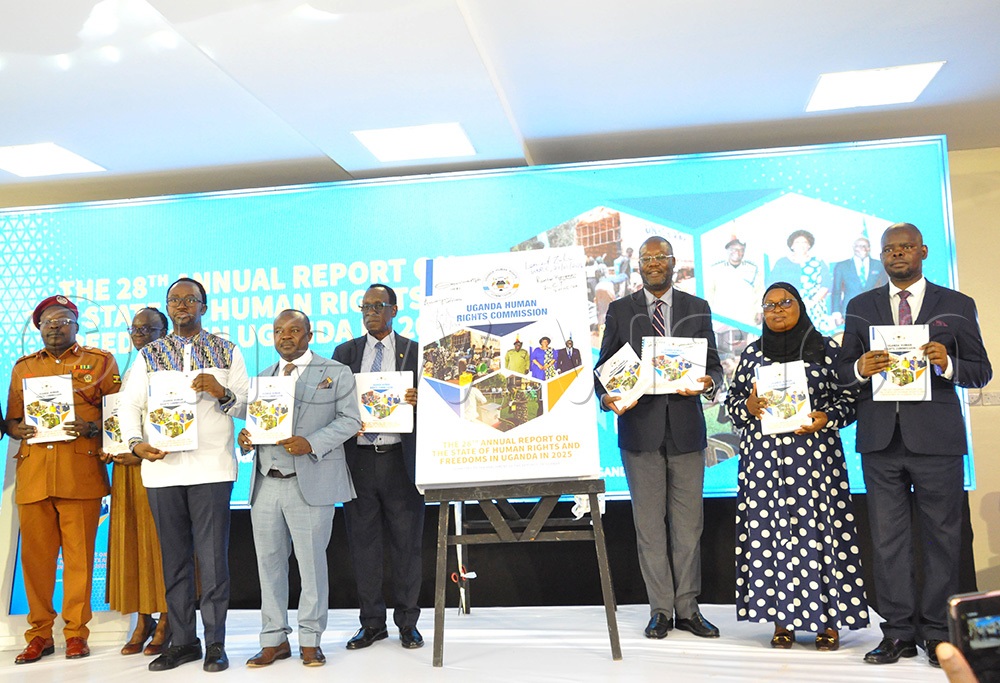
Lamex Omara Apitta Member Uganda Human Rights Commission appending a signature on a dummy report while Hajjat Aisha Lubega Deputy Chairperson Electoral Commission of Uganda, Crispin Kaheru member Uganda Human Rights Commission, Roselyn Karugonjo Segawa Chairperson Leadership Code Tribunal and other officials look on. (Photo by Nancy Nanyonga)
By: John Masaba, Journalist @New Vision
___________________
The Uganda Human Rights Commission (UHRC) has raised concern over the continued use of outlawed corporal punishment by some traditional clan leaders, warning that the practice is undermining constitutional protections and exposing victims to severe abuse.
In its 28th Annual Report on the State of Human Rights and Freedoms in Uganda, presented to Parliament, the Commission identifies the Lango sub-region as one of the areas where illegal corporal punishment remains widespread despite clear court rulings banning it.
The report was launched by UHRC at Protea Hotel in Kampala on May 20, 2026, presided over by UHRC board member Omara Lamex Apitta, who represented UHRC chairperson Mariam Wangadya.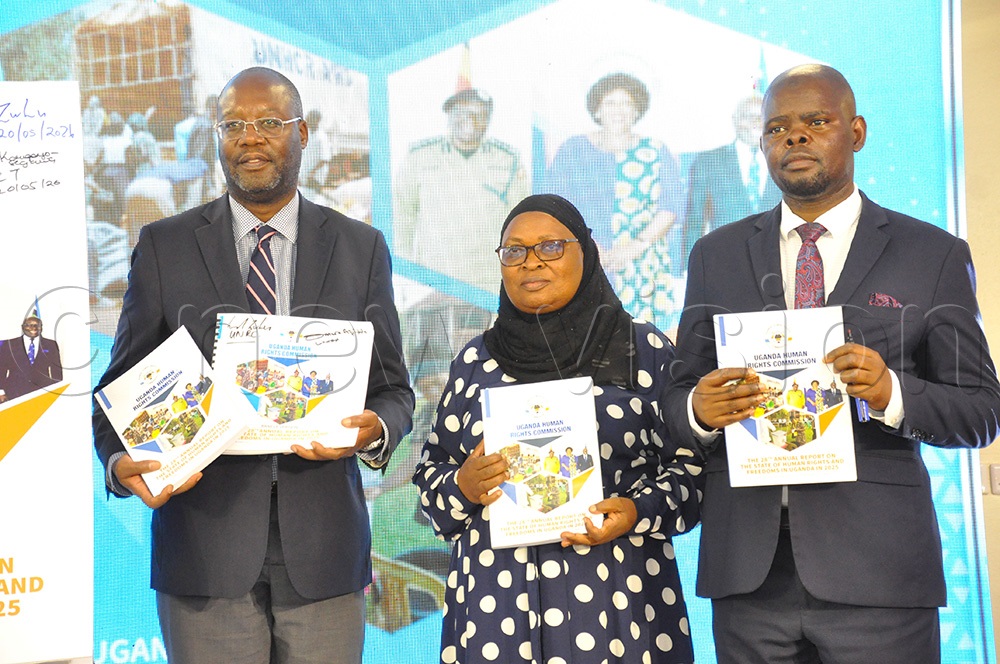
The report notes that individuals are still being subjected to physical punishment under the authority of clan structures, even though the practice was declared unconstitutional by the Supreme Court in Kyamanywa Simon v Uganda, which reaffirmed protections against torture and cruel, inhuman or degrading treatment.
“The enjoyment of cultural rights is subject to the Constitution and cannot justify practices that violate human dignity,” the UHRC emphasises in its report, citing Article 37, which recognises culture but limits it to practices consistent with human rights standards.
Despite the legal prohibition, the Commission says complaints continue to emerge from communities and police stations involving clan-ordered punishment.
According to the report, victims have been subjected to various forms of violence described as “customary discipline,” including flogging, caning, physical assault and other degrading acts. In more extreme cases, the report cites incidents involving burning materials applied to the skin, forced painful positions in public and other forms of humiliation and coercion.
UHRC warns that such acts amount to criminal conduct, noting that traditional authority does not override constitutional protections.
Why the practice continues
The Commission attributes the persistence of the illegal practice in parts of Lango to several factors, including delays in the formal justice system, which have led some communities to increasingly depend on clan structures to resolve disputes, particularly land-related cases.
It also points to a deep-rooted cultural reliance on traditional leaders as primary arbiters of justice, where physical punishment is still mistakenly regarded as a form of corrective discipline.
In addition, the report highlights limited awareness of legal boundaries, with some clan leaders reportedly unaware that their authority is restricted by constitutional law.
UHRC warns that clan-ordered corporal punishment often undermines due process by replacing formal judicial procedures with unilateral decisions by local leaders. In doing so, the report notes, victims are effectively denied the right to a fair hearing while being subjected to punishments that the state itself is prohibited from imposing.
To address the problem, the UHRC is calling for stronger action from government institutions, including law enforcement agencies, to investigate and prosecute those involved in illegal corporal punishment as criminal assault.
It also urges expanded public awareness campaigns to educate communities and traditional leaders on the constitutional limits of customary practices, as well as improved access to formal justice mechanisms to reduce reliance on informal systems of dispute resolution.
“Human rights education remains critical in eliminating these violations,” the Commission states, adding that sustained awareness and enforcement are essential to ending practices that contravene constitutional protections.