
News
Museveni urges Kigezi landowners to embrace iron ore mining for development
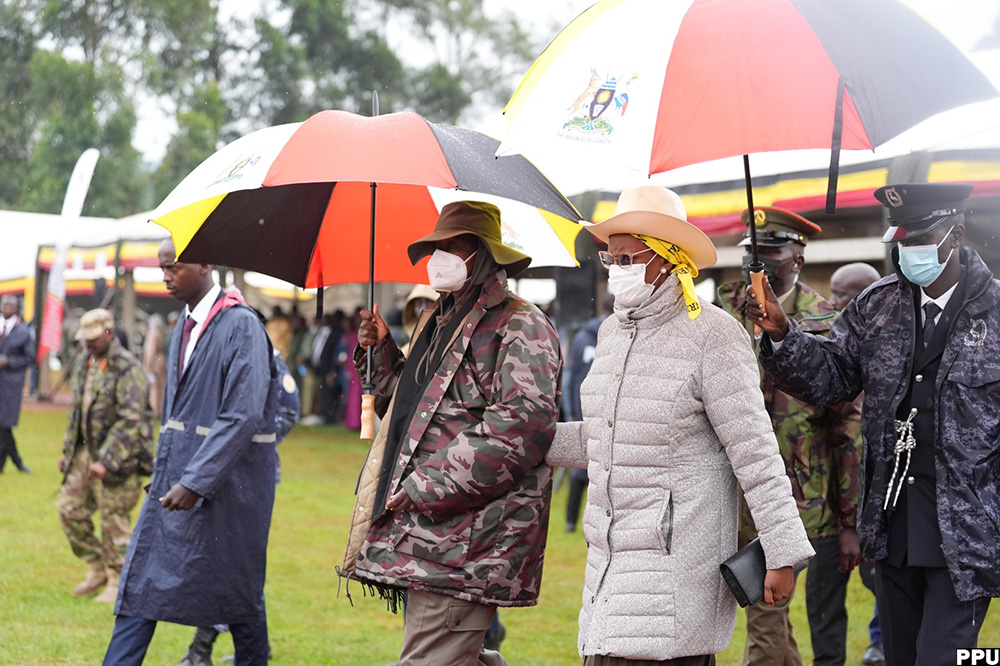
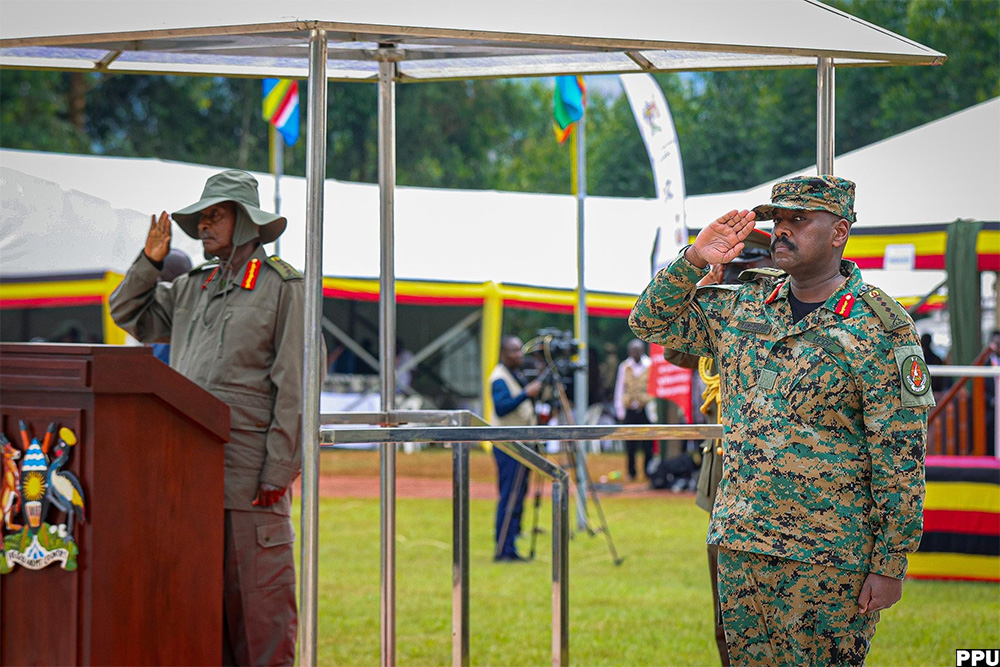
He made the call on Friday during the 45th anniversary celebrations of Tarehe Sita held at Kabale National Teachers College in Kabale District, where he was the chief guest. He was accompanied by the First Lady and Minister of Education and Sports, Mrs Janet Museveni.
Museveni urges Kigezi landowners to embrace iron ore mining for development
By: Nelson Mandela Muhoozi and Erinah Nabasa, Journalists @New Vision
_________________
President Yoweri Museveni has urged landowners in iron ore-rich parts of the Kigezi sub-region to allow investors to undertake mining, assuring them of fair compensation.
He said increased activity in mining, agriculture and industry would stimulate growth in Kigezi and across the country.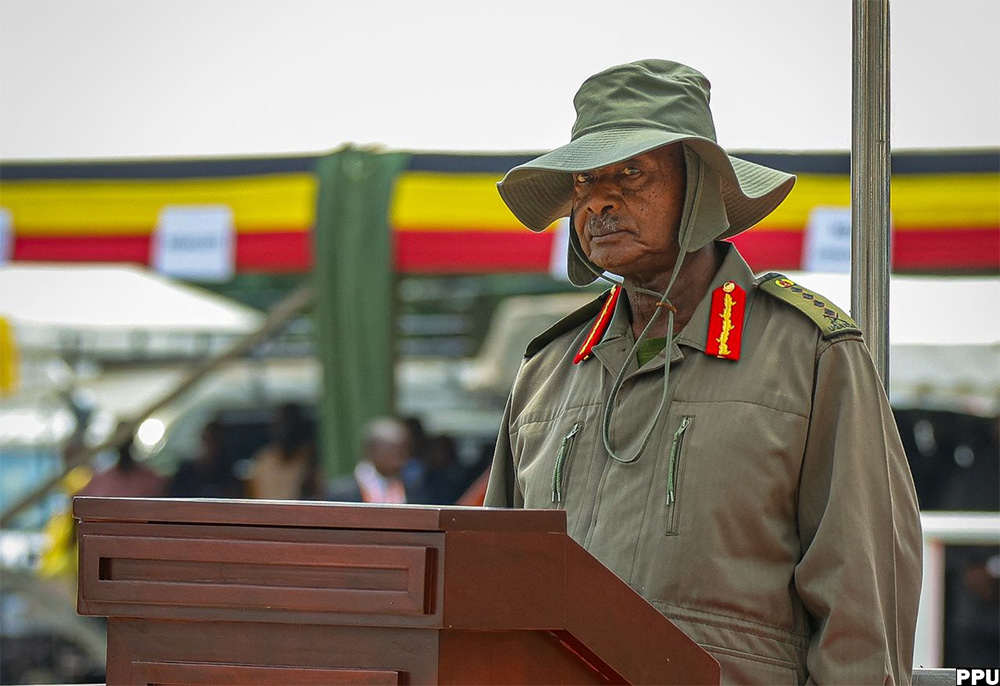
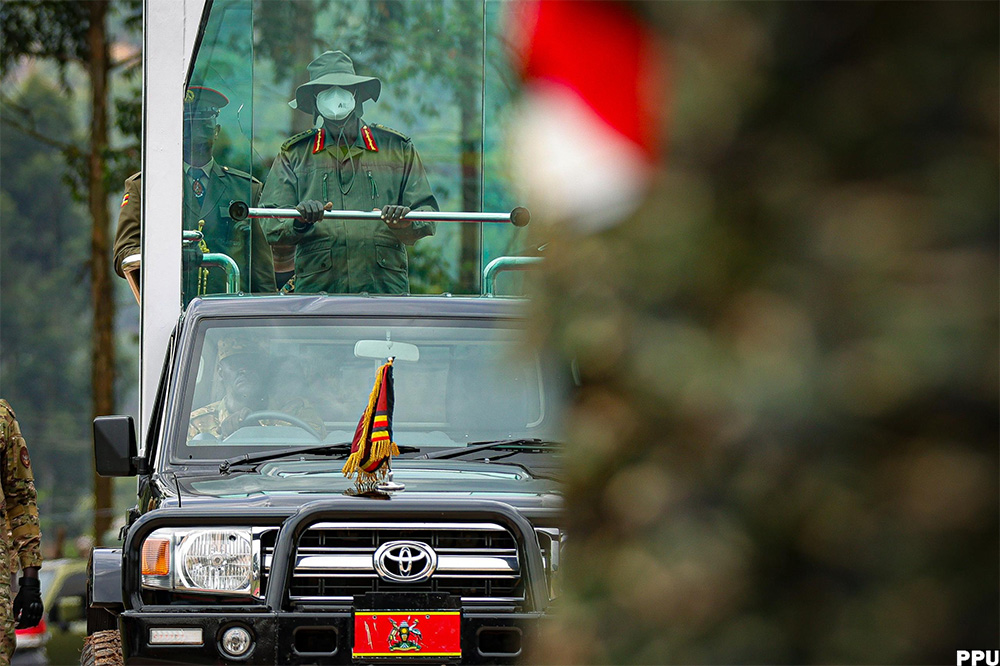
He made the call on Friday during the 45th anniversary celebrations of Tarehe Sita held at Kabale National Teachers College in Kabale District, where he was the chief guest. He was accompanied by the First Lady and Minister of Education and Sports, Mrs Janet Museveni.
Describing the mineral as a key driver to national development, Museveni said iron ore deposits in the Rubanda area of Kigezi were among the most valuable minerals in the region and could significantly contribute to economic growth if properly exploited.
Appealing to local communities to work with investors to unlock the sector’s potential, the President linked mining to broader efforts to expand productive sectors, urging residents to prioritise modern agriculture as a dependable source of income.
Speaking to the national economic vision, Museveni said Uganda’s economy is on a high-velocity growth path. Having successfully transitioned into a lower-middle-income nation, he said the country’s sights are now firmly set on achieving high-income status in the coming years.
“The economy of Uganda is growing very fast; we are now a lower-middle-income country. But our target is to become a high-income country in the coming years,” he said.
Commercial Opportunities in Kigezi
He also tipped the people of Kigezi on other commercial opportunities in the region that they can leverage to boost their incomes.
“Here in Kabale, in Kigezi, you have a very strong economy around the following activities: number one is tourism. You have mountain gorillas in Mugahinga and Bwindi, and all these places are in Kigezi. We are improving the infrastructure and building tourism roads for easy travel. We are also going to expand Kisoro Airport and build a very big airport somewhere here,” he said.
Museveni thanked industrialist Amos Nzeyi (prominent businessman, entrepreneur, and industrialist), who offered land in the area for the construction of the airport.
“We are going to build a big airport so that tourists can fly in here directly, and we shall build another big airport in Mbarara. So, this area is going to develop around tourism,” said the President.
Turning to modernising agriculture, Museveni said that although the land in Kigezi region is fragmented, it can be made productive with the right enterprises.
“But we need to add two things: the use of fertilisers and irrigation. When I was coming, I saw some people farming some crops, but they didn’t use fertilisers or irrigation.
He showcased various successful farming projects using irrigation, fish farming, among others, that use intensive methods for maximum yields.
He encouraged farmers to adopt irrigation and the use of fertilisers, saying reliance on traditional practices limited productivity and earnings.
Those who are using irrigation and fertilisers are earning over 10 times more than those who are not using them. “We must irrigate and use fertilisers in the whole of Uganda, including Kigezi. If we farm high-value crops like coffee, we shall earn good money,” he said.
Museveni further called on farmers to diversify into manufacturing, education, and information and communication technology (ICT), arguing that stronger investment across sectors would create jobs and raise household incomes.
Turning to the history of the armed struggle, Museveni cautioned against viewing Tarehe Sita in isolation, saying Uganda’s liberation history should be told as a continuous and connected story.
“When you talk of Tarehe Sita, you should not forget that there were earlier struggles that actually fed into it,” he said.
He said focusing only on January 26, 1986, when the National Resistance Army (NRA) captured power, would “do injustice to the history of Uganda” and to those who paid the price in earlier phases of resistance.
“The whole struggle of the people of Uganda should be well narrated in an interconnected way, so that we fully understand where we came from and the price that was paid,” Museveni said.
Other activities
Earlier in the day, the President unveiled a monument in Kabale for people executed by the Idi Amin regime on February 10, 1973.
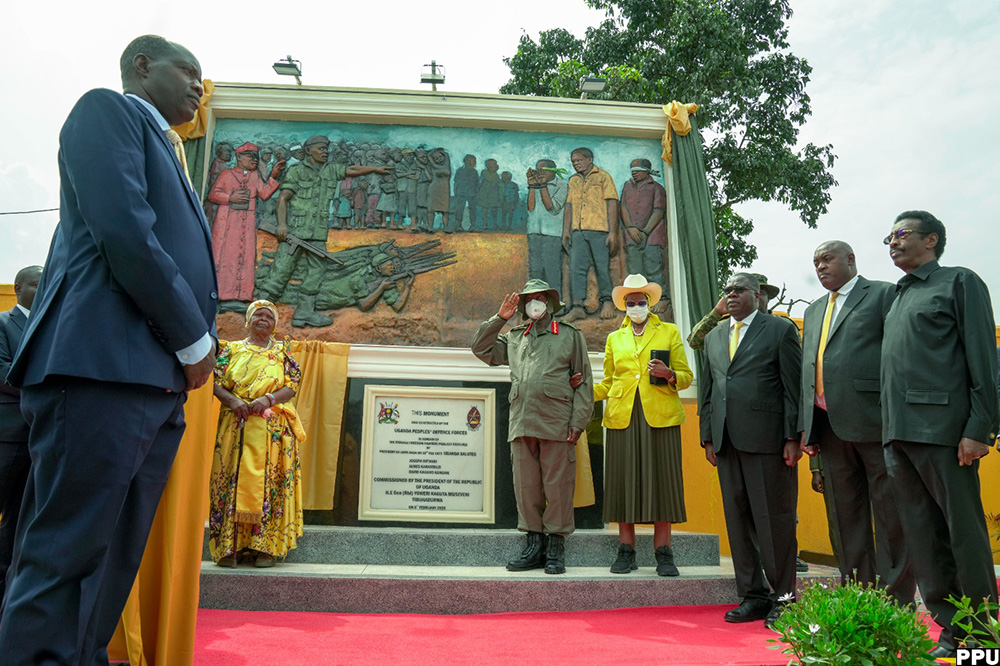
He named Muzeyi Joseph Butwali, Kalambuzi and a young man, David Kangire, as among those killed near the area.
“This was an earlier phase of the resistance of the people of Uganda. Tarehe Sita came ten years after those events, and we also had others who were executed in Mbarara, Fort Portal, Kampala, Jinja, Mbale and Gulu,” Museveni said, noting that the sacrifices laid the foundation for later struggles.
Museveni also thanked Ugandans for their political support, linking the anniversary to recent electoral outcomes.
“I thank the people for voting massively for the NRM. And I thank God that as we celebrate Tarehe Sita today, we are also celebrating the victory we recently achieved in the elections,” he said.
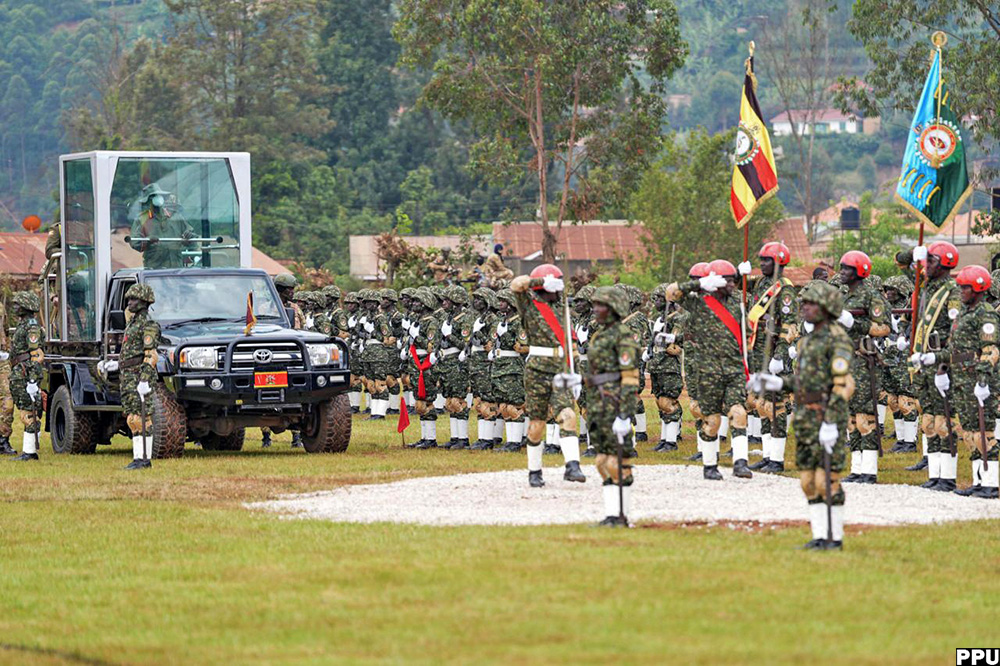
The national celebrations marked 45 years since Tarehe Sita, the annual commemoration of the NRA’s capture of power.
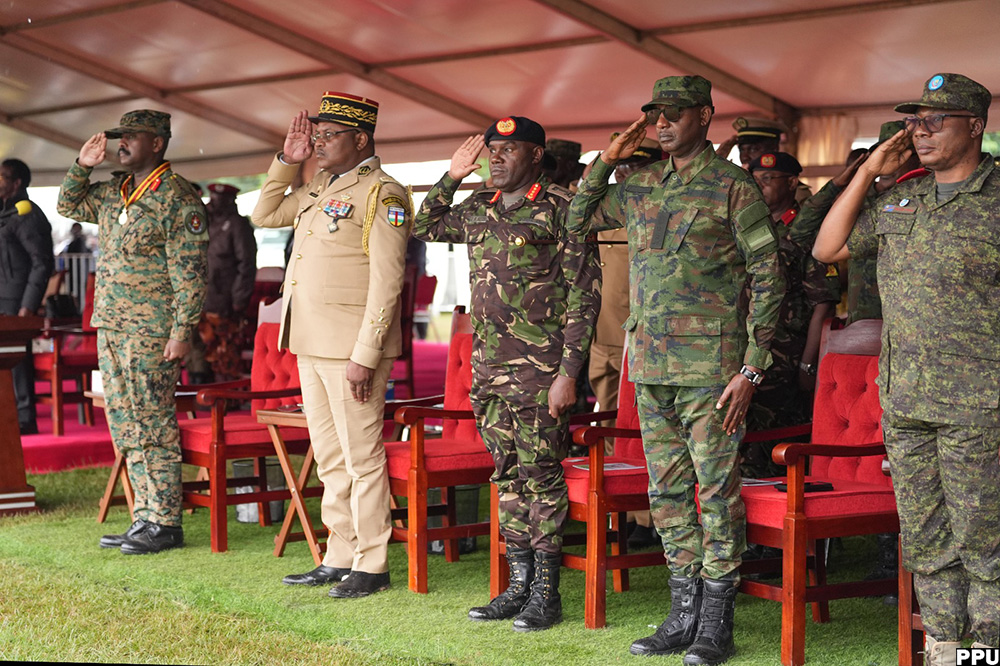
The event brought together regional military leaders, government officials and citizens from across the country.
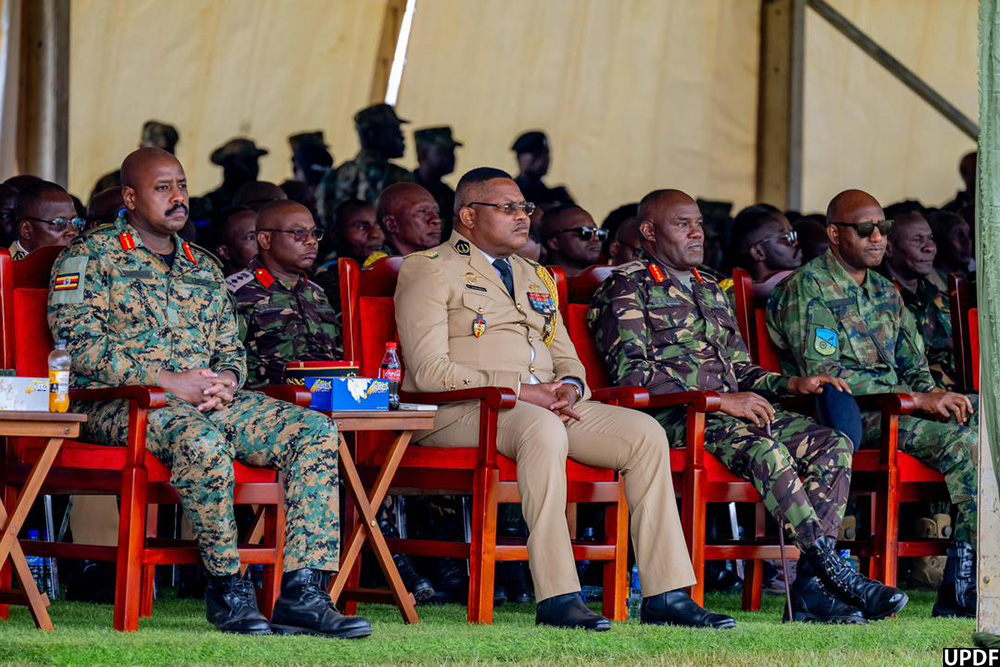
Chief of Defence Forces (CDF) Gen Muhoozi Kainerugaba said the country was peaceful and described the recent elections as the most secure since 1996.
He congratulated Ugandans for what he termed the calm conduct of the presidential, parliamentary and local council polls.
“I congratulate the people of Uganda for peacefully exercising their democratic right in the just concluded presidential, parliamentary and local council elections. Save for a few isolated cases, security was observed in most parts of the country throughout the electoral process,” Gen Kainerugaba said.
He attributed the peaceful environment to cooperation between citizens and security agencies, adding that voters largely adhered to guidance to vote and return home peacefully.
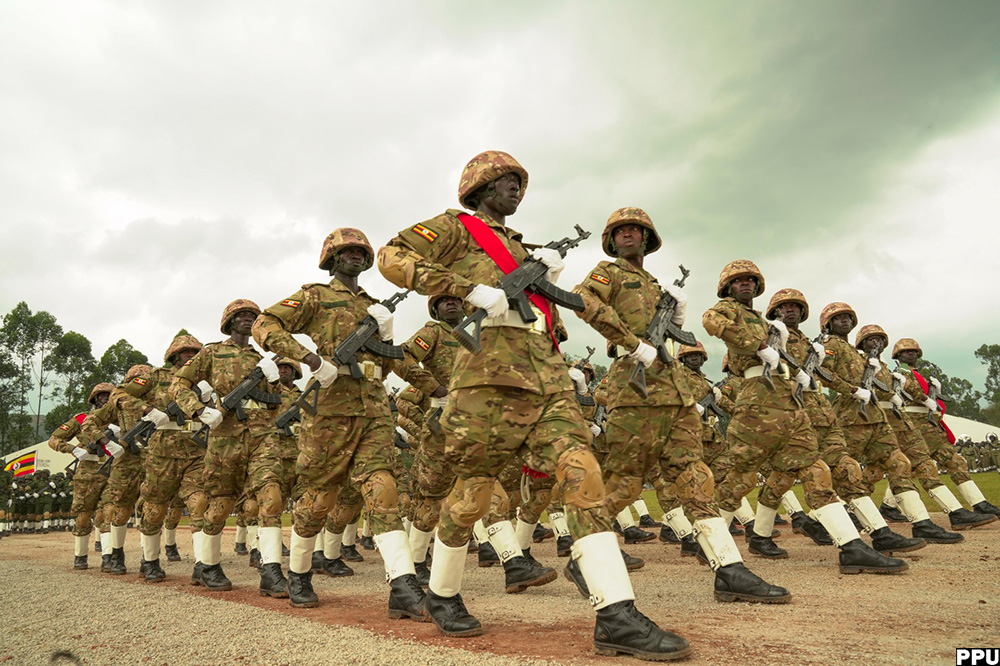
He also praised security forces for responding to post-election disturbances in parts of Kampala, Butambala, Mukono, Ssembabule and Luwero.
“There were criminal gangs who tried to stir up trouble in some parts of Kampala, Butambala, Mukono, Ssembabule and Luwero after the elections. The security forces dealt with the troublemakers, promptly arresting and charging scores of suspects in the courts of law,” he said.
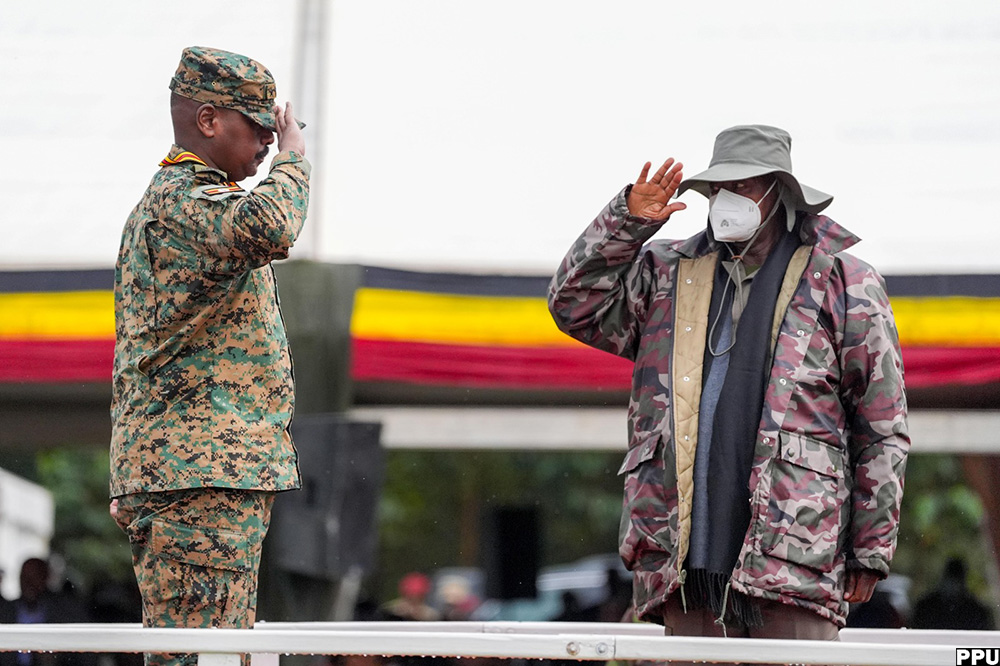
Gen Kainerugaba reaffirmed the Uganda People’s Defence Forces’ loyalty to President Museveni as Commander-in-Chief and congratulated him on his re-election.
“On my own behalf and on behalf of the officers and men of the UPDF and the entire security system in Uganda, we offer our profound congratulations to you upon your well-deserved election victory,” he said.
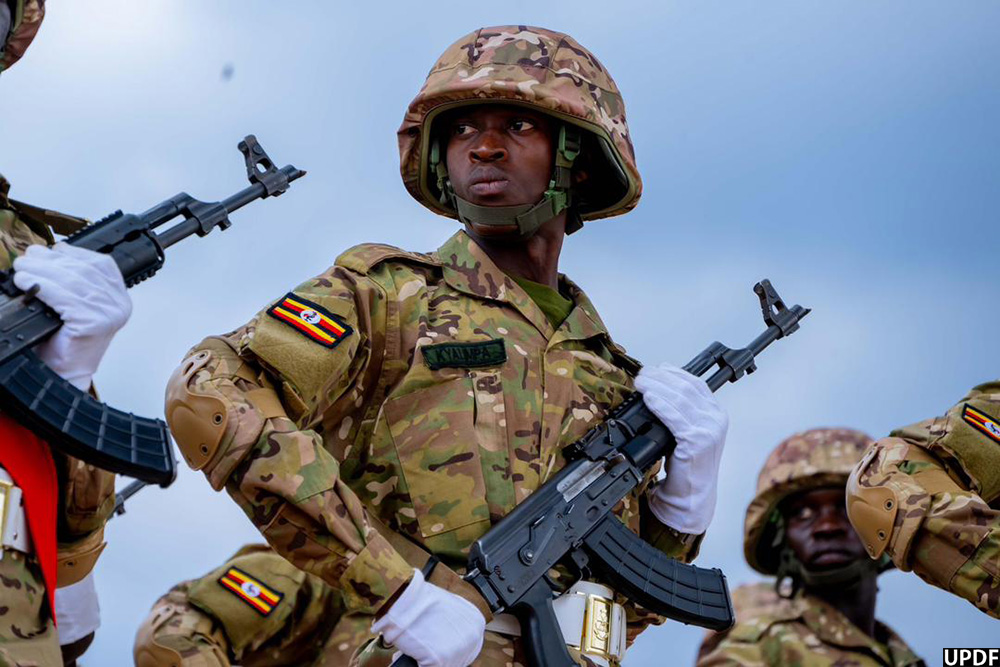
The celebrations drew high-level regional and international military delegations, which the CDF said reflected shared security interests and regional cooperation.
Gen Kainerugaba said the UPDF remained engaged in internal operations, including disarmament efforts in Karamoja, and in external peace support missions in Somalia, South Sudan and eastern Democratic Republic of Congo.
He said improved security was already translating into economic benefits, including a pickup in tourism and investment.
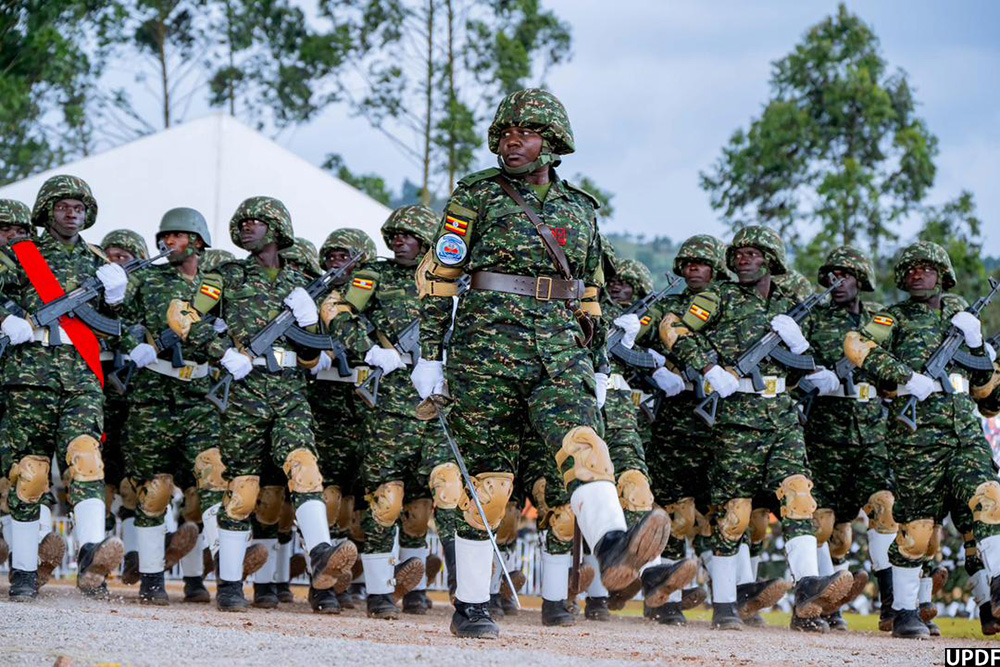
He also highlighted improvements in the welfare of UPDF personnel, citing better supervision of projects related to feeding, clothing and accommodation.
Tarehe Sita, meaning “sixth day” in Kiswahili, marks the culmination of the NRA’s five-year bush war and has evolved into a national day reflecting on security, unity and the role of the armed forces in national development.