
Museveni blames EC over voter verificaation kit failure, orders probe
The President said somebody at EC delayed sending the photos and entering the user’s biodata into the machines. Museveni then asked the area returning officer to explain how the machine operators were recruited.
President Yoweri Museveni casts his ballot at Kaaro polling station in Rwakitura, Kiruhura district on January 15, 2026. (Credit: Eddie Ssejjoba)
KIRUHURA - President Yoweri Museveni has blamed the Electoral Commission (EC) for what he calls deliberately failing the operations of the Biometric Voter Verification Kits (BVVK).
The kits are aimed at identifying the voter and eradicating multiple voting at polling stations.
The President said he has directed a probe to establish which officials failed to send the biodata to the machine operators to enable them use the BVVKs.
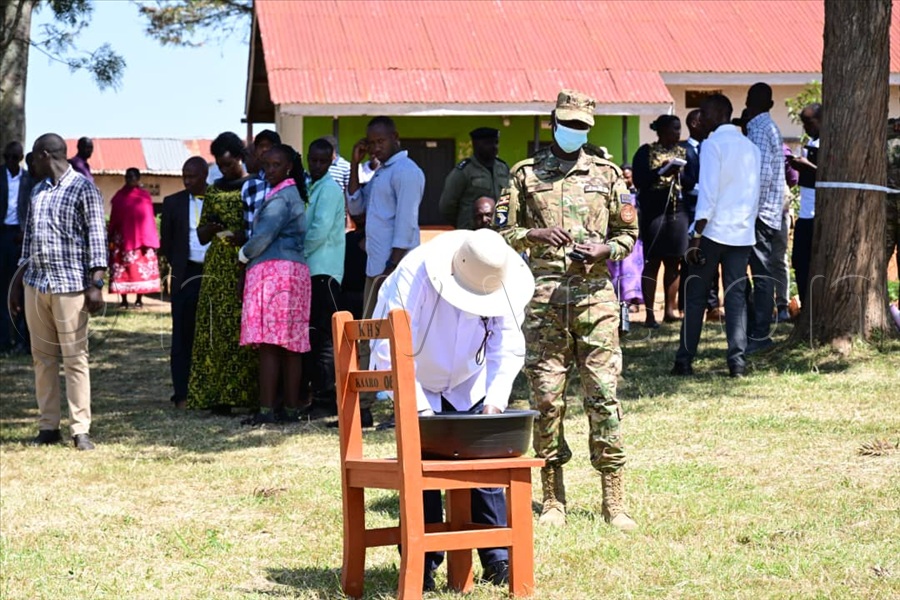
President Yoweri Museveni casts his ballot at Kaaro polling station in Rwakitura, Kiruhura district on January 15, 2026. (All Photos by Eddie Ssejjoba)
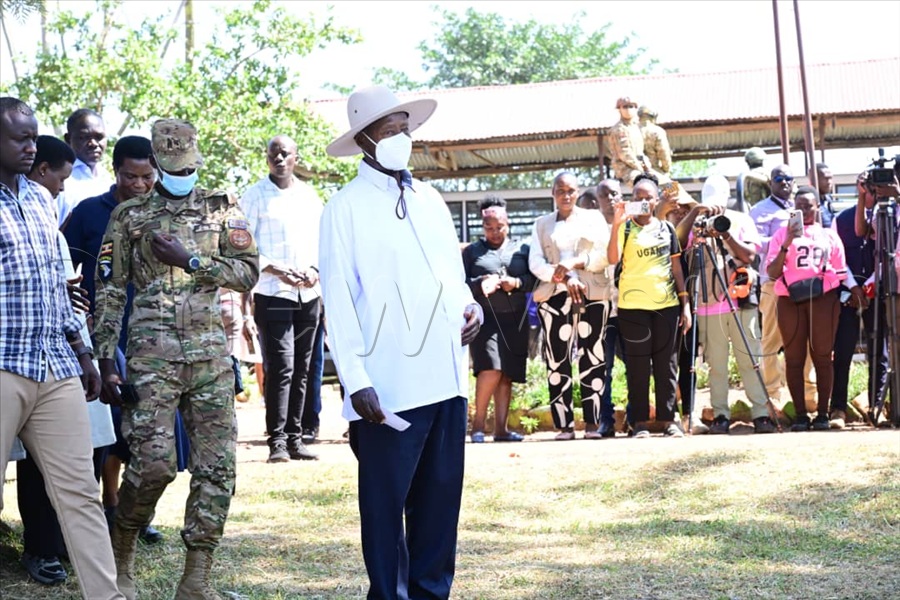
President Yoweri Museveni queues before casting his vote at Kaaro polling station in Rwakitura, Kiruhura district on January 15, 2026.
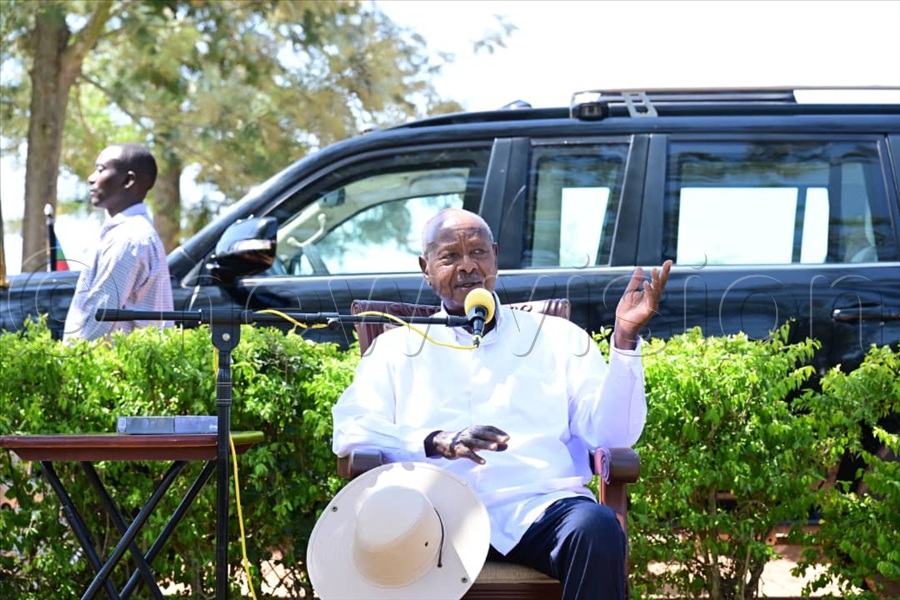
Addressing the media shortly after voting at Kaaro polling station in Rwakitura, Kiruhura district, Museveni said the BVVKs work, but some people feared it, and they didn’t want it work.
“They didn’t want the machines to work. This morning, I got up early and 6:30am, I rang Richard Todwong [NRM secretary general]. He was in Nwoya district checking on my agents. He said many of my agents had arrived, but we now had a problem with the machines.
Then I checked with Engineer Sheeba Kobutungi [head of the science unit, State House]. She said the machines had no problem, but some people in the EC delayed bringing the biodata so that it could be entered into the machine. That machine can only be operated by somebody who has been allocated to it. He is the only one who can open it.”
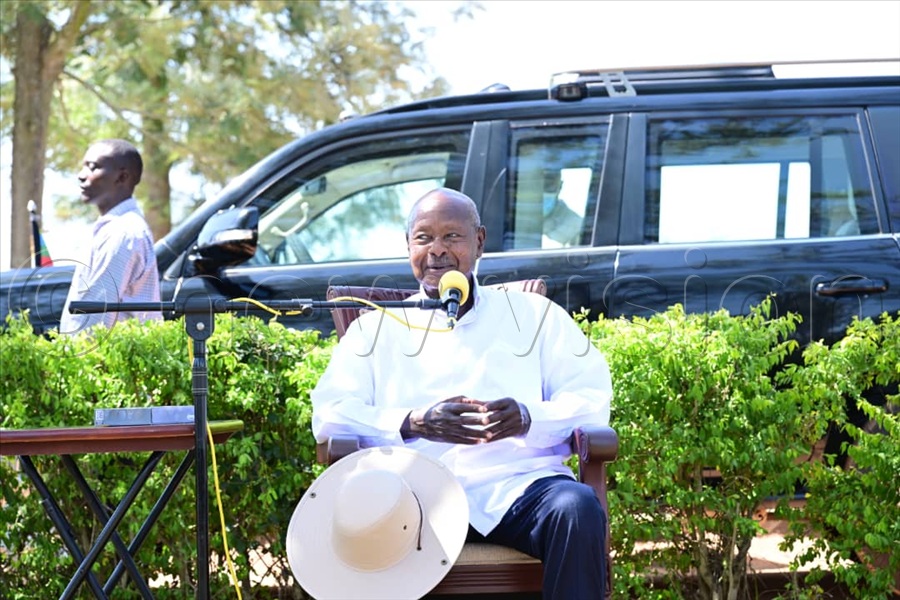
Addressing the media shortly after voting at Kaaro polling station in Rwakitura, Kiruhura district, Museveni said the BVVKs work, but some people feared it, and they didn’t want it work.

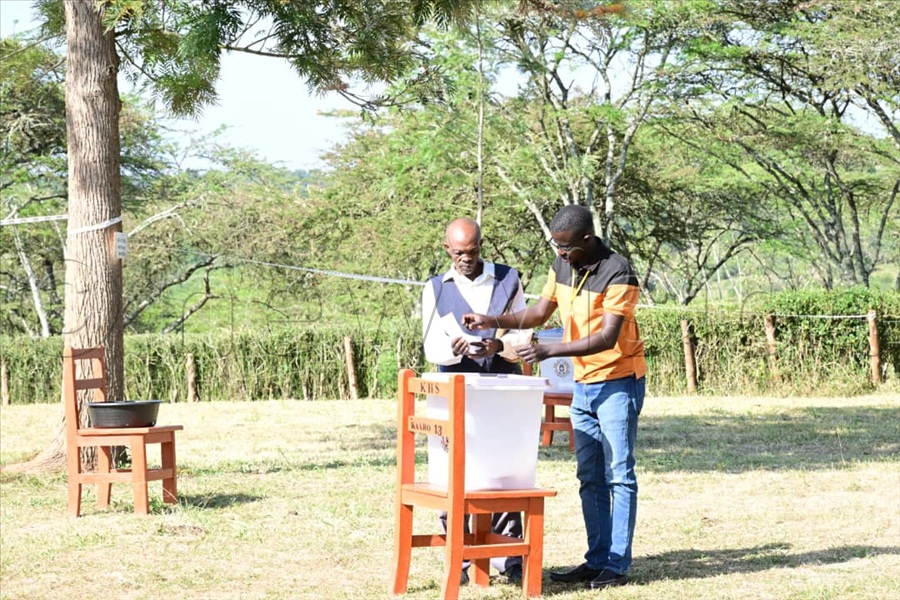
Polling officials at President Yoweri Museveni queues before casting his vote at Kaaro polling station in Rwakitura, Kiruhura district give President Museveni a ballot paper before he cast his vote on January 15, 2026.
The President said somebody at EC delayed sending the photos and entering the user’s biodata into the machines. Museveni then asked the area returning officer to explain how the machine operators were recruited.
The officer informed the president that “the polling officials were recruited on December 22, 2025. We took them through the recruitment process until January 2, 2026, when we started the training. We trained them for five days consecutively. As of January 14, 2026, we were still training them as refreshers to remind them in case they forgot because they were dealing with a machine. We took them through it, and they were ready to work,” the officer stated.
Museveni asked the official to explain how the BVVK was supposed to work.
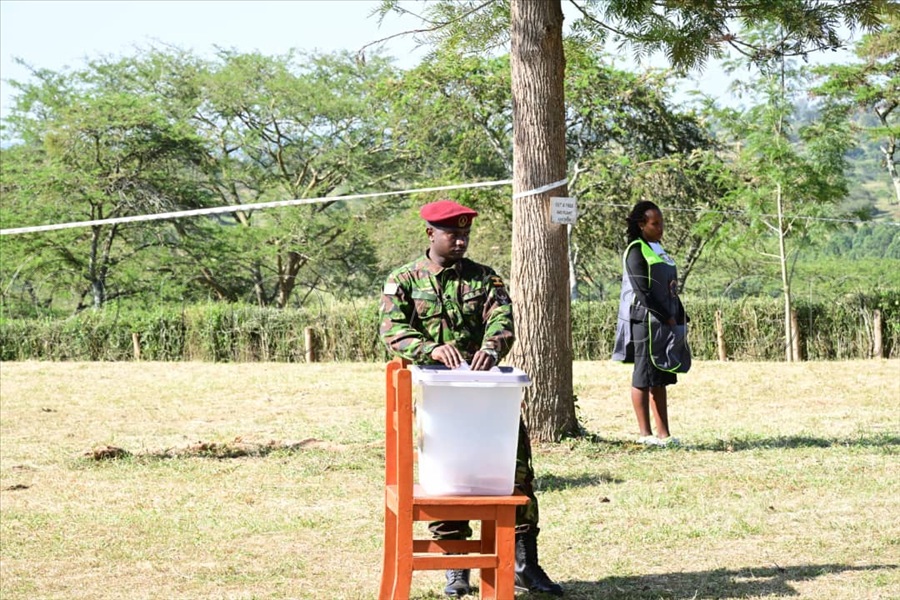
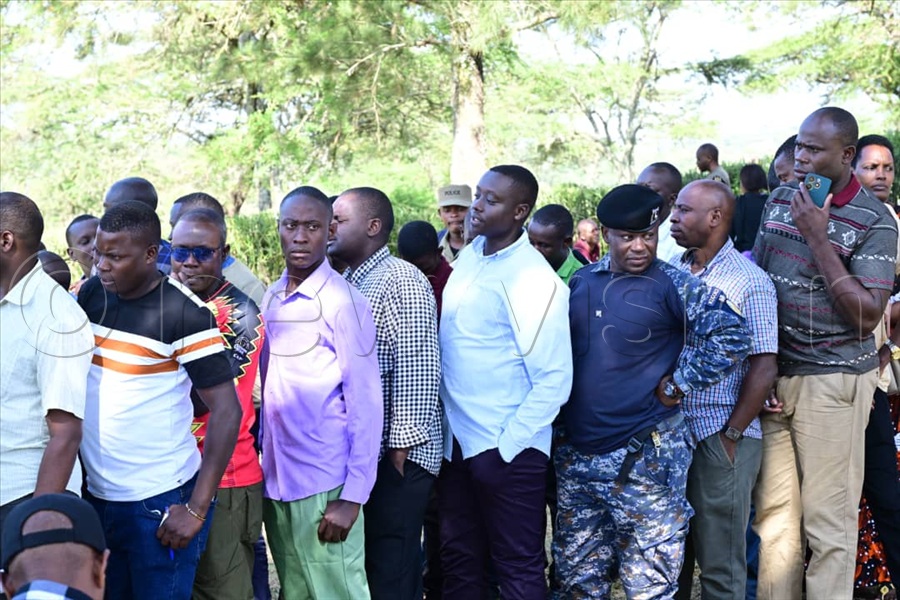
A Special Forces Command (SFC) soldier casts his ballot at at Kaaro polling station in Rwakitura, Kiruhura district on January 15, 2026, immediately after the president had voted.
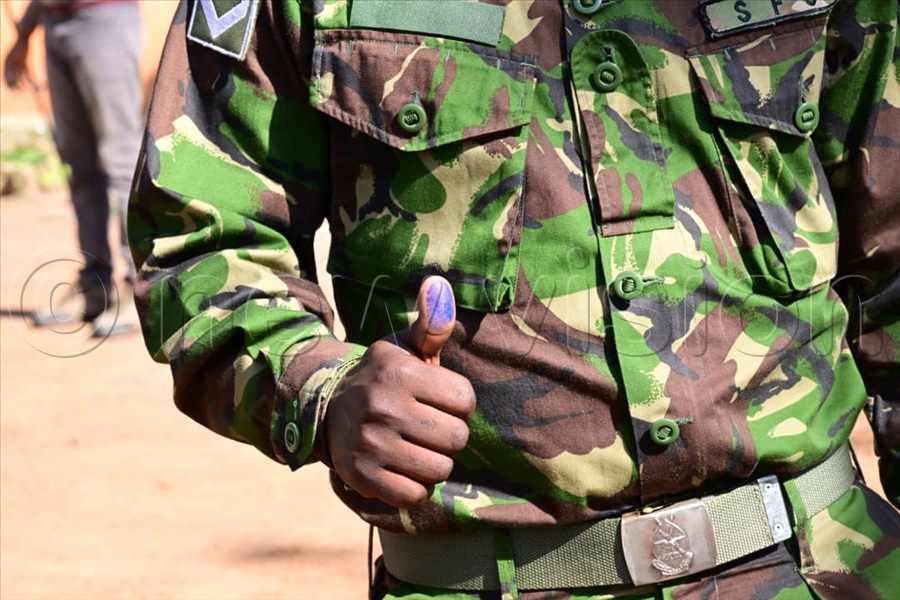
“For the BVVK to work, first of all, it's used by two officers, the operator and the presiding officer. For it to work, you must assign them before they can use them. You take their particulars, including the national Identity Card (ID), National Identification Number (NIN), and their biodata. We submitted at the district level to the EC headquarters IT, and they assigned them. That is why they can use the machine.”
Supporting manual voting
Museveni revealed that some people at EC did not send the particulars of the operators to the machines.
“I checked, and they are saying that some of them, even by this morning, had not sent their biodata, and some were sending by 9:00am. Was this deliberate? We are going to check that. When I started checking at 8:00am-9:00am, some people started ringing me, the machines were working in a few places, but they are not working. So, the EC proposed, and I had to support it because people had gathered from 7:00am that we vote manually because it was not correct for people to just go home. We are going to find out why there was a delay by some people to send the biodata to the machines,” Museveni said.
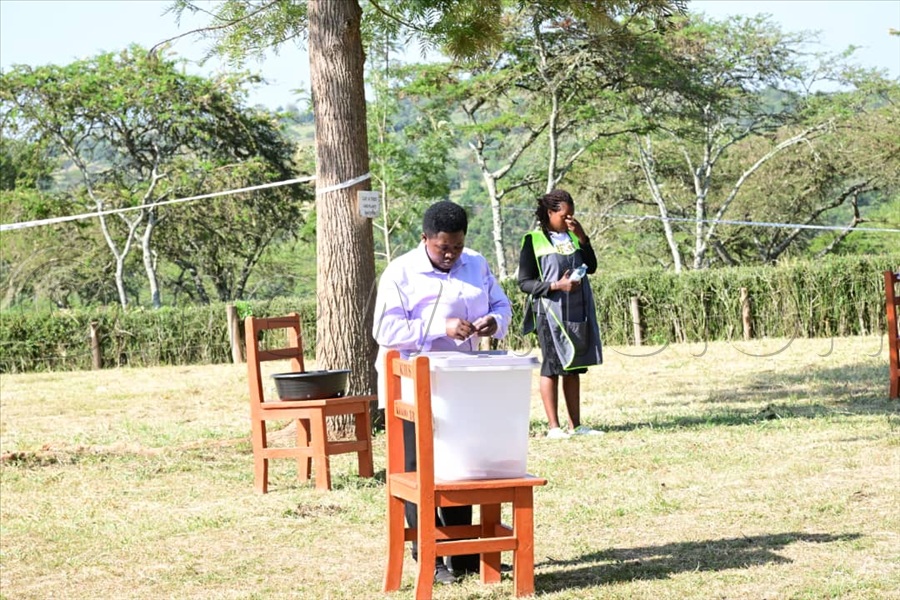
A voter at at Kaaro polling station in Rwakitura, Kiruhura district casts her ballot.
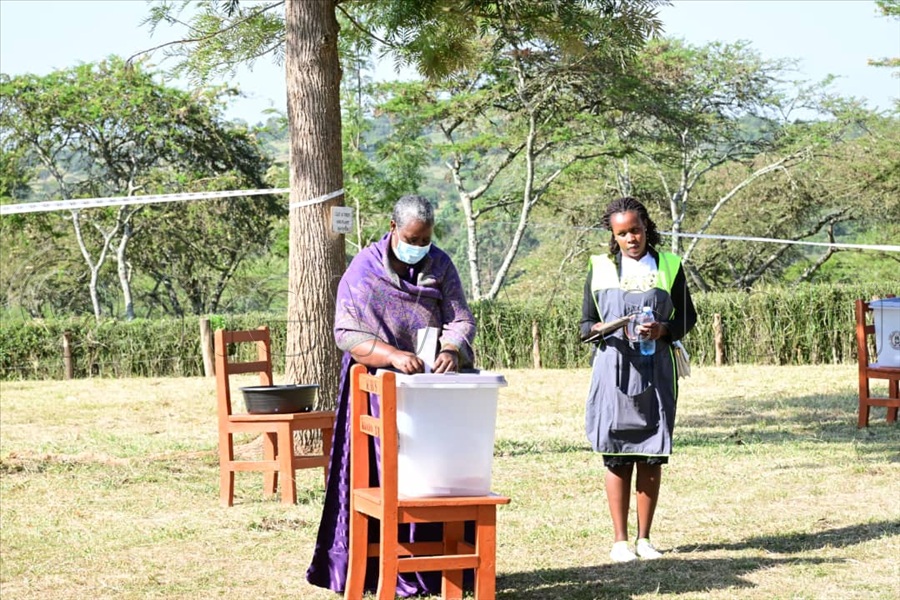
Museveni's directive to probe EC came moments after the Commission chairperson Justice Simon Byabakama, attributed the widespread failure of Biometric Voter Verification Kits (BVVK) to technical challenges.
However, he says the machine's failure should not disfranchise Ugandans of their constitutional right to vote.
Congratulations Uganda
The President, who voted at about 11:30am congratulated Ugandans for getting up early on Thursday morning. “I was following, and 5:00am-6:00am, people were up. Now they had a problem with the voter verification machines. They are working because of it, as you saw, and you were all there. First off, it did not accept my fingerprints because when they took them, they had a different angle if you don’t put them properly. But when they put my face, the machine recognised me,” Museveni said.
He revealed that the issue of vote rigging had been the struggle of NRM since 1960.
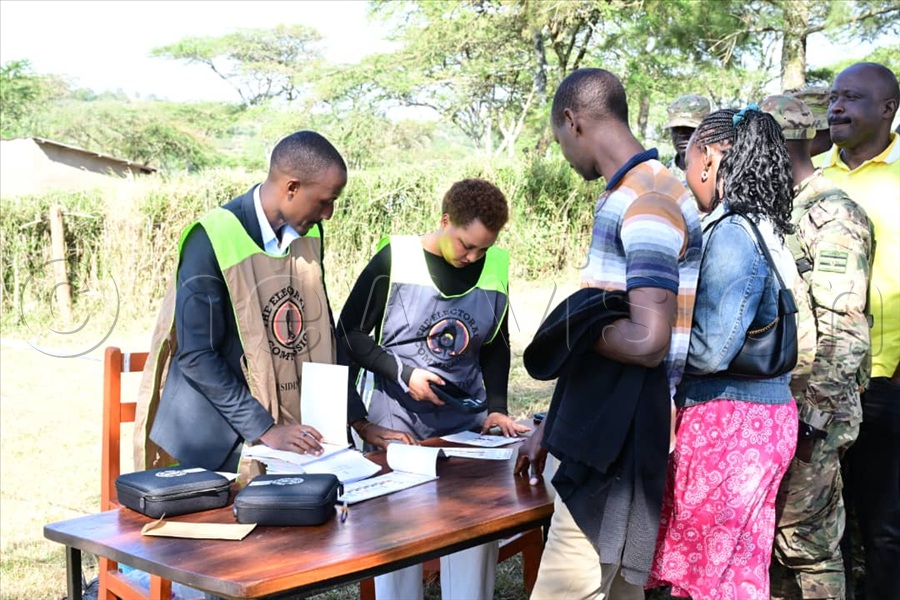
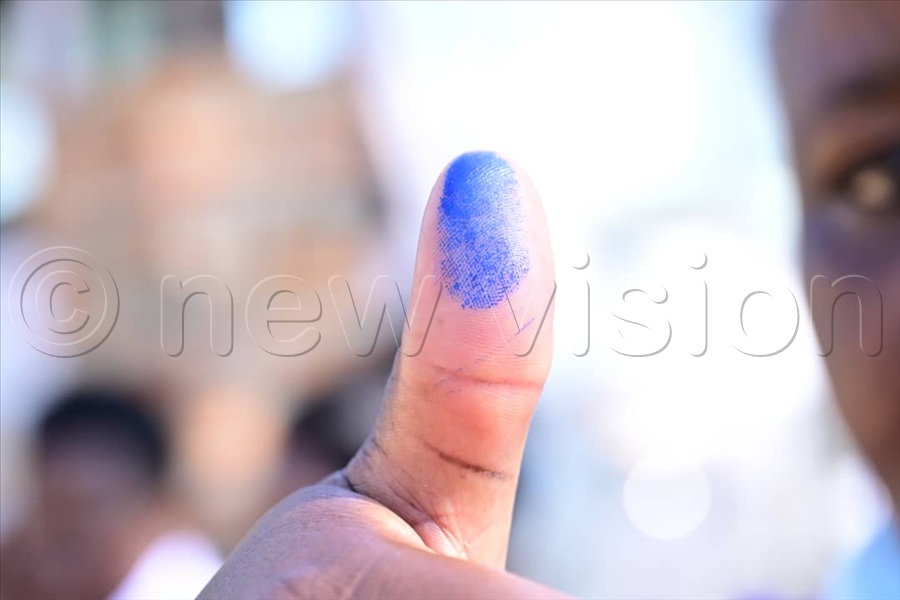
“We have been having a problem of ballot stuffing from that time. Uganda Peoples Congress (UPC) was cheating at that time. I was in the Democratic Party, and it was not very active, and it had other problems. Therefore, the elections of 1961-1962 were really not accurate. At that time, they were voting in enclosures. You would go and tick alone, and each party had its own box,” Museveni said.
He added that the country never had elections again for 18 years until 1980.
“Before the elections of 1980, we told our people, can we remove all these shades, because, in 1962, we had multiple voting and some people could vote many times. You had ballot stuffing, and someone could just bring ballots and put them there. You didn’t have registers, which you were sure of.”
Museveni said they requested a discussion on how to vote accurately, but those in power didn’t want to.
“They just wanted elections, and they cheated, and we told them if you cheat, we are going to fight, and that was what happened. So, when we defeated those groups, we started lining up in 1989. That lining up was to make sure these were real people, to remove the issue of ballot stuffing and multiple voting, and the issue of dead people voting. It worked well in 1989, but when we went back to the Constitutional Assembly, they said we must go back to a secret ballot. The lining up had the issue of people seeing you didn’t vote for me, and it would bring some beef,” Museveni said.
Museveni said in 1994 and 1996, the country went back to the secret ballot, “But we put these measures which we still see, one ballot paper with all the pictures of all the candidates, one ballot box, tick privately but where all people are seeing so that they see you have ticked one paper, have agents of candidates to see, count immediately after voting and announce,” the President said.
Museveni said they thought this would eliminate cheating. “It can, but it depends on many things; vigilance of the agents, but many times, the agents are not vigilant. Like in the last election, the opposition received 2.7 million votes. Those votes that they say the Opposition got, they never got those votes.
They printed one million votes from Nkurumah Road and brought another 1.7 million from Dubai. It’s a fact, and we know all these facts, but afterwards. That is why all this time we have been saying no, let's go electronic. Biometrics capture the fingerprints and the face. Yes, you will vote manually as you saw me voting, but after the machines have confirmed I am the one, and I will vote only once.”
However, this will not be the first time the kits have failed. In 2021, the same incident happened, paralysing voting in most polling stations in the country.