
MPs Adeke, Nsibambi in bust-up over Sovereignty Bill
“I am sorry to interject when a senior member is speaking. But he has done that consistently to all our witnesses. By the time, our witnesses submitted their memoranda, they defined who they are. Honestly, honourable chair, should you keep doing that to our witnesses and it’s been persistently one member doing that,” Adeke said.
Anna Adeke, the Forum for Democratic Change (FDC)'s newly designated parliamentary whip, turned on her predecessor, Counsel Yusuf Nsibambi. (Credit: Maria Wamala)
By Dedan Kimathi, Nelson Mandela Muhoozi, Sarah Nabakooza
KAMPALA - The afternoon of Tuesday, April 28, 2026, descended into drama after Anna Adeke, the Forum for Democratic Change (FDC)'s newly designated parliamentary whip, turned on her predecessor, Counsel Yusuf Nsibambi.
She accused the Mawokota South lawmaker of trying to derail proceedings by incessantly interjecting whenever witnesses were speaking.
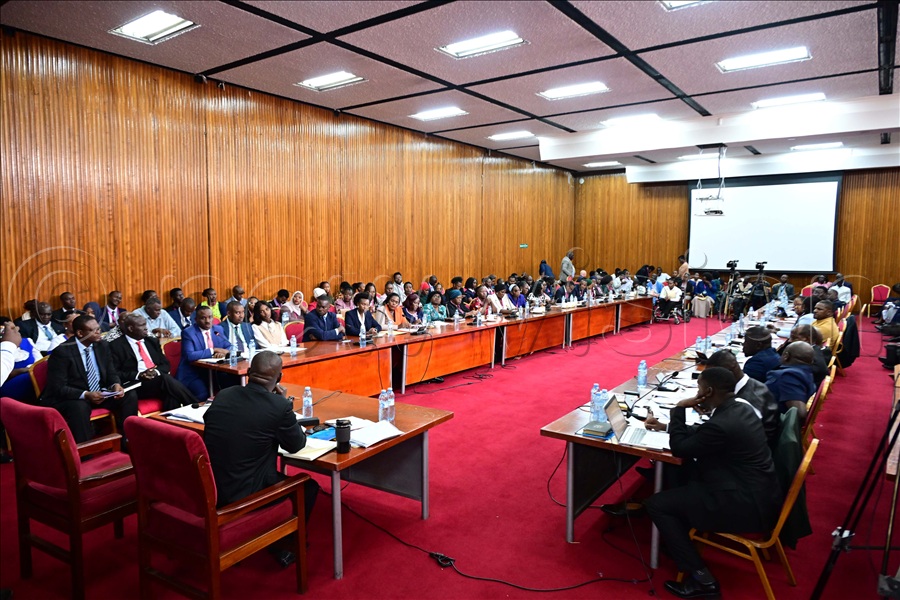
At the time of the outburst, Parliament's joint legal and defence committees scrutinising the Protection of Sovereignty Bill, 2026; were interfacing with officials from the National Association of Broadcasters (NAB) who were led by the vice chairperson Ben Mwiine and Obadiah Ismail the entity’s legal counsel.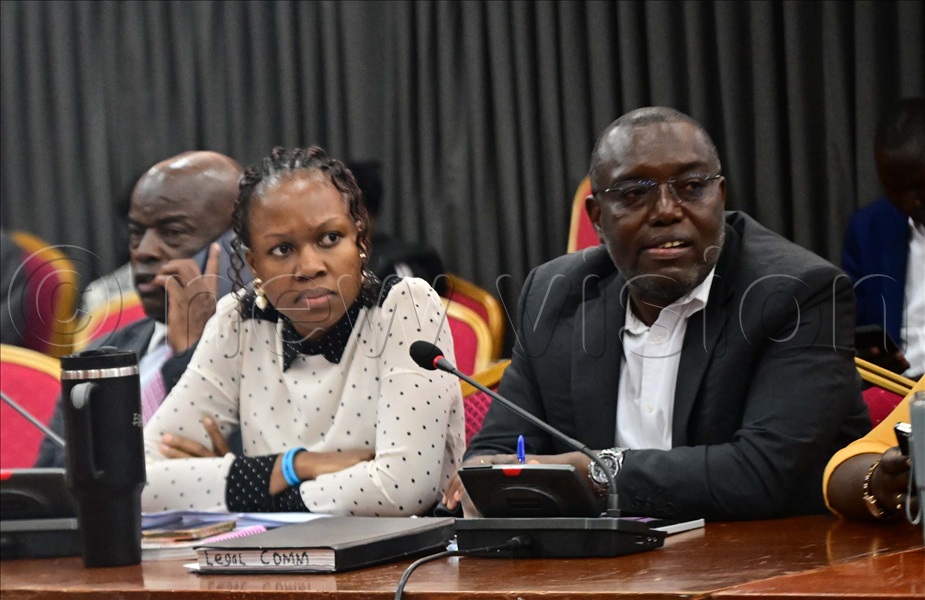
Ndorwa East MP Wilfred Niwagaba and Anne Adeke Ebaju Soroti District Woman MP during the joint Parliament's joint Defence and Legal Committees, April 28, 2026. (All Photos by Maria Wamala)
With trouble accruing from a point of procedure where Nsibambi sought to verify the particulars of the aforementioned officials.
“Are you registered as an association and who are the members. Even if you don’t have the listen now, but kindly through you chair, when you talk of stakeholders, don’t just come with two people and say we are talking on behalf of broadcasters. You are just two broadcasting houses,” Nsibambi said.
This, however, invited the wrath of Adeke, who had until then quietly observed proceedings.
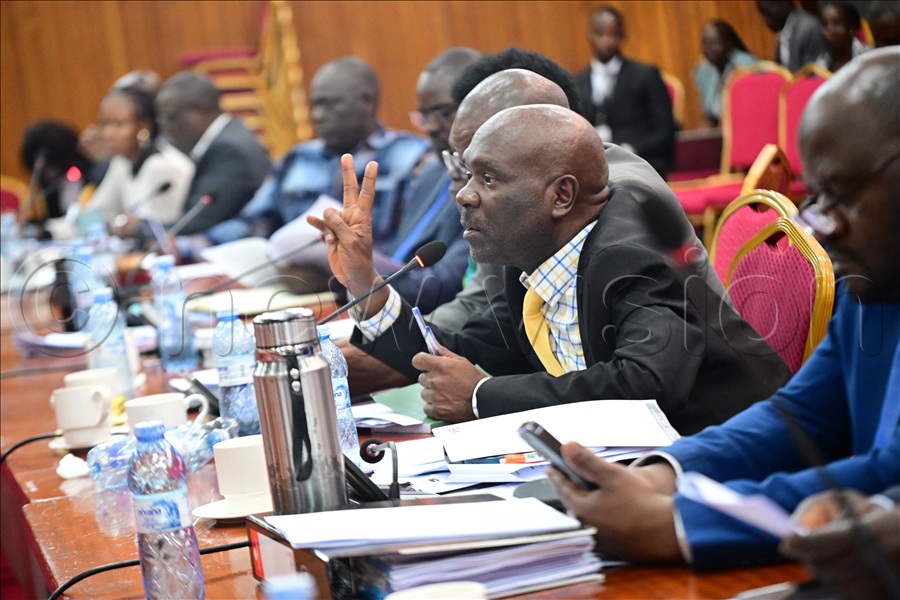
Mawokota South Member of Parliament Yusuf Nsibambi interacts with other Legislators on the Parliament's Defence and Legal Committees during a stakeholders’ consultation meeting on the Protection of Sovereignty Bill at Parliament on April 28, 2026.
“I am sorry to interject when a senior member is speaking. But he has done that consistently to all our witnesses. By the time, our witnesses submitted their memoranda, they defined who they are. Honestly, honourable chair, should you keep doing that to our witnesses and it’s been persistently one member doing that,” Adeke said.
Adding that by cutting short their submissions, Nsibambi was throwing the committee’s guests into disarray.
He was backed by Gilbert Olanya, the Kilak South Member of Parliament, who said they had observed all throughout that Nsibambi was the only member on the predominantly National Resistance Movement-dominated committees, who surprisingly appears conflicted.
“And he is doing this to disorganise our witnesses intentionally…. So, Honourable Nsibambi don’t bring your personal conflict of interest in this Bill. If you are supporting, you stay alone. After all, Mr Chairman, 99.9 per cent of witnesses are against it, it is only him who is being planted to support this Bill, he will not succeed,” Olanya said.
“Moreover, he is not a substantive member of the committees. Please.... people have been here since 9:00am, they are not mad to sit here until this time,” Adeke said.
As this went on, shadow Attorney General (AG), also Ndorwa East MP Wilfred Niwagaba (Indep) murmured: “Since he (Nsibambi) has already appeared as a witness, let him remain a witness.”
These objections were, however, overruled by Stephen Bakka Mugabi, the chairperson of the legal and parliamentary affairs committee, who ruled that Nsibambi was raising legitimate concerns.
This prompted protests from Abdullah Kiwanuka (Mukono North, NUP) who insisted that Nsibambi should join the opposite flank reserved for witnesses. Order was eventually restored when Mugabi invoked the rules requiring that chairpersons be heard in silence.
“It is his mandate as a Member of Parliament and you know that although he is not a substantive member of the joint committee, he has rights as an ex-officio member. And those rights must be respected,” he ruled.
“The question Nsibambi is asking is even good for the committee. Because you see, when an association comes and we have an attachment of members of the association, that is good for us, we would have consulted the entire members not just the three,” he added.
Even then Adeke insisted that if Nsibambi is in doubt of those appearing before MPs, he can do a private search for the certificate of incorporation with relevant bodies like the Uganda Registration Services Bureau (URSB). After which the hearing resumed.
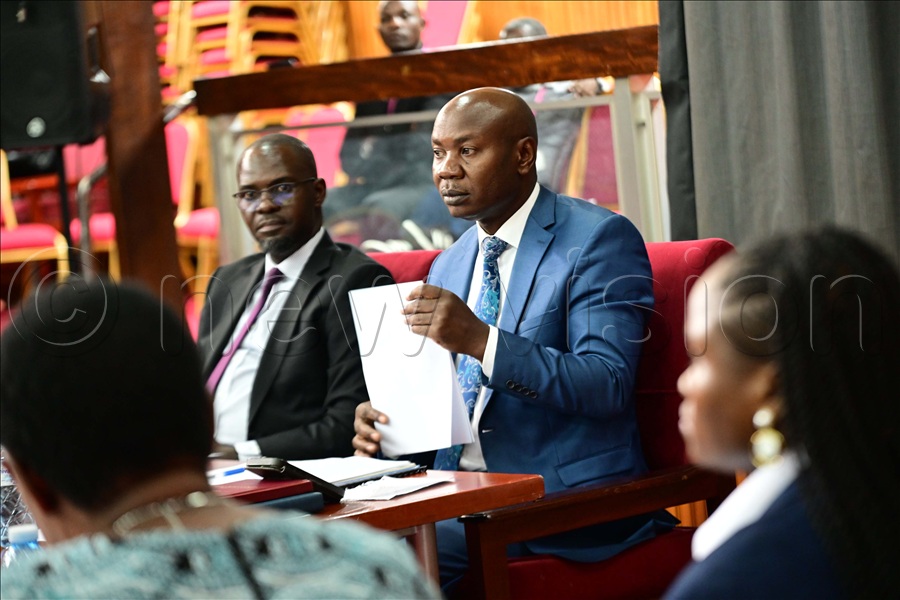
Committee resumes
Responding, Mwiine, the vice-chairperson of NAB, which represents TV and radio stations, said as early as 10:00am they were at Parliament but were constrained by scattered engagements with the likes of Uganda Performing Rights Society (UPRS) in the afternoon where many of the members were but retained a small number to attend to the pressing Bill.
Broadcasters worried
Fast forward, in his submission, Mwiine said the proposed law mooted by internal affairs minister Maj. Gen. (rtd) Kahinda Otafiire would fetter a free press that speaks truth to power.
Noting that the law as it is would criminalise partnerships, shackle journalism in the country and drive away investment that sustains thousands in the creative economy.
Specifically, he aimed Clause 13 of the Bill bars persons from publishing information or participating in any act or activity that weakens or damages the economic system or viability of the country, causing economic disruption, insecurity or instability, commits an offence of economic sabotage.
And is liable on conviction to a fine not exceeding one hundred thousand currency points (equivalent to shillonhs two billion) or 20 years imprisonment or both. While a legal entity would be fined shillings four billion.
“When the Governor of Bank of Uganda was here today, he suggested that the Bill as it threatens the stability of our currency and our country. And simply reporting that the way the Bill is structured right now, would be deemed criminal and get us into trouble,” Mwiine said.
“The Governor Bank of Uganda used a phrase I loved very much, he talked about something called regulatory fragmentation. In the world from which we come, we are masters in the art of framing headlines and being sensational, sometimes is very useful to catch attention and the Governor used a word, that I think is very well placed,” he added.
Fast forward, Mwiine said the proposed law as it can be best described as an oxymoron and classic case of cognitive dissonance.
Arguing that it does not make sense how a country that is advocating for ten-fold growth strategy is the very one introducing bills that threaten that very undertaking.