
News
Lubowa specialised hospital could open doors in a year, says Ggoobi
Dr Ggoobi, accompanied by senior technical officials from the finance ministry, toured the facility on February 13, 2026, to assess progress and address outstanding bottlenecks.
The multi-billion-shilling facility, which will be called International Specialised Hospital of Uganda (ISHU), is located in Lubowa along Entebbe Road. (Credit: Ministry of Finance)
By: John Musenze, Journalists @New Vision
__________________
The Permanent Secretary and Secretary to the Treasury at the Ministry of Finance, Planning and Economic Development, Dr Ramathan Ggoobi, has expressed satisfaction with the pace of works at the International Specialised Hospital of Uganda in Lubowa, saying the long-debated project is finally taking firm shape.
Dr Ggoobi, accompanied by senior technical officials from the finance ministry, toured the facility on February 13, 2026, to assess progress and address outstanding bottlenecks.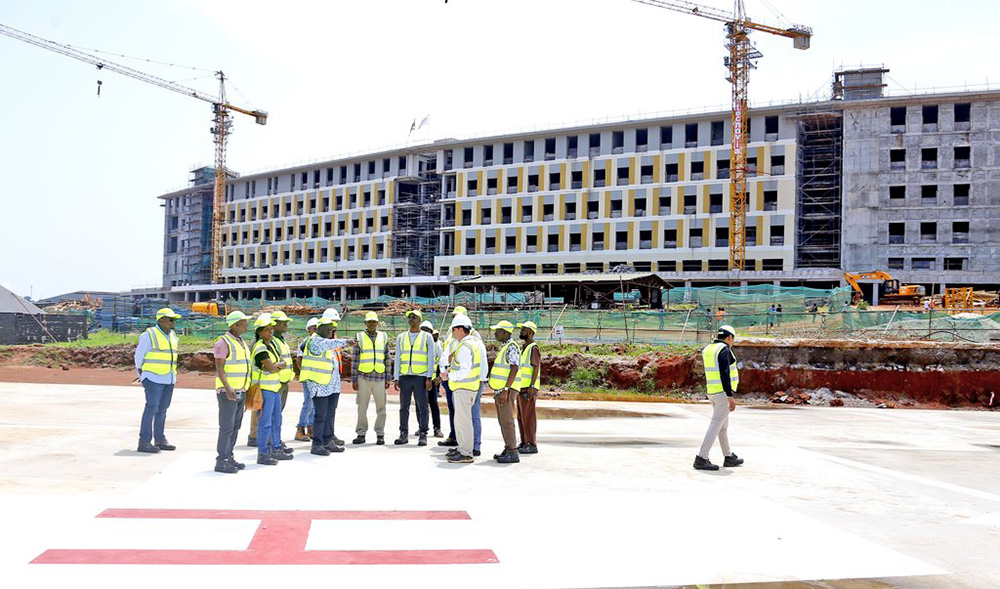
The multi-billion-shilling facility, which will be called International Specialised Hospital of Uganda (ISHU), is located in Lubowa along Entebbe Road. (Credit: Ministry of Finance)
“The hospital is progressing well. As you remember, a few years ago, there was a big debate in the country on whether this hospital would ever take shape. I’m regularly here to ensure that it takes the necessary shape, and I’m happy that the contractor is progressing very well,” Dr Ggoobi said after the guided tour on Friday.
The multi-billion-shilling facility, which will be called International Specialised Hospital of Uganda (ISHU), is located in Lubowa along Entebbe Road. The project has faced scrutiny and public debate over delays and costs since it was first announced.
However, Dr Ggoobi said visible progress on the main structure and auxiliary components signals steady advancement towards completion.
“The building, as you see it in the background, has taken shape. A number of other auxiliary projects are ongoing, which are part of the entire project. So far, so good,” he noted.
He said major structural works are nearing completion, including the casting of floors and waterproofing.
“They have now started almost finishing the building, the casting and ensuring that all of the floors are well developed, including waterproofing,” he said.
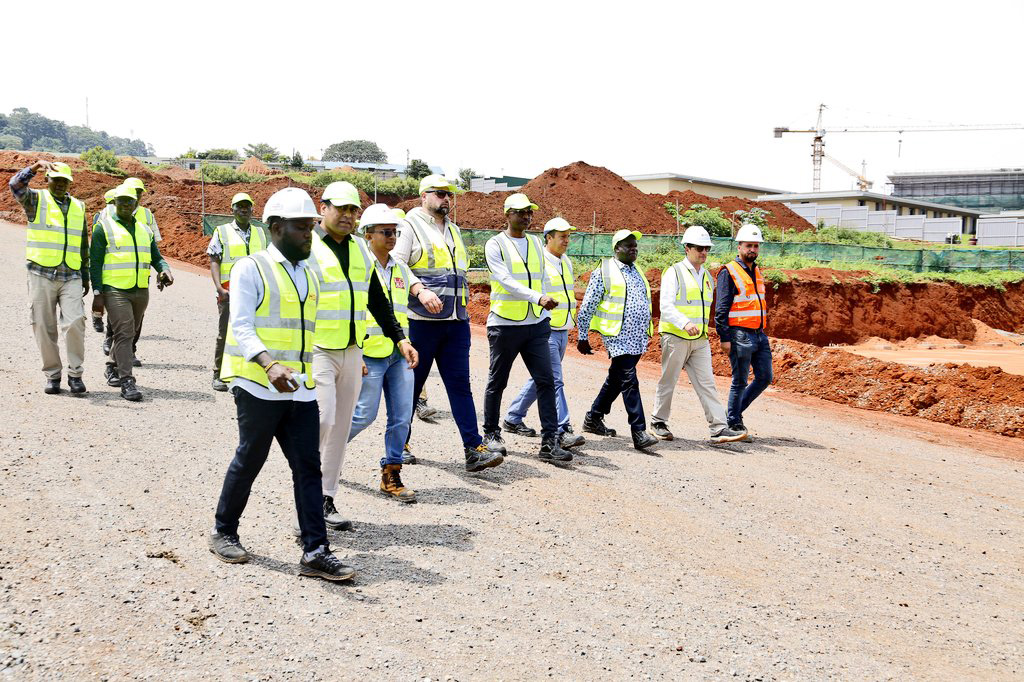
Beyond the main hospital block, Dr Ggoobi pointed to critical supporting infrastructure already underway.
“The aeropad is already almost complete,” he revealed, referring to a helipad facility expected to ease emergency evacuations and referrals.
He also highlighted the construction of a large man-made lake within the complex, designed to manage runoff water due to the area’s topography.
“There is a big man-made lake which they have built here because of the topography. There is a lot of runoff water which they have collected,” he explained.
Dr Ggoobi pledged government support to resolve remaining challenges, including securing a dedicated power line to guarantee uninterrupted electricity supply once the hospital becomes operational.
“We shall work with the hospital management team to address all the remaining challenges, including securing a dedicated power line,” he said.
He expressed optimism that the facility could be ready within about a year. “In about a year or so, we shall have this international hospital ready,” he added.
Once completed, the hospital is expected to provide highly specialised diagnostic and treatment services, including advanced surgeries and complex medical care that currently require referrals abroad.
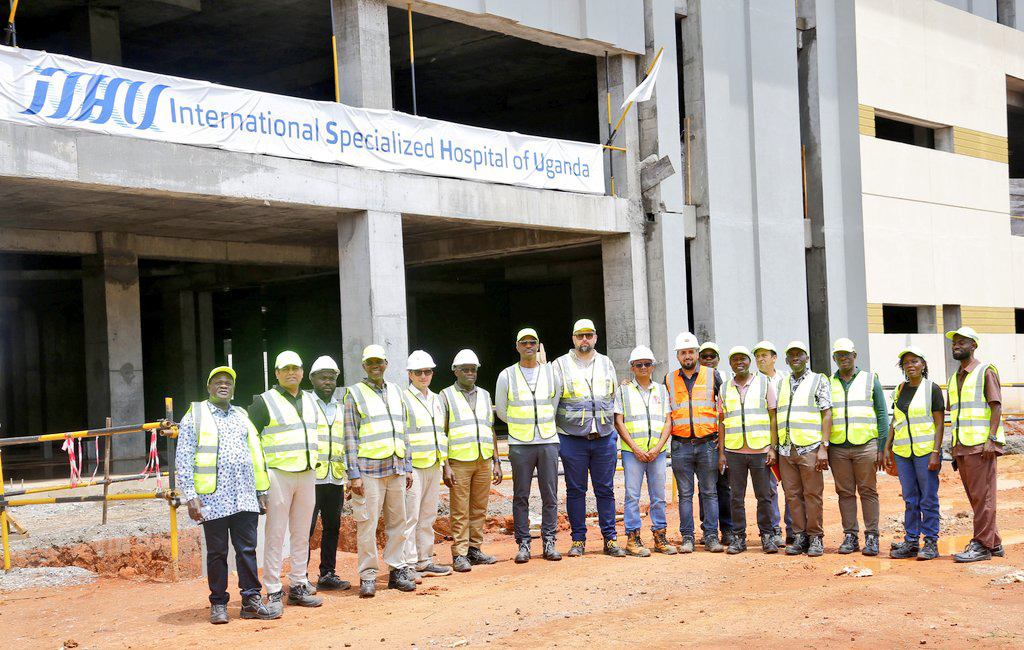
Government officials said the project is aimed at reducing the number of Ugandans seeking treatment overseas, a practice that costs the country millions of dollars annually in medical bills and travel expenses.
The facility is also envisioned to be a regional centre of excellence, boosting Uganda’s health sector capacity while positioning the country as a destination for specialised medical services in East Africa.