
Busoga king roots for stronger partnerships to end teenage pregnancy
The King highlighted the Kingdom’s flagship “Men are the Pillars” campaign, which mobilises men as heads of families to champion positive masculinity and protect girls from early pregnancy and gender-based violence, as well as empowering them to join the money economy.
From L-R: Maja Permerup, Tomas Lundstrom, SIDA's Lisa Hedin, Kyabazinga of Busoga William Gabula Nadiope IV, UNFPA's new Country Representative Kristine Blokhus, Busoga Kingdom's 2nd Deputy Prime Minister Alhaji Osman Ahmed Noor and Kyabazinga Affairs Minister Yudaya Babirye in a group photograph at Igenge Palace in Jinja City on Monday. (Photo by Donald Kiirya)
____________________
JINJA - Busoga king (Kyabazinga) William Gabula Nadiope IV has urged international partners to deepen collaboration with his kingdom and the Government in the fight against teenage pregnancies. This, according to him, will be through investing in poverty reduction, value addition and climate-resilient economic growth initiatives.
Speaking at Igenge Palace on December 9, 2025, during a high-level visit by a joint delegation led by SIDA’s multilateral partner co-ordinator, Lisa Hedin based in Stockholm and United Nations Population Fund (UNFPA) country representative Kristine Blokhus, the King informed them that unlike the usual efforts that target women and girl child, he placed men and boys at the centre of efforts to curb early pregnancies, fostering responsible families and driving transformation, since in the Kisoga culture, men are the pillars of the family.
“Early teenage pregnancy has become a big problem and is entrenching poverty" 70% of our Kingdom’s population is youth – these are our future and the leaders of tomorrow. It is our collective responsibility to ensure they are morally upright and responsible and productive citizens,” he said.
The King highlighted the Kingdom’s flagship “Men are the Pillars” campaign, which mobilises men as heads of families to champion positive masculinity and protect girls from early pregnancy and gender-based violence, as well as empowering them to join the money economy.
He proposed new partnerships in skills training, commercial agriculture (particularly poultry, coffee, cocoa, vegetables, and mushrooms), clean energy initiatives, and access to regional and European markets for certified organic produce.
“We want to establish Kingdom-driven enterprises that improve standards of living while passing on messages against teenage pregnancies. When we skill and empower men and young women, we reduce idle time, increase productivity, and ultimately lower poverty levels in the sub-region,” he added.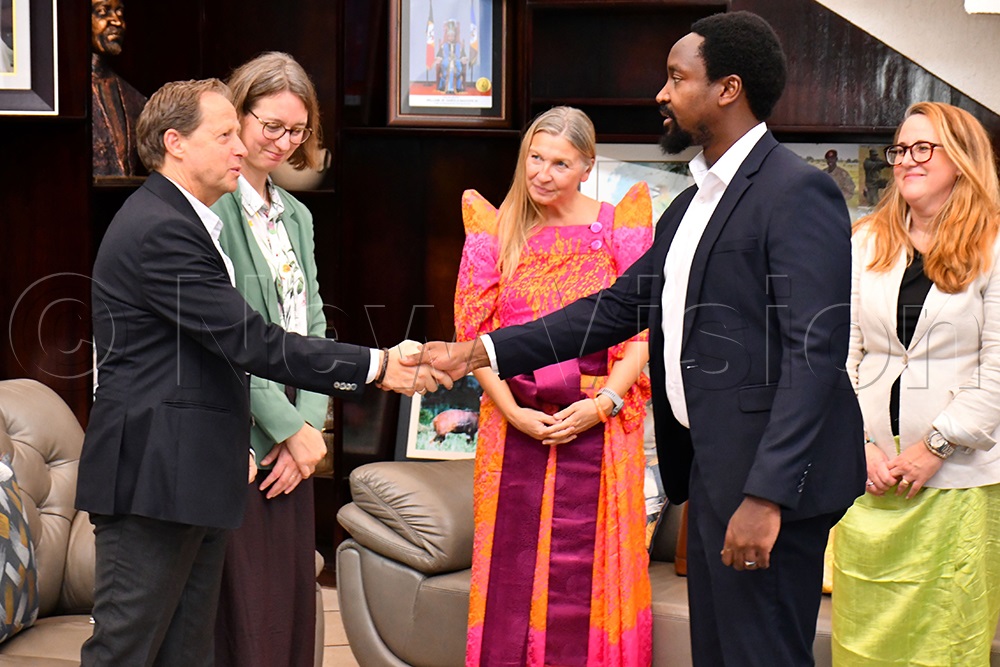
Kyabazinga of Busoga William Gabula Nadiope IV (2nd right) greets Tomas Lundstrom (left), a Counsellor for SRHR at the Swedish Embassy, as Maja Permerup (2nd left), United Nations Population Fund (UNFPA) new Country Representative, Kristine Blokhus (middle) and SIDA’s Multilateral Partner coordinator, Lisa Hedin (right) look on while at his Igenge Palace in Jinja City on Monday. (Photo by Donald Kiirya)
Hedin and Blokhus praised the Kyabazinga’s leadership and the innovative use of cultural structures to drive social change.
“Your Majesty’s decision to accept being a UN champion for engaging men and boys to end teenage pregnancies and HIV is truly inspiring. The ‘Men are the Pillars’ campaign, rooted in the Kingdom’s family and village structures, is a best practice we are proud to support,” Hedin said.
Blokhus described the campaign as a model of cultural leadership that has significantly improved community acceptance of sexual and reproductive health and rights (SRHR) messages as well as inspiring hard work.
She called for scaling up the initiative to remote villages where teenage pregnancy rates remain stubbornly high and reiterated the need for supportive environments that keep girls in school.
Tomas Lundstrom, counsellor for SRHR at the Swedish Embassy, stressed the importance of age-appropriate open conversations about sexuality.
“Young people have sex for pleasure, for fun, sometimes for stupid reasons. We must educate both boys and girls about the consequences of early indulgence and give them information concerning sexual and reproductive health and rights if we are to succeed,” he said.
Busoga Kingdom officials, including 2nd deputy prime minister Alhaji Osman Ahmed Noor and Kyabazinga affairs minister Yudaya Babirye, thanked partners for past support through the National Planning Authority, AIC, and others from Unicef, UNAIDS, WHO and UNESCO and emphasised the catalytic role the initial support is helping the cultural institution in spreading the word and sustaining momentum.
Babirye noted that the king’s personal involvement had shifted mindsets, with men now taking greater responsibility as both potential perpetrators and protectors.
“There is increased general awareness and interest by stakeholders engaged with support, such as local government authorities, cultural leaders, the public and potential corporate sponsors are approaching us to support,” she said.
The Keeping Children in School Drive (Eisomero N'empikyi) is poised to create a huge impact, given the response among learners in the 25 piloting schools where Empango clubs are operational.
The meeting concluded with renewed commitments from UNFPA and SIDA to expand technical and financial support for community mobilisation, positive masculinity dialogues, livelihood programmes for youth, and reintegration initiatives for teenage mothers and fathers.
The guests toured the kingdom's teenage skilling centre, where beneficiaries shared testimonies and appealed for cascading of centres in all chiefdoms.
Ahmed closed the engagement by expressing optimism for better future collaboration: “When we partner directly with people like you, we shall curb this vice and foster lasting development across the sub-region.”